 Bellingham
 Building Decks for Sudden Valley's Lake-and-Forest Setting
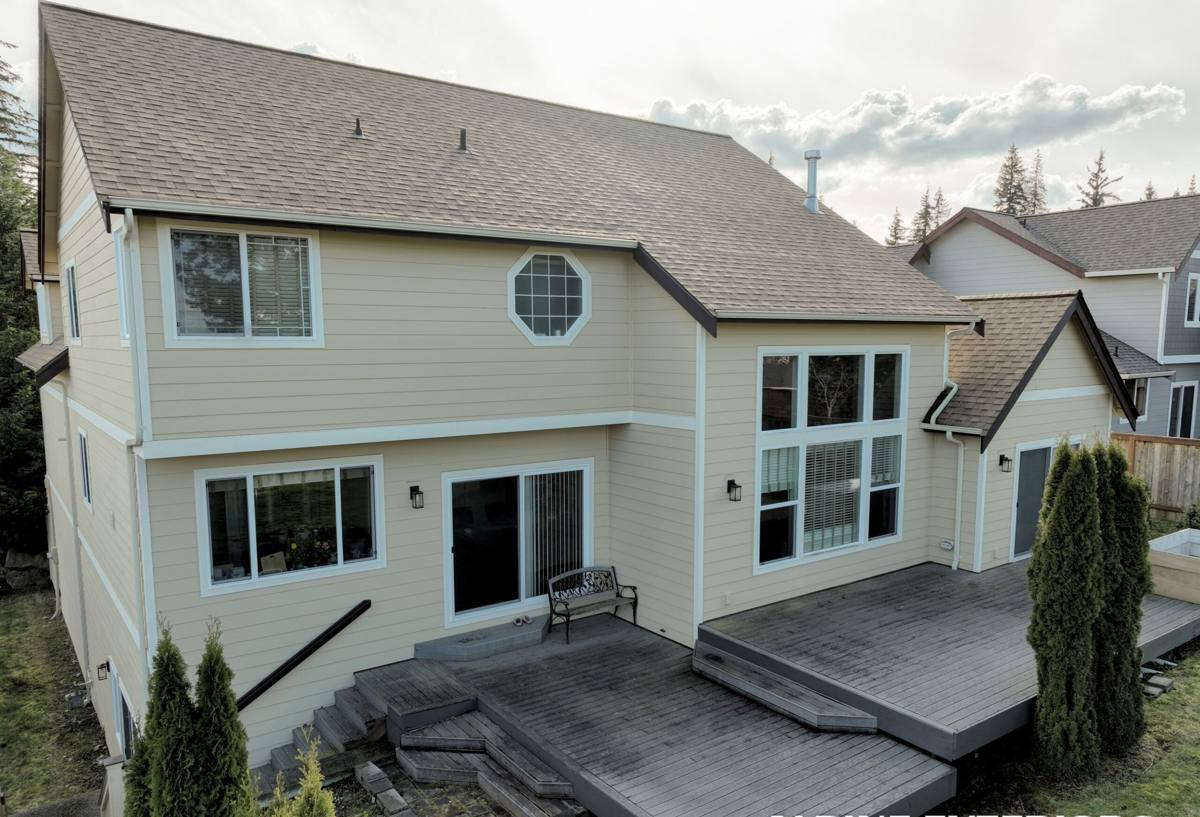
Sudden Valley sits in one of the more distinct microclimates in the Bellingham area — tucked against Lake Whatcom, wrapped in second-growth forest, and shaded by trees for a good part of the day on many lots. That combination is beautiful to live in and hard on an outdoor structure. Between the tree cover, the lake's ambient moisture, and Whatcom County's long wet season, a deck here works harder than a deck built out on an open, sunny lot across town.
We build and replace custom decks throughout the Sudden Valley community, and the lessons are consistent from house to house: the deck that fails early almost always failed because it was built for a dry climate's assumptions, not a Pacific Northwest one. This page covers what actually holds up here, what a correct build involves, and how we run the job from first look to final walkthrough.
What Sudden Valley's Climate Does to a Deck
Whatcom County's marine-influenced climate means Sudden Valley gets driving rain events, long stretches of damp gray weather, and — because of the surrounding forest and proximity to the water — a moss and algae season that runs longer than it would on a drier, more exposed lot. Add in the salt-laden air that moves through the broader Bellingham area off the Sound, and you've got three separate stresses working on the wood, fasteners, and finish at the same time:
- Moisture cycling: wood swells when wet and shrinks when it dries, and Sudden Valley's shaded lots rarely get a fast, complete dry-out between rain events.
- Moss and algae growth: shaded, damp surfaces are exactly what moss wants. Left alone, it holds moisture against the decking and turns walking surfaces slick and dangerous.
- Corrosion pressure: salt-influenced air combined with near-constant humidity accelerates rust on the wrong grade of fasteners and connectors — the kind of slow damage that's invisible until a board or rail is failing.
None of this means you can't have a great deck in Sudden Valley. It means the build has to account for all three from the start, not patch around them later.
Why Standard-Grade Builds Struggle Here
A lot of deck problems we get called out to fix in this area trace back to shortcuts that are invisible on install day: interior-rated hardware instead of coastal-rated, decking laid tight with no drainage gap, or a ledger board flashed with tape instead of proper metal flashing. In a drier inland climate those shortcuts might go unnoticed for years. In Sudden Valley's shaded, moisture-heavy setting, they show up in two or three seasons as soft spots, rust streaks, or a deck that never quite stops feeling damp underfoot.
What a Correctly Built Deck Needs in This Setting
Framing and Fasteners
Every fastener, hanger, and structural connector should be rated for the moisture and salt exposure this region actually sees — not the minimum code allows for a dry climate. Stainless or heavy hot-dip galvanized hardware costs more up front and is worth it on every Sudden Valley build, especially anywhere the deck sits close to grade or under tree canopy where it stays damp longer.
Ledger Attachment and Flashing
Where the deck attaches to the house, proper metal flashing — installed in the correct shingle-lap order with the house's existing siding and building wrap — is what actually keeps water out of the wall framing. This is the single most common point of hidden rot we find on older decks in wet Western Washington climates, and it's not visible once the deck is finished, which is exactly why it has to be done right the first time.
Decking Material Choice
Material choice matters more here than in a dry-summer climate, because whatever you pick will spend months of the year wet or damp.
| Material | How it handles Sudden Valley's moisture and moss | Maintenance reality |
|---|---|---|
| Pressure-treated wood | Resists rot when properly sealed and maintained; still needs regular attention in shade | Annual cleaning and re-sealing recommended in damp, shaded lots |
| Cedar | Naturally rot-resistant and handles moisture well, but greys and can grow moss if left unfinished in deep shade | Periodic cleaning and refinishing to keep its look and resist moss |
| Composite decking | Resists rot and doesn't absorb water like wood, but still needs cleaning where moss and algae can grow on the surface | Low maintenance overall; occasional wash-down is usually enough |
There's no single "right" material for every Sudden Valley lot — a sunnier, more open yard has more options than a deeply shaded one under mature trees. We'll walk your specific site with you and explain the real trade-offs before you commit.
Drainage and Airflow Underneath
A deck that can't breathe underneath will stay damp longer after every rain, which is exactly what accelerates rot and moss growth. Proper joist spacing, a slight drainage slope, and gaps between boards sized for this climate (not squeezed tight for looks) all matter more in a shaded, moisture-heavy setting like Sudden Valley than they would somewhere drier.
Our Process for a Sudden Valley Deck Project
- On-site assessment: we look at your lot's specific exposure — tree cover, proximity to the lake, drainage patterns, and existing structure if you're replacing a deck — before recommending anything.
- Design and material walkthrough: we go over layout, decking material, railing, and hardware choices with the actual maintenance trade-offs explained plainly, not upsold.
- Permitting: most new decks and many replacements in Whatcom County require a permit, particularly for anything attached to the house or above a certain height. We handle that process rather than leaving it on you.
- Demolition (if replacing): old decking, framing, and ledger flashing are removed and the ledger area and framing underneath are inspected for hidden rot before anything new goes up.
- Framing and flashing: corrosion-rated hardware, correctly lapped flashing at the house connection, and framing sized and spaced for proper drainage.
- Decking, railing, and finish work: installed with the gaps and fastening pattern appropriate to the material and this climate.
- Final walkthrough: we go over care and maintenance specific to your material choice and your lot's sun/shade exposure before we consider the job done.
Maintenance That Actually Matters in Sudden Valley
Whatever material you choose, a few habits make the biggest difference in a shaded, damp lot like this:
- Sweep leaves and needles off the surface regularly — trapped organic debris holds moisture and feeds moss growth.
- Clean the deck surface at least once a year, more often in heavily shaded spots, to stop moss and algae before they get a foothold.
- Check railing posts and stair connections annually for looseness — a sign moisture may be getting into a connection point.
- Re-seal or re-stain wood decking on the schedule appropriate to the product, not "whenever it looks bad" — by the time wood looks bad, moisture has often already gotten in.
- Keep gutters and downspouts near the deck clear so runoff isn't dumping extra water onto or under the structure.
Replacing an Aging Deck vs. Repairing It
We get asked often whether an older Sudden Valley deck can be repaired or should be replaced outright. A few signs point toward replacement rather than patching:
- Soft or spongy spots in the decking or framing, especially near the house connection.
- Rust staining around fasteners or visibly corroded hardware.
- Persistent moss growth that comes back quickly no matter how often it's cleaned — often a sign of a drainage or airflow problem in the structure itself, not just the surface.
- A ledger board connection that was never properly flashed, which is common on older builds in this region.
If the framing and ledger connection are sound, a resurfacing or partial rebuild can make sense. If the underlying structure has been compromised by years of moisture exposure, patching the visible surface just delays a bigger problem — and that's a straight answer we'll give you during the assessment, not a sales pitch either direction.
Why Local Experience in Sudden Valley Matters
Sudden Valley isn't a typical Bellingham subdivision — private road access, HOA considerations, and lots with real tree cover and lake-adjacent grading all shape how a deck project gets planned and built. A crew that's worked this community already knows what a typical lot's drainage and sun exposure looks like, what the permitting process through Whatcom County involves for this area, and what material and hardware choices actually hold up against the specific combination of shade, moisture, and moss season here — instead of applying a one-size-fits-all approach built for a drier or sunnier part of the county.
Get a Straight Answer for Your Property
Every lot in Sudden Valley handles sun, shade, and moisture a little differently, and that affects both the right material choice and the right build details for your deck. We're happy to come take a look, walk the site with you, and give you a clear, no-pressure estimate along with an honest read on what your specific lot needs — just fill out the form below to get started.