 Bellingham
 New-Construction Windows in Sunnyland: Getting It Right the First Time
Sunnyland is one of Bellingham's older, established neighborhoods, but it's also seen a steady run of infill building — new homes going up on smaller lots between mature trees, additions with new window openings, and full rebuilds after teardowns. Whenever a window is going into new framing rather than an existing opening, the job is called new-construction, and it's a fundamentally different task than swapping out an old window. Done right, it's the single biggest factor in whether a house stays dry, quiet, and efficient for the next 30 years. Done wrong, the problems don't show up on day one — they show up as rot in the framing three or four winters later, after the damage is already hidden behind drywall and siding.
We install new-construction windows on homes throughout Bellingham and Whatcom County, and Sunnyland's mix of shaded, established lots and newer infill construction gives us a good sense of what actually holds up here versus what looks fine on install day and fails quietly over time.
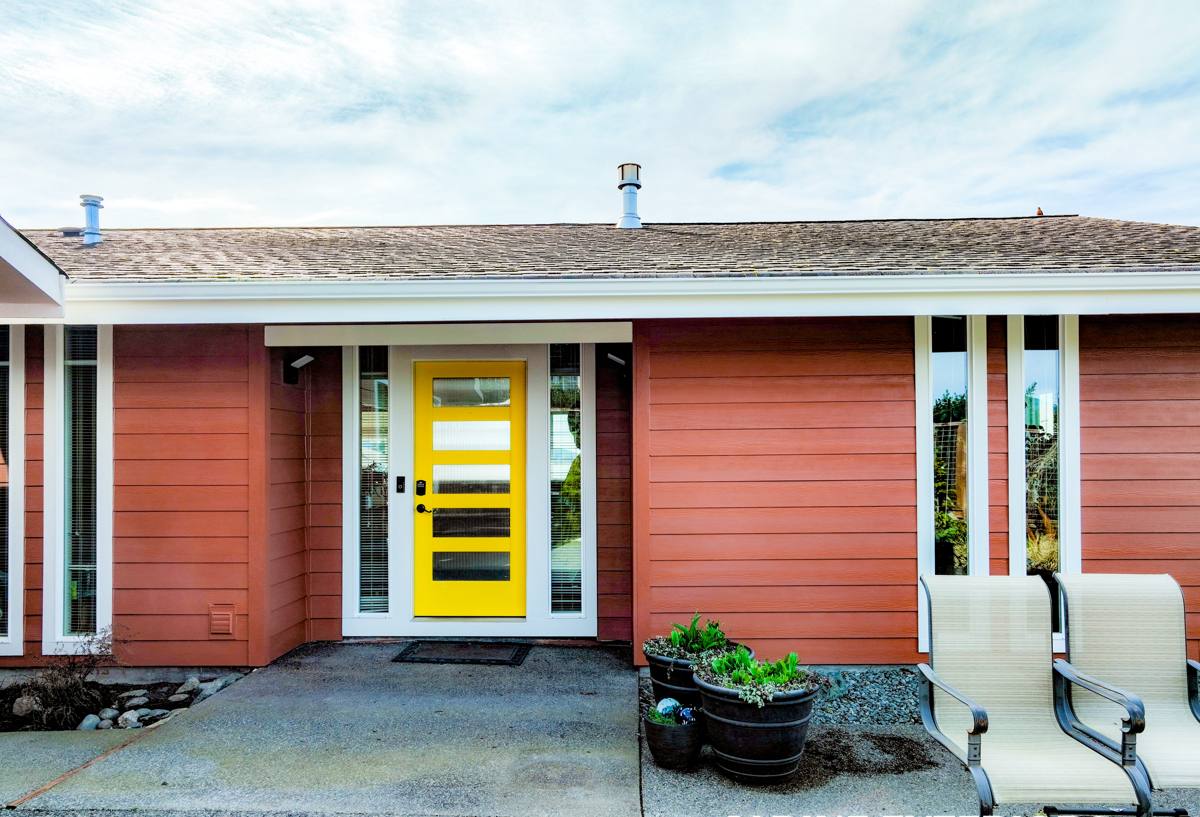
What Bellingham's Climate Actually Does to a Window Opening
Whatcom County sits in a wet marine climate, and Sunnyland's tree cover and proximity to Bellingham Bay add a couple of extra wrinkles that homeowners further inland don't deal with as much.
- Driving rain, not just steady rain. Wind off the bay pushes rain sideways during fall and winter storms, which means water is hitting window flanges and trim at an angle, not just falling straight down. A flashing detail that works fine in a light, vertical rain will leak under wind-driven rain.
- Salt-laden air. Proximity to the water accelerates corrosion on fasteners, hardware, and unprotected metal flashing. Materials that would last decades inland can start showing wear noticeably sooner this close to the bay.
- A long moss season. Shaded, tree-covered lots — common throughout Sunnyland — stay damp for months at a time. Moss and algae hold moisture against trim and sills, which is exactly the condition wood rot needs to get started, and it's why sill design and drainage details matter more here than in a drier, sunnier part of the state.
- Short, mild summers. There's less hot, dry weather to fully evaporate moisture that does get in. Whatever water finds its way behind the window has more months of the year to sit and do damage before things dry out.
None of this means Sunnyland is a uniquely hard place to build — it just means the water-management details in a new-construction window install aren't optional extras. They're the actual job.
New Construction vs. Replacement: Why the Distinction Matters
A lot of homeowners use "new windows" to mean any window project, but the installation method is completely different depending on whether the surrounding wall is open or finished.
New-Construction Windows
These have a nailing flange around the perimeter and are installed before the siding and sometimes before the weather-resistive barrier (WRB) is fully in place. The flange gets integrated into the wall's drainage plane with flashing tape and building paper, in a specific shingled sequence, then the siding laps over it. This is the method used for new builds, additions, and any project where framing is exposed.
Replacement (Retrofit) Windows
These install into an existing opening without disturbing the siding around it, using the old frame or a new frame set inside the opening. There's no flange to integrate into the wall assembly, so the water management relies on sealant and the existing structure instead.
The two methods aren't interchangeable, and a window installed the wrong way for the situation — a flanged unit crammed into a finished wall, or a retrofit unit used where the wall is open and could have been done properly — is a common source of the leaks we get called out to diagnose. If your project involves open framing in Sunnyland, whether it's a full new build or a room addition, a proper new-construction install is what protects the investment.
What a Correct New-Construction Install Actually Involves
The window unit itself gets most of the attention when people are shopping, but the installation sequence is what determines whether the wall stays dry. In order, a correct install looks like this:
- Rough opening check. Confirming the opening is square, level, and sized correctly before anything goes in — an out-of-square opening stresses the frame and can cause the sash to bind or seal poorly for the life of the window.
- Sill pan flashing. A sloped, sealed pan at the bottom of the opening that directs any water that does get past the window back out to the exterior, rather than letting it sit on the framing.
- Jamb and head flashing, shingled correctly. Flashing tape and building paper installed in the right order — bottom to top, overlapping like shingles — so water draining down the wall is always directed over the layer below it, never into a seam.
- Window set and fastened per the manufacturer's instructions. Shimmed for square, fastened through the flange (or per specified fastening schedule), with the unit checked for smooth operation before the wall is closed up around it.
- Flange integration into the WRB. The housewrap or building paper is cut, folded, and taped so the drainage plane is continuous — no gaps where water could get behind the barrier.
- Interior and exterior sealant, in the right places. Sealant belongs at specific points, not everywhere — over-sealing a flanged window can trap water inside the wall instead of letting it drain, which causes the exact rot problem the flashing was supposed to prevent.
- Trim and siding tie-in. Final trim and siding lapped correctly over the flashing so the whole assembly sheds water the way it was designed to.
Every one of those steps matters, and skipping or rushing any single one is usually invisible until the siding and drywall are long since closed up.
Choosing Windows for a Sunnyland Home
Frame material and glass package both affect how a window handles our climate, and the right choice depends on the home, its exposure, and budget. Here's how the common options compare for this area:
| Frame Material | How It Handles Bellingham's Climate | Maintenance |
|---|---|---|
| Vinyl | Good moisture resistance, no corrosion risk from salt air; performance varies a lot by manufacturer quality | Low — occasional cleaning |
| Fiberglass | Very stable in temperature swings and damp conditions; holds paint and finish well over time | Low |
| Wood (clad exterior) | Excellent look, but the exposed wood interior and any unclad joints need protection from our wet season | Moderate — finish upkeep |
| Aluminum | Durable but conducts cold and is more prone to condensation in our damp winters unless thermally broken | Low, but watch for corrosion near the bay |
For glass, we generally recommend double-pane, low-E units as the baseline for new construction here — the marine climate doesn't demand the extreme cold-climate glass packages used in harsher inland regions, but low-E coatings meaningfully cut heat loss during our long, mild-but-damp winters and help control condensation on interior glass.
Our Process for Sunnyland Projects
Whether we're working alongside a builder on a new home or handling window installation for a homeowner's addition, the process stays consistent:
- Site walk and rough-opening review. We check framing dimensions and discuss window selection before anything is ordered, so sizing and product match the plan.
- Product selection guidance. We'll walk through frame material and glass options honestly, including trade-offs, based on the home's exposure — a shaded, wooded lot and a more open, wind-exposed lot don't need identical specs.
- Coordinated scheduling with the build timeline. New-construction windows have to go in at the right point in the framing and WRB sequence — too early or too late and the flashing integration suffers.
- Installation following manufacturer specs, not shortcuts. Sill pans, shingled flashing, and correct sealant placement on every unit, every time.
- Final walkthrough and operation check. Every window gets tested for smooth operation and sealed properly before we consider the job done.
Why Local Experience Matters for This Job
New-construction window installation isn't a product you buy so much as a detail-heavy process, and the details that matter change based on climate. A crew that mostly works drier, inland parts of the state may not weight sill drainage and wind-driven rain flashing the way it needs to be weighted for a lot two miles from Bellingham Bay. A crew that works Whatcom County regularly has already seen what moss, salt air, and driving rain do to a poorly flashed opening — and builds accordingly from the start, rather than learning the lesson on a callback.
We also know that Sunnyland's older tree canopy means shade and damp conditions persist longer into the year than on more open lots, which affects both installation scheduling (materials and sealants need the right conditions to cure properly) and product recommendations for that specific site.
What New-Construction Windows Typically Cost
Pricing depends heavily on window count, size, frame material, and glass package, plus how the project is being managed — direct-to-homeowner vs. coordinated through a builder. Broad ranges to plan around:
| Factor | Lower End | Higher End |
|---|---|---|
| Frame material | Vinyl | Wood clad or premium fiberglass |
| Glass package | Standard double-pane low-E | Upgraded coatings, triple-pane, specialty tints |
| Window size/count | Standard bedroom/bath sizes, fewer units | Large picture windows, bay/bow units, high count |
| Site conditions | Easy access, straightforward openings | Difficult access, custom shapes, multi-story |
We'll give you an itemized number based on your actual plans rather than a rough estimate off square footage — window pricing varies too much by unit to guess accurately without seeing the specs.
A Checklist Before You Hire
If you're evaluating contractors for a new-construction window job in Sunnyland or elsewhere in Bellingham, it's worth asking a few direct questions:
- Do they install sill pan flashing on every opening, or only "when needed"?
- Can they describe their flashing sequence without hesitation — bottom to top, shingled, integrated with the WRB?
- Do they follow the specific window manufacturer's installation instructions, which affects warranty coverage?
- Are they willing to coordinate timing with your builder's framing and WRB schedule rather than working around it?
- Do they carry liability insurance and stand behind their installation labor, separate from the manufacturer's product warranty?
A contractor who can't answer these plainly is telling you something, even if they don't mean to.
If you're planning new-construction windows for a Sunnyland home — a new build, an addition, or a rebuild — we're glad to walk the site, look at your plans, and put together a straightforward, no-pressure estimate. Use the form below to get started.