 Bellingham
 Why Sudden Valley Puts Extra Wear on Siding
Sudden Valley sits in a pocket of Whatcom County that gets more shade, more standing moisture, and more tree litter than a typical in-town Bellingham lot. Mature conifers block direct sun on large stretches of most homes, which means siding stays damp longer after every rain. Add the moist, salt-tinged marine air that moves inland off the Sound through much of western Whatcom County, a driving rain pattern that comes sideways more often than straight down, and a moss season that can stretch from October well into spring, and you have an exterior environment that punishes any siding product with a weak moisture story.
None of that is unusual for this part of Washington. What it means practically is that the same siding installed on a sunny, open lot in a drier part of the state will not perform the same way here. Paint film breaks down faster in shaded, damp conditions. Wood-based products swell, split, and rot at the ground line and around penetrations. Caulked seams that stay wet for days at a time fail years ahead of schedule. A siding decision for a Sudden Valley home has to account for all of that, not just curb appeal.
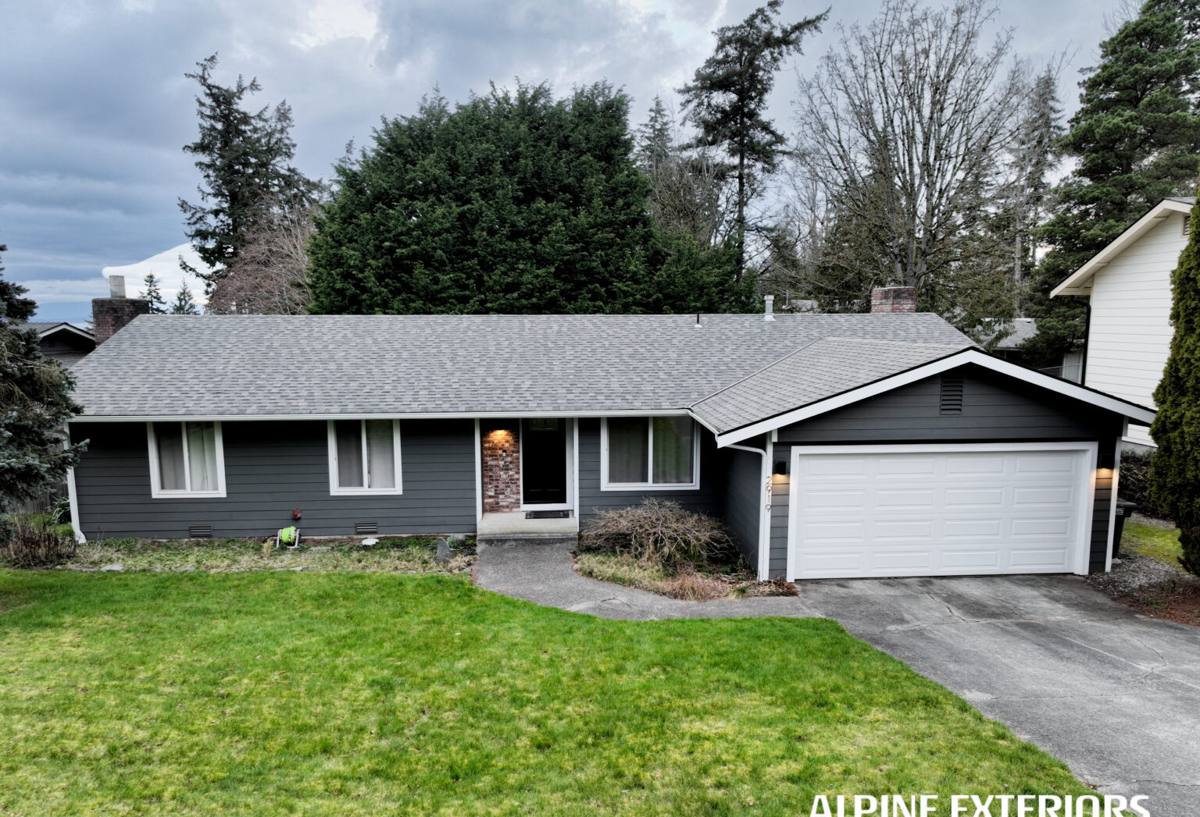
What Fiber Cement Actually Needs to Do Here
Fiber cement siding is cement, sand, and cellulose fiber, cured into a dense board that does not absorb water the way wood or wood-composite products do and does not rely on a plastic shell the way vinyl does. That makes it a strong baseline choice for a climate like this one. But the material alone doesn't guarantee a good outcome — how it's detailed and installed determines whether a Sudden Valley home gets 30-plus years out of its siding or starts showing problems in year eight.
The moisture-management basics that matter most
- A drainable weather-resistive barrier behind the siding, not just felt paper stapled flat against the sheathing
- Proper flashing at every window, door, and roof-to-wall intersection, lapped correctly so water sheds outward, not behind the cladding
- Consistent clearance — typically 1 to 2 inches — between the bottom of the siding and any roofline, deck, or grade below it
- Butt joints and trim seams caulked with a product rated for the material and inspected on a schedule, not caulked once and forgotten
- Fasteners driven at the manufacturer's specified depth and location, not overdriven or placed too close to panel edges
Skip any one of these and the siding itself becomes almost irrelevant — water gets behind it regardless of what the boards are made of. This is where a lot of siding jobs quietly go wrong: the material on the truck was the right choice, but the crew treated the install like a cosmetic swap instead of a moisture-management system.
Why We Install James Hardie and Only James Hardie
We standardized on James Hardie fiber cement because it's engineered specifically for climates like ours. Hardie makes region-specific product formulations — the HZ5 line is built for the moisture and freeze-thaw cycling common to the Pacific Northwest, with a different cement formulation than what ships to drier regions of the country. That's not a marketing detail; it affects how the board handles repeated wetting and drying over decades.
The other piece is the factory finish. Hardie's ColorPlus finish is baked on in a controlled factory environment, not brushed or sprayed on site. That gives you a more consistent, harder finish that resists the fading and moss/mildew staining that shaded, damp lots like the ones common in Sudden Valley are especially prone to. It also carries its own multi-year finish warranty separate from the substrate warranty, and both are transferable if the home sells — which matters in a neighborhood where siding condition is one of the first things a buyer's inspector will flag.
Why we don't install the alternatives
We get asked about vinyl, LP SmartSide, and cedar often enough that it's worth being direct about it. Vinyl is inexpensive and low-maintenance, but it's a thin plastic product that can warp in temperature swings, crack in cold snaps, and it has no real fire resistance — trade-offs we're not willing to put our name behind. LP SmartSide is a wood-strand product with an engineered resin coating; it performs reasonably in dry climates but wood-strand substrates are more sensitive to sustained moisture exposure than fiber cement, which is a real liability on a shaded, high-moisture lot. Cedar and primed spruce look great initially but demand a repainting and caulking schedule most owners can't keep up with, and they're both combustible. None of these are "bad" products in every setting — they're just not the right fit for the moisture load this neighborhood puts on an exterior, which is why we don't put our crews' name on that work here.
Comparing Options for a Sudden Valley Lot
| Factor | James Hardie Fiber Cement | Vinyl | LP SmartSide | Cedar / Primed Wood |
|---|---|---|---|---|
| Moisture tolerance in shaded, damp lots | High — non-combustible cement substrate, doesn't rot | Moderate — won't rot but traps moisture behind it if installed poorly | Moderate — engineered wood strand, sensitive to sustained wetting | Low — absorbs water, prone to rot without upkeep |
| Finish durability under tree cover | Factory-baked ColorPlus resists fade and moss staining | Color molded in but can chalk and fade | Field or factory finish, needs recoating over time | Repaint/reseal every few years |
| Fire resistance | Non-combustible | Melts/deforms under heat | Combustible | Combustible |
| Typical lifespan when installed to spec | 30+ years | 20-25 years | 20-25 years | 15-20 years with regular maintenance |
| Ongoing maintenance | Occasional wash, repaint decades out | Occasional wash | Recoat/reseal on a schedule | Repaint, caulk, inspect annually |
What Drives the Cost on a Job Like This
Every Sudden Valley home is different, so we won't quote a number without walking the property, but a few factors consistently move the price up or down more than homeowners expect:
| Cost Factor | Why It Matters Here |
|---|---|
| Existing siding removal | Extra labor if there's rot, old wood siding, or multiple layers to strip before Hardie can go on |
| Sheathing repair | Shaded, damp walls sometimes reveal soft or water-damaged sheathing once old siding comes off |
| Access and site layout | Wooded lots, slopes, and tight side yards common in Sudden Valley can add setup and staging time |
| Trim and detail work | Windows, dormers, and roof intersections all need individual flashing — more of these means more labor |
| Product line and profile | Lap siding, panel siding, and shingle-style profiles carry different material and labor costs |
How Our Process Works
1. On-site assessment
We walk the exterior, check for soft spots, look at how the existing siding has held up against tree cover and sun exposure on each side of the house, and check flashing at every penetration. This tells us what's actually happening behind the current siding, not just what it looks like from the driveway.
2. Scope and product selection
We walk you through which Hardie profile and ColorPlus color fit the home and the site — factoring in how much shade and moisture each elevation gets, since the north and east sides of a tree-covered lot often need the same attention to detail as the more exposed sides even if they look fine today.
3. Tear-off and substrate check
Old siding comes off, and we inspect the sheathing before anything new goes up. Any soft or compromised sheathing gets replaced — installing new siding over a damaged substrate just hides the problem for another few years.
4. Weather barrier and flashing
A drainable weather-resistive barrier goes on first, followed by correctly lapped flashing at every window, door, and roof line. This step is the one that determines whether the siding actually keeps water out for the next 30 years.
5. Installation to Hardie spec
Panels or lap boards go up with the fastener spacing, clearances, and joint treatment James Hardie specifies for HZ5 climates — not generic carpentry judgment.
6. Final walkthrough
We go over the finished exterior with you, point out any color-matched trim or touch-up details, and explain what basic upkeep looks like going forward.
Signs a Sudden Valley Home Needs Attention Now
- Dark green or black streaking on siding that returns within weeks of washing it off
- Soft or spongy spots when you press on siding near the bottom courses or under windows
- Paint that's peeling or bubbling rather than just fading evenly
- Visible gaps at caulk lines around trim, windows, or corner boards
- Warping, cupping, or separation at siding seams
- A musty smell near exterior walls inside the home, which can indicate moisture getting behind the cladding
Any one of these on its own isn't necessarily an emergency, but on a shaded, damp lot they tend to compound quickly once they start.
Why Local Experience in This Neighborhood Matters
A crew that's worked Sudden Valley before already knows what to expect before they unload the truck: which elevations hold moisture longest, how tree cover changes the finish work needed on the shaded sides of a house, and how site access on wooded or sloped lots affects staging and scheduling. That's not something you can fully substitute with general siding experience from a different part of the county. It also means fewer surprises mid-project — soft sheathing under old siding, drainage issues at grade, or moss buildup patterns that repeat on similar homes nearby are things we've already seen and planned around.
Whatcom County's building department requirements and typical inspection points for exterior work are also familiar territory for a crew working this area regularly, which keeps a project moving instead of stalling on paperwork or re-inspections.
What to Expect After Installation
Correctly installed Hardie siding is low-maintenance, not no-maintenance. A yearly rinse-down helps keep moss and mildew from taking hold in the shaded spots, and it's worth a quick visual check of caulk lines and flashing points each fall before the rainy season sets in. Beyond that, ColorPlus finishes are designed to go a long time before needing repainting, which is a meaningful difference from wood or field-painted siding that needs attention every few years regardless of climate.
If you're weighing a siding replacement or repair in Sudden Valley, we're happy to take a look and give you a straightforward, no-pressure assessment of what your home actually needs — no inflated scope, no pressure to sign anything on the spot. Fill out the form below to set up a free estimate.