 Bellingham
 Why Sunnyland Roofs Take More Punishment Than People Expect
Sunnyland is one of Bellingham's older, established residential neighborhoods, with a lot of mature tree canopy and a roofing stock that spans everything from mid-century original roofs to recent tear-offs. That mix matters when a windstorm or heavy rain event rolls through Whatcom County. A roof that's twelve years old handles a gust differently than one that's two years old, and a roof shaded most of the day by cedar and fir handles moisture very differently than one out in open sun.
The Pacific Northwest doesn't usually give Bellingham dramatic hail or hurricane-force wind. What it gives homes here instead is a slow, steady grind: salt-laden marine air off Bellingham Bay, driving rain that comes in sideways during fall and winter fronts, and a moss season that can run eight or nine months out of the year in shaded yards. None of those show up as a single dramatic event. They show up as a roof that was fine for years and then, after one bad storm, suddenly isn't.
Storm damage repair in this neighborhood is rarely just "the wind ripped some shingles off." More often it's a roof that was already weakened by moss, trapped moisture, or UV-brittle underlayment, and the storm is what exposed the weak point. A repair that only addresses the visible damage and ignores the underlying condition tends to fail again at the next storm.
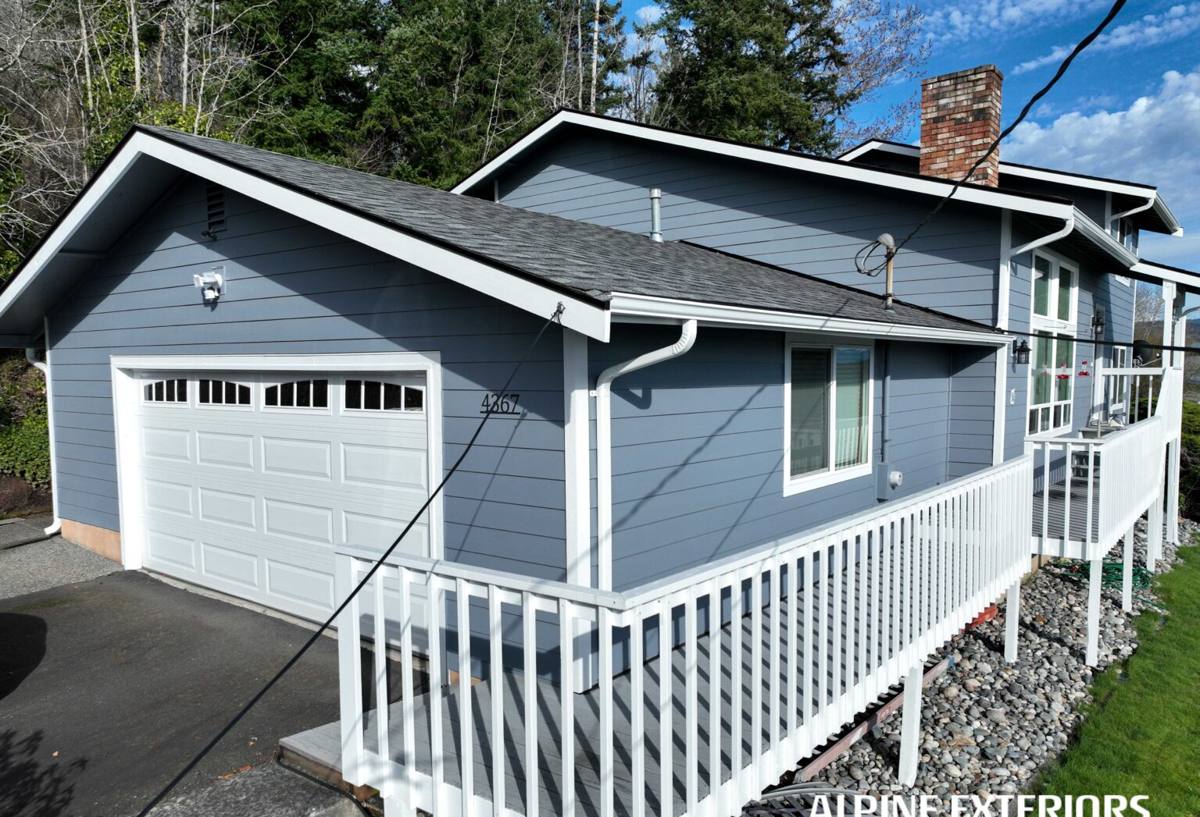
What Actually Counts as Storm Damage
Homeowners often assume storm damage means missing shingles you can see from the driveway. In practice, the damage that causes the most expensive problems is usually less obvious.
Wind Damage
Wind doesn't just tear shingles off — more often it lifts the sealant strip along the edge of a shingle without fully detaching it. That shingle looks fine from the ground but no longer seals against wind-driven rain, which is exactly the condition Bellingham's winter storms are good at finding.
Water Intrusion
Driving rain forced sideways by wind can work under flashing at chimneys, skylights, and roof-to-wall junctions even when the shingle field itself looks untouched. This is the damage that shows up weeks later as a ceiling stain, not the day of the storm.
Debris and Impact
Sunnyland's tree cover is an asset most of the year and a liability during a windstorm. Falling branches — even small ones — can crack shingles, dent metal flashing, or puncture underlayment in spots that aren't visible without getting on the roof.
Moss and Organic Buildup Made Worse by Storms
Heavy rain after a dry spell can wash moss and debris into valleys and gutters fast enough to cause localized backups. That backed-up water finds every weak seam a storm may have already loosened.
Signs a Sunnyland Home May Have Storm Damage
Not every sign requires an emergency call, but every item on this list is worth a professional look after a significant wind or rain event:
- Shingles that look curled, cracked, or slightly out of alignment compared to the rest of the roof plane
- Granules collecting in gutters or at downspout outlets after a storm
- Visible daylight or gaps around flashing at chimneys, vents, or skylights
- New or worsening ceiling stains, especially near exterior walls or chimneys
- Gutters pulling away from the fascia or sagging under debris weight
- Moss buildup that's noticeably thicker in valleys or on the north-facing slope
- Any branch strike, even one that seemed minor at the time
What a Correct Storm Repair Actually Involves
Inspection Before Anything Else
A correct repair starts with getting on the roof, not just looking from the ground with binoculars. That means checking the shingle field, all flashing points, the underlayment where it's exposed, and the condition of the decking underneath — especially near any spot with existing moss or past water staining, since that's where storm damage tends to compound existing weakness.
Matching Materials, Not Just Patching
Shingle color and profile change over the years, and a patch using the wrong shingle stands out and can also create a mismatched seal. A correct repair sources the closest reasonable match and integrates new shingles into the existing course pattern so the repair sheds water the way the rest of the roof does, not just the way it looks.
Flashing and Underlayment, Not Just the Visible Layer
Most repeat leaks after a "repair" trace back to flashing that was reused instead of replaced, or underlayment that wasn't extended far enough under adjacent courses. Given how much sideways rain this area gets, we treat flashing and underlayment as part of the repair scope by default, not an upsell.
Addressing Moss and Drainage in the Same Visit
If moss or clogged valleys contributed to the damage, a repair that ignores that just resets the clock on the same failure. We treat the contributing moss and clear the drainage path as part of a proper storm repair rather than treating it as a separate service call.
Repair, Patch, or Replace: How We Help Sunnyland Homeowners Decide
Not every storm-damaged roof needs the same response. The right call depends on the roof's age, how widespread the damage is, and what condition the roof was in before the storm.
| Situation | Typical Approach | What Drives the Decision |
|---|---|---|
| Isolated wind lift or a small area of missing shingles on a roof under 10 years old | Targeted repair, matched shingles | Localized damage, roof otherwise sound |
| Flashing failure at a chimney or skylight with interior staining | Flashing replacement, underlayment repair | Leak source, not general roof age |
| Storm damage on a roof already showing heavy moss or granule loss | Broader repair or partial re-roof of affected slope | Underlying wear compounding storm damage |
| Widespread wind damage across multiple slopes on an older roof | Full replacement usually more cost-effective than repeated repairs | Age, extent of damage, remaining roof life |
We'll always tell you honestly when a repair is the right call versus when you're better off putting that money toward a replacement instead. A repair that's really a stopgap on a roof near the end of its life isn't a favor to a homeowner, even if it's the cheaper invoice today.
Our Process for Storm Damage Calls in Sunnyland
1. Prompt Inspection
After a storm, we prioritize getting eyes on the roof quickly, especially if there's any sign of active leaking. A fast, thorough inspection is what keeps a small problem from becoming a larger one during the next rain.
2. Clear, Written Findings
You get a straightforward explanation of what we found, what's actually storm-related versus pre-existing wear, and photos documenting the damage — useful whether you're filing an insurance claim or just deciding how to move forward.
3. Scoped Repair, Done Right the First Time
We repair to the actual cause, not just the visible symptom — matching shingles, replacing flashing where it's compromised, and correcting drainage issues that contributed to the damage.
4. Cleanup and a Final Walkthrough
Debris and old materials are cleared from the property, gutters are checked, and we walk the repair with you so you know exactly what was done.
Why It Matters That We Already Work in Sunnyland
A crew that regularly works this neighborhood has already seen how its housing stock ages, which roof types are common, and how the tree canopy and marine exposure affect different parts of a property differently. That's not a marketing point — it's the difference between a repair that anticipates the next moss season and driving rain event, and one that only reacts to what's visible today.
Local familiarity also means faster response after a widespread storm, when every roofing crew in Whatcom County gets busy at once. Knowing the neighborhood's common roof pitches, access points, and typical construction ahead of time lets us move faster on the actual repair once we're on site.
Preventing the Next Storm From Doing the Same Damage
A good storm repair should also reduce your exposure next time. A few things make the biggest difference for homes in this area:
- Keeping gutters and valleys clear of debris and moss going into the fall storm season
- Addressing moss growth before it thickens enough to hold moisture against shingles
- Trimming back branches that overhang the roofline, where practical
- Having flashing and sealant checked periodically rather than only after visible damage appears
- Keeping an eye on attic ventilation, since poor ventilation accelerates moisture-related wear that makes storm damage worse
None of this eliminates storm risk entirely — nothing does in a climate like this one — but it meaningfully reduces how much damage a given storm actually causes.
If a recent storm has you wondering whether your Sunnyland roof came through it okay, we're glad to take a look. We offer free, no-pressure estimates and honest findings — including telling you when a repair isn't actually needed. Use the form below to get started.