 Bellingham
 Storm Season Hits Birchwood Roofs Harder Than Most People Realize
Birchwood sits close enough to Bellingham Bay that roofs here take on a mix of problems most inland homes never deal with. Salt-laden air off the water accelerates corrosion on flashing, fasteners, and any exposed metal. Driving rain off winter windstorms doesn't just fall straight down — it gets pushed sideways under shingle edges, into vents, and along ridge lines where a roof in a calmer climate would stay bone dry. And because this part of Whatcom County stays cool and damp for much of the year, moss and moisture-loving growth get a long runway to establish themselves and start lifting material that a storm can then peel back even further.
None of that means every Birchwood roof is in bad shape. It means storm damage here rarely shows up as one clean, obvious problem. A windstorm that pulls a few shingles loose is also usually the storm that drives water into seams that moss and salt air had already been quietly weakening for a year or two. Repairing storm damage correctly in this neighborhood means treating it as both an event and a symptom of ongoing exposure — not just patching what blew off.
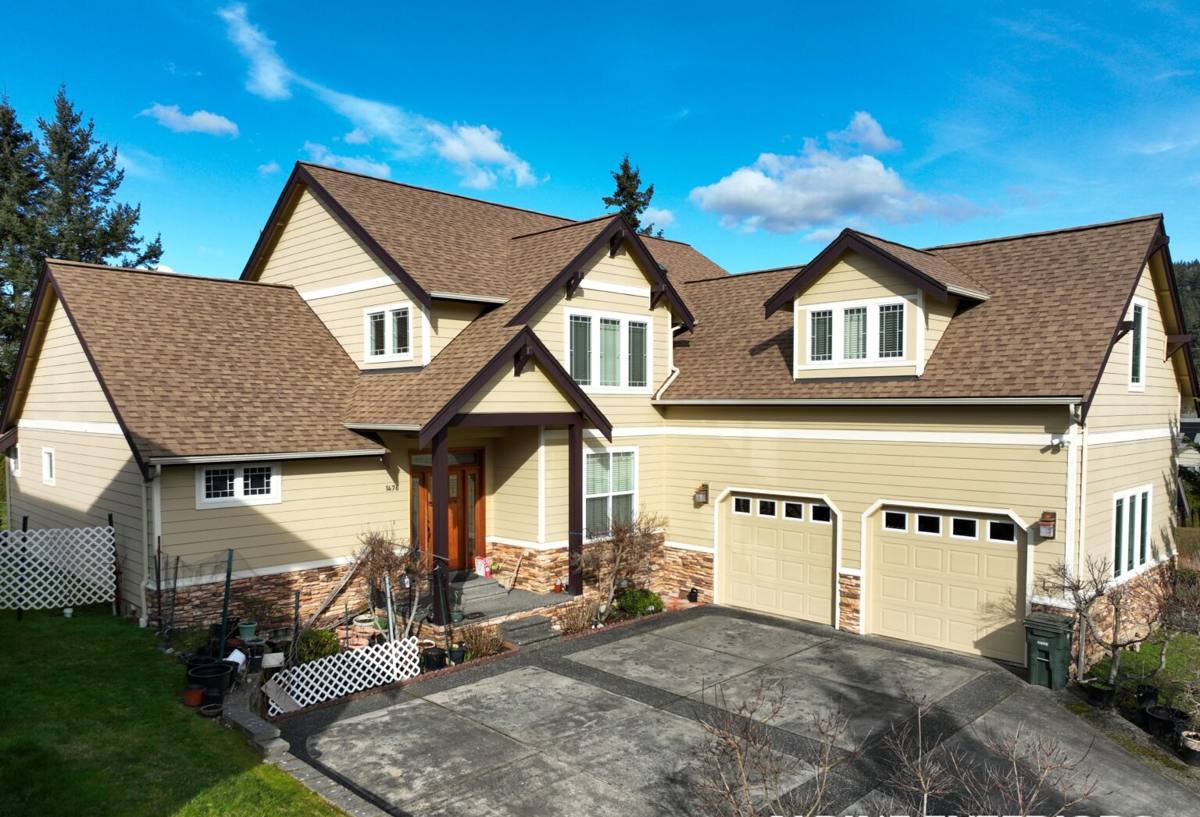
Signs Your Roof Took Storm Damage
Storm damage isn't always as obvious as missing shingles in the yard. After any significant windstorm or heavy rain event, it's worth checking for:
- Shingles that look lifted, curled, or creased even if none are fully missing
- Granules collecting in gutters or at the base of downspouts
- New or worsening water stains on ceilings or upper interior walls
- Damp insulation or musty smell in the attic after a storm
- Bent, loose, or missing flashing around chimneys, skylights, or roof-wall intersections
- Debris damage — branches, tree limbs, or blown debris that struck the roof surface
- Gutters pulled away from the fascia or clogged with storm debris and moss
- Soft or spongy spots when walking a low-slope section, which can mean water has already gotten under the surface
Any one of these is worth a look. Several at once usually means water has already found its way past the roof covering, even if nothing is visibly leaking yet.
What a Correct Storm Damage Repair Actually Involves
Inspection Before Anything Gets Fixed
A rushed repair after a storm usually means someone climbed up, found the obvious spot, and patched it. A correct repair starts with a full inspection of the roof plane — not just the area that's visibly damaged — because wind and driving rain rarely limit their damage to one tidy spot. That includes checking flashing, valleys, vent boots, and the underlayment where it's exposed, since a shingle repair over compromised underlayment just delays the next leak.
Temporary Protection First, When It's Needed
If a storm has left a roof actively exposed, the first job is stopping water intrusion, not aesthetics. That usually means a tarp or temporary seal on the damaged section, done properly so it doesn't create its own leak path, while a permanent repair is scheduled and materials are matched.
Fixing the Cause, Not Just the Symptom
If moss growth or trapped moisture contributed to the failure, a repair that only replaces the missing shingles will fail again in the next storm. That's why we address the underlying condition — clearing debris and moss buildup, checking ventilation, and confirming flashing and underlayment are sound — as part of the same repair, not as a separate upsell later.
Matching Materials Honestly
Shingle color and profile change from year to year, and a repair patch that doesn't match is both a cosmetic issue and sometimes a sign that the wrong material was used for the exposure the roof actually faces. We tell homeowners upfront when an exact match isn't realistic and what the honest options are — a nearby match, a slightly larger repair area to blend it in, or discussing whether the roof's age means a repair is really a stopgap.
Common Storm Damage Scenarios We See in Birchwood
| Damage Type | Typical Cause Here | What a Proper Fix Involves | Urgency |
|---|---|---|---|
| Lifted or missing shingles | Wind gusts catching an edge or a seam already loosened by age or moss | Replace affected shingles, check underlayment beneath them, reseal tabs | High — exposed decking soaks fast in driving rain |
| Granule loss / bald patches | Wind-driven rain and hail-like debris impact | Assess remaining shingle life; spot-repair or plan replacement of the affected section | Medium — accelerates aging but not always an active leak |
| Flashing separation | Wind flexing the roof deck plus corrosion from salt air | Re-secure or replace flashing, renew sealant, confirm proper overlap | High — flashing failures are a leading cause of hidden leaks |
| Moss-related lifting | Long damp season allowing moss to root under shingle edges | Careful moss removal, treatment, and repair of any shingles it lifted | Medium — worsens with every storm if untreated |
| Gutter and fascia damage | Wind load plus debris impact during storms | Reattach or replace gutter runs, check fascia for rot underneath | Medium to high depending on how water is currently draining |
| Debris impact (limbs, branches) | Trees near the property shedding limbs in high wind | Structural check of decking, not just surface shingles, before patching | High — impact damage can crack decking even when shingles look okay |
Repair or Replace? How We Help You Decide
Not every storm-damaged roof needs a repair, and not every one needs full replacement — but the honest answer depends on more than just what the storm did. We look at the age and remaining life of the roofing material, how many prior repairs are already on the roof, whether the damage is isolated or spread across multiple planes, and whether underlying decking or structure was affected. A five-year-old roof with a localized flashing failure almost always makes sense to repair. A roof that was already near the end of its service life before the storm, with damage spread across several areas, is a different conversation — and we'll tell you that plainly rather than stack repairs on a roof that's due for replacement anyway.
Storm Damage and Insurance Claims
Many storm-related roof repairs in this area do get covered under homeowners insurance, particularly wind and impact damage from a documented storm event. We're not a public adjuster and we don't promise coverage outcomes, but we do provide a clear, documented inspection and written scope of damage that you can bring to your insurer or adjuster. Getting an independent, honest assessment before or alongside the adjuster's visit tends to lead to a more accurate claim — and it protects you from either underestimating real damage or paying out of pocket for a repair that should have been covered.
Our Process, Start to Finish
- Call or request an estimate. Tell us what happened — the storm, what you noticed, when it started.
- On-site inspection. We walk the roof (or the affected sections) and check for damage beyond what's visible from the ground.
- Written scope and honest recommendation. You get a clear explanation of what's damaged, what needs to happen, and what it will cost — repair or replace, no pressure either direction.
- Temporary protection if needed. If the roof is actively exposed, we secure it before scheduling the full repair.
- The repair itself. Matched materials, proper flashing and underlayment work, and cleanup of the job site when it's done.
- Final walkthrough. We show you the completed work and explain anything you should keep an eye on going forward.
Why Local Experience in Birchwood Actually Matters
A roofing crew that mostly works dry, inland climates will treat a Birchwood storm repair like any other patch job. A crew that already works this neighborhood knows that salt air changes what fasteners and flashing hold up over time, that the moss season here is long enough to actively contribute to storm damage rather than just being a cosmetic nuisance, and that a single wind event on Bellingham Bay can drive rain sideways in a way that a textbook repair from a drier region won't account for. That local familiarity shows up in small decisions — how a flashing detail gets sealed, whether ventilation gets addressed alongside a shingle repair, how a temporary tarp is anchored so it survives the next gust — that add up to a repair that actually holds through the next storm instead of needing to be redone.
Get a Free, No-Pressure Estimate
If a recent storm has left your Birchwood roof with missing shingles, a slow leak, or damage you're not sure about, we're glad to take a look and give you a straight answer. Fill out the form below for a free estimate — no pressure, no obligation, just an honest assessment of what your roof actually needs.