 Bellingham
 Building a Deck That Actually Belongs on South Hill
South Hill sits up above downtown Bellingham with mature tree cover, older lots, and views that make an outdoor deck one of the best investments a homeowner up here can make. But this neighborhood also takes a specific kind of weather beating: marine air off Bellingham Bay, driving rain that comes in sideways for months at a time, and a moss season that starts early and doesn't let go. A deck built to a generic spec sheet will hold up fine somewhere dry. Up here, it needs to be built for this hill specifically.
We've worked on decks all over South Hill and the surrounding Bellingham neighborhoods long enough to know where the shortcuts show up first — usually at the ledger board, the fastener heads, and the spots where shade and tree litter keep a surface damp for days after everyone else's yard has dried out.
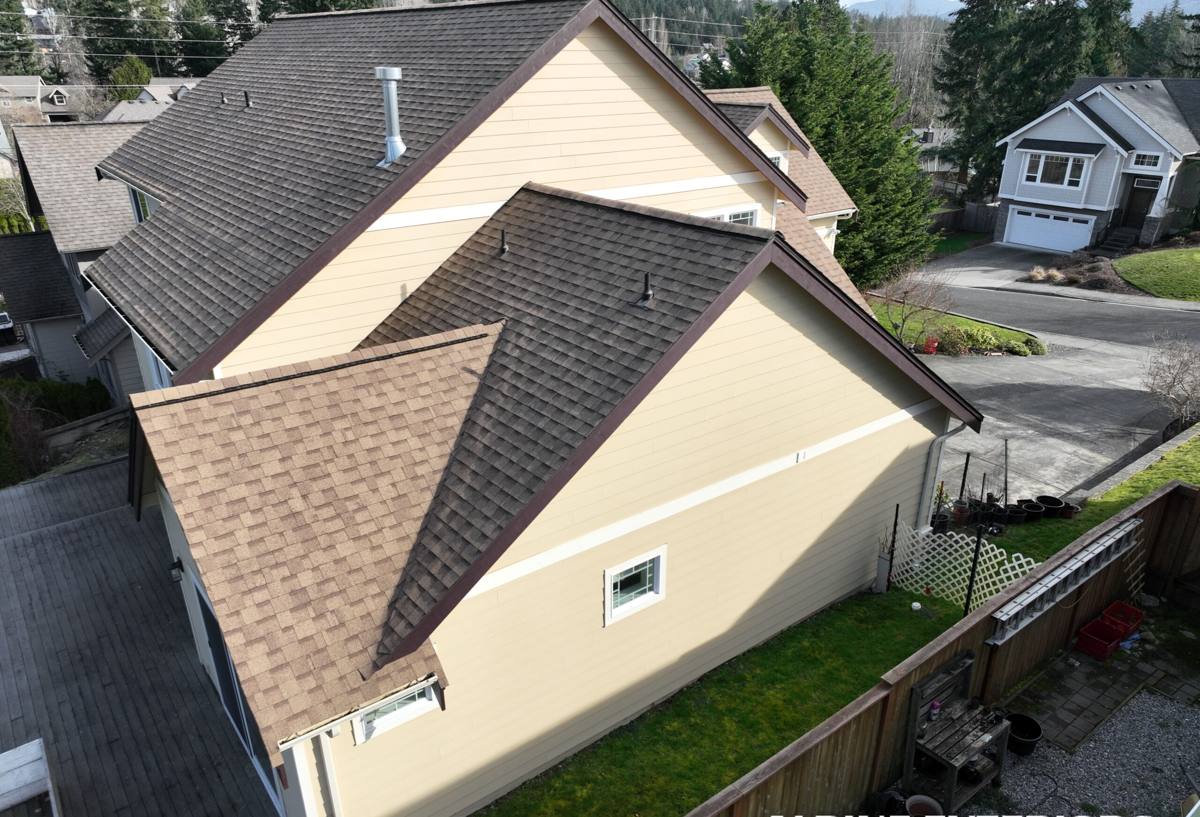
What Whatcom County's Climate Does to a Deck
Salt Air and Metal Fatigue
Bellingham's proximity to the bay means a steady low-level dose of salt in the air, even well up the hill. Salt accelerates corrosion in any fastener, bracket, or hanger that isn't rated for it. A deck built with standard interior-grade hardware will start showing rust streaks and weakened joints years before it should — often while the decking boards on top still look fine, which is exactly what makes it dangerous. The structure fails quietly underneath a deck that still looks good.
Driving Rain and Trapped Moisture
Whatcom County doesn't get occasional rain — it gets sustained, wind-driven rain for weeks at a stretch. That matters most where the deck meets the house. A ledger board that isn't flashed correctly will let water track behind the siding and into the rim joist, and by the time it shows up as a soft spot or a stain on an interior ceiling, the damage has usually been building for a season or two. Gaps between boards, drainage under the frame, and flashing details matter more here than in drier climates.
Moss, Shade, and Slow Drying
South Hill's tree canopy is part of what makes it a great place to live, but shaded lots dry out slowly, and slow-drying wood grows moss and algae. On a walking surface, that's not just cosmetic — it's a slip hazard, and it accelerates decay in any material that isn't built to shed water quickly. Deck orientation, board spacing, and material choice all affect how fast a surface dries after a wet week, and on a shaded South Hill lot that difference is significant.
Choosing the Right Decking Material for This Hill
There's no single "best" decking material — there's the right material for a given budget, sun exposure, and how much upkeep a homeowner actually wants to do. Here's how the common options hold up specifically under South Hill conditions:
| Material | How It Handles Our Climate | Maintenance | Rough Cost Position |
|---|---|---|---|
| Pressure-treated fir/hem-fir | Good if detailed correctly; needs real drainage and airflow underneath to avoid staying damp on shaded lots | Annual cleaning, periodic sealing | Lowest upfront |
| Cedar | Naturally rot- and insect-resistant, but still needs sealing to fight moss growth and UV graying in wet shade | Regular cleaning and re-sealing every 1–2 years | Mid-range |
| Composite decking | Doesn't absorb water or feed moss the way wood does; some boards can still get slick, so surface texture matters | Periodic washing, no sealing or staining | Higher upfront, lower long-term labor |
| PVC decking | Fully moisture-resistant; performs well in shade and salt air; least forgiving of poor substructure planning | Occasional washing | Highest upfront |
For a shaded, elevated South Hill lot, we usually steer homeowners toward whichever material fits their maintenance appetite and budget, but we're honest that wood — even good cedar — is going to ask more of the owner here than it would in a sunnier, drier part of the state. That's not a knock on wood; it's just what this particular climate demands of it.
What a Correctly Built Deck Involves
Footings and Framing
Footings need to sit below frost depth and bear on undisturbed soil — on hillside South Hill lots, that sometimes means dealing with slope, drainage, and soil that's wetter than it looks at the surface. Framing lumber should be rated for ground contact or exposed use where it's close to grade, and joist spacing should account for the decking material chosen, since composite and PVC boards often have different span requirements than wood.
Ledger Attachment and Flashing
This is the single most important detail on any deck attached to a house in a wet climate. The ledger board needs proper flashing that directs water out and away from the wall assembly, not just a bead of caulk. Done wrong, it's the number one cause of hidden rot behind a deck in a region like ours.
Fasteners and Hardware
Given the salt air here, we use corrosion-resistant, coated or stainless hardware rated for coastal exposure — joist hangers, structural screws, and post bases included. It costs more than standard hardware. It's also the difference between a deck that's still structurally sound in fifteen years and one that needs framing repairs in eight.
Drainage and Airflow Underneath
A deck built low to the ground with no airflow underneath traps moisture against the framing, especially in shade. Where grade and code allow, we build in enough clearance and, where needed, drainage systems to keep the underside of the deck from becoming a permanently damp environment.
Our Process on a South Hill Deck Project
- On-site assessment — we look at slope, shade, existing structure (for replacement or expansion projects), and how water currently moves across the lot.
- Design and material selection — sized to how the space will actually be used, with a material recommendation based on sun exposure and maintenance preference, not just budget.
- Permitting — we handle the permit application and inspections required for the project through the appropriate local jurisdiction.
- Structural build-out — footings, framing, ledger flashing, and hardware installed to hold up under sustained wet-weather exposure, not just pass a dry-day inspection.
- Decking and finish work — surface material installed with attention to drainage gaps and edge detailing that sheds water instead of holding it.
- Final walkthrough — we go over care and maintenance specific to the material installed, so the homeowner knows what upkeep actually looks like here.
Permits and Local Requirements
Most deck projects attached to a house, or built above a certain height, require a permit and inspection through the applicable local building department. Requirements can vary based on deck height, size, and whether it's attached to the structure, so we confirm the specifics for each project rather than assuming. Skipping this step is a common shortcut on owner-built or budget projects, and it can create real problems at resale when a deck shows up on a home inspection as unpermitted work.
Keeping a South Hill Deck in Good Shape
Whatever material is chosen, a little seasonal attention goes a long way in this climate. A basic yearly checklist:
- Clear leaves, needles, and debris from between boards before wet weather sets in — trapped organic matter is what feeds moss and holds moisture against wood.
- Check and clear any drainage paths or gaps underneath the deck so water isn't pooling against framing.
- Inspect fasteners and hardware yearly for early rust or corrosion, especially at the ledger and post bases.
- Wash composite or PVC decking periodically to prevent algae film, which gets slick in shaded, damp spots.
- Re-seal or re-stain wood decking on the schedule the product calls for — skipping a cycle in our climate shows up fast.
- Trim back overhanging branches where practical to improve sun and airflow across the deck surface.
Why a Crew That Already Works South Hill Makes a Difference
A deck built by someone unfamiliar with this specific hill — its shade patterns, its soil, its exposure to weather off the bay — tends to make the same predictable mistakes: undersized drainage, standard hardware instead of corrosion-resistant, and ledger flashing that's adequate for a drier climate but not this one. We build decks throughout Bellingham and Whatcom County, and the lessons from one South Hill lot generally apply to the next, because the conditions repeat: shade, slope, salt air, and rain that doesn't quit. That familiarity shows up in fewer callbacks and a deck that's still solid well past the point where a shortcut build would be showing problems.
If you're planning a new deck, replacing an aging one, or just want an honest read on whether your current deck's framing is holding up, we're happy to take a look. Reach out for a free, no-pressure estimate using the form below.