 Bellingham
 South Hill's Climate Is Rougher on Decks Than It Looks
South Hill sits up above the flats of Bellingham with tree cover, hillside grading, and a clear shot of weather rolling in off the bay. That combination is tougher on an outdoor deck than most homeowners expect. Whatcom County gets long stretches of steady, driving rain from fall through spring, and the salt air drifting up from Bellingham Bay adds a corrosive edge to anything metal — fasteners, brackets, railing hardware. Add in the shade from mature evergreens and big leaf maples that many South Hill lots are known for, and you get surfaces that stay damp far longer than they would in full sun. That's the recipe for a long moss season, and moss doesn't just grow on roofs — it takes hold on deck boards, stair treads, and anywhere water sits or shade lingers.
A deck built without that context in mind — generic framing, whatever boards were on sale, no real drainage plan — will look fine for a year or two and then start showing it: green film on the boards, soft spots where water pooled against the house, corroding fasteners bleeding rust streaks. Building for South Hill specifically means building for shade, slope, and moisture from day one, not treating it like a deck going up in a dry climate.
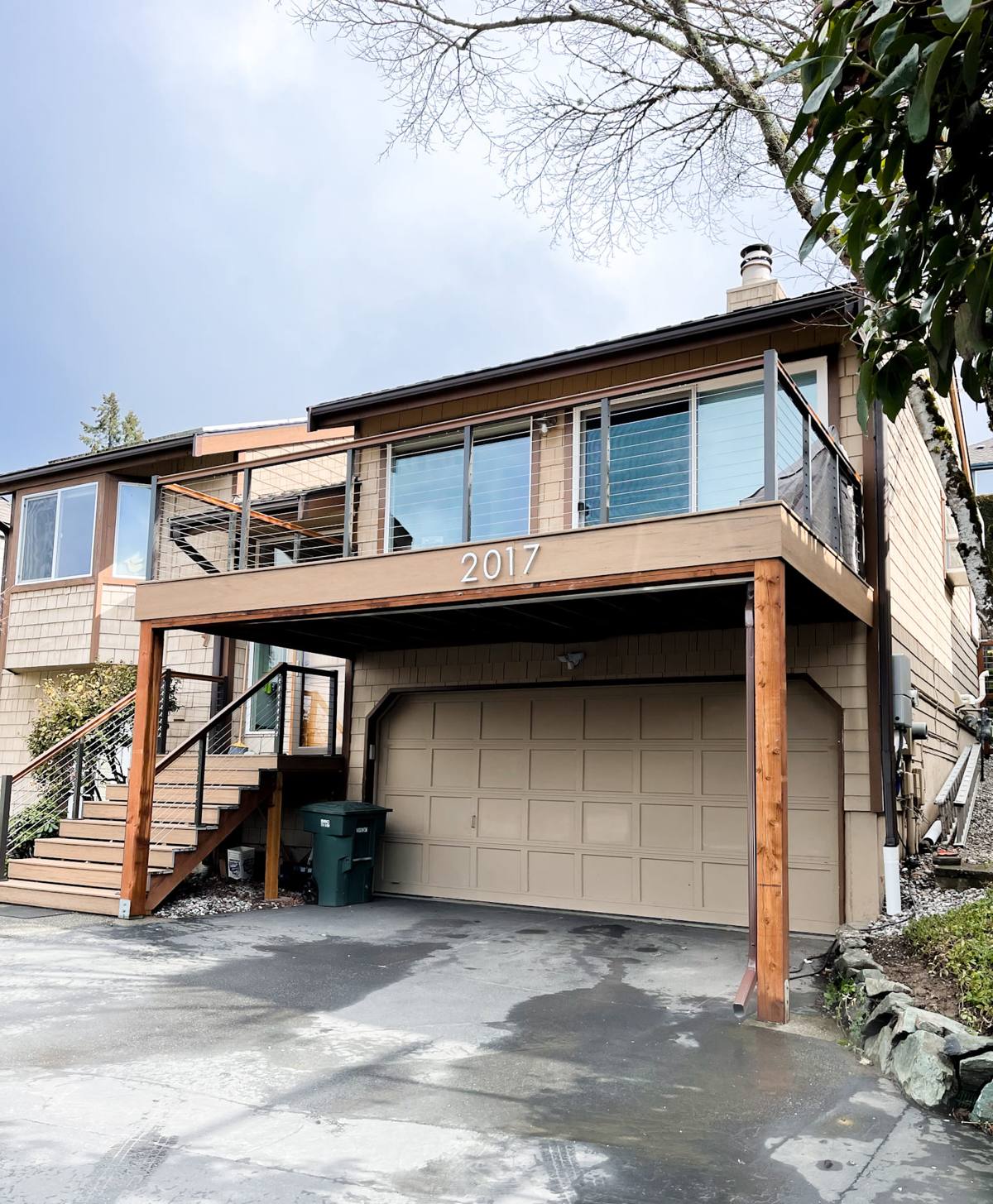
Why Composite Makes Sense Here — and Where It Doesn't Solve Everything
Composite decking earns its keep in a climate like this because it doesn't absorb water the way solid wood does, so it doesn't cup, splinter, or rot the same way. That matters when a deck sits under tree cover and stays wet for days after a storm. But composite isn't maintenance-free, and we tell customers that plainly. It can still grow surface mildew or moss film in shaded, low-airflow spots if it's not detailed right — the material resists rot, it doesn't repel every organism that wants to grow on a damp surface. The difference between a composite deck that stays clean-looking for fifteen years and one that greens up every fall usually comes down to installation details, not the brand of board.
| Factor | Traditional Wood | Composite Decking |
|---|---|---|
| Moisture absorption | Absorbs water, swells and shrinks seasonally | Minimal absorption, dimensionally stable when wet |
| Moss/algae resistance | Low — porous surface holds moisture and organic film | Higher, especially capped boards, but not immune in deep shade |
| Maintenance | Annual cleaning, periodic staining or sealing | Periodic washing, no staining or sealing required |
| Fastener/hardware exposure | Standard exterior fasteners, visible | Hidden fastener systems available, less surface corrosion staining |
| Typical lifespan (well-built) | 15-25 years with upkeep | 25-30+ years with manufacturer warranty |
| Upfront material cost | Lower | Higher |
What a Correctly Built Composite Deck Actually Involves
The Substructure Matters More Than the Boards
Most deck problems we get called out to inspect aren't a composite board failing — they're the framing underneath failing while the boards sit on top looking fine. In a climate that stays wet as long as ours does, we treat the substructure as the part that determines whether the whole deck lasts:
- Ledger board flashed correctly where the deck meets the house, with a drainage gap and proper counter-flashing — this is the single most common source of hidden rot on ledger-attached decks in this region
- Joist tape over all framing lumber so fasteners don't create a wicking point for water into the wood
- Pressure-treated or naturally rot-resistant framing lumber rated for ground contact where it's close to grade
- Positive slope away from the house so water sheds instead of pooling against the siding or foundation
- Hidden fastener systems where the board profile allows it, which reduces surface penetration points and the rust streaking that salt-air moisture accelerates on exposed screw heads
Footings on Sloped South Hill Lots
Because a lot of South Hill properties sit on grade changes rather than flat pads, footing depth and placement need to account for the slope, not just meet a minimum frost depth. We check existing soil drainage before we ever set a footing — a footing that's fine on a flat lot can end up sitting in a wet pocket on a hillside if the grading around it isn't accounted for.
Railings, Stairs, and Code on a Hillside Lot
Elevated decks on sloped South Hill properties almost always need guardrails, and the code requirements aren't optional details — they're safety minimums that also get checked at inspection. Guardrail height, baluster spacing that a small child can't pass through, and graspable handrail profiles on stairs are all spelled out in the building code Bellingham inspectors work from. We build to those specs as a baseline, not as an upsell, and we handle the permit submittal so the design is right before we ever start cutting lumber.
On a hillside lot, stair stringer layout also has to account for the actual slope of the yard rather than an assumed flat run — get that wrong and you end up with a bottom step that's a different height than the rest, which is both a tripping hazard and something an inspector will flag.
Choosing Boards for a Shaded, Damp Yard
Not every composite board performs the same way under tree cover. A few things we walk homeowners through before picking a product:
Capped vs. Uncapped Composite
Capped composite has a protective outer shell bonded to the core, which resists staining and moisture intrusion better than fully uncapped composite. For a shaded, moss-prone yard, that cap is worth the added cost — it's the difference between a board you can hose off once or twice a year and one that needs more aggressive cleaning to keep ahead of surface growth.
Color and Board Texture
Lighter, low-contrast board colors show pollen film, dirt, and early moss growth faster than mid-tone or streaked colors do. In heavily shaded South Hill yards, we usually steer people toward mid-tone colors and a texture with some grain relief — it hides the between-cleaning grime better and still looks sharp.
Board Spacing and Airflow
Gapping and ventilation underneath the deck matter as much as the board itself. Boards installed tight with poor underdeck airflow trap moisture against the bottom face, which is exactly where you don't want it sitting through a long, wet Whatcom County winter.
| Cost Factor | What Drives It |
|---|---|
| Board tier | Uncapped composite vs. capped composite vs. premium capped lines |
| Substructure condition | New framing vs. reusing/repairing an existing structure |
| Site grading | Flat pad vs. sloped lot requiring engineered footings |
| Railing style | Basic code-compliant railing vs. matching composite/aluminum railing systems |
| Size and layout | Simple rectangle vs. multi-level or wraparound designs |
| Permit scope | Deck height, attachment type, and whether stairs/railings trigger full plan review |
How We Approach a South Hill Composite Deck
The process is the same discipline on every job, but the details get tailored to the site:
- On-site assessment of the existing structure (if there is one), grading, drainage, and shade exposure — this tells us what the substructure and drainage plan actually need to be, not just what the finished deck will look like
- Design and material selection, walking through board tier, color, and railing options against the site's shade and moisture conditions
- Permit submittal to the City of Bellingham where required, so railing height, footing depth, and attachment method are approved before construction starts
- Demolition of the old structure if replacing, with a check of the ledger area and any hidden rot at the house connection point
- Framing with flashed ledger, joist tape, and correct drainage slope, followed by composite board and railing installation
- Final walkthrough covering fastening, railing security, and basic care so the deck starts its life clean and the homeowner knows what upkeep (if any) it actually needs
Why Local Experience on South Hill Actually Matters
A deck crew that's worked South Hill specifically already knows the pattern: which streets sit in heavier shade, how the grading typically runs on the sloped lots, and what the City of Bellingham inspectors are going to look for on a guardrail or stair detail. That's not a small thing — it means fewer surprises mid-project, a permit that goes through cleanly, and a drainage plan that's designed for the actual site instead of a generic assumption. It also means we've seen what happens to decks in this specific microclimate over several seasons, which shapes which boards, fasteners, and flashing details we actually recommend versus which ones look fine in a showroom but underperform once the moss season sets in.
Keeping a Composite Deck Looking Good Through the Wet Season
Composite cuts down maintenance significantly, but "low-maintenance" isn't "no-maintenance," especially in a shaded, damp yard. A simple seasonal routine keeps most decks looking new:
- Sweep debris (needles, leaves, maple seed pods) off the deck regularly — organic debris sitting on the surface is what feeds moss and mildew growth
- Hose down or soft-wash the deck surface once or twice a year, more often in heavily shaded sections
- Keep gutters and downspouts near the deck clear so runoff isn't dumping extra water onto the deck surface or the ledger connection
- Trim back overhanging branches where practical to cut down on shade and debris load
- Check railing hardware annually for corrosion, especially on decks closer to the water where salt air exposure is higher
- Address any standing water or slow-draining spots early — they're usually a sign of a slope or drainage issue, not something a cleaning will fix
If you're planning a new composite deck or replacing one that's showing its age on your South Hill property, we're happy to come take a look and walk you through what your specific site needs — no pressure, no obligation. Fill out the form below for a free estimate.