 Bellingham
 Why Silver Beach Homes Need Windows Built for This Spot
Silver Beach sits close enough to the water that salt air is a daily fact of life, not an occasional nuisance. Add Bellingham's long wet season, wind-driven rain off Bellingham Bay, and the shade and moisture that fuel a stubborn moss season on north-facing walls and rooflines, and you've got a climate that is genuinely hard on exterior windows. Frames, seals, and hardware here take a different kind of beating than they would twenty miles inland.
Salt-laden air accelerates corrosion on unprotected metal hardware — hinges, locks, balance systems — and it breaks down lesser sealants faster than manufacturers' published lifespans suggest. Driving rain finds any gap in flashing or caulking and pushes water sideways and upward, not just down, which means installation detailing matters more here than in a calmer climate. And the same damp, shaded conditions that grow moss on a roof will grow mildew in a window sill or a poorly sealed jamb if water is getting in and not drying out.
None of this means custom windows are a losing battle in Silver Beach — it means the material choices, hardware, and installation details need to match the environment instead of fighting it for twenty years.
What "Custom" Actually Means for a Window Job
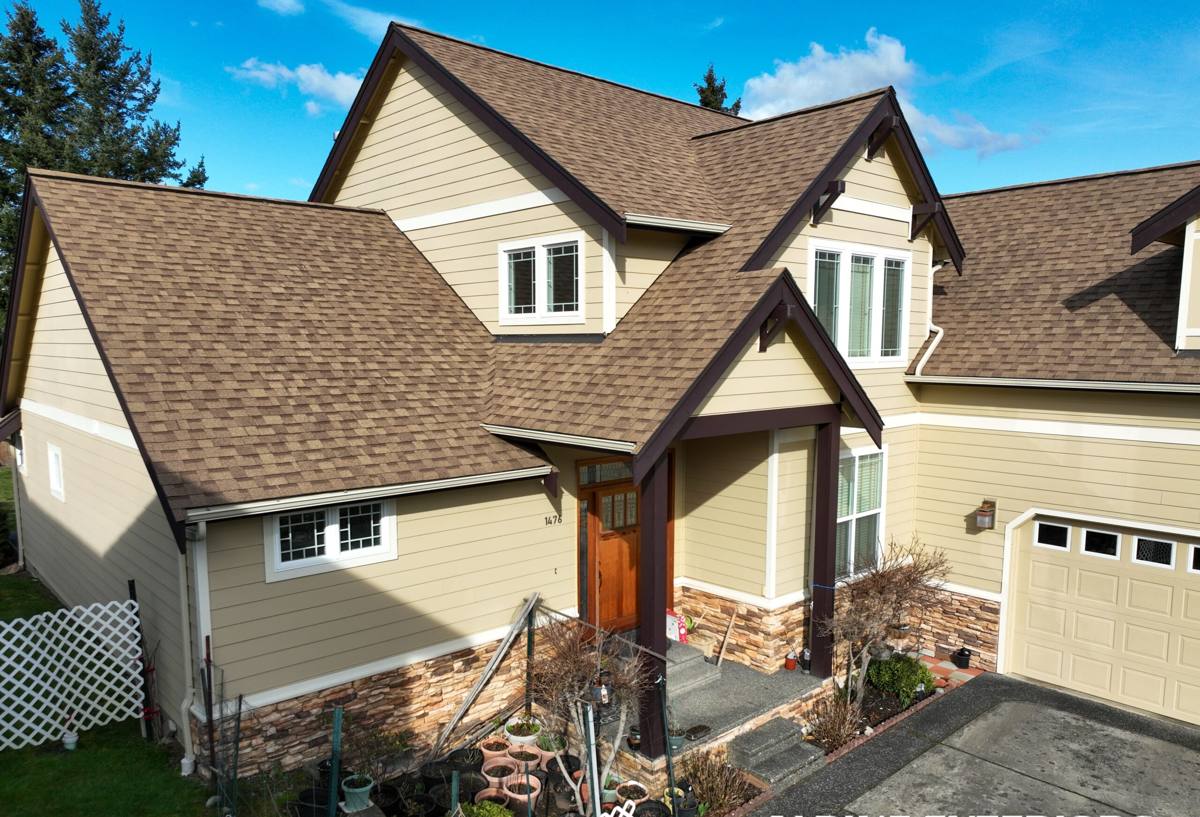
"Custom windows" isn't a marketing phrase — it's a description of how the work actually gets done on an older or irregular home. Few houses in this neighborhood have perfectly standard rough openings, especially if there's been a past remodel, settling, or the home predates modern stock sizing. Custom windows are built to the exact opening (or built to a new opening you want), rather than forcing a stock size to fit with shims, filler panels, and extra trim that become their own leak points down the road.
Replacement vs. New Construction Windows
There are two different approaches, and picking the wrong one for the situation is one of the most common mistakes we see corrected on older homes:
- Replacement (insert) windows fit inside the existing frame, keeping the original exterior trim and siding undisturbed. Faster, less invasive, and appropriate when the existing frame is sound.
- New construction windows include a nailing flange and require removing the surrounding siding and trim down to the sheathing. This is the right call when the existing frame is rotted, undersized, out of square, or when you're resizing or relocating an opening.
On a salt-air, high-rain site like Silver Beach, we lean toward new construction detailing more often than a drier inland neighborhood would need, simply because it lets us rebuild the flashing and water management from scratch instead of trusting decades-old materials underneath.
Material and Frame Options Worth Comparing
There's no single "best" window material — there's a best fit for your home's exposure, your budget, and how much upkeep you're willing to do. Here's how the common options actually compare for a coastal-adjacent Whatcom County home:
| Material | Salt-air performance | Maintenance | Typical use case |
|---|---|---|---|
| Vinyl | Good — won't corrode or rot; UV-stable frames hold color | Low — occasional wash, no repainting | Best value for straightforward replacements |
| Fiberglass | Excellent — dimensionally stable, resists moisture and salt exposure | Low — very durable finish, minimal upkeep | Best long-term choice for direct wind/salt exposure |
| Wood-clad | Fair to good — depends heavily on cladding quality and joint sealing | Moderate — cladding protects the wood, but seams need monitoring | When interior wood aesthetics matter most |
| Aluminum | Poor unless marine-grade and properly finished | Moderate — prone to corrosion near saltwater without upgraded coatings | Rarely our first recommendation this close to the water |
We don't push one brand or material on every job. What we will tell you honestly is which option fits your home's exposure, and where a cheaper frame material is likely to cost you more in ten years through hardware corrosion or seal failure than it saved you up front.
Hardware and Glass Considerations
Hardware quality matters as much as frame material in this environment. Look for corrosion-resistant hinges, locks, and balance hardware — plain steel components will show rust streaks on a stucco or light-colored siding home within a few seasons here. On glass, a good low-E, argon-filled dual-pane unit handles Bellingham's temperature swings well; triple-pane is worth discussing for rooms with heavy west or water-facing exposure where wind-driven rain and cold snaps hit hardest.
Signs Your Current Windows Are Losing the Battle
Homeowners often live with early warning signs for years before calling anyone, partly because the damage is gradual. Here's what tends to show up first on homes near the water:
- Fogging or a permanent haze between double-pane glass — the seal has failed and the gas fill is gone
- Soft or discolored wood at the sill or lower corners of the frame
- Visible rust streaking below hinges, locks, or hardware
- Difficulty opening, closing, or locking that wasn't there a year or two ago
- A musty smell or visible mildew on the interior sill, especially on north- or shade-facing rooms
- Noticeable drafts or a cold spot near the window even with it fully closed
- Peeling or bubbling paint on the interior or exterior trim around the frame
Any one of these on its own might just need a repair. Several together, especially on an older window, usually means the frame or seal system has reached the end of its useful life.
What a Correct Installation Actually Involves
The window unit itself is maybe half the job. The other half — the part you can't see once trim goes back on — is what actually determines whether the installation holds up to driving rain and salt air for the next couple of decades.
Water Management, Not Just Caulk
A correct installation builds a layered water management system around the opening: a sloped sill pan to direct any intruding water back out, self-adhered flashing tape integrated with the home's weather-resistant barrier in the correct shingle-lap order (so water always sheds downward and outward, never into the wall cavity), and head flashing above the window to break the path of driving rain. Caulk and sealant are the last line of defense, not the only one — a job that relies on caulk alone is the kind of install that fails quietly over a few winters.
Fit, Shim, and Fastening
The window needs to sit plumb, level, and square in the opening, shimmed at the correct points so the frame doesn't bow under fastening pressure — a racked frame won't operate smoothly and won't seal evenly for its whole service life. Fasteners go in per the manufacturer's schedule, not "close enough," because manufacturer warranties are frequently tied to installation meeting their published specs.
Insulation Without Overpacking
The gap between the window frame and the rough opening gets insulated with a low-expansion foam or backer rod and sealant designed for that gap — not packed tight, which can bow the frame and cause operational problems.
Our Process, Start to Finish
- On-site assessment — we look at the existing openings, exposure to wind and rain, current frame condition, and talk through what you actually want out of the windows (energy performance, sightlines, ease of operation, maintenance level).
- Measurement and product selection — exact measurements are taken for custom-built units; we walk through material and glass options against your budget and exposure.
- Written estimate — clear scope, materials, and price before anything is ordered.
- Removal and prep — old units come out carefully; we inspect the opening, sheathing, and existing flashing for hidden rot or water damage before anything new goes in.
- Flashing and installation — full water-management detailing as described above, then the window is set, shimmed, and fastened to spec.
- Insulation, trim, and sealing — interior and exterior finish work completed to match your home.
- Walkthrough and cleanup — we check operation of every window with you and clear the site.
Cost Factors to Expect
Every quote is specific to your home, but the price of a custom window job is driven by a consistent set of factors. Knowing them upfront makes it easier to compare estimates apples-to-apples:
| Factor | Why it moves the price |
|---|---|
| Replacement vs. new construction | New construction involves more demolition, flashing rebuild, and trim work |
| Frame material | Fiberglass and wood-clad typically cost more than vinyl |
| Glass package | Triple-pane, upgraded low-E coatings, and specialty glass add cost |
| Opening condition | Rot or structural repair found once old windows come out adds labor |
| Size and configuration | Oversized units, custom shapes, or grid patterns cost more than standard rectangles |
| Number of openings | Whole-house jobs generally have a better per-window cost than one-off replacements |
Energy Performance and Everyday Comfort
Beyond keeping water out, a well-fitted, properly glazed window makes a real difference in comfort and heating costs through Bellingham's damp winters. A tight-sealing frame with a good low-E, gas-filled glass unit cuts down on the cold-radiating feeling you get standing near an old single-pane or failed-seal window, and it reduces condensation on the interior glass — which matters directly for moss and mildew prevention, since interior condensation dripping onto sills is one more moisture source feeding the same problem the exterior climate already creates.
Maintenance in a Salt-Air Environment
Even a well-installed window benefits from a little seasonal attention here:
- Rinse frames and glass periodically to clear salt residue, especially on water-facing elevations
- Check and lubricate hardware annually if it's metal and exposed
- Inspect exterior caulking each fall before the wet season sets in, and touch up any cracked or separated beads
- Keep gutters and downspouts clear so roof runoff isn't sheeting down across window heads
- Watch for early moss or algae growth on north-facing trim and clean it before it holds moisture against the frame
Why Local Experience in Silver Beach Matters
A contractor who mostly works dry, inland projects can still install a window competently in a showroom sense — square, plumb, functional. What local experience adds is knowing which details actually matter for a specific block's wind exposure, which flashing sequence holds up against driving rain coming off the bay, and which material choices are worth the extra cost here versus where they'd be overkill somewhere drier. We work in Bellingham and across Whatcom County regularly, which means we've seen how different approaches actually perform after a few Pacific Northwest winters, not just how they look on installation day.
If you're weighing whether your current windows need repair, replacement, or just better maintenance, we're glad to take a look and give you an honest read — no pressure, no upsell script. Reach out for a free estimate and we'll walk your home's specific exposure with you before recommending anything.