 Bellingham
 Siding Replacement Built for Sudden Valley's Conditions
Sudden Valley sits in a pocket of Whatcom County that behaves differently than a lot of the rest of the Bellingham area. Homes here are tucked into mature tree cover, close to Lake Whatcom, often shaded for large portions of the day, and set on lots where wind-driven rain and standing moisture linger longer than they would on an open, sun-exposed street. That combination is hard on exterior siding, no matter what it's made of. Salt-laden marine air off the Sound, long stretches of driving rain through fall and winter, and a moss and algae season that can run most of the year all chip away at a home's exterior a little at a time.
This page is specifically about siding replacement in Sudden Valley — not a repaint, not a patch job, but tearing off failing siding and putting on a system that's actually built for this environment. If you're trying to figure out whether your home needs it, what a correct job looks like, and what to expect from a crew that works this neighborhood regularly, this covers it.
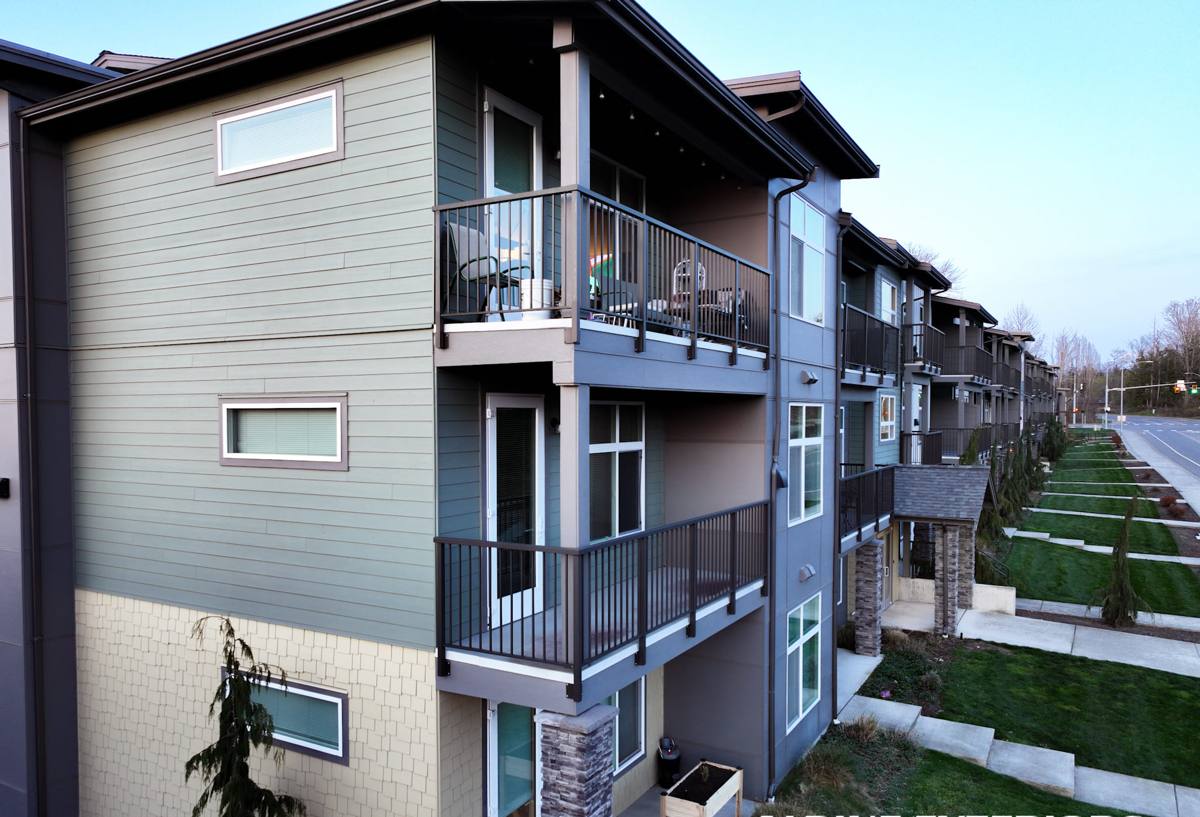
Why This Climate Wears Siding Down Faster Than Homeowners Expect
Most siding failure in this part of Washington isn't dramatic — it's slow and cumulative. A few specific local factors drive it:
- Shade and moisture retention: Tree-covered lots around Lake Whatcom dry out slower after rain. Siding that stays damp longer is siding that's more prone to swelling, delamination, or rot at seams and butt joints.
- Moss and algae growth: Whatcom County's mild, wet stretch of the year gives moss and algae a long runway. On porous or textured surfaces, that growth holds moisture directly against the material.
- Driving rain and wind exposure: Storms coming off the water push rain sideways into wall assemblies, not just straight down. Siding and flashing details that only handle vertical rain well start to fail here.
- Salt air: Even inland from the immediate waterfront, salt-laden air corrodes fasteners, trim metal, and paint finishes faster than it would in a dry inland climate.
None of this means siding here is doomed — it means the material and the installation both have to be matched to the conditions, not just picked off a shelf because it's the cheapest option at the yard.
Signs a Sudden Valley Home Needs Siding Replacement, Not Just Repair
Not every siding problem calls for a full tear-off. But there's a point where patching becomes false economy. Look for:
- Soft, spongy, or crumbling spots when you press on the siding, especially near the bottom courses and around windows
- Persistent moss or algae staining that comes back within weeks of cleaning
- Paint that's failing in sheets rather than just fading, or that won't hold a new coat
- Visible gaps, warping, or cupping boards, particularly on shaded, north-facing, or tree-adjacent walls
- Soft trim or sheathing discovered when a board is pulled — a sign moisture has already gotten behind the siding
- Rising energy bills with no other explanation, which can point to a compromised weather barrier
If you're seeing two or more of these, it's worth having someone look at the wall assembly itself, not just the visible siding — because by the time siding shows damage, the water has often already been working on what's underneath it for a while.
What a Correct Siding Replacement Job Actually Involves
Tear-Off and Inspection
A proper job starts with full removal of the old siding, not siding-over-siding. That's the only way to actually see the sheathing, framing, and existing moisture barrier underneath. In a shaded, wet-prone neighborhood like Sudden Valley, this step matters more than in drier areas — hidden rot doesn't announce itself from the outside, and it's common to find soft sheathing or compromised framing at butt joints, window corners, and low wall sections that looked fine from the street.
Repairing What's Underneath
Any soft or rotted sheathing and framing gets cut out and replaced before anything new goes on. Covering damaged substrate with new siding just hides the problem and guarantees it comes back, usually worse and more expensive to fix later.
Weather-Resistive Barrier and Flashing
A correctly installed weather-resistive barrier, properly lapped and sealed, is what actually keeps wind-driven rain out of the wall assembly — the siding itself is the second line of defense, not the only one. Flashing at windows, doors, roof-to-wall intersections, and any penetration needs to be installed to shed water down and out, not trap it. This is where a lot of lower-bid jobs cut corners, and it's exactly the detail that matters most in a driving-rain climate.
Installation to Manufacturer Spec
Fastener type, spacing, clearance from grade and roof lines, caulking at joints, and butt-joint treatment all have to follow the manufacturer's installation instructions to keep the warranty valid and the assembly performing as designed. Fiber cement in particular is unforgiving of shortcuts here — improper fastening or clearance is one of the most common causes of premature failure, and it's an installation error, not a product flaw.
Finish and Detail Work
Trim, corners, and caulking get finished to shed water at every joint. On a shaded lot, we also pay attention to ground clearance and any spots where siding sits close to landscaping or hardscape, since those are the areas most likely to stay damp and grow moss first.
Why We Only Install James Hardie Fiber Cement
We standardized on James Hardie fiber cement siding and don't install vinyl, LP SmartSide, Cemplank, Allura, primed spruce, or cedar. That's a deliberate call, not a sales pitch, and it's worth explaining honestly rather than just asserting it.
Vinyl is inexpensive and low-maintenance, but it's a thin plastic product that can warp in heat, crack in cold, and simply doesn't hold up structurally the way fiber cement does over decades. Wood products like cedar and primed spruce have real appeal — the look, the material — but wood is organic, and in a climate with this much sustained moisture and shade, it's fighting rot, moss, and repainting cycles from day one. Engineered wood products like LP SmartSide use resin-treated wood strands, which perform better than raw wood but are still wood-based and still moisture-sensitive at cut edges and joints if installation isn't precise. Other fiber cement brands like Cemplank and Allura are legitimate products in the same category as Hardie, but we've standardized on one system so our crews install it the same correct way every time, with one warranty structure and one set of installation specs to master rather than spreading expertise thin across several product lines.
James Hardie fiber cement is non-combustible, dimensionally stable, and doesn't feed moss and algae growth the way wood-based products can. The ColorPlus factory finish is baked on under controlled conditions rather than field-applied, which matters a lot in a climate where a field-painted finish is fighting rain within days of going up. Hardie's HZ product lines are engineered for specific climate zones, and the Pacific Northwest zone rating accounts for exactly the moisture and temperature swings Whatcom County sees. The warranty is transferable to a future homeowner, which matters if you ever sell.
Comparing Siding Options for a Sudden Valley Home
| Material | Moisture/Moss Resistance | Typical Lifespan | Maintenance Burden |
|---|---|---|---|
| James Hardie fiber cement | High — non-combustible, dimensionally stable | 30+ years with proper install | Low — factory finish, occasional wash |
| Vinyl | Doesn't rot, but can trap moisture behind panels | 15-25 years | Low, but prone to cracking/warping over time |
| Cedar | Low in shaded, wet conditions without diligent upkeep | 15-30 years, highly upkeep-dependent | High — regular staining/sealing |
| LP SmartSide (engineered wood) | Moderate — sensitive at cut edges/joints | 20-30 years with careful maintenance | Moderate — periodic repainting |
| Other fiber cement (Cemplank, Allura) | High — similar category to Hardie | 25-30+ years | Low |
This isn't a knock on every other product in that table — it's a reflection of the trade-offs we weighed and why we settled on installing one system correctly rather than several systems adequately.
How Our Process Works, Start to Finish
- Free on-site assessment: We walk the exterior, check for soft spots, moisture damage, and problem areas specific to how your lot sits relative to shade and drainage.
- Written estimate: A clear scope and price — no pressure, no upsell tactics.
- Tear-off and sheathing inspection: Old siding comes off, and we show you what we find underneath before closing anything back up.
- Repairs as needed: Any compromised sheathing or framing gets addressed before new siding goes on.
- Weather barrier and flashing installation: This is the layer that actually keeps water out long-term.
- Hardie installation to spec: Fastening, clearances, and joint treatment done to manufacturer requirements.
- Final walkthrough and cleanup: We review the finished work with you and clear the site.
Why a Crew That Already Works Sudden Valley Matters
A neighborhood like this has its own quirks — private road access, HOA or community guidelines that may apply to exterior work, tree-heavy lots that affect staging and cleanup, and homes where shade patterns and moisture behavior vary a lot from one side of the house to the other. A crew that's already worked in the community knows how to plan around those things instead of learning them for the first time on your job. It also means fewer surprises on timeline, easier coordination if the community requires any notice for contractor access, and a better sense of which parts of a given lot are most at risk for the rot and moss issues that drive most replacement calls out here.
Questions Worth Asking Any Contractor Before You Hire
- Will you fully tear off the old siding, or install over it?
- What happens if you find rotted sheathing — is that priced separately or included?
- Are you a certified James Hardie installer, and do you follow their published fastening and clearance specs?
- What weather-resistive barrier and flashing details do you use at windows and roof lines?
- Is the manufacturer's warranty transferable, and does your workmanship come with its own warranty?
- Can you walk me through what you'll do differently on a shaded, tree-covered lot versus an open one?
If a contractor can't give straight answers to those, that's worth noticing before you sign anything.
If you're seeing moss buildup, soft siding, or paint that won't hold on your Sudden Valley home, we're happy to take a look and give you an honest assessment — no pressure, no obligation. Use the form below to request a free estimate.