 Bellingham
 Siding Replacement in Sehome: A Neighborhood With Its Own Climate Demands
Sehome sits close enough to Bellingham Bay to catch salt-laden air off the water, and close enough to Whatcom County's tree cover to stay shaded and damp for long stretches of the year. That combination — salt exposure plus persistent moisture plus limited direct sun on many lots — is a harder environment for exterior siding than most homeowners realize until they're dealing with paint failure, soft trim, or streaks of green moss creeping up a north-facing wall. A siding replacement here isn't a cosmetic project. It's a decision about what material and installation method will actually hold up to the specific conditions this neighborhood produces year after year.
This page is about that one job, in this one neighborhood: what Sehome homes need from a siding replacement, what a correct job looks like, and why the crew doing the work matters as much as the material going on the wall.
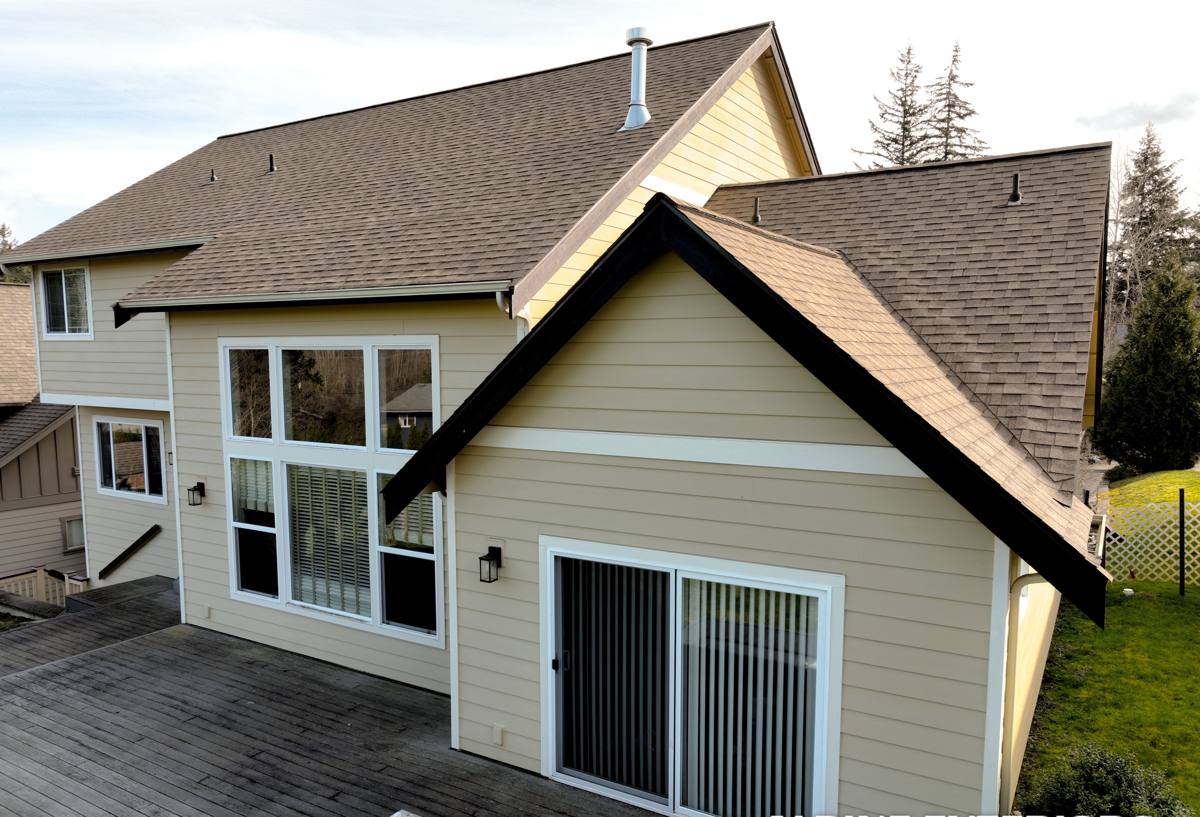
What Bellingham's Climate Actually Does to Siding
Whatcom County doesn't get extreme weather in the dramatic sense — no hurricanes, no hard freezes most winters — but it delivers something arguably tougher on siding: consistency. Rain falls often and lightly, driven sideways by wind off the water more than homeowners in drier climates expect. That means siding here isn't just shedding water that falls straight down; it's fighting water that gets pushed up and under laps, into seams, and behind poorly flashed trim.
Salt Air
Proximity to Bellingham Bay means airborne salt settles on exterior surfaces even on homes that aren't waterfront. Salt is corrosive to fasteners and hardware, and it accelerates the breakdown of paint films and lower-grade composite materials. Over years, that shows up as premature chalking, fastener staining, and finishes that fail faster than the same product would in an inland climate.
Driving Rain
Wind-driven rain is the single biggest stress test for a siding system's water management. It's not about whether a product is "waterproof" — almost none are fully waterproof. It's about whether the siding, the flashing behind it, and the weather-resistive barrier underneath it are installed to actually drain and dry. Products and installations that look fine in a showroom often fail specifically under driving rain because that's the condition their design assumptions didn't account for.
Moss and Shade
Sehome's mature trees and hillside terrain mean plenty of homes get partial shade most of the day, especially on north and east elevations. Shade plus regular moisture is exactly what moss and algae need to establish. Once organic growth gets a foothold on a siding surface, it holds moisture against the substrate longer, which speeds up rot in wood-based products and accelerates coating failure on painted surfaces.
Signs a Sehome Home Needs Siding Replacement — Not Just a Patch
Not every siding problem calls for full replacement. But in this climate, certain signs mean the damage is likely deeper than what's visible, and patching will just delay a bigger repair.
- Soft or spongy spots when you press on the siding, especially near the bottom courses or below windows
- Visible bubbling, peeling, or chalking paint that keeps coming back within a year or two of repainting
- Persistent moss or algae streaking that returns quickly after cleaning
- Warping, cupping, or delamination in the siding panels themselves
- Gaps opening up at seams, corners, or trim boards
- Musty smell or visible staining on interior walls that back up to exterior siding
- Siding that's original to a home built more than 20-25 years ago with wood-based or older composite products
If you're seeing two or more of these at once, that's usually a sign the water-management layer behind the siding has been compromised for a while, not just that the surface needs a fresh coat of paint.
What a Correct Siding Replacement Actually Involves
Siding replacement is often sold as a cosmetic upgrade, but the work that actually protects a house happens in layers most people never see once the job is done.
Tear-Off and Inspection
Removing the old siding is also the only chance to inspect the sheathing underneath for rot, delamination, or prior water damage — particularly important on Sehome homes with mature landscaping that's kept walls shaded and damp for years. Any compromised sheathing needs to be replaced before new siding goes up, not covered over.
Weather-Resistive Barrier and Flashing
This is the layer that actually stops driving rain from reaching the wall assembly. Housewrap needs to be installed and lapped correctly, and flashing at windows, doors, and any wall penetrations needs to shed water down and out — not trap it. This step matters more in a wind-driven rain climate than almost anything else in the job.
Rainscreen or Drainage Gap
A small air gap behind the siding lets any moisture that does get past the outer layer drain and dry instead of sitting against the wall. In a climate with Bellingham's rainfall pattern and shaded, slow-drying lots, this detail is worth insisting on rather than treating as optional.
Fastening and Installation Spec
Fiber cement siding has manufacturer-specified nailing patterns, clearances from grade, and gapping requirements at seams. Installed off-spec, even the best material on the market will trap water or crack prematurely. This is where the installer matters as much as the product.
Trim, Caulking, and Finish Details
Corners, trim boards, and caulk joints are where most callback problems originate. Factory-finished products reduce this risk somewhat because the color coat is cured under controlled conditions rather than field-applied, but joints and cut edges still need to be sealed correctly on site.
Why We Install Only James Hardie Fiber Cement
We install James Hardie siding exclusively — not vinyl, not LP SmartSide, not Cemplank, not Allura, not primed spruce or cedar. That's a deliberate standard, not a limitation of what we're capable of installing.
Vinyl siding is affordable and low-maintenance in mild climates, but it's a thin plastic product that can warp, crack in cold snaps, and fade under UV exposure, and it doesn't hold paint if a homeowner ever wants to change the color. In a coastal climate with real temperature swings and salt exposure, we've seen it age faster than homeowners expect for the money they spent.
Engineered wood products like LP SmartSide use treated wood strand technology that's genuinely improved over older wood siding, but it's still a wood-based product at its core — meaning it's more sensitive to sustained moisture exposure than fiber cement, and cut edges and seams need diligent sealing to keep water out over the long run. In a shaded, moss-prone neighborhood like Sehome, that's a maintenance burden we'd rather not put on a homeowner.
Cedar and primed spruce require the most ongoing maintenance of any option — regular refinishing, vigilant caulking, and real vulnerability to the rot and moss growth that Bellingham's climate encourages. They can look excellent, but the upkeep cost over 15-20 years is significant and often underestimated at the time of installation.
James Hardie fiber cement is non-combustible, dimensionally stable across our temperature and humidity swings, and doesn't feed moss and algae growth the way wood-based products can. Its ColorPlus factory finish is baked on under controlled conditions, resists fading and chipping better than field-applied paint, and comes with a real transferable warranty. Hardie also engineers specific product lines (its HZ5 line, for example) for regions with our exact combination of moisture and temperature exposure. When installed to spec, it's the option that holds up the longest with the least ongoing maintenance — which is why it's the only product we put our name behind.
Comparing Siding Materials for a Sehome Home
| Material | Moisture Resistance | Maintenance | Typical Lifespan | Salt Air Performance |
|---|---|---|---|---|
| James Hardie fiber cement | High — doesn't swell, rot, or feed organic growth | Low — occasional wash, no repainting for years | 30-50 years | Strong |
| Vinyl | Moderate — doesn't rot but can warp/crack | Low, but not repaintable if faded | 20-30 years | Fair — can fade and become brittle |
| LP SmartSide (engineered wood) | Moderate — treated but still wood-based | Moderate — seams/cuts need diligent sealing | 25-30 years | Fair to moderate |
| Cedar / primed spruce | Lower — vulnerable to sustained moisture | High — regular refinishing and caulking | 15-25 years with upkeep | Weaker without diligent care |
These are general performance patterns, not guarantees — actual results depend heavily on installation quality, sun/shade exposure, and how consistently a home gets maintained. But the pattern holds across enough homes in this climate that it's the basis of our standard.
Cost Factors for a Sehome Siding Replacement
Every home is different, so we're not going to quote a number without seeing the house — but these are the variables that actually move the price on a real project.
| Factor | Why It Matters |
|---|---|
| Home size and wall area | More square footage means more material and labor, the largest single driver of cost |
| Condition of existing sheathing | Rot or water damage found during tear-off adds repair work before new siding can go on |
| Home shape and trim detail | Corners, gables, and dormers all add cutting, flashing, and labor time |
| Siding profile and finish selection | Lap width, texture, and color all carry different material pricing |
| Access and site conditions | Steep lots, mature landscaping, or tight setbacks (common in Sehome) can add labor time |
| Scope — full replacement vs. partial | Full tear-off resets the whole water-management system; partial repair is cheaper but doesn't address hidden damage |
Our Process for Sehome Siding Replacement Projects
- Inspection and assessment — we look at the current siding, sheathing condition where accessible, and the specific sun/shade and drainage pattern of your lot
- Written scope and product selection — you get a clear plan covering tear-off, sheathing repair contingencies, flashing details, and the James Hardie profile and color you choose
- Tear-off and inspection — old siding comes off, sheathing gets inspected and repaired as needed before anything new goes up
- Weather barrier and flashing installation — the water-management layer goes in correctly, not as an afterthought
- Hardie siding installation to manufacturer spec — correct fastening, clearances, and gapping
- Trim, caulking, and final finish — details sealed and finished cleanly
- Final walkthrough — we go over the finished work with you before calling the job done
Why Hiring a Crew That Already Works Sehome Matters
Siding installation quality varies enormously between crews, and the mistakes that cause failures — poor flashing laps, wrong fastener placement, skipped drainage gaps — are rarely visible until years later, when they're expensive to fix. A crew that regularly works Bellingham and Whatcom County neighborhoods like Sehome has already seen how this specific climate exposes bad installation habits, and adjusts accordingly: paying closer attention to flashing details because they know driving rain will find any gap, and building in drainage because they've seen what happens on shaded lots when it's skipped.
Local also means accountability. A contractor based in this area, working on homes in this neighborhood, has a reputation to maintain here — not a one-time job before moving to the next region.
Ready to Talk About Your Sehome Home?
If your siding is showing moss, soft spots, failing paint, or you're just planning ahead for a home that's due, we're happy to take a look and give you an honest read on what it needs. Reach out for a free, no-pressure estimate — we'll walk the exterior with you, answer your questions about James Hardie and what correct installation involves, and give you a straightforward scope and price before anything gets scheduled.