 Bellingham
 Decking Built for Fairhaven's Waterfront Climate
Fairhaven sits close enough to Bellingham Bay that salt-laden air is part of daily life for anyone with an outdoor deck. Add Whatcom County's long wet season, the shade from mature evergreens on many Fairhaven lots, and the moss that thrives in that combination, and you get a set of conditions that punishes decking materials that aren't built for it. Composite decking has become the practical answer for a lot of homeowners here, but "composite" isn't one product — it's a category with real differences in how boards handle moisture, salt exposure, and the moss and algae that show up on shaded, north-facing decks by late fall.
This page is specifically about composite decking installed on homes in and around Fairhaven — what the climate demands, what a correctly built deck looks like underneath the surface, and how we approach the job differently than a generic deck build in a drier part of the state.
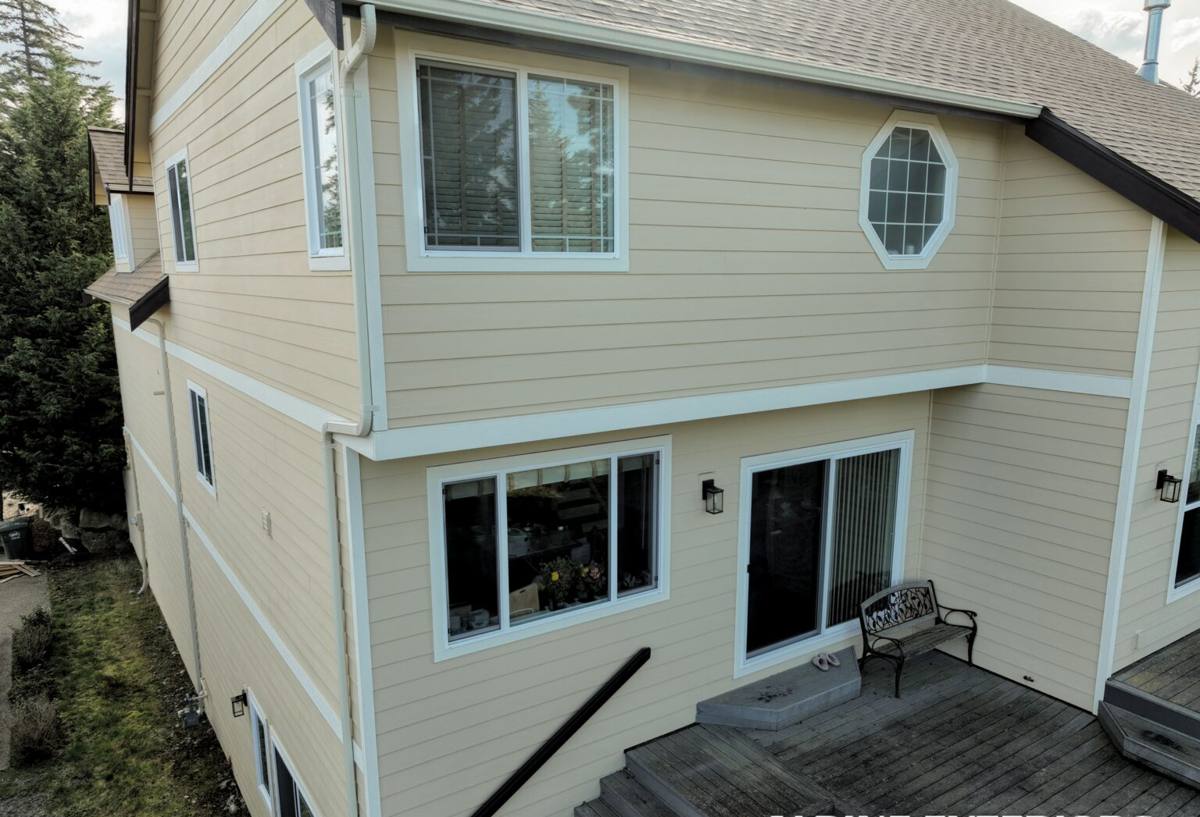
What Fairhaven's Climate Actually Does to a Deck
Salt Air and Metal Fasteners
Proximity to the bay means airborne salt settles on every exterior surface, including deck hardware. Standard fasteners and brackets corrode faster here than they would ten or fifteen miles inland. Over a few seasons, corroding hardware can stain composite boards, weaken connections, and cause the kind of hidden structural fatigue you don't notice until a board feels soft or a railing wiggles.
Driving Rain and Standing Water
Bellingham's rain doesn't just fall straight down — wind off the water pushes it sideways into ledger connections, board gaps, and stair stringers. A deck that isn't sloped and flashed correctly will hold water in places it shouldn't, and composite boards that sit in standing water for extended periods are far more prone to mold growth on the surface, even though the core material itself doesn't rot the way wood does.
Moss, Algae, and Shade
Many Fairhaven properties are wooded or partially shaded, which is great for privacy and terrible for keeping a deck surface dry between rain events. Moss and algae need moisture and lack of direct sun to establish, and a shaded composite deck with poor airflow underneath will grow both faster than one that gets a few hours of sun and has proper ventilation beneath the joists.
Why Composite Makes Sense Here — With Honest Caveats
Composite decking's core appeal for this climate is that it doesn't rot, splinter, or need annual staining the way a wood deck does. That's a real advantage in a place where a wood deck's finish gets tested by rain nine or ten months a year. But composite isn't maintenance-free, and it isn't immune to the moss and mildew problem — it just fails differently than wood does.
What Composite Handles Well
- Resists rot and insect damage even with extended moisture exposure
- Doesn't require sanding, staining, or sealing on a recurring schedule
- Holds up to salt air better than untreated or under-maintained wood
- Consistent color and board dimensions, which matters on a visible waterfront-adjacent deck
Where Composite Still Needs Attention
- Surface mildew and algae can still grow on shaded boards without regular cleaning
- Cheaper, uncapped composite boards can absorb moisture at cut ends and fastener holes over time
- Color and heat retention vary by brand — darker boards in full sun get noticeably hot, lighter boards show dirt and pollen more
- Substructure (joists, ledger, fasteners) still needs to be built to the same wet-climate standard as a wood deck — the composite boards are only as good as what's underneath them
What a Correct Composite Deck Build Looks Like Underneath
Most composite deck problems we get called out to inspect in this area trace back to the substructure, not the boards themselves. A board manufacturer's warranty covers the board — it doesn't cover a joist that was never properly flashed or a ledger board that was lag-bolted straight into siding without a moisture barrier.
Ledger Attachment and Flashing
Where the deck meets the house is the single most common failure point on any Bellingham-area deck, composite or wood. Correct flashing directs water away from the ledger board and the wall assembly behind it, rather than letting it wick in behind the siding. On a home near the water, we treat this connection as critical, not optional trim work.
Joist Protection
Composite decking is often marketed as low-maintenance, but the pressure-treated joists underneath still need joist tape or a comparable moisture barrier on top of every joist. Skipping this step is one of the most common shortcuts we see on older or budget builds, and it's the difference between a substructure that lasts twenty-plus years and one that starts showing rot at the fastener lines within a decade.
Ventilation and Drainage Below the Deck
On shaded Fairhaven lots especially, airflow underneath the deck matters as much as drainage on top of it. A deck built low to the ground with poor cross-ventilation traps moisture underneath, which accelerates joist decay and gives moss and mold a damp environment to spread from below upward. Proper height, gapping, and in some cases venting adjustments are part of doing this correctly on a shaded or low-clearance lot.
Fastener and Bracket Material
Given the salt air exposure, we spec stainless steel or high-grade coated fasteners and structural brackets rather than standard galvanized hardware. It costs more upfront and it's the right call for a deck that's going to sit exposed to bay air year-round.
Choosing the Right Composite Board for a Shaded, Salt-Air Lot
| Factor | What to Look For in Fairhaven's Climate |
|---|---|
| Capping | Fully capped boards (all four sides) resist moisture absorption at cut ends and fastener holes far better than uncapped or partially capped composite |
| Color | Mid-tone colors hide pollen, moss residue, and mildew staining better than very light or very dark boards |
| Surface texture | A textured, low-sheen surface provides better footing on a deck that stays damp longer in shaded areas |
| Warranty structure | Check whether the warranty covers fading, staining, and mold/mildew specifically, not just structural failure |
| Board profile | Grooved-edge boards with hidden fasteners reduce standing water pockets compared to some face-screwed profiles |
Cleaning and Maintenance Realities for a Waterfront-Adjacent Deck
Homeowners considering composite specifically to avoid maintenance should still expect to do some upkeep, especially in this climate. The good news is it's simpler and less frequent than what a wood deck demands.
Seasonal Cleaning
A deck brush and a composite-safe cleaner, used once or twice a year — typically after the heaviest moss growth in late winter and again before summer — keeps most Fairhaven decks looking right. Pressure washing is fine at low pressure with a wide-fan tip, but aggressive pressure washing can etch the surface of some composite boards and actually roughen them enough to trap more dirt going forward.
Gap and Drainage Checks
Leaves, needles, and debris collect in board gaps and around posts on shaded lots. Clearing these out periodically prevents standing moisture pockets that feed algae growth, and it's a five-minute task compared to the labor of re-staining a wood deck.
Hardware Inspection
Because of the salt air, it's worth having fastener and bracket connections checked every few years, particularly on decks built more than a decade ago before stainless hardware was as commonly specified.
Our Process for a Fairhaven Composite Deck Project
- On-site assessment of the existing structure (if replacing a deck) or the site conditions (for new builds), including sun exposure, drainage slope, and proximity to the water
- Ledger and structural review — we don't reuse a ledger connection or substructure that doesn't meet current flashing and fastening standards, even on a resurfacing job
- Material selection walkthrough based on the specific lot's shade, exposure, and your maintenance expectations
- Substructure build or repair, including joist tape, proper spacing, and stainless or coated fasteners throughout
- Composite board installation with manufacturer-specified gapping for drainage and thermal movement
- Final walkthrough covering cleaning recommendations specific to your deck's sun and shade pattern
Signs an Existing Deck in Fairhaven Needs Attention
- Soft or spongy spots in the boards or around the ledger connection
- Rust staining bleeding through near fasteners or brackets
- Persistent moss or algae that returns within weeks of cleaning
- Visible gaps, movement, or squeaking at the ledger-to-house connection
- Water pooling on the surface instead of draining off after rain
- Boards that have swelled, cupped, or separated at the ends
Any of these can point to a substructure issue rather than a cosmetic one, and on a deck exposed to bay air and heavy rain, it's worth having it looked at before a small fastener or drainage problem turns into a larger repair.
Get a Straightforward Estimate
If you're planning a new composite deck in Fairhaven or want an honest look at whether your current deck's substructure is holding up to the salt air and rain, we're happy to come take a look. There's no pressure and no obligation — just a clear rundown of what we see and what it would take to get it right. Use the form below to request a free estimate.