 Bellingham
 Siding Built for Fairhaven's Waterfront Climate
Fairhaven sits close enough to the water that its homes take a different kind of weather beating than houses a few miles inland. Salt-laden air off Bellingham Bay, driving rain that comes in sideways during winter storms, and a moss season that seems to run most of the year all work on exterior siding at once. A siding job that looks fine on day one can fail quietly over a few winters if it wasn't specified and installed with this exact combination of conditions in mind.
We install James Hardie fiber cement siding exclusively, and we work in Fairhaven regularly enough to know which details matter most here: how water is shed away from the wall assembly, how the siding handles constant damp without swelling or rotting, and how the finish holds its color against salt exposure and shade-driven moss growth. This page walks through what that actually looks like on a Fairhaven house.
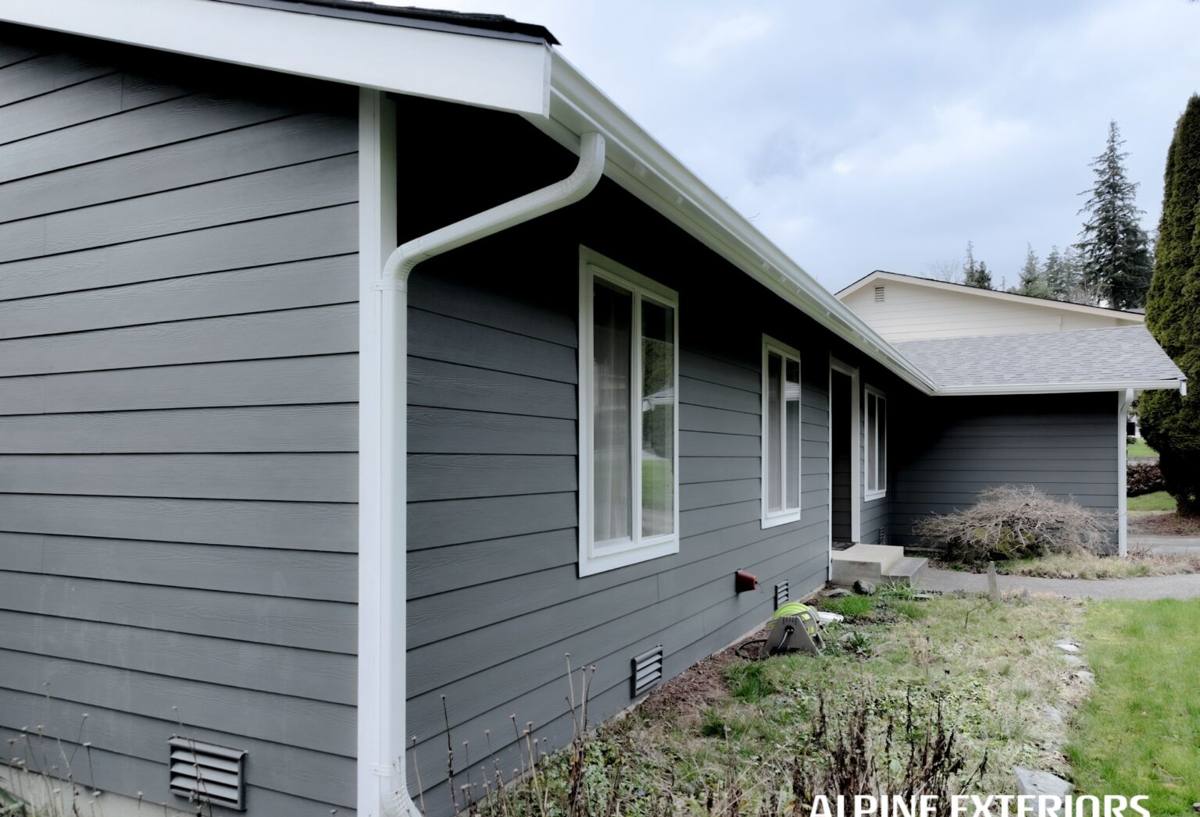
What Salt Air, Rain, and Moss Actually Do to Siding
Salt Air
Homes closer to the bay get airborne salt on their exterior surfaces more or less constantly. On untreated wood and many composite products, salt accelerates finish breakdown, pulls moisture into seams and end cuts, and speeds up corrosion on any exposed fasteners or trim hardware. Over years, that shows up as chalking paint, soft spots at butt joints, and rust streaking below nail heads.
Driving Rain
Fairhaven's exposure to weather coming off the water means rain doesn't just fall straight down — it gets pushed sideways into wall assemblies, especially on gable ends and upper stories. Siding systems that rely on face-sealing (caulk and paint alone to keep water out) tend to fail here faster than systems designed to manage water that gets past the surface and drain it back out.
Moss and Constant Damp
Shaded lots, tree cover, and long stretches of overcast, wet weather give moss and algae ideal growing conditions on north-facing and shaded wall sections. On wood-based products, moss holds moisture directly against the substrate, which is exactly the condition that leads to rot underneath a surface that still looks intact from a distance.
Why We Only Install James Hardie Here
James Hardie fiber cement is not wood and doesn't absorb and swell the way wood-based sidings do. It's manufactured from cement, sand, and cellulose fiber, which means constant dampness and salt exposure don't drive the same slow deterioration you get with organic materials. A few specifics that matter for a Fairhaven property:
- ColorPlus factory finish — baked on in a controlled environment, it resists fading and chalking from salt air and UV far better than field-applied paint, and it means we're not relying on a perfect caulk-and-paint seal to keep water out.
- Non-combustible material — fiber cement doesn't feed a fire the way wood siding can, a real consideration during Whatcom County's drier late-summer stretches.
- Moisture-resistant core — it won't rot, and it stands up to the freeze-thaw and constant-damp cycles that come with a marine climate.
- HZ5 engineering — Hardie's cold/wet climate product line, which is what we spec for most Whatcom County installs, including Fairhaven.
We don't install vinyl, LP SmartSide, Cemplank, Allura, or primed wood siding. That's not a knock on every use case for those products — it's that we've seen how they perform specifically in this climate, over years, and we'd rather stand behind one system we trust than offer a menu of products with different failure points.
What a Correct Installation Actually Involves
The siding panel itself is only part of what determines how a Fairhaven house holds up. Most siding failures we get called to diagnose trace back to installation shortcuts, not the product. A correct job includes:
Water Management Behind the Siding
A drainage plane (weather-resistant barrier plus a rainscreen gap in most cases) that lets any moisture that gets past the siding face drain and dry out, rather than sitting against the sheathing. This is the single biggest factor in long-term performance on a driving-rain site like Fairhaven.
Flashing at Every Penetration
Windows, doors, deck ledgers, hose bibs, vents — every penetration through the siding plane needs proper flashing and integration with the water-resistant barrier, not just a bead of caulk. Caulk is maintenance, not a water management strategy.
Correct Fastening
Hardie specifies fastener type, spacing, and placement precisely, and using the wrong fasteners (or the wrong spacing) is one of the most common ways an installer voids the manufacturer warranty without the homeowner ever knowing.
Proper Clearances
Minimum clearance from grade, roofing, and decks keeps splash-back and standing water away from the bottom edge of the siding — a detail that matters more on shaded, damp lots than it does elsewhere.
Caulking and Joint Treatment
Butt joints, corners, and trim intersections need to be treated to Hardie's spec, using compatible sealants that won't degrade under UV and salt exposure.
Our Process on a Fairhaven Project
- On-site assessment — we look at sun/shade exposure, wind and rain direction relative to the house, existing moisture or moss damage, and current wall assembly condition before recommending anything.
- Tear-off and substrate check — old siding comes off and we inspect sheathing for rot or damage that needs to be addressed before new siding goes on. Skipping this step just buries an existing problem.
- Water-resistant barrier and drainage plane — installed to current best practice for the exposure level of your specific wall.
- Flashing and trim — every window, door, and penetration detailed before panels go up.
- Hardie panel installation — installed to manufacturer fastening and clearance specs, panel by panel.
- Final inspection and cleanup — walkthrough so you know exactly what was done and why.
Cost Factors for a Fairhaven Siding Job
Every house is different, but the factors that move a Fairhaven estimate up or down are fairly consistent. We'll always give you a specific number after an on-site look — broad ranges without seeing the house aren't useful to you.
| Factor | Why It Matters Here |
|---|---|
| Existing substrate condition | Rot or moisture damage found during tear-off adds repair scope before new siding can go on |
| Wall exposure to wind-driven rain | Gable ends and upper stories facing the bay often need more robust flashing detail |
| Shade and moss history | Heavily shaded walls may need additional drainage consideration |
| Trim and architectural detail | More corners, windows, and transitions mean more flashing and labor time |
| Access and site conditions | Sloped lots, tight setbacks, or limited staging area affect labor and equipment needs |
| Hardie product line and profile | Lap width, panel vs. shingle style, and ColorPlus color selection affect material cost |
Why the Local Track Record Matters
A contractor who's installed siding on other Fairhaven and Bellingham homes has already seen how this specific stretch of coastline behaves — which wall orientations take the worst of the weather, which lots hold moisture longest, and how Whatcom County's inspection and permitting process works for exterior work. That's different knowledge than a crew that mostly works drier, inland climates and treats every job with the same generic spec. When you're vetting a contractor for this work, it's worth asking directly about their experience with coastal exposure, not just siding installation in general.
A Practical Checklist Before You Hire
- Ask what water-resistant barrier and drainage approach they use, and why, for a wall facing the bay's weather
- Confirm they're following James Hardie's published fastening and clearance specifications — not just "install according to manufacturer instructions" as a vague line item
- Ask how they handle substrate rot or damage discovered during tear-off, and how that affects your quote
- Get clarity on warranty coverage — both the manufacturer's product warranty and the contractor's labor warranty
- Ask about their experience with other homes in Fairhaven or similarly exposed Bellingham neighborhoods
- Make sure the estimate is based on an actual on-site walk of your house, not a phone quote
Get an Honest Look at Your Home
If your siding is showing chalking, moss buildup, soft spots, or you're just planning ahead for a home in a spot that takes real weather off the bay, it's worth having someone walk the property and tell you honestly what shape it's in. We'll look at your specific exposure, walk through what a correct James Hardie installation would involve for your house, and give you a real number — no pressure, no generic sales pitch. Use the form below to request a free estimate.