 Bellingham
 Siding Installation Built for Columbia's Waterfront Climate
Homes in Columbia sit close enough to Bellingham Bay that the weather isn't the same weather the rest of Whatcom County deals with. Salt-laden air moves in off the water, driving rain comes sideways during winter storms, and the shade from mature trees combined with damp air gives moss a long season to work on north- and west-facing walls. Siding here doesn't fail because it was bad siding — it fails because it wasn't matched to what this specific stretch of coastline throws at it, or because it wasn't installed with the level of care a marine-influenced climate demands.
We install siding in Columbia regularly, and the patterns repeat: paint that's failed early on the weather-facing side of a house, soffits and trim with soft spots from years of trapped moisture, and moss establishing itself in seams and butt joints where water sits instead of shedding. A correct installation addresses all of that at the water-management level, not just the surface finish level.
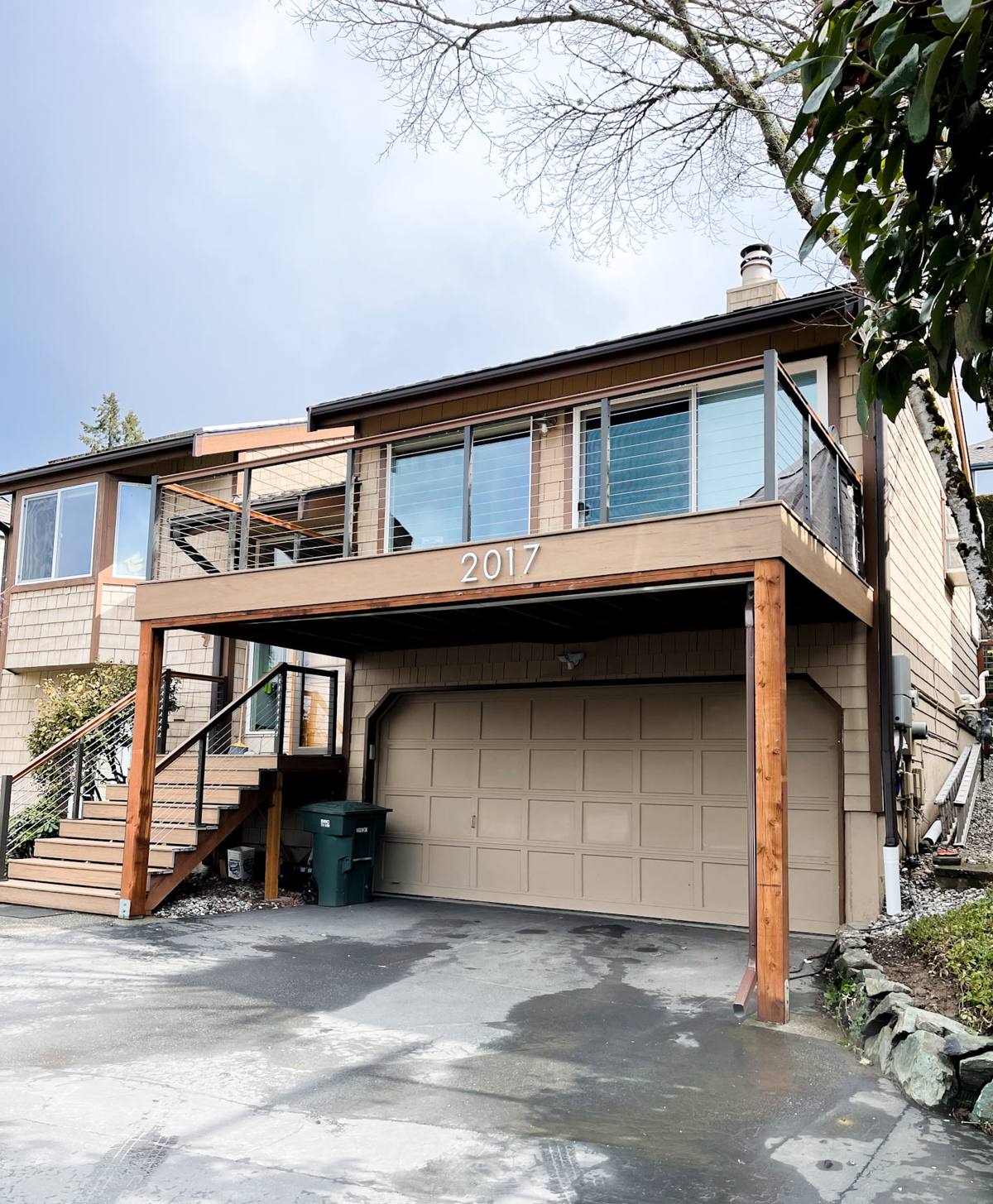
What Salt Air, Rain, and Moss Actually Do to Siding
Salt Air and Corrosion
Airborne salt accelerates corrosion on anything metal — fasteners, flashing, trim caps — and it degrades some paint and coating systems faster than inland exposure would. Siding materials and fastening systems that aren't rated for coastal exposure can show chalking, fading, or fastener bleed years ahead of schedule.
Wind-Driven Rain
Bellingham Bay funnels wind, and driving rain doesn't just fall on a wall — it gets pushed into laps, seams, and any gap around windows, doors, and penetrations. If the water-resistive barrier, flashing, and lap spacing aren't done correctly, that water finds its way behind the siding instead of running down the face of it.
Moss and Prolonged Dampness
Shade, humidity, and a long wet season give moss and algae the conditions they need to take hold, especially on north-facing elevations and anywhere air can't circulate. Moss holds moisture against the siding surface far longer than open exposure would, which is hard on any substrate but especially hard on materials that swell, delaminate, or absorb water when their coating is compromised.
Why We Only Install James Hardie Fiber Cement
We made a decision to install one siding system, James Hardie fiber cement, and to explain honestly why on every job we bid. We don't install vinyl, LP SmartSide, Cemplank, Allura, primed spruce, or cedar — not because those products have no merit, but because on a coastline like this one, the trade-offs stopped making sense to us as a standard we'd put our name behind.
Non-Combustible
Fiber cement doesn't burn, which matters more every year as wildfire smoke and dry summer stretches become part of the Pacific Northwest's normal weather pattern, even here on the wet side of the Cascades.
ColorPlus Factory Finish
Hardie's ColorPlus finish is baked on in a controlled factory environment rather than sprayed on-site, which gives it far more consistent coverage and a stronger bond to the substrate than field-applied paint. In a salt-air environment, that finish quality is the difference between a repaint in year six and one in year fifteen or beyond.
HZ Product Lines Engineered for This Climate
Hardie manufactures its HZ5 product line specifically for the wetter, harsher climate zones on the West Coast. It's formulated and tested for high-moisture, high-exposure conditions like what Columbia sees off the bay — not a generic product used everywhere regardless of region.
A Warranty Backed by the Manufacturer
Hardie's transferable warranty coverage on both the substrate and the ColorPlus finish gives homeowners real protection, and it transfers to a new owner if the home sells — something worth factoring into resale value on a waterfront-adjacent street.
What a Correct Installation Actually Involves
The siding itself is only part of the system. Most siding failures we get called out to inspect trace back to something behind the boards, not the boards themselves. A correct installation in a climate like Columbia's means getting every layer right:
- A continuous, properly lapped weather-resistive barrier installed shingle-style so water always drains outward and downward
- Correct flashing at every window, door, and roof-to-wall intersection, with head flashing and kickout flashing where water volume concentrates
- Proper fastener type, spacing, and depth per Hardie's installation specifications — this is what determines whether the warranty is actually valid
- Minimum clearance from grade, roofing, and decks so the bottom edge of the siding never sits in standing water or snow
- Correct lap spacing and caulking at butt joints, sized for the wood movement and moisture cycling this climate produces
- Ventilation behind the cladding where the wall assembly calls for a rainscreen gap, especially on shaded, moss-prone elevations
- Trim and corner details sealed and back-primed so cut edges aren't left absorbing moisture
Skip any one of these and the siding can look fine for a season or two while water is already getting behind it. That's the gap between a crew that installs siding and a crew that manages water.
Our Process on a Columbia Job
- On-site assessment. We look at the existing siding, wall assembly, trim condition, and the specific exposure of each elevation — a west wall facing the bay gets treated differently than a sheltered, shaded north wall.
- Moisture check. Before any tear-off, we check for soft sheathing, trapped moisture, or existing rot, particularly around windows and at the base of walls, since that's where problems concentrate here.
- Written scope and product selection. We walk through the Hardie plank profile, texture, and ColorPlus color options that fit the home, and put the full scope — barrier, flashing, fastening schedule — in writing before work starts.
- Tear-off and substrate repair. Any compromised sheathing or framing gets addressed before new siding goes up; covering up a moisture problem is not an option we take.
- Weather barrier and flashing installation. This is the step that actually protects the house, done to manufacturer spec, not shortcuts.
- Hardie installation. Fastened, spaced, and finished to James Hardie's published requirements so the manufacturer warranty stays intact.
- Final walkthrough. We go over caulking, trim, and touch-up paint with the homeowner before calling the job done.
Comparing Siding Materials for a Coastal Bellingham Home
| Material | Salt Air & Moisture Performance | Moss Resistance | Typical Longevity Here |
|---|---|---|---|
| James Hardie Fiber Cement (HZ5) | Engineered for wet coastal climates; ColorPlus finish resists fading and moisture intrusion | Dense, factory-finished surface sheds moisture and resists moss buildup better than porous materials | Decades, with proper install and normal maintenance |
| Vinyl | Can warp or become brittle with temperature swings; seams are a moisture entry point | Smooth surface but seams and laps trap grime and moss over time | Variable; often shows fading and wear well before fiber cement |
| LP SmartSide (engineered wood) | Wood-based core is more sensitive to sustained moisture exposure than fiber cement | More prone to moss and mildew holding moisture at cut edges and seams | Shorter than fiber cement in high-moisture coastal exposure |
| Cedar | Natural material, but absorbs and releases moisture constantly; needs ongoing sealing | Higher moss and mildew risk without regular maintenance | Requires the most upkeep of the group to reach comparable lifespan |
This isn't a knock on any of these products in the right application — it's why, for a climate like Columbia's, we standardized on the one system that holds up with the least maintenance burden over the long run.
Why Hiring a Crew That Already Works Columbia Matters
A contractor who's worked this specific stretch of Bellingham knows which elevations take the worst of the wind off the bay, where moss establishes fastest, and how the local building department handles permitting and inspection for exterior work in Whatcom County. That local familiarity shows up in small decisions — where to add extra flashing, which side of the house needs a rainscreen gap even if it's not strictly required elsewhere — that a crew unfamiliar with this climate might not think to make.
It also matters for accountability. A local crew is still around next year and the year after if a question comes up, and stands behind both the installation work and the manufacturer warranty that comes with it.
Signs Your Columbia Home's Siding Needs Attention
Not every siding problem is obvious from the street. A few things worth checking, especially on the walls facing the bay or sitting in shade:
- Paint that's peeling, bubbling, or chalking faster on one side of the house than the others
- Soft or spongy spots when you press on siding near the bottom edge or around windows
- Persistent moss or dark streaking that comes back within a season of cleaning
- Visible gaps, warping, or separation at seams and corners
- Rising utility bills that suggest air and moisture are getting through the wall assembly
Any one of these on its own isn't necessarily urgent, but a few together usually mean the siding is past due for a real look, not just a repaint.
Get a Straight Answer About Your Siding
If you're weighing a repair against a full replacement, or just want an honest read on how your current siding is holding up against Columbia's salt air and rain, we're glad to take a look. Reach out for a free, no-pressure estimate — we'll tell you what we actually see, not just what sells a job.