 Bellingham
 Board & Batten in Sehome: A Style With Real Climate Demands
Sehome's mix of older bungalows, mid-century homes, and newer infill sits close enough to Bellingham Bay that salt air is a daily fact of life, and close enough to the hills that moss finds every shaded north wall within a season or two. Board and batten siding — vertical boards with narrow strips covering the seams — is one of the most requested looks in this neighborhood right now, whether it's going on a full exterior or as an accent on a gable or entry feature. It's a clean, architectural look that reads well on both a 1920s Sehome cottage and a newer build near the Western Washington University campus.
What most homeowners don't realize until they're comparing bids is that board and batten is less forgiving of sloppy installation than horizontal lap siding. The vertical orientation, the seam coverage, and the way water moves down a wall all change the math on flashing, fastening, and moisture management. In a marine climate like Whatcom County's, those details aren't cosmetic — they're the difference between siding that looks good for thirty years and siding that's trapping moisture behind it by year eight.
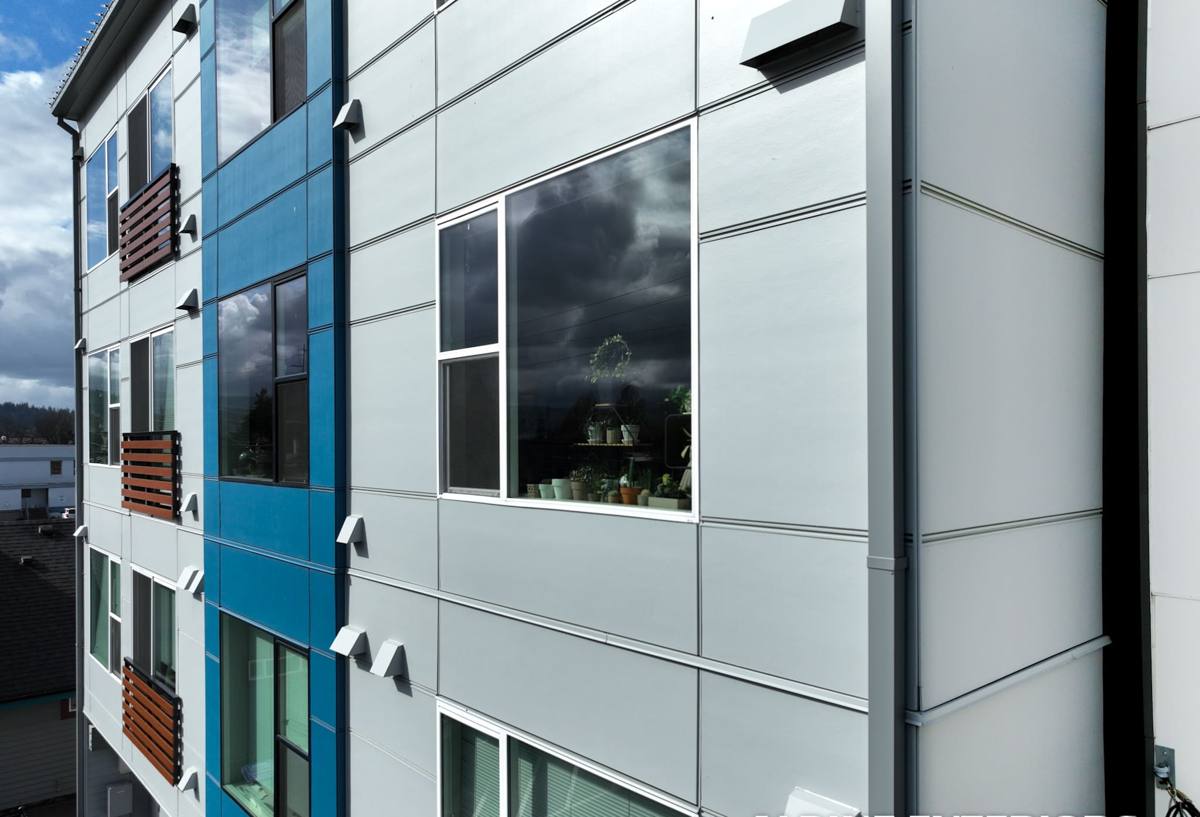
What Bellingham's Climate Actually Does to Vertical Siding
Salt Air and Corrosion
Homes within a few miles of Bellingham Bay deal with airborne salt that accelerates corrosion on fasteners, flashing, and any metal trim. Cheap or mismatched fasteners on a board and batten job show up as rust streaks bleeding down the boards within a few years — a common callback we see on homes that weren't sided with corrosion-resistant hardware from the start.
Driving Rain
Whatcom County doesn't just get a lot of rain — it gets a lot of wind-driven rain off the Sound, which pushes water sideways into wall assemblies that a drier climate would never test. Board and batten's vertical seams, if not lapped and fastened correctly, give wind-driven rain more opportunities to find a way behind the cladding than a properly lapped horizontal board does.
Moss and Prolonged Dampness
Sehome's tree cover and the region's long gray stretches mean many walls — especially north- and east-facing ones — stay damp for weeks at a time. Moss and algae don't just look bad; sustained dampness against a wood-based or improperly sealed product speeds up rot at the exact seams and cut edges that are hardest to inspect once the siding is up.
What a Correct Board & Batten Installation Involves
Board and batten looks simple from the street, but the assembly behind it is doing a lot of work. A correct installation in this climate includes:
- A drainage plane (weather-resistive barrier) installed and lapped correctly before any siding goes up
- A rainscreen gap or furring strips behind the boards so water that does get behind the cladding can drain and the wall can dry
- Correct board spacing and batten overlap sized to the manufacturer's specification, not "close enough"
- Stainless or hot-dip galvanized fasteners rated for coastal/marine exposure
- Factory-primed or factory-finished cut edges sealed in the field — raw cut ends are where water intrusion starts
- Proper flashing at every window, door, and roofline intersection, since board and batten has more vertical seams meeting horizontal trim than lap siding does
Skip any one of these and the siding can still look right for a while. The failures that come from cut corners here are slow — they show up as soft spots, staining, or panel separation years down the line, usually after the installer is long gone.
Why We Install Only James Hardie for Board & Batten
We don't install LP SmartSide, vinyl, Cemplank, Allura, or raw wood board and batten. That's not a marketing position — it's a standard we settled on after weighing how each product actually performs in a wet, salt-exposed, moss-prone climate over decades, not just the first few years.
Where the alternatives fall short here
Vinyl board and batten is affordable and low-maintenance in a dry climate, but it expands and contracts more than fiber cement, and in driving rain it relies almost entirely on careful J-channel and flashing work to keep water out — there's little margin for error. Engineered wood products like LP SmartSide use a wood strand core that, however well-treated, is still wood at its core; if the factory coating is ever compromised at a cut edge or fastener hole, moisture has a path in, and moss-heavy microclimates like parts of Sehome don't forgive that. Raw or primed wood board and batten needs recoating on a schedule most homeowners underestimate, and skipped maintenance years show up fast in this climate.
What Hardie gets right for this application
James Hardie's fiber cement is non-combustible, doesn't swell or rot from moisture the way wood-based products can, and its ColorPlus factory finish is baked on rather than field-applied, which matters when your board and batten job has dozens of vertical seams and cut edges that all need consistent protection. Hardie's HZ5 product line is engineered for the kind of freeze-thaw and moisture-cycling weather the Pacific Northwest delivers, and the warranty is transferable if you sell the home — a real factor in a neighborhood with steady turnover near the university.
Our Process on a Sehome Board & Batten Project
1. On-Site Assessment
We walk the exterior, check for existing moisture damage or rot (common around older Sehome window trim and at grade level), and evaluate what's behind the current siding before quoting anything.
2. Tear-Off and Sheathing Check
Once the old siding is off, we inspect the sheathing itself. Any soft or water-damaged sheathing gets addressed before new siding goes up — covering a compromised wall with new siding just hides the problem.
3. Weather Barrier and Rainscreen
We install the drainage plane and furring strips correctly lapped, since this is the layer doing the real work in Bellingham's rain.
4. Board and Batten Installation
Boards and battens go up to Hardie's fastening and spacing specs, with all cut edges sealed and corrosion-resistant fasteners throughout.
5. Trim, Flashing, and Final Walkthrough
Every flashing point gets checked before we call the job done, and we walk the finished exterior with the homeowner.
Cost Factors for a Sehome Board & Batten Project
| Factor | Why It Moves the Price |
|---|---|
| Tear-off condition | Rot or water damage found under old siding adds sheathing repair before new siding can go up |
| Home height and roofline complexity | Steep gables and multiple stories add labor, scaffolding, and flashing detail |
| Board width and reveal | Wider boards and specific spacing patterns change material takeoff and layout time |
| Full exterior vs. accent application | Board and batten used only on a gable or entry costs far less than a full-house install |
| Trim and color complexity | Multiple ColorPlus colors or custom trim details add coordination and material cost |
Maintenance in a Moss-Prone, Salt-Air Climate
Even with the right product installed correctly, Sehome's climate calls for some upkeep:
- Rinse siding annually to clear salt residue and organic buildup before it turns into moss
- Keep gutters clear so overflow doesn't run down the wall face at seams and corners
- Trim back vegetation and tree limbs holding moisture against north- and east-facing walls
- Check caulking at trim and window intersections every couple of years — this is where seasonal movement shows up first
- Have any staining or discoloration inspected early rather than assumed to be cosmetic
Hardie's factory finish reduces how much of this falls on the homeowner compared to field-painted wood, but no siding in this climate is truly maintenance-free.
What to Ask Before Hiring a Board & Batten Installer
- Do they install a rainscreen or furring gap behind board and batten, or fasten directly to the weather barrier?
- What fastener type do they use, and is it rated for coastal/marine exposure?
- Do they seal cut edges in the field, and with what product?
- Can they show board spacing and batten overlap specs before work starts, not just after?
- Are they James Hardie certified, and do they carry manufacturer-backed installation warranties?
Why a Crew That Already Works Sehome Matters
A crew that regularly works this part of Bellingham already knows which walls in this neighborhood hold moss longest, which older homes tend to have sheathing issues once the siding comes off, and how the wind off the bay behaves against a given elevation. That's not something a crew from outside the region picks up on the first job. It shows up in details — how tight the flashing is at a window that catches wind-driven rain, or which side of the house needs extra attention to drainage — that only come from having done this work, on these streets, in this climate, more than once.
If you're considering board and batten siding for a home in Sehome, we're happy to walk the exterior with you and give you a straight, no-pressure estimate — just fill out the form below.