 Bellingham
 Roofing in the Columbia Neighborhood: A Different Set of Problems
Columbia is one of Bellingham's older, closer-to-the-water neighborhoods, and that location cuts both ways. It's a great place to live, but it's also a tough place to keep a roof watertight for the long haul. Homes here sit close enough to Bellingham Bay to pick up salt-laden air, they take the full brunt of driving rain off the water, and the tree cover that makes the neighborhood shady and pleasant in July is exactly what feeds a long, stubborn moss season the rest of the year. None of that is unique to any one street — it's a neighborhood-wide condition, and it shows up in roofs of every age and material.
A roof replacement here isn't just "tear off the old shingles, nail down new ones." Done right, it accounts for how this specific pocket of Bellingham weathers a roof differently than, say, a newer subdivision further inland. That's the lens we bring to every Columbia estimate.
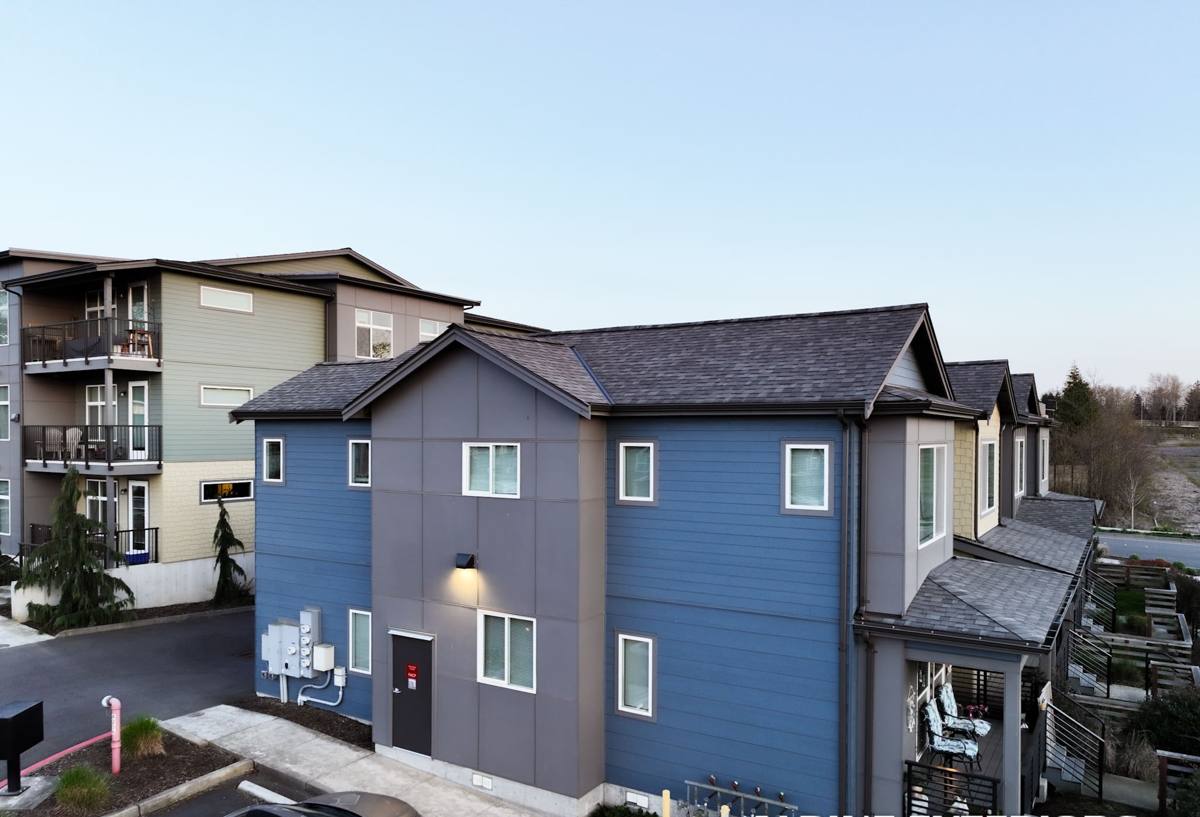
What Whatcom County's Climate Actually Does to a Roof
Salt Air and Metal Fatigue
Salt-tinged marine air accelerates corrosion on anything metal — flashing, fasteners, vent caps, gutter hardware. On a roof that's otherwise in decent shape, corroded flashing around chimneys, skylights, and roof-to-wall transitions is very often where leaks actually start. It's a slow process, which is why it tends to get missed until water's already found its way into the attic.
Driving Rain and Wind-Driven Water
Bellingham doesn't just get rain — it gets rain pushed sideways off the bay during winter storms. Wind-driven rain finds gaps that a straight-down rain never would: under shingle tabs, around poorly lapped underlayment, through nail holes that weren't sealed. A roof system built for a drier or calmer climate often isn't built for this.
Moss, Shade, and Moisture Retention
Between the tree canopy common in Columbia and the region's long wet stretches from fall through spring, moss and moss-related algae growth is close to unavoidable without some attention. Moss isn't just cosmetic — it holds moisture against the roofing material, works its way under shingle edges as it grows, and can lift tabs enough to let water underneath. On older wood-shake or aging asphalt roofs, heavy moss buildup is frequently the reason a roof fails years before it should have.
Signs a Columbia Roof Needs Replacement, Not Another Repair
Not every roof problem means a full replacement — plenty of issues are legitimately fixable with a targeted repair. But there's a point where patching becomes throwing money at a roof that's fundamentally past its service life. Some signs worth taking seriously:
- Granules collecting in gutters and downspouts in noticeable amounts, not just a light dusting
- Shingles that are cupping, curling at the edges, or cracking when you look closely
- Daylight visible through the roof deck from inside the attic
- Soft or spongy spots when walking the roof, which usually means the decking underneath is compromised
- Moss coverage heavy enough that it's lifting shingle edges rather than just sitting on the surface
- Flashing that's visibly rusted, pulled away, or was never properly integrated in the first place
- Multiple past repairs in different spots — a pattern that usually means the whole roof is aging out together
- A roof that's 20+ years old (for asphalt composition) and has never been replaced
If you're only seeing one or two of these, a repair may genuinely be the right call — we'll tell you that if it's true. If you're seeing several at once, it's usually more cost-effective to replace than to keep chasing individual leaks.
What a Correct Roof Replacement Actually Involves
A roof replacement is only as good as what's underneath the shingles or panels you can see. Skipping steps here is where cheap roof jobs turn into five-year roof jobs. Here's what should happen on every replacement, Columbia or anywhere else in Bellingham:
- Full tear-off down to the deck — layering new roofing over old traps moisture and hides problems, and most manufacturer warranties don't allow it anyway.
- Deck inspection and repair — any soft, rotted, or delaminated sheathing gets replaced before anything new goes down. This is where an older Columbia home's true condition usually shows up.
- Ice and water shield at eaves, valleys, and roof penetrations — the areas most exposed to wind-driven rain and ice damming in a cold snap.
- Synthetic underlayment across the full deck as the primary water barrier beneath the roofing material.
- New flashing at every chimney, skylight, vent pipe, and wall transition — reusing old, corroded flashing is one of the most common corner-cuts we see on other contractors' past work.
- Proper ventilation at the ridge and soffits, so moisture from inside the attic has somewhere to go instead of condensing against the underside of the new roof.
- Roofing material installed to manufacturer spec — correct nailing pattern, exposure, and fastener count, not just "close enough."
- Final walkthrough covering the ground for stray nails and debris, plus a look at gutters and downspouts to confirm water has a clear path off the new roof.
Choosing the Right Material for a Bellingham Roof
There's no single "best" roofing material — it depends on your budget, your roof's pitch and exposure, and how much long-term maintenance you're willing to take on. For a Columbia home dealing with salt air, rain, and moss, here's how the common options stack up:
| Material | Typical Lifespan | How It Handles This Climate | Maintenance |
|---|---|---|---|
| Asphalt composition shingle | 20–30 years | Solid all-around performer; algae-resistant shingle lines help with moss/algae staining | Periodic moss removal, gutter clearing |
| Metal (standing seam or panel) | 40–60+ years | Sheds moss and moisture well due to smooth surface; needs quality fasteners and flashing to resist salt-air corrosion | Low; occasional fastener/flashing check |
| Cedar shake | 20–30 years with upkeep | Traditional look but holds moisture and grows moss readily in shaded, damp spots | High; regular treatment and moss control needed |
| Synthetic/composite shingle | 30–50 years | Resists moisture absorption better than wood; good moss and algae resistance | Low to moderate |
We'll talk through which of these actually fits your roof's slope, sun exposure, and budget rather than pushing one product across the board. Our professional standard is to steer clients away from materials that trade a lower upfront cost for a maintenance burden that outweighs the savings over 10-15 years — that's a trade-off worth understanding before you sign a contract, not after.
Our Process for a Columbia Roof Replacement
The steps are straightforward, but the order and attention to detail matter:
- On-site inspection — we get on the roof (weather permitting) and check the deck, flashing, ventilation, and overall condition before quoting anything.
- Written estimate — a clear scope of work and price, broken down so you know what you're paying for, not a vague lump sum.
- Scheduling around the weather — in a climate that gets serious wind-driven rain much of the year, we plan tear-off days around forecasts and keep the deck protected if weather turns mid-job.
- Tear-off and deck repair — old material removed, deck inspected and repaired as needed.
- Dry-in — underlayment and ice/water shield installed so the home is protected even if the full install spans more than one day.
- Roofing installation — material installed to spec, with flashing and ventilation done properly, not as an afterthought.
- Cleanup and walkthrough — site cleared, magnetic nail sweep, and a final look with you before we call it done.
Why It Matters to Hire a Crew That Already Works Columbia
A roofing crew that's worked other homes in this neighborhood already knows what to expect before they climb the ladder: how much moss buildup is normal versus a sign of deeper trouble, which flashing details tend to fail first on homes exposed to bay winds, and how to sequence a job around Bellingham's rain patterns instead of getting caught mid-tear-off in a squall. That familiarity shows up in fewer surprises during the job and a roof system that's actually built for the conditions it has to survive, not a generic install that happened to land in Whatcom County.
It also matters for the paperwork side. Roof replacement in Bellingham typically requires a building permit, and depending on exactly where a property sits, that can run through the City of Bellingham or Whatcom County. We handle that process as part of the job so it's not something you have to sort out yourself.
What Drives the Cost of a Roof Replacement
Every roof is different, so we won't throw out a number that doesn't mean anything until we've actually seen your roof. What we can tell you is what moves the price up or down:
| Factor | Why It Matters |
|---|---|
| Roof size and pitch | More square footage and steeper slopes mean more material and more labor time |
| Number of existing layers | Tearing off two layers of old roofing costs more than tearing off one |
| Deck condition | Rotted or soft sheathing found during tear-off needs replacing before new roofing goes down |
| Material choice | Asphalt, metal, and composite shingle carry different material and labor costs |
| Roof complexity | Valleys, dormers, chimneys, and skylights all add flashing work and time |
| Access | Steep sites, tight lots, or limited staging area can add time and equipment cost |
We walk through these factors with you during the estimate so the final number makes sense — no padded line items, no pressure to decide on the spot.
Get a Straight Answer on Your Roof
If your roof in Columbia is showing its age, dealing with heavy moss, or you're just not sure whether it's a repair or a replacement situation, we're happy to take a look and give you an honest read — no pressure, no hard sell. Fill out the form below for a free estimate, and we'll walk the roof, explain what we find, and give you a clear picture of your options.