 Bellingham
 Roof Repair Built for Sudden Valley's Conditions
Sudden Valley sits in one of the more heavily wooded, lake-adjacent pockets of Whatcom County, and that setting shapes what goes wrong with a roof out here. Tree canopy holds moisture against shingles and shakes longer than it would on an open lot. Lake Whatcom's humidity keeps roofs damp well after a storm has passed. And like the rest of the Bellingham area, homes here sit under a marine-influenced climate that cycles between driving rain, damp fog, and the occasional coastal-tinged wind event that carries salt-laden moisture inland from Bellingham Bay. None of that is unusual for this part of Washington, but it does mean a roof in Sudden Valley ages differently than one in a drier, more open part of the state, and it needs repair work that accounts for that.
Most of the repair calls we get in this neighborhood fall into a few repeating categories: moss intrusion under shingle tabs, slow leaks around flashing that's been softened by years of standing moisture, and gutter or valley clogs from the heavy leaf and needle drop that comes with living among mature trees. None of these are exotic problems. They're the predictable result of a long wet season meeting a roof that hasn't had a close look in a while.
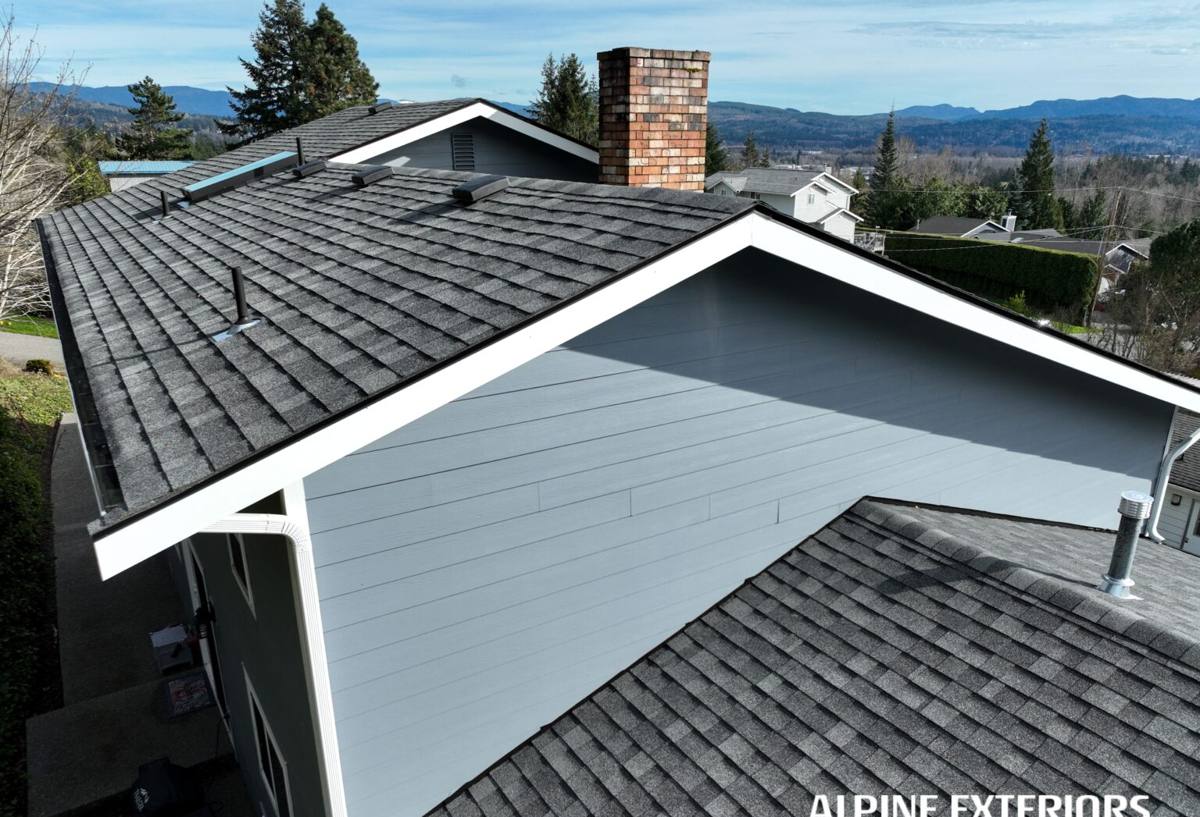
Why Moss Is the Number One Local Issue
Moss doesn't just sit on top of a roof looking bad — it actively works against the shingle underneath it. As moss colonies grow, they hold water against the roofing material around the clock instead of letting it shed and dry between rain events. On shaded, tree-covered lots like many in Sudden Valley, that cycle repeats for months at a stretch through fall, winter, and into spring.
How moss actually damages a roof
- Moss lifts shingle edges and tabs as it grows, breaking the seal that keeps wind-driven rain out
- Trapped moisture accelerates granule loss on asphalt shingles, shortening their service life
- On wood shake or shingle roofs, sustained dampness promotes rot in the wood itself, not just surface staining
- Moss mats hold debris that clogs valleys and gutters, redirecting water to places the roof wasn't designed to handle it
A homeowner can slow moss with regular cleaning and zinc or copper strips, but once it's established under shingle tabs, cleaning the surface doesn't undo the damage that's already happened underneath. That's the point where it becomes a repair job rather than a maintenance task.
What a Correct Roof Repair Involves
A roof repair done right isn't a patch dropped on top of a problem — it starts with figuring out why that section failed in the first place. On a Sudden Valley home, that usually means checking three things together: the shingle or shake condition, the flashing underneath and around it, and the decking below both. Fixing the visible layer while ignoring a soft or damp deck underneath just means calling someone back out in a year or two.
Our repair process, start to finish
- Inspection first. We get on the roof (or use a pole camera where pitch or access makes that unsafe) and identify every affected area, not just the one that's leaking into the house.
- Trace the water path. Leaks rarely show up directly below where the water enters. We follow moisture staining and soft decking back to the actual entry point before opening anything up.
- Remove and inspect the decking. Any plywood or sheathing that's gone soft or delaminated gets cut out and replaced — patching over compromised decking just hides the problem for another season.
- Rebuild flashing and underlayment correctly. Flashing around valleys, chimneys, vents, and wall intersections gets replaced or resealed to shed water the way it was designed to, not just caulked over.
- Match and install the roofing material. New shingles or shakes are matched as closely as possible to the surrounding roof and installed with proper nailing pattern and exposure.
- Clear and check drainage. Valleys and adjacent gutter runs get cleaned so the repair doesn't just get undone by the next clogged section backing water up under the new work.
Signs a Sudden Valley Homeowner Should Watch For
Because so much of Sudden Valley sits under tree cover, visual roof checks from the ground are harder here than in more open neighborhoods. That makes it worth knowing the indoor and close-up warning signs, not just what you can see from the yard.
- Dark streaking or green-black patches on shingles, especially on north-facing or shaded slopes
- Granules collecting in gutters or at downspout outlets — a sign asphalt shingles are wearing thin
- Soft or spongy spots when walking a low-pitch roof (never attempt this without proper fall protection)
- Water stains on ceilings or in the attic, particularly after a heavy or wind-driven rain
- Daylight visible through the roof deck when viewed from inside the attic
- Curling, cracking, or missing shingle tabs, especially near valleys and flashing lines
- A musty smell in upper rooms or attic space, which often points to trapped moisture before a visible leak appears
Repair or Replace: How We Help You Decide
Not every damaged section needs a full roof replacement, and we're not going to sell a homeowner on one if a targeted repair will hold up. The honest answer depends on the roof's age, how widespread the damage is, and what shape the decking is in underneath.
| Factor | Points Toward Repair | Points Toward Replacement |
|---|---|---|
| Roof age | Under 12–15 years, isolated wear | Approaching or past manufacturer's expected lifespan |
| Extent of moss/damage | Contained to one or two slopes or valleys | Widespread across most of the roof |
| Decking condition | Solid, dry, minor localized soft spots | Multiple areas of rot or delamination |
| Leak history | First occurrence, clear single cause | Recurring leaks in different spots over time |
| Shingle/shake condition overall | Granule loss or curling limited to repaired area | Brittle, cracked, or thinning material roof-wide |
We'll walk you through where your roof lands on that table before recommending anything, and we'll tell you plainly if a repair is the right call even when a replacement would be the bigger job for us.
What This Costs and What Drives the Range
Roof repair pricing varies a fair amount based on what's actually found once we're up there, so we'd rather give you real factors than a number that doesn't hold up. A small, single-area flashing or shingle repair is a modest job. A repair that involves deck replacement, valley rebuilding, or matching an older or discontinued roofing material runs higher. Steep pitch, difficult access under tree canopy, and multiple affected areas all add time and cost. We give a firm, written estimate after inspection — not a guess over the phone — because guessing on a roof repair almost always means a surprise later, for either the homeowner or the crew.
Why Local Experience in This Neighborhood Matters
A crew that already works Sudden Valley knows the practical stuff that isn't written down anywhere: which streets have tight or sloped driveways that limit ladder and material staging, how much tree cover a given lot typically has and what that means for moss and drying time, and how Lake Whatcom's microclimate keeps some roofs damper than others just a mile or two away in more open parts of Bellingham. That's not a substitute for a proper inspection, but it means less time spent re-learning the neighborhood on your dime and more time actually fixing the roof.
It also means we're not disappearing after the invoice. Whatcom County's wet season is long, and a repair that looked solid in August can get tested hard by November. Working locally, on an ongoing basis, means we're accountable for how that repair holds up through the season it's actually built for.
Maintaining a Repaired Roof Through the Wet Season
A repair is only as good as the upkeep around it. A few habits go a long way toward protecting the work and the rest of the roof:
- Clear gutters and valleys before the fall rains start, and again mid-winter if tree drop is heavy
- Trim back branches that overhang the roofline to reduce shade, debris, and physical abrasion
- Have moss treated at the first sign of regrowth rather than waiting for it to spread
- Schedule a roof check after any major windstorm, even if nothing looks obviously wrong from the ground
- Keep an eye on the attic once a year for early moisture signs, since that's often where a problem shows up first
Get an Honest Look at Your Roof
If you're seeing moss buildup, a slow ceiling stain, or just haven't had your roof checked in a few years, it's worth a look before the next wet stretch settles in. We'll give you a straight assessment of what's actually going on and what it would take to fix it — no pressure, no upsell. Use the form below to request a free estimate for your Sudden Valley home.