 Bellingham
 Building Decks for a Marine Climate, Not a Catalog Photo
Puget-area homes sit close enough to the water that salt air is a daily fact of life, not an occasional nuisance. Add Whatcom County's long stretch of driving rain and the shaded, damp winters that turn every north-facing board green, and you've got a climate that's genuinely tough on outdoor structures. A deck built the way it would be built in a dry inland town simply won't hold up the same way here. We build decks around what this specific climate does to wood, metal, and fasteners over time — not around what looks good in a showroom.
This page is about one job in one area: deck construction for homes in and around Puget. It's not a generic "we build decks" pitch. The framing choices, fastener specs, and material recommendations below are the ones we actually use on this side of Bellingham Bay, where salt exposure and moss growth are the two biggest long-term threats to any outdoor structure.
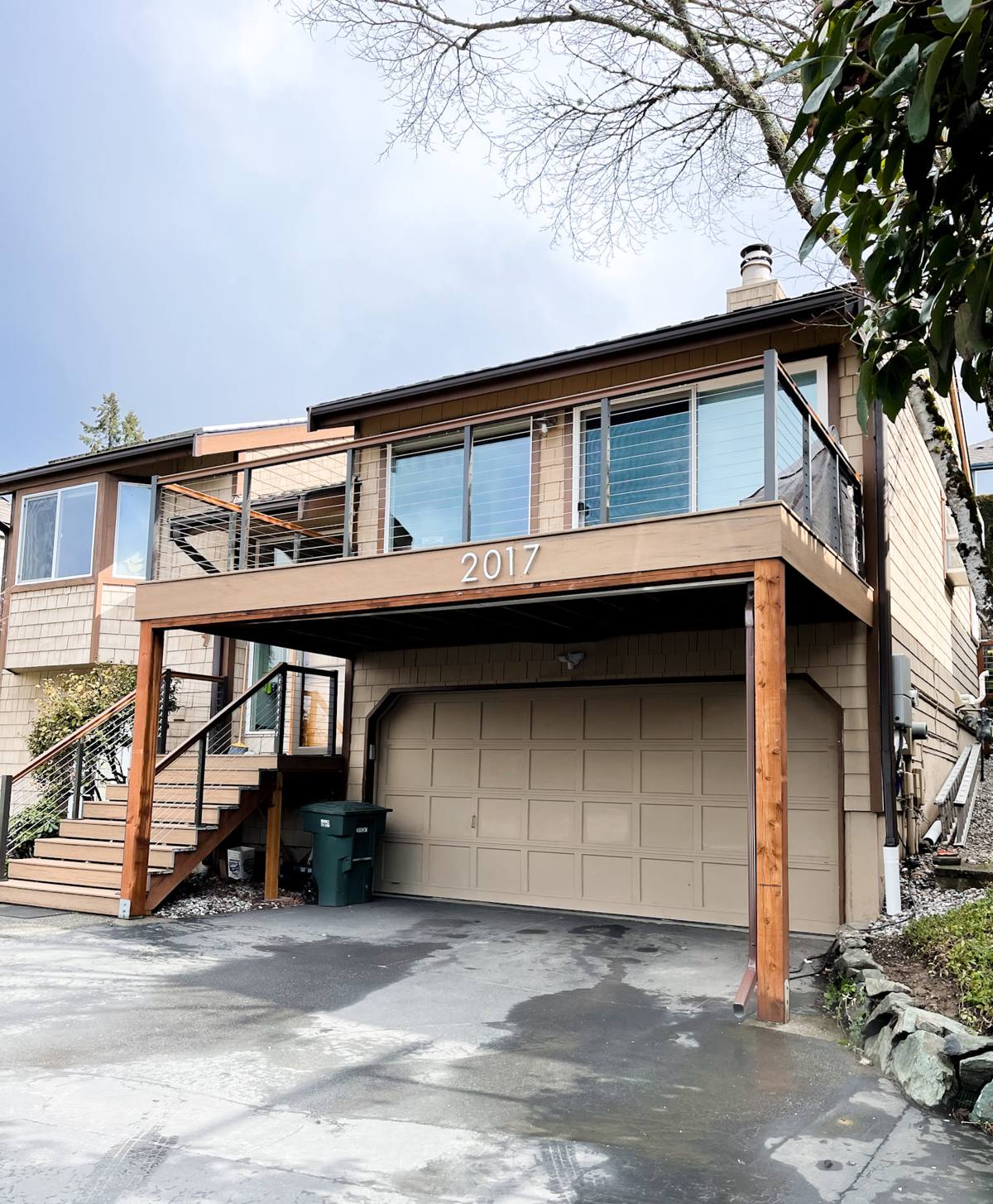
What Salt Air, Rain, and Moss Actually Do to a Deck
Salt Air and Metal Fatigue
Airborne salt accelerates corrosion on anything metal — nails, screws, joist hangers, post bases, and railing hardware. Standard galvanized fasteners that would last decades inland can start showing rust streaks and pitting in a fraction of that time this close to the water. Once a fastener corrodes, it loses holding strength long before it looks obviously bad, which is how decks end up with hidden structural weak points that only show up as a wobble or a squeak.
Driving Rain and Moisture Intrusion
Rain that comes in sideways off the water doesn't just fall on a deck — it drives up under railings, behind ledger boards, and into any gap in the flashing. Repeated wetting and drying cycles are what actually rot wood, not a single soaking. A deck that can't shed water fast, or that traps moisture against the house or ground, will show rot at the connection points years before the boards themselves wear out.
The Long Moss Season
Mild, wet winters and heavy tree cover around many Puget-area lots create ideal conditions for moss and algae on horizontal surfaces. Beyond looking neglected, moss holds moisture against decking boards and stair treads, which speeds up rot in wood and can make composite or painted surfaces genuinely slick and dangerous underfoot for a good part of the year.
What a Correctly Built Deck Needs in This Climate
None of this is exotic — it's just discipline about the details that get skipped when a crew is used to building in a drier climate or is racing to finish a job.
- Stainless steel or heavy-duty coated fasteners and hardware rated for coastal/marine exposure, not standard galvanized
- Fully flashed ledger board connections with a drainage gap, or a freestanding structure that avoids the ledger connection entirely where the house wall condition warrants it
- Joist tape or a comparable protective barrier on every cut and every top edge of framing lumber
- Positive drainage slope built into the decking layout so water sheds away from the house instead of pooling
- Post bases set above grade and away from standing water, with concrete footings sized for our frost depth and soil conditions
- Decking material and fastening pattern chosen for how it performs wet, not just how it looks dry
Choosing the Right Decking Material for a Puget Property
There's no single "best" decking material — there's the material that fits your maintenance appetite, your budget, and how much shade and moss exposure your specific lot gets. Here's how the common options actually perform in this climate:
| Material | How It Handles Local Conditions | Maintenance Load | Relative Cost |
|---|---|---|---|
| Pressure-treated fir/hem-fir | Affordable and strong, but needs consistent sealing to resist moss and rot in shaded, damp areas | High — annual cleaning and re-sealing | Low |
| Cedar | Naturally rot- and insect-resistant, ages to a silver-gray patina, still needs cleaning to control moss | Moderate | Moderate |
| Composite decking | Won't rot, but can still grow surface mildew/algae in constant shade and needs periodic washing | Low to moderate | Moderate to high |
| PVC/capped polymer decking | Best moisture resistance of the group, very low absorption, still benefits from occasional cleaning | Low | High |
For heavily shaded, water-adjacent lots, we generally steer homeowners away from bare pressure-treated lumber as a long-term surface unless they're committed to an annual maintenance routine — not because the product is bad, but because it demands upkeep that a lot of homeowners underestimate. Composite and capped polymer products carry that moisture-resistance burden in the material itself, which is a real advantage here, at a real cost trade-off.
Railings and Fasteners
Railing systems face the same salt and moisture exposure as the deck surface but often get an afterthought level of hardware. We spec stainless or marine-grade fasteners on railing posts and use cap rail details that shed water instead of collecting it in horizontal grooves, which is where a lot of premature rail rot and metal staining actually starts.
Framing and Substructure: Where Decks Actually Fail
Almost every deck failure we're called to assess starts below the visible decking, not on top of it. The ledger connection, the joist ends, and the post bases take the brunt of moisture cycling and are the hardest parts to inspect once the deck is finished. Getting these right the first time matters more than any decking material decision, because a beautiful composite deck on a rotting frame is still a failing deck.
Ledger Attachment
Where a deck attaches to the house, the flashing has to actually shed water past the siding and down over the ledger board — not just sit behind it. This is one of the most common shortcuts on older or poorly built decks in wet climates, and it's often invisible until the rot has already spread into the rim joist.
Footings and Post Bases
Footings need to be sized and set below frost depth for our conditions, and post bases need to hold the post above grade so it's never sitting in standing water after a heavy rain. On sloped or poorly draining lots, this sometimes means adjusting footing placement rather than following a generic layout.
Our Deck Building Process
- On-site assessment — we walk the property, look at drainage, sun/shade exposure, and how the deck will tie into the house
- Design and material selection — we talk through decking, railing, and layout options based on your maintenance preferences and budget
- Permitting — we handle the permit application and inspections required for the project
- Demolition of the old structure (if applicable) — including proper disposal, not just stacking debris on the property
- Framing and flashing — the structural work that determines how long the deck actually lasts
- Decking, railing, and finish work — installed to the fastening pattern and drainage detailing appropriate to the material chosen
- Final walkthrough — we go over maintenance expectations specific to your deck's material and exposure before we consider the job done
Living With a Deck Here: Realistic Maintenance
Every deck material in this climate benefits from a seasonal check, and being upfront about that is part of building it right the first time.
- Clear leaves and debris from between boards and off railings before fall rains settle in
- Wash moss and algae off horizontal surfaces at least once a year — a stiff brush and deck cleaner is usually enough; pressure washing can damage soft woods if used carelessly
- Check fastener heads and hardware annually for early rust or corrosion, especially on railings closest to the water side of the property
- Reseal or restain wood decking on the schedule the product actually requires in a wet climate, not the schedule printed for a national average
- Confirm drainage gaps between boards haven't been clogged by debris, which traps moisture against the framing below
Permits and Local Code Considerations
Most new decks and significant deck rebuilds in Whatcom County require a building permit, particularly once a structure exceeds a certain height above grade or attaches to the house. Requirements can also touch on setback distances from property lines, guardrail height on elevated decks, and stair geometry. We handle the permit process as part of the job rather than leaving it to the homeowner, because an unpermitted deck can become a real problem at resale.
Why It Matters That We Already Work in Puget
A crew that only occasionally works this close to the water can miss the details that matter most — the fastener grade, the flashing detail, the drainage slope — because those choices aren't obvious mistakes on day one. They show up as rot and rust three to five years later. Working regularly in this specific area means we've already seen how different decking materials, hardware grades, and framing details hold up against Bellingham's salt air, rain, and moss over time, and we build accordingly rather than guessing.
If you're planning a new deck or replacing one that's showing its age, we're happy to take a look and talk through honest options for your property — no pressure, no obligation. Reach out using the form below for a free estimate.