 Bellingham
 Building New in Silver Beach Means Building for the Water
Silver Beach sits close enough to the water that salt air, wind-driven rain, and shade-fed moss are part of daily life, not occasional weather events. When you're framing a new home or a major addition in this part of Bellingham, the windows you choose and how they're installed on day one will decide whether you're dealing with a tight, dry envelope for the next thirty years or chasing leaks and rot behind the trim by year five. New-construction window work is fundamentally different from a replacement job, and in a neighborhood like this, the margin for error is smaller than it is a few miles inland.
This page is about that one job done right in this one place: setting new-construction windows into a home that's still open to the weather, in a location where the weather doesn't take a season off.
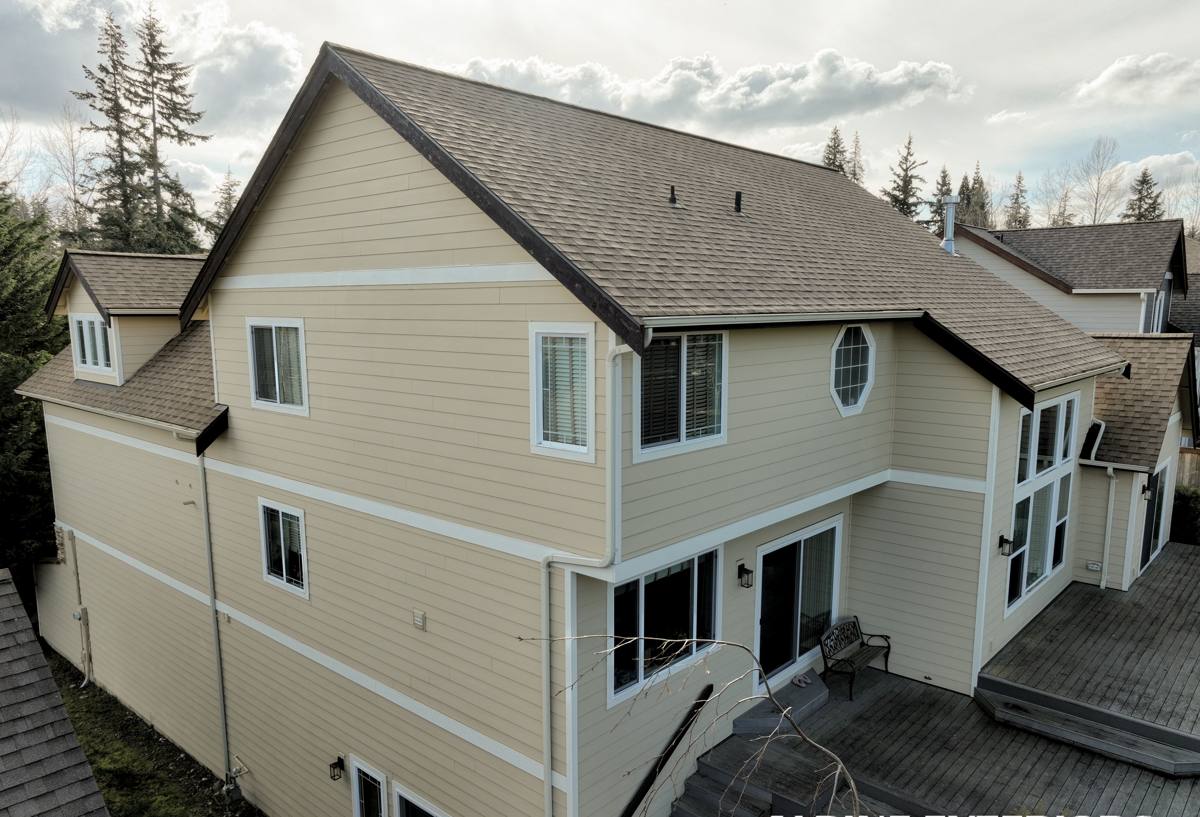
New-Construction vs. Replacement: Why the Distinction Matters Here
New-construction windows have a nailing fin that gets integrated directly into the wall's water-resistive barrier (WRB) and flashing system before siding goes on. That's a real advantage over replacement windows, which get set into an existing opening and rely on the old frame and whatever flashing is already there. On a new build, we get to build the drainage plane correctly from scratch — sill pan, jamb flashing, head flashing, and WRB laps all done in the right order, before anything is covered up.
In Silver Beach, that first-pass correctness matters more than most places in Whatcom County. Wind-driven rain off the water doesn't just fall straight down — it gets pushed sideways and upward under eaves and around corners, which is exactly the kind of moisture a sloppy flashing sequence lets through. Get it right during framing and you're set. Get it wrong, and the fix later means pulling siding and trim to correct it.
What "Correct" Actually Looks Like
- Sloped sill pan flashing under every window, not just a bead of sealant
- WRB integrated in proper shingle-lap order — housewrap over head flashing, never under it
- Jamb flashing that extends past the sill pan and laps correctly with the sill and head flashing
- Corner and end-dam details at the sill pan to stop lateral water movement
- Continuous, compressed sealant bead at the nailing fin — not spot-dabbed
- Backer rod and compatible sealant at the interior and exterior trim joints
What Silver Beach's Climate Actually Demands from a Window
Three things define window performance in this part of Bellingham: salt-laden air, sustained wind-driven rain, and long stretches of shaded, damp conditions that grow moss and algae on anything that holds moisture. None of these are dramatic on their own, but stacked together over years they punish weak materials and weak details.
Salt Air
Airborne salt accelerates corrosion on unprotected hardware, fasteners, and some window frame components. It's not usually severe enough here to rule out standard residential materials, but it's a reason we pay attention to hardware finish quality and avoid cutting corners on fasteners around window openings — a stainless or coated fastener costs little more and lasts much longer this close to the water.
Driving Rain
Bellingham gets a lot of rain, and Silver Beach's exposure means more of it arrives sideways. A window's water rating matters here more than in a sheltered inland lot. We look at each opening's exposure — how close it is to the waterfront side of the house, how much roof overhang protects it, which direction it faces — and match window performance and flashing detail to that specific exposure rather than treating every opening on the house the same.
Moss and Shaded Dampness
Mature tree cover and marine-layer humidity keep some elevations damp for long stretches, which is exactly what moss and algae need to take hold. Moss holding moisture against a sill or trim board is a slow, quiet way to cause rot even when the window itself is performing fine. Trim material choice, sill slope, and keeping vegetation clearances in mind during the build all reduce how much of a problem this becomes later.
Choosing the Right Window Material for This Exposure
There's no single "best" window material — the right choice depends on the specific opening, the budget, and how much upkeep the homeowner wants to take on. Here's how the common options compare for a Silver Beach build:
| Material | Coastal/moisture performance | Maintenance | Typical trade-offs |
|---|---|---|---|
| Vinyl | Good — won't rot or corrode, but can expand/contract with temperature swings | Low | Best value; frame color and sizing options more limited on large openings |
| Fiberglass | Very good — dimensionally stable, holds paint well, resists moisture damage | Low-moderate | Higher upfront cost than vinyl; strong long-term option for exposed elevations |
| Aluminum-clad wood | Good exterior protection with the warmth of wood inside | Moderate | Exterior clad face resists weather well; any cladding breach needs prompt attention |
| Bare wood | Weakest for this exposure without diligent upkeep | High | We generally steer clients toward clad or fiberglass on water-facing elevations for this reason |
We're not going to tell a homeowner a particular brand or material is "bad" — plenty of well-built products exist across all these categories. What we will do is walk through which elevation of the house each window sits on, how exposed it is, and recommend the material and glazing package that makes sense for that spot, rather than a one-size-fits-all answer for the whole house.
Glazing and Performance Considerations
Washington's energy code sets minimum performance requirements for new construction, and most quality window lines meet or exceed those baselines without much trouble. Beyond code minimums, a few things are worth deciding early with your builder:
- Low-E glazing package — helps with both winter heat retention and reducing summer heat gain, useful given how much glass modern coastal-view homes tend to include
- Argon or krypton gas fill — standard on most quality double- and triple-pane units, adds insulating value
- Impact or laminated glass on ground-floor or highly exposed openings, if wind-driven debris is a concern for the specific lot
- Egress compliance for bedroom windows — sizing and sill height requirements that need to be locked in during framing, not discovered at final inspection
How We Handle Installation on New Builds
Our process is built around getting the flashing sequence right the first time, since that's the part that's expensive to fix once siding is on.
- Rough opening review — we check every opening against the actual window schedule before anything gets set, catching sizing or squareness issues while they're still cheap to fix.
- Sill pan flashing — sloped, with end dams, installed before the window ever goes in.
- Window set and shim — leveled, plumbed, and squared, fastened per the manufacturer's schedule so the warranty stays intact.
- Jamb and head flashing — integrated with the WRB in correct shingle-lap order so water always sheds outward and downward.
- Sealant and backer rod — compatible sealants only; we don't mix sealant chemistries that can fail at the joint.
- Photo documentation — we document flashing details before they're covered by siding, so there's a record of what's behind the wall.
- Final walk-through — operation check on every unit, hardware adjustment, and a look at trim and caulking lines before we consider the job done.
Working Alongside Your Builder or GC
Most of our new-construction window work happens as a coordinated piece of a larger build, not a standalone project. That means scheduling around the framing and WRB installation timeline, communicating directly with your general contractor about sequencing, and making sure our flashing details match up with whatever siding system is going over them — lap siding, board and batten, or fiber cement all have slightly different trim and flashing expectations at the window opening. We'd rather have that conversation with your GC before the windows show up on site than after.
If you're the homeowner managing your own build or acting as your own GC, we're glad to walk you through the sequencing so nothing gets covered up before it should be.
Cost Factors on a New-Construction Window Package
Every build is different, so we won't quote a number without seeing the plans, but these are the variables that move the price most:
| Factor | Why it matters |
|---|---|
| Number and size of openings | Larger view windows and expansive glass packages cost more per square foot than standard-sized units |
| Material (vinyl vs. fiberglass vs. clad wood) | Material choice is usually the single biggest line-item swing in the window budget |
| Glazing package | Impact-rated or upgraded Low-E glass adds cost but may be worth it on exposed elevations |
| Site access and staging | Waterfront and hillside lots in Silver Beach can add labor time for material handling |
| Flashing complexity | Custom shapes, multiple stories, or unusual roof lines take more flashing detail work |
Why Hiring a Crew That Already Works This Neighborhood Matters
Silver Beach isn't a generic Bellingham lot. Lot exposure, prevailing wind direction relative to the water, and shade patterns from mature trees all vary block to block, and a crew that's already worked in the area has a feel for which elevations of a house need extra attention before we even walk the site. That familiarity shows up in small decisions — which openings get upgraded flashing details, where we push for a more moisture-resistant trim material, where a standard install is genuinely fine. It's the difference between a window package that's technically to code and one that's actually built for where it sits.
We also know the practical side of building in this area: typical inspection expectations in Whatcom County jurisdictions, how weather windows during framing tend to work with our wet season, and how to sequence window installation so your home isn't sitting open to driving rain any longer than necessary.
Get a Straight Answer on Your Windows
If you're planning new construction or a major addition in Silver Beach, we're happy to look at your plans, walk the site if it's framed, and give you an honest read on window materials, glazing, and flashing details suited to your specific lot and exposure. There's no pressure and no obligation — just a straightforward assessment from a crew that works this stretch of Bellingham regularly. Reach out using the form below for a free estimate.