 Bellingham
 New-Construction Windows in Happy Valley: Getting It Right the First Time
Happy Valley sits close enough to Bellingham Bay that homes here deal with a different set of conditions than a house twenty miles inland in the county. If you're building new, adding a room, or replacing a window opening down to the studs, "new-construction" windows are a different job than a retrofit replacement — the window unit has a nailing flange, it gets integrated directly into the wall's weather-resistive barrier, and the flashing sequence is built into the framing before siding ever goes on. Get that sequence wrong and you won't see the problem for a year or two, by which point it's hidden behind finished walls.
We install new-construction windows for homeowners and builders throughout Bellingham and Whatcom County, and Happy Valley is one of the areas we're in regularly enough to know what tends to go wrong on this side of town and what doesn't.
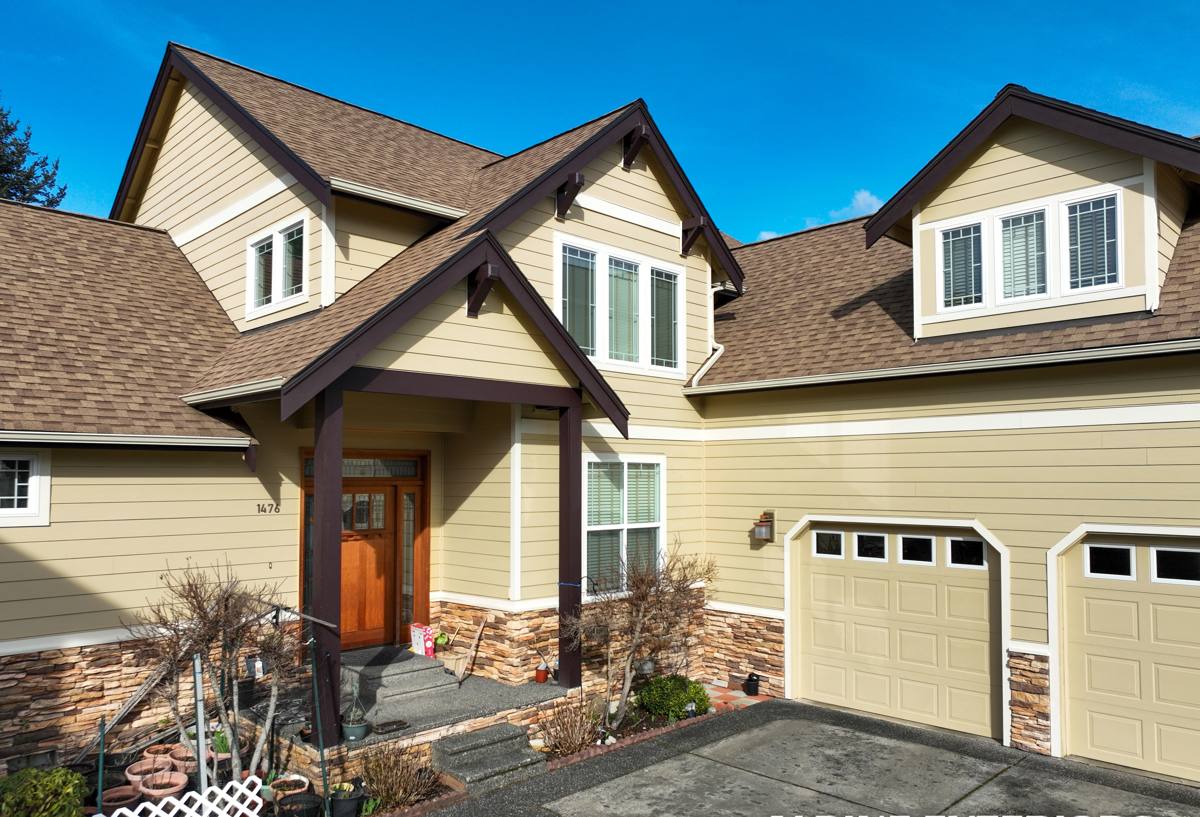
What Bellingham's Climate Actually Does to a Window Opening
Three things matter most for a new-construction window install in this part of Whatcom County:
Salt Air and Corrosion
Proximity to Bellingham Bay means airborne salt is a real factor on fasteners, flashing metal, and window hardware — not dramatically so compared to a beachfront property, but enough that cheap galvanized flashing or mismatched metals at the sill will corrode faster here than they would inland. We spec corrosion-resistant flashing and fasteners as standard, not an upgrade.
Driving Rain
Bellingham gets a lot of its rain sideways, pushed by wind off the water. A window that would be fine in a calm, dry climate with basic flashing can still leak here if the sill pan, head flashing, and side flashing aren't lapped correctly — water finds the path of least resistance, and driving rain finds gaps that vertical rain never would. This is the single biggest source of callback problems we see on other people's installs.
Moss and Sustained Moisture
Whatcom County's long wet season means anything that traps moisture against wood — a poorly sealed sill, a clogged weep hole, siding installed too tight to a window frame — stays damp for months at a time instead of drying out between storms. That sustained dampness is what feeds rot and the moss and algae growth you see staining exteriors around here. Window details that would be marginal in a drier climate become real problems in ours.
Choosing Window Material and Type for This Site
There's no single "right" window for every Happy Valley build, but material choice matters more here than it would in a milder climate. The table below is a general guide, not a recommendation to buy on price alone.
| Frame Material | Coastal/Marine Suitability | Maintenance | Relative Cost |
|---|---|---|---|
| Vinyl | Good — won't corrode, handles moisture well | Low | Lowest |
| Fiberglass | Excellent — very stable, resists warping and corrosion | Low | Mid-High |
| Aluminum | Fair — needs marine-grade finish or it corrodes near the bay | Moderate | Mid |
| Wood / Wood-clad | Fair to Good — clad exterior protects wood, but any breach invites rot | High | Highest |
We don't push wood-frame windows on homes this close to the water unless the homeowner specifically wants the look and understands the upkeep — any nick or failed seal in the cladding lets moisture into the wood underneath, and that's a slow, hidden failure in a climate that stays damp this long. Fiberglass and quality vinyl tend to be the more honest recommendation for most Happy Valley builds; which one makes sense depends on budget, window size, and the look you're going for.
The Installation Details That Actually Determine Performance
A window's rating on paper doesn't matter if the install is wrong. For new construction, the sequence is what protects the opening:
- Sill pan flashing — a sloped, sealed pan under the window that directs any water that gets past the frame back outside instead of into the wall.
- Weather-resistive barrier integration — the housewrap or barrier has to be cut, lapped, and taped so water sheds over each layer like shingles, never trapped behind one.
- Side and head flashing — layered in the correct order (sill, sides, then head) so every seam overlaps the one below it.
- Proper fastening and shimming — the unit has to be square, plumb, and fastened per the manufacturer's schedule, or the sash won't seal correctly for the life of the window.
- Interior and exterior sealant — backer rod and sealant at the right points, not just a bead of caulk around the trim.
Skipping or rushing any one of these is invisible on install day and becomes a problem two winters later, usually as a stain on drywall or a soft spot in siding — right when the driving rain and long wet season we described above go to work on the weak point.
Coordinating With Your Builder or General Contractor
Most new-construction window jobs in Happy Valley involve us working alongside a GC, framer, or the homeowner acting as their own general contractor. A few things make that go smoothly:
- Windows should be ordered with accurate rough opening measurements confirmed after framing, not from the plan set alone — framing tolerances vary.
- The weather-resistive barrier and flashing sequence needs to be coordinated with whoever is doing the siding, so there's no gap in responsibility between "who flashed the window" and "who installed the siding around it."
- Lead times on windows can run several weeks depending on size, manufacturer, and finish — ordering early avoids holding up the framing-to-dry-in schedule.
- Inspections (local building department sign-off on rough-in and weather barrier) should happen before siding closes the wall up.
We're comfortable working directly with a GC's schedule or directly with a homeowner managing their own build — either way, the flashing and integration details don't change.
Energy Code and Efficiency
Washington's energy code sets minimum performance requirements for new windows, and those requirements get updated periodically, so what qualified a few years ago may not meet current code today. For a Bellingham build, we help make sure the U-factor and solar heat gain numbers on the windows you're ordering actually meet what the current code requires for our climate zone — this matters for passing inspection and for how the house performs through our long, overcast, damp winters, when a well-sealed, properly rated window makes a noticeable difference in comfort and heating cost.
Our Process for a New-Construction Window Install
For a Happy Valley job, our process generally runs:
- Site visit and measure — confirming rough openings against the window order, checking framing for square and level.
- Product selection — walking through material, glazing, and performance options against your budget and the site's exposure to weather and salt air.
- Flashing and install — sill pan, barrier integration, side and head flashing, then the unit itself, fastened and sealed to spec.
- Inspection-ready documentation — the barrier and flashing work left visible and correct for the building department's rough-in inspection before siding closes it up.
- Final walkthrough — checking operation, seals, and trim before we call it done.
What to Check Before You Sign Off
Whether we're doing the work or you're evaluating any contractor's new-construction window install, this is worth confirming before the wall gets closed up:
- Is there a visible sill pan under each window, sloped to drain outward?
- Does the weather-resistive barrier lap over the flashing at the top of the window, not under it?
- Are the windows shimmed square and plumb, not just fastened where the opening happened to be?
- Do the U-factor and solar heat gain numbers on the spec sheet match current Washington energy code for our zone?
- Is the flashing metal or tape rated for long-term exterior exposure, not a generic interior product?
Why Local Experience in Happy Valley Matters
A window installer who mostly works dry-climate jobs can do everything "by the book" and still miss the details that matter on a site exposed to Bellingham Bay's wind-driven rain and salt air. Crews who work Happy Valley and the surrounding Whatcom County neighborhoods regularly get a feel for which details actually get tested by our weather versus which ones are just checkbox items elsewhere — where moss and algae tend to take hold first, which flashing metals hold up near the water, and how much slope a sill pan really needs when rain is coming in sideways off the bay for days at a stretch. That's not something you can fully substitute with a spec sheet.
If you're planning new-construction windows for a Happy Valley build — a new home, an addition, or a gutted-to-the-studs remodel — we're glad to walk the site and put together a straightforward, no-pressure estimate. Use the form below to get started.