 Bellingham
 Metal Roofing Built for Blaine's Coastline
Blaine sits right where Puget Sound weather gets serious about a roof. You've got salt air rolling in off the water, driving rain that comes sideways more often than straight down, and a moss season that seems to start earlier and last longer every year. A roof here isn't just shedding water — it's fighting corrosion, wind-driven moisture, and organic growth all at once. Metal roofing, installed correctly, handles all three better than most other options. Installed wrong, it fails faster than most other options too. The difference is almost entirely in the details.
We work throughout Whatcom County, and Blaine's proximity to the water and the Canadian border area gives it its own microclimate — more salt exposure than inland Bellingham neighborhoods, and often just as much rain, if not more, thanks to the marine air pushing moisture inland off the Strait.
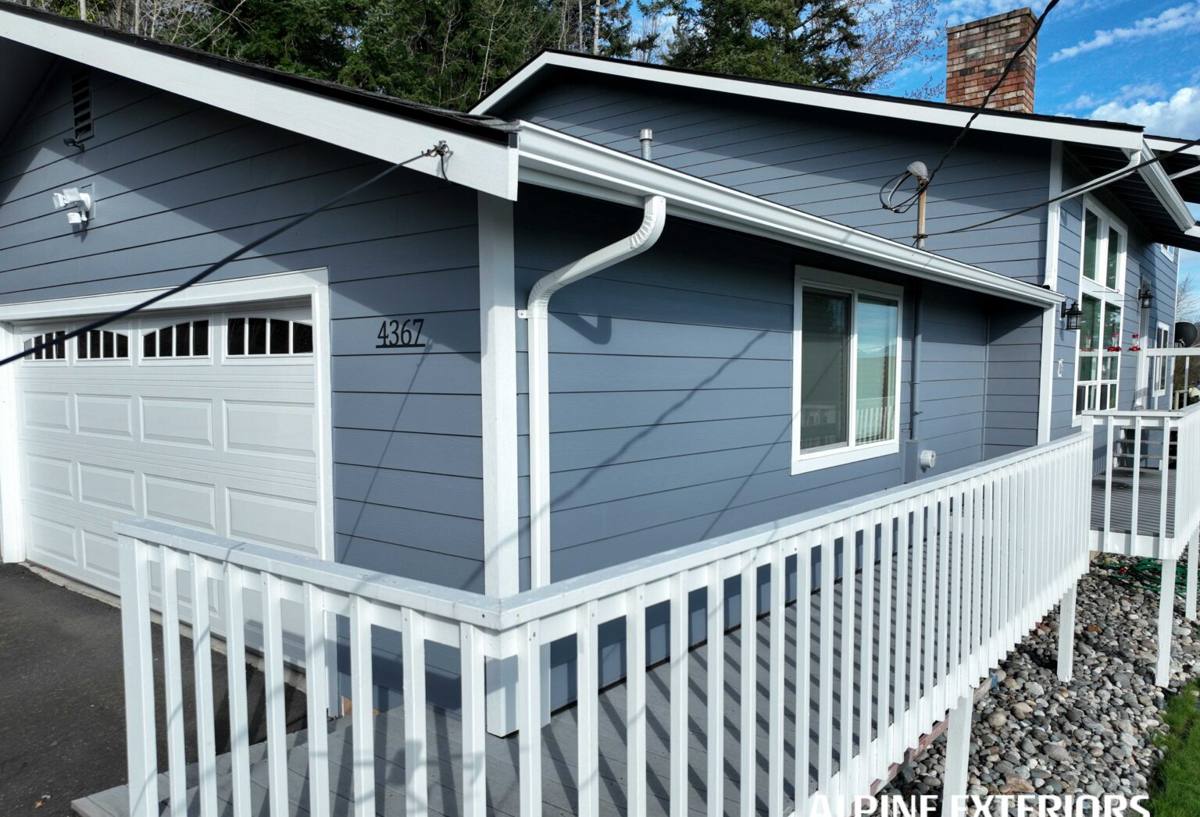
What Blaine's Climate Actually Does to a Roof
Salt Air and Corrosion
Salt-laden air accelerates corrosion on any exposed metal — fasteners, flashing, panel edges, cut ends. It doesn't matter how good the base material is if the fasteners or the cut edges aren't protected. This is the single biggest reason metal roofs fail early near the water: not the panels, but the small stuff around them.
Driving Rain
Wind-driven rain doesn't just land on a roof, it gets pushed sideways and upward into laps, seams, and penetrations. A roof detailed for calm-weather rain (straight down, gravity does the work) will leak in Blaine within a few seasons. Every seam, vent boot, and valley needs to assume water is trying to get in from an angle, not just from above.
Moss and Organic Growth
Whatcom County's damp, shaded conditions grow moss on almost anything that holds moisture and doesn't get sun. Moss on asphalt shingles lifts tabs and traps water against the roof deck. Metal roofing is far more moss-resistant by nature — there's less texture for spores to grab onto and moisture doesn't sit on the surface the way it does in shingle mat — but it isn't moss-proof, especially in shaded valleys, north-facing slopes, or spots where debris collects and holds dampness.
What a Correct Metal Roof Install Involves
A lot of roofing problems we get called out for aren't a bad product — they're a rushed or incomplete install. For Blaine conditions specifically, we treat the following as non-negotiable:
- Fastener and flashing material matched to the panel — mismatched metals near salt air cause galvanic corrosion, where one metal eats away at the other
- Proper underlayment — a synthetic or self-adhering ice-and-water type membrane at eaves, valleys, and penetrations, not just felt paper
- Correct panel overlap and sealed laps at low-slope sections, since wind-driven rain exploits any lap that's under-lapped for the wind direction
- Closure strips and foam closures at ridges and eaves to block wind-driven rain and pests without blocking ventilation
- Ventilation that actually balances intake and exhaust — trapped moisture under a metal roof causes condensation problems that show up as "leaks" that aren't leaks at all
- Valley and penetration detailing built for water moving fast and sideways, not just straight down
Skipping any one of these doesn't usually cause a problem on day one. It shows up two, five, or ten years later — which is exactly why cutting corners on a metal roof is a bad trade. You're buying a 40-50 year roof; it should be detailed like one.
Panel Types and What They Mean for a Blaine Home
| Panel Type | Salt/Coastal Suitability | Typical Use | Notes |
|---|---|---|---|
| Standing seam (steel or aluminum) | Excellent | Full roof replacement, higher-end remodels | Concealed fasteners mean far fewer penetration points for water and corrosion to start at |
| Aluminum standing seam specifically | Best for direct salt exposure | Waterfront or near-waterfront properties | Aluminum doesn't rust the way steel can; worth the upgrade closer to the water |
| Exposed-fastener steel panels | Good, with maintenance | Budget-conscious full replacements, outbuildings | Fasteners are the weak point — they need periodic inspection and eventual re-torquing or replacement |
| Stone-coated steel | Good | Homeowners wanting a shake or tile look with metal durability | More surface texture, so keep an eye on debris buildup in shaded areas |
For most Blaine homes we recommend standing seam with concealed fasteners. The upfront cost is higher than exposed-fastener panels, but the maintenance burden over 20+ years drops significantly, and that matters more here than in drier inland areas.
Our Process on a Blaine Metal Roof
- On-site inspection — we look at the existing roof, deck condition, ventilation, and how exposed the property is to wind and salt air (a beachfront lot and an inland Blaine lot get different recommendations)
- Honest scope and estimate — what panel type fits the home, what the deck needs (repair vs. replace), and a clear number, not a range designed to grow later
- Tear-off and deck prep — we check for rot and soft spots before anything new goes down; covering up a bad deck is how "new roofs" leak in year two
- Underlayment and flashing first — this is the layer that actually stops the water; panels are the visible layer, flashing is the working layer
- Panel installation to manufacturer spec, adjusted for local wind and rain exposure
- Final walkthrough — we go over what was done, what maintenance (if any) it needs, and how the warranty works
Maintenance: What Blaine Homeowners Actually Need to Do
One of the real advantages of metal roofing here is how little upkeep it needs compared to shingles — but "little" isn't "none," especially with moss pressure and salt air working against it year-round.
- Clear gutters and valleys of needles, leaves, and debris at least twice a year — trapped debris holds moisture against the panel and is where moss gets its first foothold
- Rinse off accumulated salt residue if the home is directly on the waterfront — a garden hose a couple times a year is usually enough
- Have exposed fasteners checked periodically if that's the panel type installed — they can loosen over time with thermal cycling
- Watch for moss starting in shaded valleys or north-facing sections and remove it early with a soft wash, not pressure washing, which can damage panel coatings
- After any major windstorm, a quick visual check for lifted flashing or dented panels is worth the ten minutes
Common Mistakes We See on Older Installs
We're regularly called out to homes where a metal roof was installed by a crew unfamiliar with coastal Washington conditions. The recurring issues: mismatched fastener metal causing corrosion streaking, underlayment that wasn't rated for the moisture exposure, and valleys detailed for straight-down rain instead of wind-driven rain. None of these are metal roofing's fault — they're installation shortcuts that only show themselves once the weather gets to work on them.
Why Local Experience in Blaine Matters
Roofing crews who mostly work drier, inland climates tend to detail roofs the way they'd detail one in Spokane or Yakima — technically to code, but not built for what Whatcom County's coastline actually throws at a house. A crew that regularly works Blaine and the surrounding Whatcom County waterline knows which slopes catch the worst of the wind-driven rain, where moss tends to establish first, and which fastener and flashing combinations hold up against salt air instead of just looking fine at handoff. That knowledge doesn't show up in a spec sheet — it shows up ten years later, in whether the roof is still doing its job.
What Metal Roofing Costs and Why It Varies
| Factor | Why It Moves the Price |
|---|---|
| Panel type and material (steel vs. aluminum, standing seam vs. exposed fastener) | Aluminum and standing seam cost more upfront but need less long-term maintenance |
| Roof complexity (valleys, dormers, penetrations) | More cuts and flashing details mean more labor and more failure points to detail correctly |
| Existing deck condition | Rot or soft decking found during tear-off adds repair cost before panels can go on |
| Tear-off vs. overlay | Metal can sometimes go over existing shingles if code and conditions allow, but a full tear-off gives a better long-term result on older roofs |
| Proximity to water | Higher salt exposure often justifies upgrading to more corrosion-resistant materials |
Broad ranges for a full metal roof replacement in this region typically run from the mid-teens per square (100 sq ft) for exposed-fastener steel up to considerably more for standing seam or aluminum — but the honest answer is that it depends on the roof in front of us. That's what the estimate is for.
If you're weighing metal roofing for a home in Blaine, we're happy to take a look and give you a straight answer — what your roof actually needs, what it doesn't, and what it would cost to do it right. The estimate is free and there's no pressure attached to it; fill out the form below and we'll get in touch.