 Bellingham
 Metal Roofing Built for Birchwood's Climate
Birchwood sits close enough to Bellingham Bay and the surrounding waterways that salt-laden air is a real factor in how long any roof lasts, not just a talking point. Add Whatcom County's long wet season, wind-driven rain off the Sound, and the shade from mature conifers that keeps roof surfaces damp well into summer, and you have a set of conditions that punishes the wrong roofing choice fast. Metal roofing, installed correctly, handles all three of those stressors better than most alternatives — but "installed correctly" is doing a lot of work in that sentence, and it's the part that separates a roof that lasts thirty-plus years from one that starts leaking at year eight.
This page is specifically about metal roofing for homes in and around Birchwood. We're not going to give you a generic rundown of metal roofing in general — we want to walk through what this particular neighborhood's weather actually does to a roof, what a correctly installed system looks like in response, and how our process is built around that.
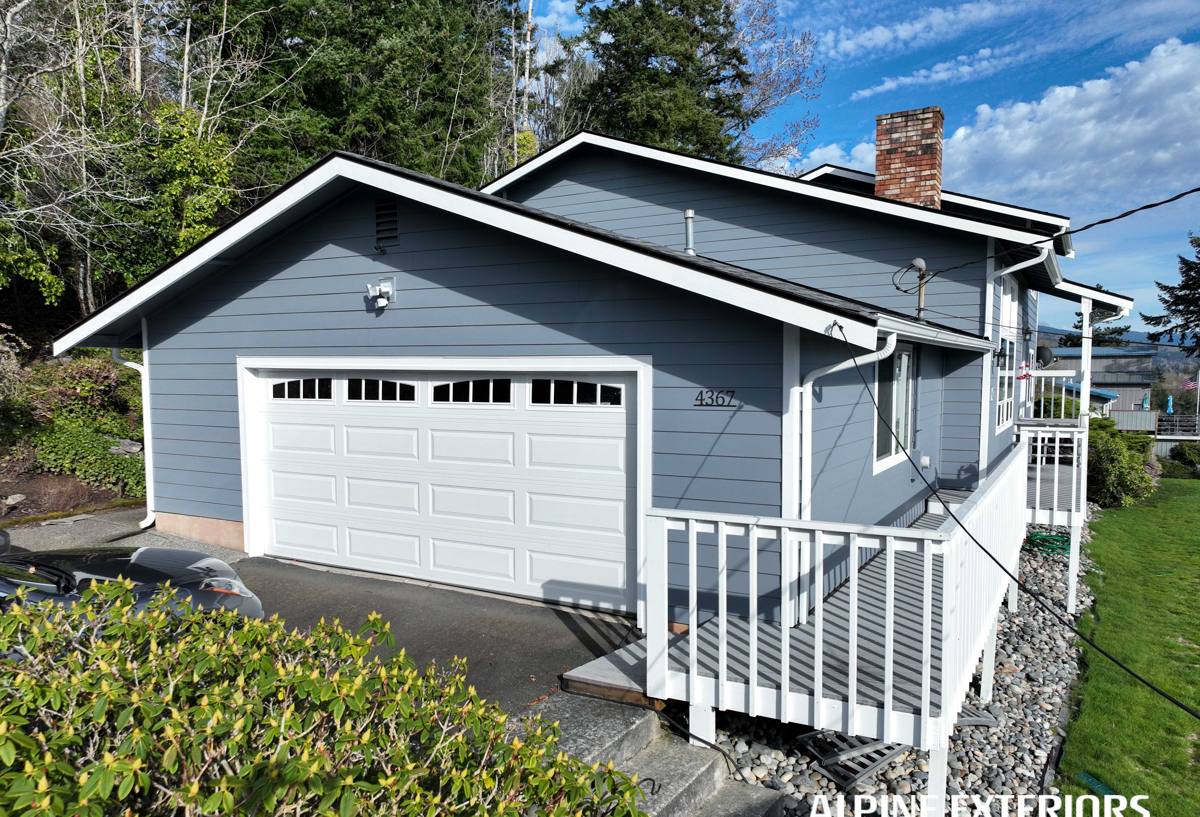
What Bellingham's Weather Does to a Roof
Salt Air and Corrosion
Proximity to the bay means airborne salt settles on every exterior surface, roofs included. Bare or poorly coated steel fasteners, exposed cut edges, and low-grade flashing are the first places corrosion shows up. It's not dramatic — it's a slow, steady process that shows up as rust streaking and eventually as failed seams, usually starting at the roof's most exposed edges and valleys.
Driving Rain
Wind off the water doesn't just bring rain straight down — it pushes it sideways and up under laps, ridge caps, and flashing that weren't detailed with that in mind. A roof that would shed water fine in a calm climate can leak in Bellingham if the underlayment, laps, and fastening pattern weren't built for wind-driven moisture.
Moss and Shade
Whatcom County's tree cover and long damp season give moss and algae a lot of time to establish, especially on north-facing slopes and anywhere debris collects. Moss holds moisture against the roof surface, works into seams, and on the wrong roofing material can trap water long enough to cause real damage underneath.
Why Metal Handles These Conditions Well — When It's Done Right
Quality metal roofing has a real advantage here: it doesn't have the porous surface that moss and algae need to gain a foothold, and there's no organic material for it to feed on. Combined with a steep or well-pitched roof — common on Birchwood's older and newer homes alike — water and debris move off the surface quickly instead of sitting and soaking in. That said, metal is not moss-proof or corrosion-proof on its own. The coating quality, the fastener grade, and the flashing detailing are what actually determine whether a metal roof shrugs off this climate or struggles with it.
Panel Types We Install: A Comparison
Not every metal roofing product is a fit for every home or budget. Here's how the main options compare for a Birchwood application specifically.
| System | Salt-Air Resistance | Best Fit | Trade-Offs |
|---|---|---|---|
| Standing seam steel or aluminum | Excellent — concealed fasteners, minimal exposed metal | Full roof replacements, homes closer to the water | Higher material and labor cost, requires an experienced installer |
| Exposed-fastener steel panels | Good, if fasteners and gaskets are high-grade and re-checked over time | Budget-conscious full replacements, outbuildings, shops | Fasteners are the weak point long-term and need periodic inspection |
| Stone-coated steel | Very good — coating protects the steel and mimics shake or tile | Homeowners wanting a traditional look with metal's durability | Heavier system, more complex flashing at penetrations |
| Aluminum standing seam | Best-in-class for coastal/salt exposure — won't rust | Homes with direct bay exposure or heavy salt spray | Softer material, needs careful handling during install |
For most Birchwood homes we lean toward standing seam in steel or aluminum, largely because concealed fasteners remove the corrosion weak point entirely and the long panel runs shed wind-driven rain with fewer joints for water to find. Where budget is the deciding factor, a quality exposed-fastener system is still a reasonable choice — it just needs realistic expectations about fastener maintenance down the road.
What a Correct Installation Actually Involves
The panel itself is maybe a third of what makes a metal roof perform in this climate. The rest is in the details most homeowners never see:
- Underlayment: A synthetic, high-temp-rated underlayment across the full deck, with self-adhered ice-and-water membrane at eaves, valleys, and any low-slope transitions — the areas driving rain and pooling water hit hardest.
- Fastener grade: Stainless or high-grade coated fasteners matched to the panel material, not mixed metals that set up galvanic corrosion between fastener and panel.
- Flashing detail: Custom-formed flashing at every valley, wall transition, chimney, and vent — pre-formed, one-size flashing is where most leaks in this region actually start.
- Ventilation: Proper ridge and intake venting so moisture from inside the attic doesn't condense against the underside of the panels, which matters more in a consistently damp, cool climate than in drier regions.
- Fastening pattern and seam spacing: Tightened to the wind exposure of the specific site, not a generic spec sheet number.
- Panel-edge treatment: Cut edges sealed or oriented so exposed steel isn't left to corrode where it's most vulnerable.
Moss Prevention Built Into the Job
Metal's smooth, non-porous surface already resists moss better than composite or wood roofing, but the details still matter in a shaded, damp neighborhood like Birchwood:
- Zinc or copper strips near the ridge on shaded slopes, which release trace metal ions in rainwater that discourage moss growth over the life of the roof.
- Proper slope and panel overlap so water and debris don't pool anywhere on the surface.
- Gutter and valley design that doesn't trap falling needles and leaf litter against the panel edges, which is where moss tends to establish first even on metal.
Our Process for a Birchwood Metal Roof
- On-site assessment: We walk the roof, check the deck condition, note shade patterns, wind exposure, and existing moss or corrosion issues specific to the property.
- System recommendation: Based on that assessment — not a one-size answer — we recommend the panel type, gauge, and finish that fits the home's exposure and your budget.
- Deck prep: Any soft, rotted, or water-damaged decking gets replaced before anything goes down. Installing over a compromised deck just hides a problem.
- Underlayment and flashing installation: Full underlayment coverage with ice-and-water membrane at vulnerable areas, then custom flashing formed for the specific roof geometry.
- Panel installation: Installed to the fastening and seam spec appropriate for the site's wind exposure.
- Final inspection and walkthrough: We check every seam, flashing point, and penetration before calling the job done, and walk you through what maintenance (if any) the system needs.
Cost Factors for a Birchwood Metal Roof
| Factor | Impact on Cost |
|---|---|
| Panel type (exposed-fastener vs. standing seam) | Standing seam runs higher due to labor and concealed-fastener hardware |
| Roof complexity (valleys, dormers, penetrations) | More cuts and flashing detail add labor time |
| Existing deck condition | Rot or water damage found during tear-off adds repair cost |
| Material (steel vs. aluminum) | Aluminum costs more but is the strongest choice against salt exposure |
| Roof pitch and access | Steep or hard-to-access roofs add labor and safety equipment time |
We don't publish a flat per-square-foot number because these factors genuinely move the price — but we'll give you a clear, itemized quote after seeing the roof, with no pressure to upsize the system beyond what the home actually needs.
Maintenance: What to Expect Afterward
- An annual visual check for debris buildup in valleys and against any shaded edges.
- Keeping gutters clear so water isn't backing up under eave flashing during heavy rain events.
- A look at any exposed fasteners every couple of years if you went with an exposed-fastener system.
- No sealing, staining, or recoating required with a properly finished metal system — that's one of the real advantages over other roofing materials in this climate.
Why a Crew That Already Works Birchwood Matters
Roofing details that work fine in a drier inland climate can fall short here, and a crew that hasn't worked Whatcom County roofs regularly may not think to spec ice-and-water membrane at every low-slope transition, or use fastener grades that hold up against salt air, or set up moss-resistant detailing on shaded slopes. We work in Bellingham and the surrounding communities, including Birchwood, regularly enough that these aren't extra add-ons we have to be talked into — they're standard practice for us because we've seen what this climate does to roofs that skip them.
If you're weighing a metal roof for your Birchwood home, we're glad to come take a look, walk you through what your specific roof needs, and put together a straightforward, no-pressure estimate — no obligation, just a clear picture of your options. The form below is the easiest way to get started.