 Bellingham
 Why Lynden Roofs Take a Different Kind of Beating
Lynden sits inland from Bellingham Bay, but "inland" doesn't mean easy on a roof. Homes here still deal with salt-laden air drifting in off Puget Sound and the Strait of Georgia, months of driving rain that finds every weak seam, and a moss season that can run from late fall through spring. Add in the cold, gusty outflow winds that periodically funnel down out of the north in winter, and you've got a climate that punishes any roof installed with shortcuts. A roof that's correctly built for this part of Whatcom County isn't just about keeping rain out on a dry day — it's about surviving weeks of saturated ground, freeze-thaw cycles, and near-constant humidity without the deck rotting, the shingles curling, or moss lifting the edges of every course.
That's the standard we install to. Whether your current roof is failing early, was never installed right in the first place, or has simply reached the end of its service life, a new roof for a Lynden home needs to be built for this exact climate — not a generic roof dropped in from a warmer, drier part of the country.
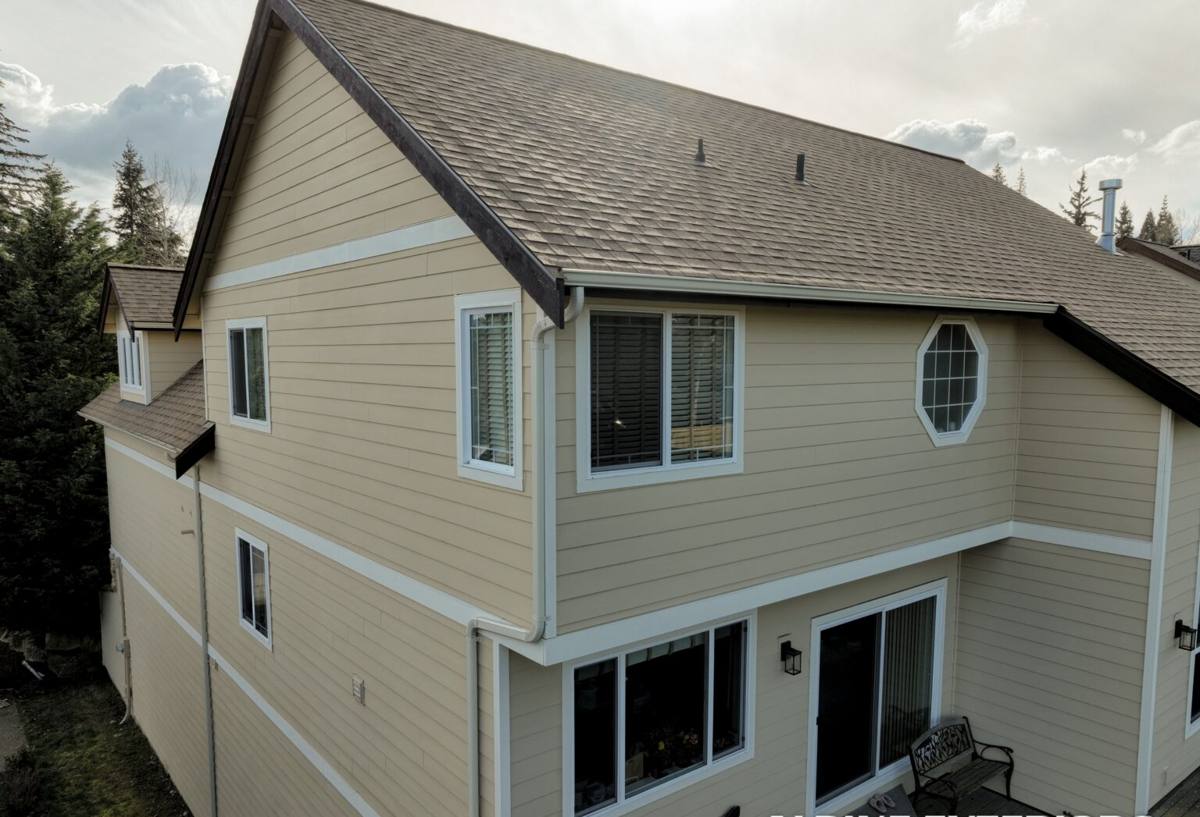
What a Correct New Roof Installation Actually Involves
Tear-Off and Deck Inspection
A proper new roof starts with a full tear-off down to the decking, not a layer installed over old material. This is the only way to actually see what's happening underneath — and in a wet climate like ours, that matters. We check every sheet of decking for soft spots, delamination, and water staining, especially around old flashing points, plumbing vents, and valleys where water has been concentrating for years. Any compromised decking gets replaced before a single shingle goes down. Skipping this step is one of the most common ways a "new roof" fails within a few years.
Underlayment and Water Barriers
In a region that sees this much sustained rain, the underlayment matters almost as much as the roofing material itself. We use synthetic underlayment across the full roof deck for its tear resistance and water shedding, with self-adhering ice-and-water shield membrane at the eaves, valleys, and any low-slope transitions — the spots where wind-driven rain and ponding water are most likely to work their way underneath the surface layer. This is a place where cutting corners doesn't show up right away; it shows up two or three winters later as a stain on a ceiling.
Flashing, Ventilation, and the Details Nobody Sees
Most roof leaks don't come from the field of the roof — they come from the details around it: chimneys, skylights, sidewalls, and vent penetrations. We install new metal flashing at every one of these transitions rather than reusing old, bent, or rusted pieces. We also size and balance intake and exhaust ventilation correctly, because a roof that can't breathe traps moisture in the attic, which accelerates deck rot, feeds mold, and shortens the life of the shingles from underneath — a slow failure that's easy to miss until it's expensive.
Roofing Materials That Hold Up in Whatcom County
There's no single "best" roofing material for every home — the right choice depends on your roof's slope, your home's style, your budget, and how much long-term maintenance you're willing to take on. Here's how the common options compare for a wet, moss-prone, moderately salty coastal climate like ours.
| Material | Typical Lifespan | Moss/Moisture Behavior | Maintenance |
|---|---|---|---|
| Architectural asphalt shingle | 25–30 years | Good with algae-resistant granules; still benefits from periodic cleaning | Low |
| Standing seam metal | 40–50+ years | Sheds moss and moisture very well; minimal organic growth on smooth panels | Very low |
| Cedar shake | 20–30 years with upkeep | Attractive but absorbs moisture and is the most moss- and rot-prone option here | High |
| 3-tab asphalt shingle | 15–20 years | Lower wind rating and thinner profile; moss and algae take hold faster | Low-moderate |
For most Lynden homes, we steer people toward architectural (dimensional) asphalt shingles with algae-resistant granules, or standing seam metal for homeowners who want the longest possible service life and the least moss maintenance. We don't typically recommend cedar shake for this climate as a primary roofing material — not because it can't look good, but because sustained regional moisture makes it a high-upkeep choice, and we'd rather be upfront about that maintenance burden than sell a product that will need constant attention.
Our New Roof Installation Process
- On-site inspection and honest assessment of whether you need a full replacement or targeted repair
- Written estimate detailing materials, scope, and timeline — no vague allowances
- Material selection walkthrough, including color, style, and ventilation plan
- Scheduling built around realistic Whatcom County weather windows, not guesswork
- Full tear-off, deck inspection and repair, and jobsite protection for landscaping and gutters
- Installation of underlayment, ice-and-water membrane, flashing, and the roofing material itself
- Ventilation balancing and a final walk-through so you know exactly what was done and why
We schedule new roof installations with an eye on actual weather patterns here, not a generic calendar. A roof torn off and left exposed during a multi-day rain system is a preventable disaster — good scheduling and jobsite sequencing avoid that entirely.
What Affects the Cost of a Lynden Roof Replacement
Every roof is priced on its own specifics, but the same handful of factors drive most of the variation we see on Whatcom County homes.
| Cost Factor | Why It Matters |
|---|---|
| Roof size and number of planes | More square footage and complexity means more material and labor time |
| Pitch and accessibility | Steeper or harder-to-access roofs require more safety equipment and slower work |
| Decking condition | Rot or delamination found during tear-off adds replacement material and labor |
| Material choice | Standing seam metal and premium shingles cost more upfront than standard asphalt |
| Number of penetrations | Chimneys, skylights, and vents each need new flashing, adding labor |
| Layers to remove | Multiple existing layers take longer to strip and dispose of than a single layer |
Broad ranges only, since every roof is different: a straightforward asphalt shingle replacement on an average home is typically a moderate five-figure investment, while metal roofing or a larger, more complex roof runs higher. We'll always give you the real number for your roof in writing before any work starts.
Signs Your Roof Needs Replacing, Not Another Repair
Not every roof problem means starting over. But a handful of signs usually mean patching is just delaying the inevitable — and often costing more in the long run.
- Shingles that are curling, cracked, or missing granules across large sections, not just one spot
- Daylight visible through the roof deck from inside the attic
- Soft or spongy decking underfoot when walked during inspection
- Repeated leaks in different locations after prior repairs
- Heavy, established moss growth that's lifting shingle edges rather than sitting on the surface
- A roof at or past 20–25 years old (for asphalt) with visible wear
- Sagging rooflines, which can indicate structural or moisture damage underneath
Moss, Algae, and Whatcom County's Long Wet Season
Moss isn't just a cosmetic issue in this climate — it's a moisture trap. Once moss establishes itself on a roof, it holds water against the shingle surface far longer than the shingle was designed to handle, and it can physically lift shingle edges, opening a path for water underneath. A new roof installation is the right time to get ahead of this: we install algae-resistant shingle products where appropriate and can add zinc or copper strips near the ridge, which release trace metal ions with each rain to slow future moss and algae growth across the roof field below. None of this eliminates the need for occasional roof cleaning in a region with this much sustained dampness, but it meaningfully extends the time between cleanings and reduces how aggressively moss takes hold.
Why a Crew That Already Works in Lynden Matters
A roofing crew that regularly works Lynden and the surrounding Whatcom County communities isn't guessing at how to build for this climate — they've already seen what fails here and why. That means knowing which flashing details actually hold up through a wet Pacific Northwest winter, understanding local permitting and inspection expectations, and being realistic about scheduling around the rain rather than promising a timeline that falls apart the first time a weather system rolls through. It also means being reachable afterward if a question comes up — not a crew that did one job in the area and moved on. A roof is a long-term investment in your home; it's worth having it installed by people who plan to still be working in this community years from now.
If you're weighing a repair against a full replacement, or you just want a straight answer on what your roof actually needs, we're glad to take a look. Fill out the form below for a free, no-pressure estimate on your Lynden home.