 Bellingham
 Why Lynden Homes Need Siding Built for This Climate
Lynden sits in a part of Whatcom County that puts real stress on exterior building materials year-round. Homes here deal with a long wet season, driving rain that comes in sideways off open farmland and river valleys, salt-tinged air carried inland from Bellingham Bay and the Salish Sea, and a moss and mildew season that can stretch from fall through spring. Siding that isn't engineered for this combination doesn't just look tired faster — it can trap moisture behind the surface, swell, delaminate, or rot from the inside out long before a homeowner notices a problem from the curb.
That's the reason we install James Hardie fiber cement siding exclusively on Lynden homes. It's not a marketing preference — it's a decision based on what actually holds up against this specific climate, versus what looks fine in a showroom but struggles once it's on a wall facing forty-plus inches of annual rainfall and months of damp, low-sun conditions.
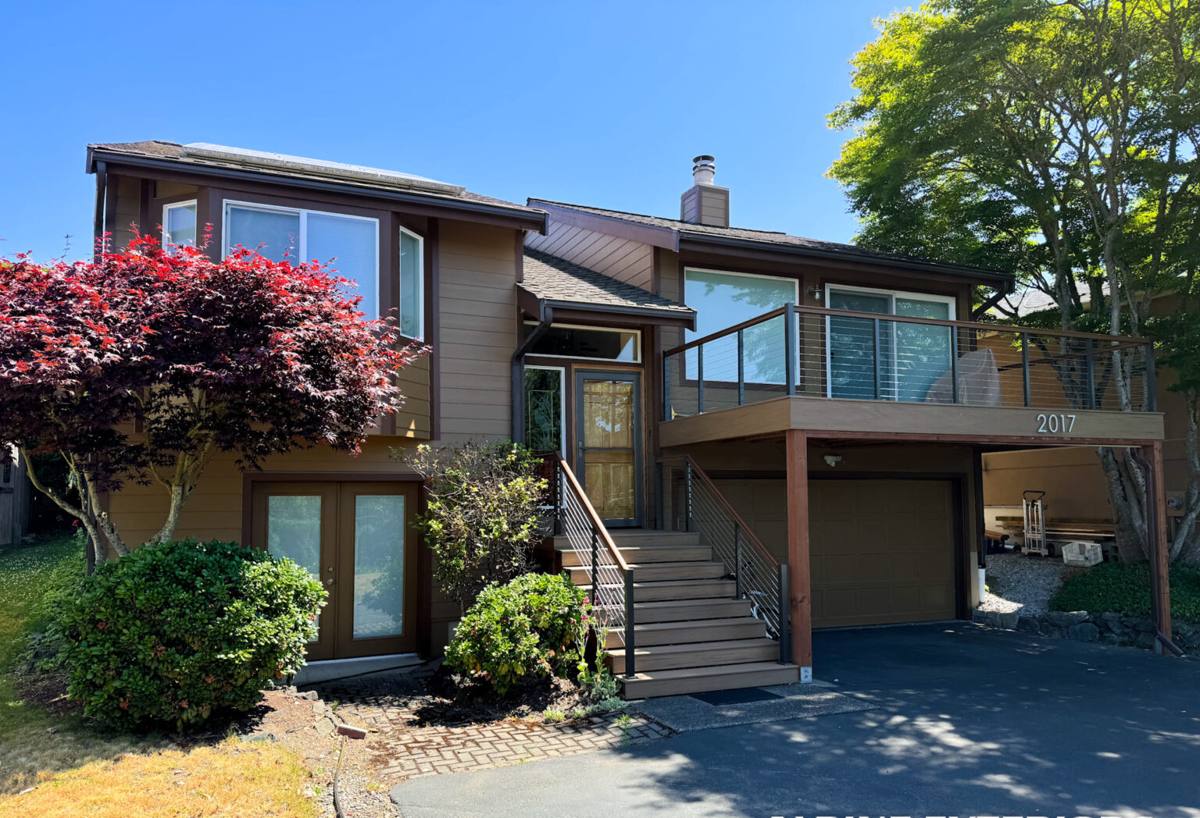
What Whatcom County's Climate Actually Does to Siding
Driving Rain and Wind-Driven Moisture
Lynden's open agricultural setting means less wind-blocking than you'd get in a denser neighborhood closer to town. Rain doesn't just fall here — it gets pushed horizontally into wall assemblies, especially on west- and south-facing elevations. Siding materials that rely on paint film alone for weather resistance, or that swell when they absorb water, start failing at the seams and fastener points first.
Salt Air, Even This Far Inland
Lynden is far enough from the coast that people don't always think of salt exposure as a factor, but Whatcom County's marine-influenced air moves inland more than most homeowners expect. Over years, that salt content accelerates corrosion on fasteners and metal trim, and it interacts with organic growth on porous siding surfaces in ways that speed up surface breakdown.
Moss, Algae, and the Long Damp Season
Northwest Washington's moss season isn't a two-month nuisance — on shaded or north-facing walls, conditions favorable to moss and algae growth can persist most of the year. Wood-based and wood-fiber siding products are especially vulnerable because organic growth needs organic material to feed on. Fiber cement doesn't offer that food source, which matters more here than in drier climates.
Why James Hardie Specifically — Not Wood, Vinyl, or Other Fiber Cement
We only install James Hardie products, and homeowners in Lynden deserve to know exactly why, not just take it as a slogan.
- It's non-combustible. Fiber cement doesn't feed a fire the way wood-based siding can, which matters as wildfire smoke seasons have become a more regular part of Pacific Northwest summers.
- It's engineered for wet climates specifically. James Hardie's HZ5 product line is formulated for the moisture and freeze-thaw conditions common in the Pacific Northwest, unlike generic fiber cement built to a national average spec.
- The ColorPlus factory finish outperforms field-applied paint. A baked-on, multi-coat finish applied under factory conditions resists fading and moisture intrusion far better than paint rolled on-site, which is especially relevant given how much UV and rain cycling this region's siding endures.
- The warranty is transferable and substantive. That matters to homeowners who may sell in the next decade — a strong warranty on the siding itself is a real selling point for the next buyer.
We've made a deliberate call not to install LP SmartSide, vinyl, Cemplank, Allura, primed spruce, or cedar. Each of those products has legitimate use cases somewhere — but for the specific combination of driving rain, salt exposure, and moss season that Lynden homes face, we've found the trade-offs (moisture sensitivity, maintenance burden, finish durability, or installation forgiveness) aren't worth it. We'd rather install one product exceptionally well than juggle five and get mediocre results installing each of them occasionally.
What a Correct James Hardie Installation Actually Involves
The material is only half the equation. Fiber cement siding fails prematurely almost exclusively because of installation mistakes, not product defects — and that's especially true in a climate like this one where the margin for error is smaller.
Water Management Comes First
Before a single plank goes up, correct water-resistive barrier (WRB) installation, proper flashing at windows, doors, and penetrations, and a rainscreen or drainage gap where called for are what actually keep water out of the wall assembly. Hardie siding is durable, but it's still a rain-screen cladding, not a waterproof membrane — the assembly behind it does the real work of managing moisture that gets past the surface.
Fastening and Clearances
James Hardie specifies exact fastener types, spacing, and penetration depth, along with minimum clearances from grade, roofing, and decks. In a high-rainfall area, skipping the specified ground clearance or caulking a joint that should have been left to drain is exactly the kind of shortcut that causes moisture problems years down the line — often hidden behind the siding until the damage is significant.
Joint Treatment and Caulking Discipline
Butt joints, corners, and trim intersections need to be treated according to Hardie's published details, not improvised. Overusing caulk to "seal everything" is a common mistake that actually traps moisture rather than letting it drain and dry, which is a bigger problem in a climate this wet than in drier parts of the country.
Installation Checklist We Follow on Every Lynden Project
- Verify and repair the water-resistive barrier before any siding installation begins
- Install proper flashing at all windows, doors, and roof-to-wall intersections
- Maintain manufacturer-specified clearance from grade, decks, and roof lines
- Use correct fastener type, spacing, and embedment depth per James Hardie specs
- Follow Hardie's joint and butt-seam details rather than relying on field caulking
- Prime and finish any field-cut edges per manufacturer instructions
- Inspect for level, plumb, and proper panel engagement before final fastening
Comparing How Common Siding Materials Handle This Climate
| Material | Moisture Behavior in Wet Climates | Moss/Algae Resistance | Long-Term Maintenance |
|---|---|---|---|
| James Hardie Fiber Cement (HZ5) | Engineered for wet regions; dimensionally stable when installed correctly | No organic food source; resists growth better than wood-based products | Low — factory finish holds up for years |
| Vinyl Siding | Can warp and gap in temperature swings; seams are moisture entry points | Moderate; growth occurs but doesn't feed on the material itself | Low, but appearance and fit degrade over time |
| Wood/Cedar | Absorbs moisture readily; prone to swelling, cupping, and rot | Poor — organic material feeds growth directly | High — regular refinishing and treatment required |
| LP SmartSide / Wood-Fiber Composite | Better than raw wood but still moisture-sensitive at cut edges and seams | Moderate; still an organic substrate | Moderate — edge sealing and inspection needed |
Why Hiring a Crew That Already Works in Lynden Matters
Installation quality depends heavily on whether the crew understands local conditions before they ever show up on site. A crew that mostly works drier climates may not think twice about clearance details or drainage gaps that are non-negotiable here. A crew that regularly works Whatcom County homes already knows which elevations take the worst weather, how the local moss season affects long-term siding performance, and where past installations in this area have run into trouble when corners were cut.
That local familiarity also shows up in smaller but real ways — knowing which inspectors in the area check for what, understanding how Lynden's mix of older farmhouses and newer construction affects retrofit approaches, and having already worked through the practical realities of scheduling around this region's wet season rather than learning it on your project.
What to Expect From Our Process
Assessment
We start by looking at your home's current siding condition, water management details, and any problem areas — particularly on north-facing or shaded walls where moss and moisture tend to concentrate first.
Plan and Product Selection
We walk through James Hardie's relevant product lines, profiles, and ColorPlus finish options for your home, explaining what's appropriate for your specific elevations and exposure rather than a one-size-fits-all recommendation.
Installation
Water-resistive barrier and flashing work happens first and gets verified before siding goes up. Every fastening, clearance, and joint detail follows James Hardie's published installation specifications — not shortcuts, not improvisation.
Final Walkthrough
We walk the finished job with you, confirming fit, finish, and any trim or caulking details before considering the project complete.
Cost Factors for a Lynden James Hardie Project
Every home is different, but the factors that most affect cost on a Lynden project are consistent: the condition of the existing wall assembly and whether water damage needs remediation before new siding goes on, the complexity of the home's roofline and trim details, the amount of water-resistive barrier and flashing work required, and the specific Hardie product line and finish selected. Homes with prior moisture damage from failed siding typically cost more up front but avoid a much larger repair bill down the road.
If you're planning a siding project in Lynden, we're happy to take a look at your home and walk you through what correct James Hardie installation would involve for your specific situation — no pressure, no obligation. Use the form below to request a free estimate.