 Bellingham
 Board & Batten Siding for Lynden: A Look That Has to Earn Its Keep
Board and batten has a natural home in Lynden. The vertical lines and clean, farmhouse-style profile suit the mix of acreage properties, newer builds, and traditional homes you find throughout this part of Whatcom County. But board and batten isn't just a style choice out here — it's a siding system that has to perform against real weather, year after year, or it turns into a maintenance headache fast. This page is about what board and batten needs to be built like in Lynden specifically, not what it looks like in a brochure photo from somewhere dry.
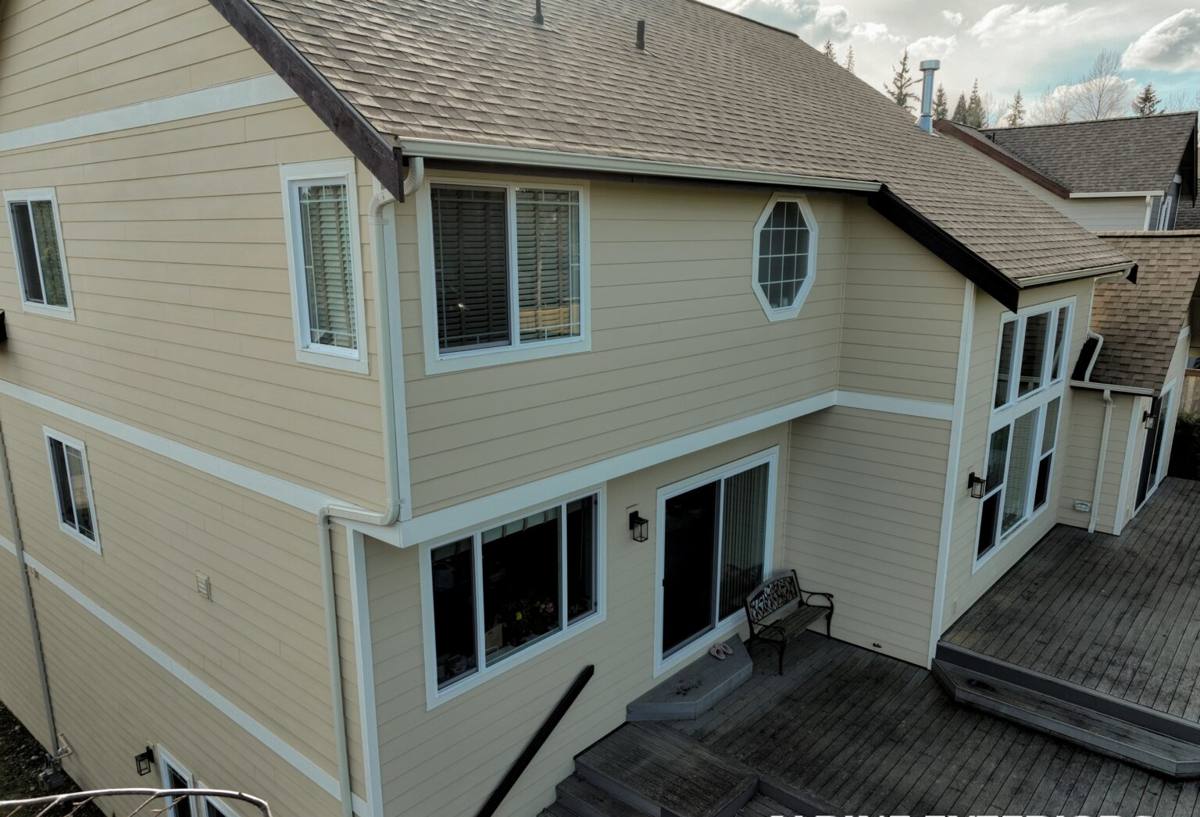
What Lynden Siding Is Actually Up Against
Whatcom County sits where marine weather off the water meets long, wet winters and a growing season that keeps everything green — including things you don't want growing on your house. Three factors matter most for board and batten performance here:
- Salt-laden air. Moisture moving inland off Bellingham Bay and the Salish Sea carries salt content that accelerates corrosion on fasteners, staples, and unprotected metal flashing — a slow but steady problem for any siding system that relies on exposed hardware.
- Driving rain. Storms here don't just fall straight down — wind-driven rain gets pushed sideways into vertical seams, gable ends, and the top edges of battens, which is exactly where a poorly detailed board and batten job fails first.
- A long moss season. Shaded walls, north-facing elevations, and tree-covered lots hold moisture for months at a time. Anything that traps water against the wall — caulk-only seams, tight-to-the-wall battens, missing drainage gaps — becomes a moss and mildew magnet.
None of this means board and batten is a bad choice for Lynden. It means the installation details matter more here than they would in a drier climate, and cutting corners shows up on the wall within a few wet seasons instead of a few decades.
What a Correct Board & Batten Installation Actually Involves
Furring strips and drainage
Board and batten can be installed flat against the wall or over vertical furring strips that create a small air gap between the siding and the weather-resistive barrier. In a climate with this much sustained moisture, that gap matters — it lets any water that gets past the outer layer drain and dry instead of sitting against the sheathing. We evaluate wall assembly, sheathing type, and exposure on every project to decide whether furring is the right call, rather than defaulting to whatever is fastest to install.
Fastening that won't fail early
Board and batten puts a lot of exposed vertical seams on a wall, and every one of those seams is a potential water path if fasteners are placed wrong, spaced wrong, or driven with the wrong tool settings. Hand-nailing or properly calibrated pneumatic fastening, correct penetration into framing, and corrosion-resistant fasteners aren't optional details — they're the difference between siding that holds its line for decades and siding that starts telegraphing nail pops and gaps within a few winters.
Flashing, gaps, and sealant — used correctly, not as a substitute
Caulk is a maintenance item, not a waterproofing strategy. A correctly built board and batten wall relies first on a continuous weather-resistive barrier, properly lapped and taped seams, head flashing above windows and doors, and kickout flashing where a roofline meets a wall — with sealant used to finish those details, not to compensate for skipping them. This is where a lot of the difference between a good board and batten job and a problem one actually lives, and it's invisible once the siding goes up, which is exactly why it has to be done right the first time.
Why We Only Install James Hardie for Board & Batten Work
We install James Hardie fiber cement exclusively — for board and batten and every other siding profile we put on a home. That's a deliberate standard, not a limitation of what we're capable of installing. Here's why it holds up specifically for a Lynden project:
- Non-combustible material. Fiber cement doesn't feed a fire the way wood-based sidings can, which matters for insurance considerations and peace of mind alike.
- Climate-engineered formulation. James Hardie's HZ product lines are engineered specifically for wet, humid climates like the Pacific Northwest — dimensionally stable material that resists the swelling, warping, and moisture wicking that plague wood and some engineered-wood alternatives in this kind of weather.
- Factory-applied ColorPlus finish. The color and finish are baked on in a controlled factory process, not brushed or sprayed on-site, which means far more consistent coverage on the cut edges and reveals that board and batten exposes.
- A warranty that's actually structured to mean something. James Hardie backs its siding with a long, transferable warranty on the substrate and a separate finish warranty on ColorPlus products — paperwork that matters if you ever sell the home.
We don't install LP SmartSide, vinyl board and batten, Cemplank, Allura, or cedar/primed wood board and batten. Each of those products has legitimate uses and loyal customers elsewhere, but given what this climate does to seams, fasteners, and exposed panel edges over time, we've standardized on the one system we're confident holding up to our own standard on every Lynden home we touch.
Board & Batten Material Comparison for This Climate
| Material | Moisture Behavior Here | Maintenance Burden | Typical Warranty Structure |
|---|---|---|---|
| James Hardie fiber cement | Dimensionally stable; engineered for wet, humid climates | Low — factory finish resists moss/mildew staining better than raw wood surfaces | Long, transferable substrate warranty plus separate finish warranty |
| Engineered wood (e.g. LP SmartSide) | Wood-based core is more moisture-sensitive at cut edges and seams | Moderate — edge sealing and repainting cycles needed to protect the substrate | Manufacturer warranty, often with maintenance requirements to stay valid |
| Vinyl board and batten | Won't rot, but can warp/distort with heat-cold cycling and doesn't manage a rainscreen assembly the same way | Low cleaning, but limited repairability if a panel is damaged | Varies widely by manufacturer and product tier |
| Real wood / cedar board and batten | Attractive but highly moisture-sensitive; prone to cupping and checking in sustained wet weather | High — regular refinishing, caulk maintenance, and moss treatment | Typically no meaningful manufacturer warranty on the material itself |
This table reflects general product behavior, not a claim about any specific competitor's installed work — installation quality affects every one of these materials significantly. It's also why we're selective about which system we'll put our name behind.
How We Approach a Board & Batten Project in Lynden
- On-site assessment of the existing wall assembly, sheathing condition, and any moisture or moss issues already present.
- Removal of old siding where needed and inspection of sheathing for hidden rot or damage before anything new goes up.
- Installation or repair of the weather-resistive barrier, with properly lapped seams and flashing at every window, door, and roof intersection.
- Furring strips installed where the wall assembly calls for a drainage gap.
- HardiePanel vertical siding and HardieTrim battens installed to manufacturer fastening specifications, not shortcuts.
- Color-matched caulking and touch-up at cut edges, followed by a final walkthrough with the homeowner before we call the job done.
Living With Board & Batten Through a Long Moss Season
Even a correctly installed board and batten wall benefits from a little seasonal attention in a climate that stays damp this much of the year. A properly installed James Hardie system dramatically reduces the maintenance burden compared to wood alternatives, but "low maintenance" isn't "no maintenance."
- Rinse shaded and north-facing walls periodically to keep moss and algae from establishing on the surface.
- Keep gutters clear so overflow doesn't run down battens and seams during heavy rain events.
- Trim back vegetation and tree cover that keeps a wall section shaded and damp longer than the rest of the house.
- Check caulking at trim and penetrations every year or two and touch up before a small gap becomes a water path.
- Have any nail pops, cracked boards, or lifted battens repaired promptly rather than waiting for a full re-side.
Why Hiring a Crew That Already Works in Lynden Matters
Board and batten detailing that works fine in a drier region can fail here within a few seasons, and a contractor who doesn't regularly work in Whatcom County may not know that until it's your wall showing the problem. A crew already familiar with Lynden's building requirements, common wall assemblies, and how wind-driven rain typically hits a given elevation brings that knowledge to your project instead of learning it on your house. It also means faster response if a warranty question ever comes up, because we're not driving in from out of the area to take a look.
If you're considering board and batten siding for a home in Lynden, we're happy to take a look and walk you through what your specific wall assembly, exposure, and budget call for. Reach out for a free, no-pressure estimate — there's no obligation, and you'll get a straight answer about what your project actually needs.