 Bellingham
 Why Edgemoor's Setting Makes Siding Choice Matter
Edgemoor sits close enough to Bellingham Bay that the water shapes almost everything about how a house ages here. Homes on or near the bluff catch wind straight off the water, take on more direct rain exposure than homes further inland, and stay shaded and damp longer through the fall and winter than you'd expect for a Pacific Northwest city. That combination — salt air, driving rain, and a long moss season — is exactly the environment that separates siding materials that hold up for decades from siding materials that start showing problems in five to ten years.
This page is about one job in one neighborhood: installing James Hardie fiber cement siding correctly on an Edgemoor home. Not a general rundown of what Hardie siding is everywhere, but what it needs to do here, in Whatcom County, on a lot exposed to the bay.
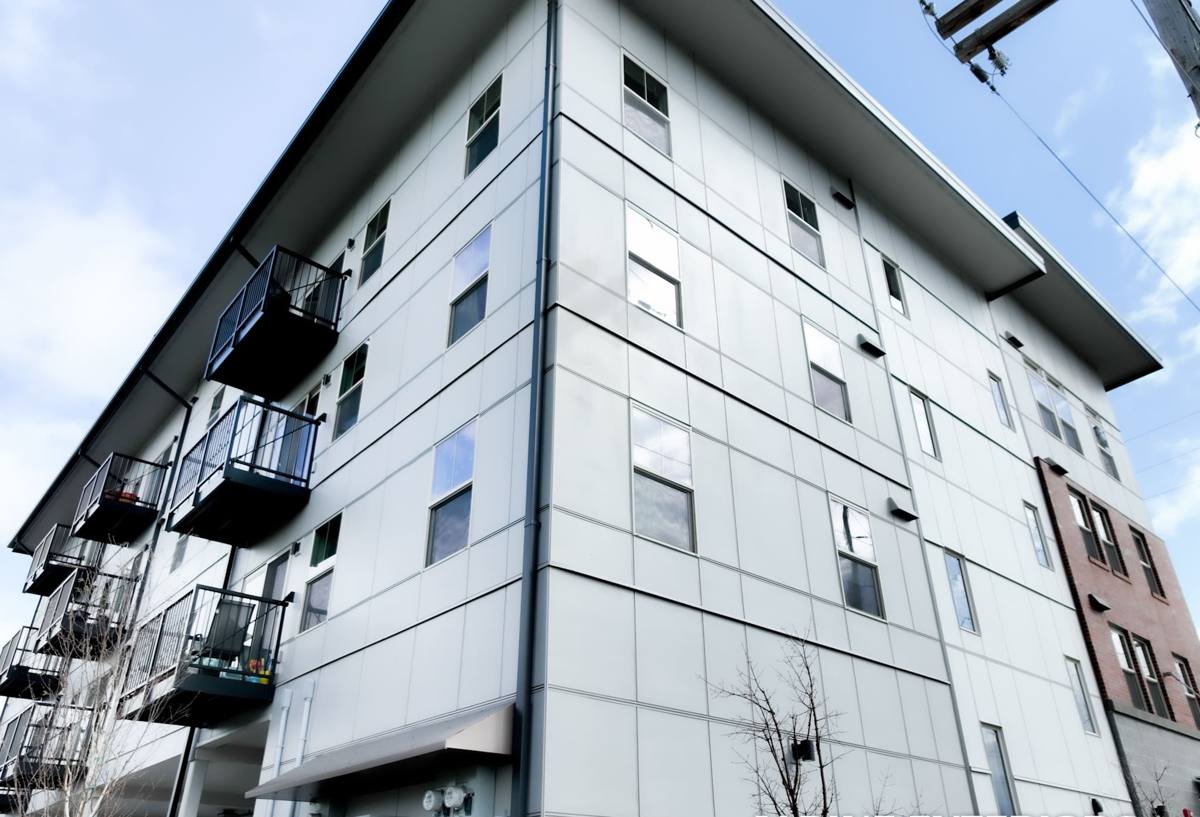
What Salt Air, Driving Rain, and Moss Actually Do to Siding
Salt-Laden Wind
Air moving off saltwater carries fine salt particles that settle on exterior surfaces and accelerate corrosion of anything metal — fasteners, flashing, trim edges. On siding materials that aren't dimensionally stable, salt exposure also speeds up finish breakdown, especially on south- and west-facing walls that get the most direct wind.
Driving Rain
Bellingham gets a lot of rain, but the rain that does the real damage isn't the steady, straight-down kind — it's wind-driven rain that hits siding at an angle and gets pushed up under laps, around trim, and into any gap that wasn't sealed or flashed correctly. Homes with more wind exposure, which describes a lot of Edgemoor, see more of this kind of rain than homes tucked into more sheltered parts of the city.
The Long Moss Season
Shaded walls, north-facing elevations, and anywhere tree cover keeps siding damp longer stay wet for months at a stretch through fall, winter, and spring. That's the window where moss, algae, and mildew get a foothold. Once organic growth establishes on a porous or absorbent siding surface, it holds moisture against the wall even longer, which speeds up whatever decay process is already underway underneath.
Why We Only Install James Hardie Fiber Cement Here
We don't install vinyl, LP SmartSide, cedar, or primed wood siding — on any job, in any neighborhood. In a climate like Edgemoor's, the reasons get sharper:
- Non-combustible material: fiber cement doesn't feed a fire the way wood-based products can, which matters everywhere but is a real factor in wildfire-adjacent seasons.
- Dimensionally stable in wet-dry cycling: Hardie board doesn't swell, cup, or warp the way wood and engineered wood products can when they take on repeated moisture from driving rain and long damp stretches.
- Factory-cured ColorPlus finish: the color coat is baked on at the factory under controlled conditions, which holds up to salt air and UV far better than field-applied paint that has to cure on the wall.
- Climate-engineered HZ product line: James Hardie makes region-specific formulations for high-moisture climates like ours, rather than a single one-size-fits-all board.
Vinyl siding can loosen, warp in wind, or crack in cold snaps, and it doesn't stop moisture as reliably at the seams. Cedar and primed wood look good on day one but need repainting and recaulking on a maintenance schedule that gets harder to keep up with in a climate that's wet more months than it's dry. We standardized on Hardie because it's the product that holds up to this specific climate with the least amount of homeowner upkeep — not because it's the cheapest option on the market.
Getting the Installation Right for This Climate
James Hardie siding is only as good as the installation behind it. In a high-exposure spot like Edgemoor, a few details matter more than they would on a sheltered inland lot.
Drainage Plane and Rain Screen Gap
Correct installation starts with a weather-resistant barrier behind the siding and, ideally, a small gap between that barrier and the back of the siding so any moisture that does get past the surface can drain and dry out instead of sitting against the wall. Skipping or shortcutting this layer is one of the most common ways a Hardie installation fails to perform, even though the boards themselves are correct.
Flashing and Fastener Details
Every window, door, and horizontal trim transition is a place water can get behind the siding if it isn't flashed properly. In a driving-rain environment, we pay particular attention to head flashing above openings and kick-out flashing at roof-to-wall intersections. Fasteners matter too — corrosion-resistant nails or screws driven at the correct depth and spacing keep the board secure without cracking it or leaving room for water to wick in around the fastener.
Caulking — Less Is More
Caulk is a backup, not a primary water barrier, and over-reliance on it is a common shortcut. Joints should be minimized through good planning and butted correctly where they can't be avoided, with quality sealant used only where James Hardie's installation instructions call for it — not smeared over gaps as a substitute for proper flashing and fitting.
Comparing Siding Materials for an Edgemoor Home
| Factor | James Hardie Fiber Cement | Vinyl | Cedar / Primed Wood |
|---|---|---|---|
| Salt air resistance | Strong — factory finish, corrosion-resistant fasteners when installed correctly | Moderate — can chalk, fade, and become brittle over time | Weak — finish breaks down faster, opens door to moisture |
| Driving rain / moisture behavior | Dimensionally stable, won't swell or warp | Seams and panels can loosen or gap in wind | Absorbs moisture, prone to swelling and rot |
| Moss / algae resistance on shaded walls | Good — dense material sheds growth more easily | Growth sits on surface but can trap moisture at seams | Poor — porous surface holds moisture, feeds growth |
| Maintenance burden | Occasional wash; no repainting for the life of the ColorPlus finish | Low labor but limited repair options once damaged | Repainting or restaining on a recurring cycle |
| Typical lifespan when installed to spec | Multiple decades | 15–25 years, shorter in high-wind exposure | 10–20 years before major refinishing or replacement |
| Warranty structure | Strong, transferable manufacturer warranty | Varies widely by manufacturer and grade | Limited to material only; workmanship separate |
Our Process for an Edgemoor Siding Job
Inspection and Assessment
We start by walking the exterior and identifying which elevations take the most wind and rain exposure, where moss and staining have already taken hold, and where existing flashing, trim, and sheathing may have already been affected by moisture. This tells us where extra attention is needed once the old siding comes off.
Tear-Off and Prep
Once the old siding is off, we check the sheathing and framing underneath for water damage before anything new goes up. Any compromised material gets addressed before the weather barrier and new siding go on — covering over a wet or damaged wall with new siding just hides the problem.
Install
Weather-resistant barrier, drainage gap, flashing at every penetration and transition, then the Hardie boards themselves, fastened to manufacturer spec with corrosion-resistant hardware. Trim and joints get detailed last, with caulk used sparingly and only where it belongs.
Final Walkthrough
We walk the finished job with the homeowner, check every elevation up close, and go over basic care so the new siding starts its life set up to perform in this climate rather than just look good on installation day.
Living With Hardie Siding in a Moss-Prone, Salty Climate
Hardie siding needs less upkeep than the alternatives, but "less" isn't "none." A short annual routine keeps it performing the way it's supposed to:
- Rinse the exterior — especially shaded, north-facing walls — once a year to keep moss and algae from establishing before it becomes visible staining.
- Walk the perimeter after major windstorms and check for anything loose at trim edges, corners, or flashing.
- Keep gutters clear and downspouts directed away from the foundation so water isn't sheeting down onto siding below.
- Trim back vegetation and tree limbs that shade walls or hold moisture against the siding longer than the surrounding areas.
- Have caulked joints and trim checked every few years — caulk is a maintenance item even when the siding behind it isn't.
- Address any paint or trim issues on wood elements (fascia, soffits) promptly so moisture doesn't migrate from those areas into the siding system.
Why Hire a Crew That Already Works Edgemoor
Installation details that matter everywhere matter more on an exposed, water-adjacent lot. A crew that already works in and around Edgemoor and the rest of Bellingham has already seen how wind off the bay behaves on different elevations, which walls in this kind of setting tend to hold moss longest, and where past installations — Hardie or otherwise — have failed because a shortcut got taken on flashing or drainage. That's not something a crew unfamiliar with Whatcom County's coastal conditions picks up on the first pass. It shows up in fewer callbacks and siding that's still doing its job fifteen and twenty years out, not just on the day it goes up.
If you're planning a siding project on an Edgemoor home, we're glad to walk the exterior with you, point out what your specific lot's exposure means for the job, and put together a straightforward, no-pressure estimate using the form below.