 Bellingham
 Window Installation Built for Happy Valley's Weather
Happy Valley sits close enough to Bellingham Bay that homes here take on a different kind of weathering than houses further inland in Whatcom County. Salt-laden air off the water, wind-driven rain that finds its way sideways under eaves, and a moss season that can stretch from October well into spring all put steady pressure on window frames, sills, and the seals around them. Window installation in this neighborhood isn't just about picking a product out of a catalog — it's about how that product and its installation handle year after year of damp, salty, low-sun conditions without failing quietly behind the trim.
We work on homes throughout Happy Valley and the surrounding Bellingham area regularly, so we see the same failure patterns come up again and again: fogged double panes, soft sills, sticking sashes, and drafts that show up every winter no matter how many times a homeowner has caulked around the frame. Good window installation solves those problems at the source instead of covering them up.
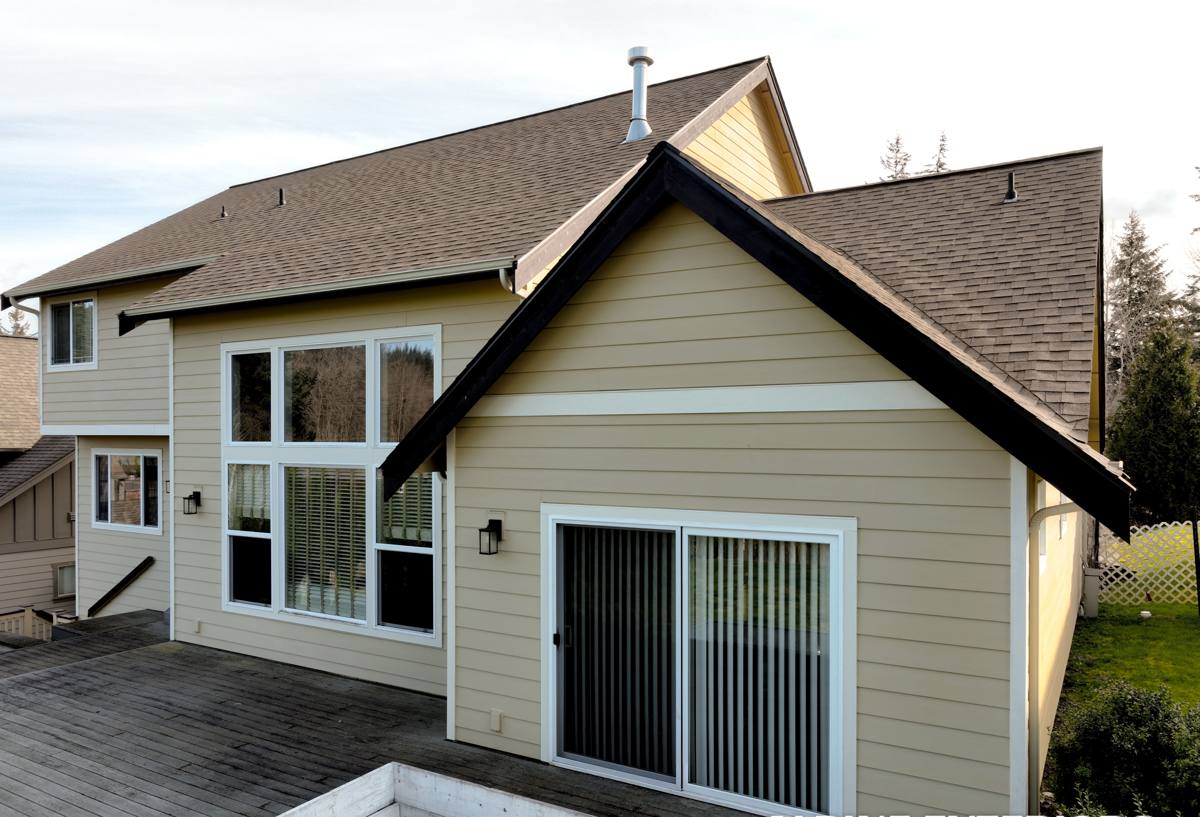
What Bellingham's Climate Does to Windows Over Time
Whatcom County's marine climate is mild compared to a lot of the country, but "mild" doesn't mean easy on building materials. A few specific stresses show up again and again on Happy Valley homes:
Salt Air and Metal Fatigue
Proximity to the bay means airborne salt settles on exterior surfaces, including window hardware. Over years, this accelerates corrosion on hinges, balances, and lower-quality cladding fasteners, which is part of why hardware quality matters as much as glass quality when you're choosing replacement windows here.
Driving Rain and Wind-Driven Moisture
Rain in this region rarely falls straight down. Wind off the water pushes it at an angle, which means it's testing the flashing and sealant around every window opening, not just the glass itself. A window that's watertight in a lab test can still leak on a real house if the flashing details around it weren't done correctly.
Moss and Sustained Dampness
A long moss season means extended periods where wood trim, sills, and siding around windows stay damp rather than drying out between rain events. That sustained moisture is what actually causes rot — it's rarely a single storm, it's weeks of a wet surface that never fully dries.
Low Winter Sun and Condensation
Bellingham's short winter days and high humidity mean interior condensation on window glass and frames is common, especially with older single-pane or poorly sealed units. That moisture, left unaddressed, works its way into the surrounding wall assembly.
Signs a Happy Valley Home May Need New Windows
Not every window problem means a full replacement, but these are the signs worth taking seriously before they turn into structural repairs:
- Fogging or a visible film between panes on double- or triple-glazed windows — the seal has failed and the gas fill is gone
- Soft, spongy, or discolored wood at the sill or lower frame corners
- Windows that are difficult to open, close, or lock, especially after damp weather
- Visible gaps between the window frame and the siding or trim
- Noticeable drafts near the window even when it's fully closed and latched
- Peeling paint or bubbling finish concentrated around the window opening rather than the whole wall
- A musty smell or visible mold near the window frame, especially at the bottom corners
- Rising heating bills without any other obvious cause
If you're seeing two or more of these on the same window, it's usually more cost-effective to replace than to keep patching.
What a Correct Window Installation Actually Involves
The window itself is only part of the job. In our experience, most window failures in this region trace back to installation shortcuts, not product defects. A correct installation includes:
Proper Removal and Opening Inspection
Before a new window goes in, the opening needs to be checked for hidden rot, soft framing, or old flashing that failed. Skipping this step means sealing a new window over an existing problem.
Flashing That Actually Sheds Water
Flashing tape and pan flashing at the sill need to be layered correctly — sill first, sides next, top last — so that any water that does get behind the siding drains out and away from the framing instead of pooling at the bottom of the opening. Given how often wind drives rain sideways here, this detail matters more in Bellingham than it would in a drier climate.
Insulation Around the Frame — Not Just Caulk
The gap between the window frame and the rough opening needs to be filled with a low-expansion foam or backer rod and sealant, not just caulked around the visible trim. A gap packed incorrectly leaves a cold, drafty channel even if the outside looks sealed.
Integration With Existing Siding and House Wrap
The new window's flashing has to tie into the home's existing water-resistive barrier correctly, whether that's house wrap, building paper, or another system. A window installed "on top of" the existing barrier instead of integrated with it can actually create a new path for water to get behind the siding.
Choosing a Window Type for This Neighborhood
There's no single "best" window material — the right choice depends on your home's exposure, your budget, and how much upkeep you want to take on. Here's how the common options compare for a home in a coastal, wet climate like Bellingham's:
| Frame Material | Moisture Resistance | Maintenance | Typical Fit for This Area |
|---|---|---|---|
| Vinyl | Very good — won't rot, resists salt corrosion | Low — occasional cleaning | Strong value option for most Happy Valley homes |
| Fiberglass | Excellent — dimensionally stable in wet/dry cycles | Low | Good for homes with heavy sun/rain exposure or larger openings |
| Wood | Requires ongoing protection; vulnerable if finish fails | High — repainting/resealing needed | Best for homes prioritizing a traditional look and willing to maintain it |
| Wood-Clad (wood interior, metal/vinyl exterior) | Good, provided cladding seams stay sealed | Moderate | Popular where owners want a wood interior with less exterior upkeep |
| Aluminum | Prone to condensation without thermal breaks | Low, but corrosion risk near salt air without proper coating | Less common for residential use here; better suited to commercial applications |
For most homes in this neighborhood, we steer clients toward vinyl or fiberglass because they hold up to the salt air and damp cycles with the least amount of long-term homeowner maintenance. We'll talk through the trade-offs honestly rather than push whatever's easiest to install — the right call depends on your home's specific exposure and how it's oriented to the weather coming off the bay.
Glass Packages Worth Considering
Double-pane, low-E glass is the practical baseline for this climate — it manages both heat loss and condensation risk. Triple-pane adds further insulation value and can be worth it on north- or west-facing walls that take the brunt of wind and cold, though it comes at a higher cost and added weight that some older frames aren't built to support without reinforcement.
Our Installation Process
Every job follows the same sequence, whether it's one window or a whole-house replacement:
- On-site assessment of existing windows, framing condition, and any signs of moisture damage
- Honest recommendation on repair vs. full replacement, with material options suited to the specific wall's exposure
- Detailed, written estimate with no vague allowances
- Careful removal of old units and inspection of the rough opening for hidden rot or prior flashing failures
- Repair of any compromised framing before the new window goes in — this is not an optional add-on
- Installation with proper flashing sequencing, air-sealing, and insulation around the frame
- Exterior trim and sealant work finished to match the home
- Final walkthrough and operation check on every window installed
- Job-site cleanup, including removal of old windows and debris
Permits and Energy Code Considerations
Window replacement work in Whatcom County and the City of Bellingham may require permitting depending on the scope of the project, particularly if the rough opening size is changing or if the work is part of a larger remodel. Washington's energy code also sets minimum performance requirements for replacement windows, which affects which glass packages are acceptable for the job. We handle these details as part of the estimate process so there are no surprises mid-project — you shouldn't have to track permit requirements yourself.
Cost Factors to Expect
Window installation pricing varies by home, but a few factors consistently move the number up or down:
| Factor | Effect on Cost |
|---|---|
| Number of windows | More windows typically lower the per-unit cost slightly through shared labor and setup |
| Frame material chosen | Vinyl is generally the most affordable; fiberglass and wood-clad cost more |
| Glass package (double vs. triple-pane) | Triple-pane adds cost but improves insulation on exposed walls |
| Hidden framing repair | Rot or moisture damage found during removal adds cost but is far cheaper to fix now than later |
| Custom sizes or shapes | Non-standard openings cost more than stock sizes |
| Trim and finish work | Matching existing trim profiles or repainting adds labor |
We give straightforward, itemized estimates so you can see exactly what's driving the cost rather than a single lump number.
Why Local Experience in Happy Valley Matters
A crew that regularly works this neighborhood already knows how homes here are typically built, what the common trouble spots are around older window openings, and how the local weather pattern — salt air, sideways rain, and a long damp season — actually behaves against a house rather than in a manufacturer's brochure. That local familiarity means fewer surprises during removal, more accurate estimates up front, and installation details that are chosen specifically for this coastline, not a generic climate zone. It also means we're accountable close to home if a question comes up after the job is done.
If your windows in Happy Valley are drafty, fogged, hard to operate, or just due for an honest look, we're happy to come take a look and give you a straightforward, no-pressure estimate using the form below.