 Bellingham
 Happy Valley's Roofs Work Harder Than Most
Happy Valley sits close enough to Bellingham Bay to catch salt-laden air off the water, and its mature tree canopy means many homes here sit in shade for a good part of the day. That combination — moisture that doesn't evaporate quickly, plus salt exposure that accelerates corrosion on metal fasteners and flashing — puts real wear on a roof that a drier, more open neighborhood wouldn't see. Add Whatcom County's driving winter rain, which comes in sideways often enough to test every flashing detail and shingle overlap, and you have a roof system that needs to be built correctly the first time, not patched together and hoped for the best.
A new roof installation in this part of Bellingham isn't just about swapping old shingles for new ones. It's about choosing materials and installation details that account for shade, moisture, and salt air specifically — because a roof that would perform fine in a sunny, open subdivision can fail early here if it's installed without those factors in mind.
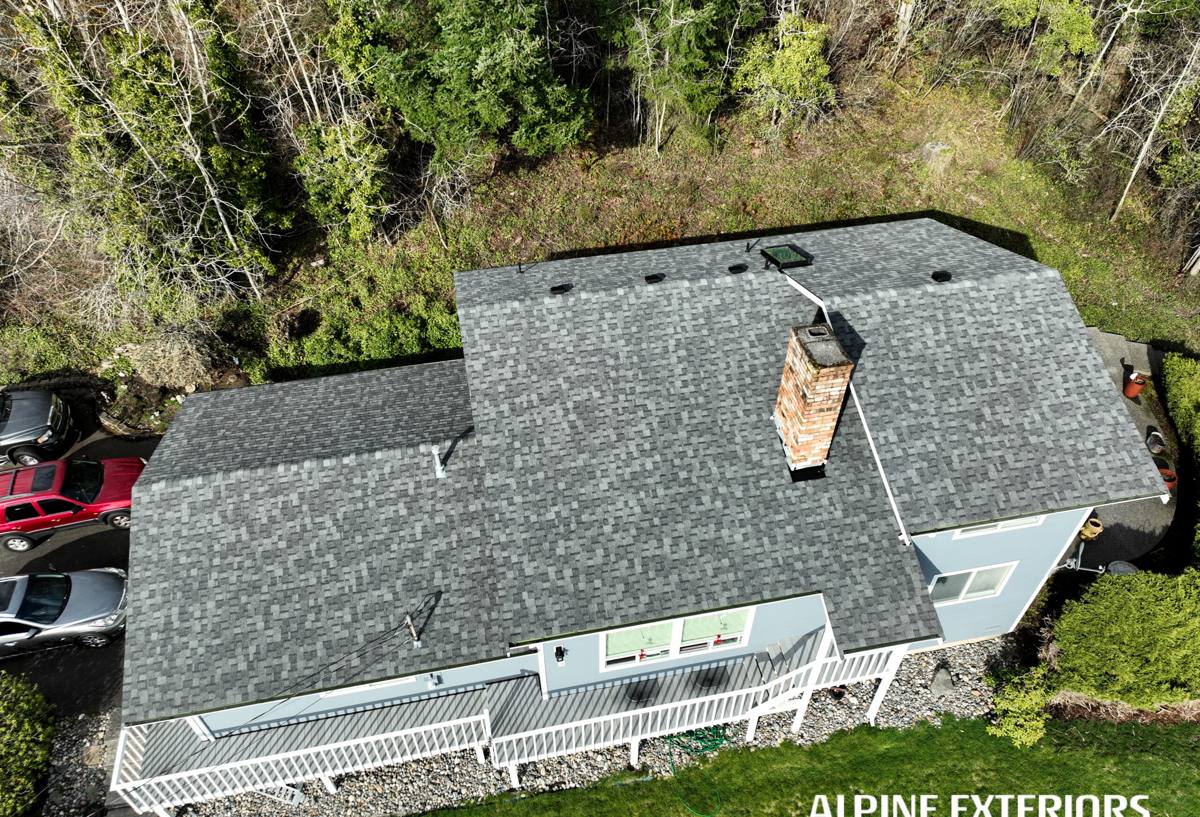
Signs a Happy Valley Home Needs a New Roof, Not Another Repair
Repairs make sense when the damage is isolated. A full replacement makes sense when the roof's overall condition is compromised. Homeowners in this neighborhood typically start looking at replacement when they notice:
- Granule loss showing up in gutters or at downspout outlets, especially after a hard rain
- Moss or dark streaking that keeps returning within a season or two of cleaning, a common issue on the shaded slopes common to Happy Valley lots
- Soft or spongy spots underfoot on the roof deck, which usually means water has already reached the sheathing
- Curling, cracked, or missing shingles concentrated on north-facing or heavily shaded sections
- Daylight visible through the attic roof boards, or damp insulation after a storm
- A roof approaching or past 20 years old with asphalt shingles, particularly if it's never had proper ventilation upgrades
Any one of these on its own might still be repairable. Several together, especially on an older roof, usually means the underlying materials are past the point where patching is the honest answer.
Why Shade Changes the Math
A roof under tree cover stays wetter longer after every rain event, which is most of the year in Whatcom County. That extended dampness is what feeds moss and lichen growth and slowly breaks down the asphalt mat underneath the granules. Two roofs installed the same year, one in full sun and one shaded like many in Happy Valley, will often age at noticeably different rates — the shaded one needs more attention to ventilation, algae resistance, and moss prevention from day one.
What a Correctly Installed Roof Actually Includes
A new roof is a system, not a single product. Every layer matters, and skipping or shortcutting any one of them is where premature leaks and failures usually start.
Tear-Off and Deck Inspection
We remove the old roofing down to the deck rather than layering over it. This lets us actually see the sheathing underneath — soft, delaminated, or water-stained boards get replaced before anything new goes down. Installing over a compromised deck just hides the problem under a new roof.
Ice and Water Protection
Self-adhering waterproof underlayment goes at eaves, valleys, and around every penetration — chimneys, vent stacks, skylights. These are the spots where wind-driven rain is most likely to force its way under standard shingles, and in a climate with as much driving rain as ours, this layer isn't optional.
Flashing Done Right
Flashing failures are the single most common cause of roof leaks that homeowners blame on "the shingles." Step flashing at walls, counter-flashing at chimneys, and properly lapped valley flashing all need to be installed in the correct sequence with the roofing material, not caulked on as an afterthought.
Ventilation
A roof deck that can't breathe traps moisture from inside the house, which shortens the life of the roofing material from underneath — sometimes faster than weather does from above. Balanced intake and exhaust ventilation matters on every roof, but it matters more on shaded homes where the roof surface itself dries slowly.
Choosing the Right Material for This Climate
There's no single "best" roofing material — the right choice depends on the home's shade exposure, roof pitch, budget, and how long the homeowner plans to stay. Here's how the common options compare for a Happy Valley property specifically.
| Material | Moss / Algae Resistance | Typical Lifespan | Best Fit |
|---|---|---|---|
| Standard architectural asphalt shingle | Moderate — improves with algae-resistant granules | 20–30 years | Most homes; good value with proper ventilation |
| Algae-resistant (copper-granule) asphalt shingle | Higher — granules actively discourage growth | 25–30 years | Shaded lots and homes with a history of moss return |
| Standing seam metal roofing | High — smooth surface sheds debris and moisture fast | 40–50+ years | Owners planning to stay long-term or wanting minimal moss maintenance |
| Cedar shake | Low without ongoing treatment | 20–25 years with maintenance | Homeowners committed to regular upkeep for the look |
For heavily shaded Happy Valley properties, we usually steer the conversation toward algae-resistant shingles or metal — not because standard shingles are bad, but because the extra resistance to moisture and growth pays for itself in fewer callbacks and a longer real-world lifespan under tree cover.
Moss Prevention Built Into the Installation
Cleaning moss off a roof after the fact only buys time — the spores are already established and the shaded, damp conditions that let them take hold in the first place haven't changed. A new roof installation is the right moment to build in prevention:
- Zinc or copper ridge strips, which release trace metal ions with every rain that inhibit moss and algae regrowth
- Algae-resistant shingle products where the budget and roof style allow
- Correct roof-to-tree clearance recommendations so branches aren't dropping debris and shade directly onto the new surface
- Ventilation sized to keep the deck drying between rain events instead of staying perpetually damp
None of this eliminates the need for occasional roof cleaning on a shaded lot — that's just the reality of living among mature trees in Whatcom County. But it stretches the interval between cleanings and keeps moss from working its way under shingle edges, which is where real damage starts.
Salt Air and Metal Component Selection
Proximity to Bellingham Bay means fasteners, flashing, and any exposed metal on a roof are exposed to a mild but constant salt-air environment. Standard galvanized fasteners can corrode faster here than the same product would inland. We use corrosion-resistant fasteners and flashing rated for coastal exposure on Happy Valley installations, since a roof is only as durable as its weakest hardware — a shingle warranty means little if the nails holding it down rust out first.
Our Installation Process
1. On-Site Assessment
We walk the roof and attic, note shade patterns, existing ventilation, deck condition where visible, and any moss or moisture history the homeowner can point us to.
2. Material and Scope Discussion
We go over material options honestly, including trade-offs on cost, lifespan, and maintenance — no upselling to a product the home doesn't need.
3. Tear-Off and Deck Repair
Old roofing comes off, the deck is inspected and any damaged sheathing replaced before anything new is installed.
4. Underlayment, Flashing, and Ventilation
Ice and water shield, flashing, and ventilation components go in per manufacturer and code specifications — this is where most of the roof's actual waterproofing performance is decided, well before the visible shingle layer.
5. Roofing Installation
Shingles or metal panels are installed to manufacturer spec, with attention to nailing patterns and exposure — details that directly affect wind and rain performance in a climate like ours.
6. Final Walkthrough and Cleanup
We walk the finished roof with the homeowner, confirm ventilation and drainage are functioning as intended, and do a full magnetic sweep of the property for stray fasteners.
Why Local Experience in Happy Valley Matters
A crew that's worked roofs throughout this neighborhood already knows which streets sit under heavy tree cover, how the terrain affects drainage and ice buildup in a cold snap, and what the salt-air component means for hardware selection. That's the difference between a roofer who's installed shingles in general and one who's installed roofs that hold up specifically in this pocket of Bellingham. It also means faster, more accurate estimates — we're not guessing at how a given roof pitch or tree situation will behave, we've seen it on the house down the street.
What to Expect for Cost
Roof replacement pricing depends on square footage, pitch, tear-off complexity, decking condition, and material choice — anyone quoting a firm number before seeing the roof is guessing. In general, standard architectural asphalt shingle roofs sit at the lower end of the cost range, algae-resistant shingles add a modest premium, and standing seam metal costs more upfront but spreads that cost over a much longer service life. We give homeowners a clear, itemized estimate after an on-site look, not a ballpark over the phone.
Ready for a Straight Answer on Your Roof
If your Happy Valley roof is showing granule loss, recurring moss, or is simply old enough that a hard freeze or windstorm has you worried, it's worth getting an honest, no-pressure look before winter weather makes the decision for you. We'll tell you plainly whether you need a full replacement or whether a repair still has life left in it. Reach out for a free estimate using the form below.