 Bellingham
 Building a Deck That Holds Up in Happy Valley
Happy Valley sits close enough to the water and the weather patterns that roll off Bellingham Bay that a deck here takes a different kind of beating than one built twenty miles inland. Salt-laden air accelerates corrosion on anything metal. Driving rain finds its way into every gap that isn't detailed correctly. And a long, damp moss season coats decking, stairs, and railings in a surface that gets slick fast if the deck wasn't designed with drainage and airflow in mind. A deck built without those conditions in mind might look fine the first summer and start showing problems — soft spots, rusted fasteners, green film on the boards — within a couple of years.
This page is about what it actually takes to build a deck that holds up in Happy Valley specifically: the material choices, the framing and hardware details, and the maintenance habits that matter here more than they would in a drier part of the state.
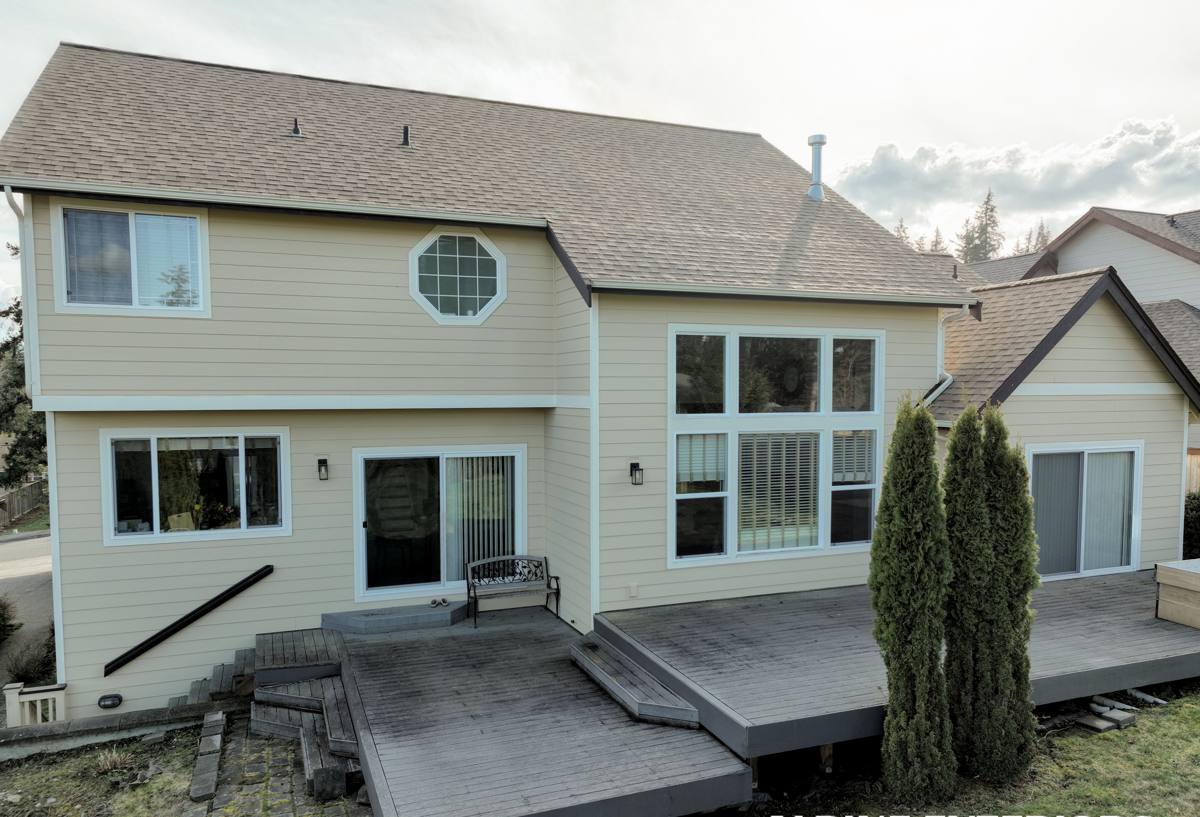
What Happy Valley Homes Are Up Against
Three things drive most of the deck problems we see in this part of Whatcom County:
- Salt air: Even a few miles from the shoreline, airborne salt speeds up corrosion on fasteners, joist hangers, and any exposed metal hardware. Standard hardware-store screws and hangers that would last decades elsewhere can start rusting and staining within a few seasons here.
- Driving rain: Storms off the water don't just fall straight down — wind pushes rain sideways into ledger boards, stair stringers, and any joint that isn't properly flashed. Water that gets behind a ledger board or into end-grain cuts is what causes hidden rot.
- A long moss season: Cool, damp, shaded conditions for much of the year give moss and algae plenty of time to establish on decking surfaces, especially anywhere sun and airflow are limited. Once moss takes hold, it holds moisture against the wood and turns steps and walkways slippery.
None of these are exotic problems, but they compound. A deck that's under-flashed, under-ventilated, and built with the wrong hardware will show all three issues at once — and by the time it's visible, the framing underneath is usually already affected.
Choosing the Right Decking Material for This Climate
There's no single "correct" decking material — it depends on budget, maintenance tolerance, and how much moss and moisture exposure the deck will actually see. Here's how the common options compare for a Happy Valley setting:
| Material | Moisture & Moss Behavior | Maintenance | Typical Lifespan Here |
|---|---|---|---|
| Pressure-treated lumber | Resists rot when properly sealed; moss can still grow on the surface if not cleaned | Needs re-sealing every 1-2 years and periodic cleaning | 15-20 years with upkeep |
| Cedar | Naturally rot-resistant, but surface greys and can hold moss without regular cleaning/oiling | Annual cleaning and oiling recommended | 15-25 years with upkeep |
| Composite decking | Doesn't absorb water or rot, but moss and algae can still grow on the surface film and need washing | Occasional washing; no sealing or staining | 25-30+ years, manufacturer-dependent |
| Tropical hardwood | Very dense and rot-resistant; low water absorption | Periodic oiling to maintain color; low structural maintenance | 25+ years |
Composite has become popular locally because it removes the sealing/staining cycle, which matters when moss season makes surface upkeep a recurring chore rather than a once-a-year task. That said, we still install quality wood decks for homeowners who want that look or have a tighter budget — the key either way is getting the framing and drainage right underneath, because that's what actually determines how long the deck lasts, regardless of decking material.
What a Correctly Built Deck Involves
The decking boards are the part everyone sees, but the framing and connection details underneath are what determine whether a deck lasts 10 years or 30. On a Happy Valley build, we pay particular attention to:
Ledger Attachment and Flashing
Where the deck attaches to the house is the single most common point of water intrusion on any deck. Proper ledger flashing — installed so water sheds outward and away from the house sheathing, not behind it — is non-negotiable given how much sideways rain this area gets. A poorly flashed ledger is the most common cause of hidden rot we find when repairing older decks.
Joist Spacing and Board Orientation
Tighter joist spacing and correct board gapping affect how quickly a deck surface dries out after rain. Boards that can't drain and dry between storms hold moisture longer, which is exactly the condition moss needs to establish.
Footings Sized for Local Soil
Whatcom County's mix of clay-heavy and wet soils means footing depth and sizing need to account for local frost depth and drainage conditions, not a generic minimum. Undersized or shallow footings are a common source of deck movement over time.
Ventilation Underneath
Low decks built close to grade without enough clearance underneath trap moisture and stay damp longer after rain — a direct contributor to both rot and moss growth on the framing itself, not just the surface.
Fasteners, Flashing, and Hardware: The Parts You Don't See
This is where a lot of decks quietly fail in a salt-air environment. Standard galvanized fasteners and joist hangers are rated for general outdoor use, but they aren't necessarily matched to the corrosion rate you get within a few miles of the water. We spec hardware and fasteners rated for the moisture and salt exposure the deck will actually see — that usually means stainless steel or heavy-duty coated fasteners in exposed connections, and hangers and flashing tape compatible with whatever decking material is going over them (some coatings react badly with certain wood treatments, which is a detail that's easy to miss).
The cost difference between standard and corrosion-resistant hardware is small relative to the total project cost. The cost of replacing rusted-out structural hardware on a deck that's already built — tearing up decking to get at it — is not small. It's one of the clearest examples of where spending a little more upfront saves real money later.
Preventing Moss and Slip Hazards
Moss on a deck isn't just cosmetic — wet moss on stairs and walkways is a genuine slip hazard, and moss holds moisture against the decking surface longer than bare wood or composite would on its own. A few design and build choices reduce how much moss takes hold in the first place:
- Proper board spacing so water drains through rather than pooling on the surface
- Decking profiles and surface textures that shed water and dry faster
- Layout and railing choices that don't unnecessarily block sun and airflow across shaded areas of the deck
- Composite or hardwood in the shadiest, dampest sections where moss pressure will be highest
No deck in this climate will be entirely moss-free — that's just the reality of Whatcom County's damp season — but a deck built with drainage and airflow in mind needs far less scrubbing and pressure-washing than one that wasn't.
Our Deck Building Process in Happy Valley
The process itself isn't complicated, but each step matters for a deck that's going to hold up long-term:
- On-site assessment: We look at the house's existing wall assembly, grade, drainage patterns, and sun exposure before recommending a layout or material.
- Design and material selection: We walk through decking, railing, and hardware options with honest trade-offs for maintenance and cost — not just what's cheapest upfront.
- Permitting: Deck permitting requirements vary by height, size, and whether the deck attaches to the house — we handle the permit process so it's not left to the homeowner to figure out.
- Framing and structural work: Footings, ledger flashing, joists, and hardware go in first, built to the details covered above.
- Decking, railing, and finish work: Surface material and railings are installed, with attention to gapping and drainage throughout.
- Final walkthrough: We go over the finished deck and basic care with the homeowner before calling the job done.
Maintenance Checklist for Coastal Whatcom County Decks
A well-built deck still needs some seasonal attention in this climate. This is a reasonable baseline for most Happy Valley decks:
- Sweep debris and standing leaves off the deck surface regularly, especially in fall
- Clean visible moss and algae buildup before it spreads, particularly in shaded corners and near stairs
- Check that gaps between boards are still clear and draining, not clogged with debris
- Inspect ledger flashing and any visible hardware yearly for rust staining or movement
- Re-seal or re-stain wood decking on the schedule appropriate to that material
- Confirm underneath the deck stays ventilated — clear vegetation or storage that blocks airflow
Why Hire a Crew That Already Works in Happy Valley
A deck built to a generic national spec will often technically meet code and still underperform in this specific climate. Contractors who already work in Bellingham and Whatcom County know which hardware actually holds up near the water, how local permitting works for deck projects, and where moss and drainage problems tend to show up first on homes in this area. That local track record matters more than it might seem — it's the difference between a deck that needs real repair work in five years and one that's still solid in twenty.
If you're planning a new deck or replacing one that's showing its age, we're happy to walk the site with you and put together a straightforward, no-pressure estimate — just fill out the form below.