 Bellingham
 Why Fairhaven Siding Takes a Different Kind of Beating
Fairhaven sits close enough to Bellingham Bay that salt-laden air is a daily fact of life, not an occasional weather event. Add in the driving, wind-pushed rain that rolls off the water during fall and winter storms, and then the long, damp moss season that stretches from late fall through spring, and you've got three separate stresses working on a home's exterior at once — often at the same time. Salt air accelerates corrosion on fasteners and trim. Wind-driven rain doesn't just fall on siding, it gets pushed sideways and upward into laps, seams, and butt joints that a calmer climate would never test. And moss and algae don't just sit on the surface — given enough damp, shaded time, they hold moisture against the siding face and behind trim, which is exactly the condition that rots wood-based products and delaminates poorly made composites.
None of this is unique to any one street or block in Fairhaven — it's the nature of living this close to Whatcom County's marine shoreline. But it does mean siding decisions that work fine in a drier, inland climate can fail early here. The right product and the right installation details matter more in Fairhaven than they would forty miles inland.
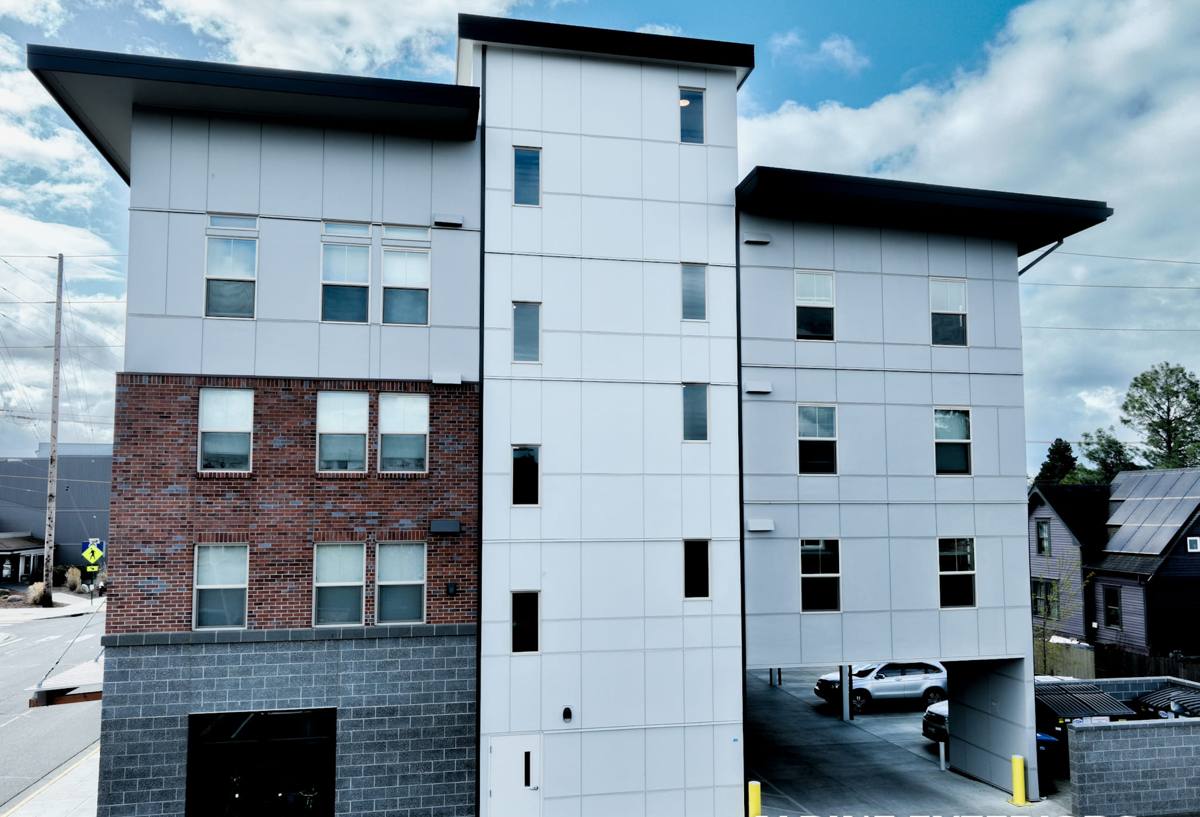
What Fairhaven Homes Actually Need From Their Siding
Moisture management, not just moisture resistance
A lot of siding marketing talks about "water resistance" as if it's a single property. In practice, what matters is the whole assembly's ability to shed bulk water, let incidental moisture drain and dry out, and resist holding water against wood framing. That's a system property — cladding, house wrap, flashing, gaps, and fastening all have to work together. In a climate with this much driving rain, any weak point in that system eventually shows up as a stain, a soft spot, or paint failure.
A finish that can survive salt air and UV without chalking or fading fast
Salt air is abrasive to lower-grade paint films over time, and UV exposure off the water is stronger than most homeowners expect. A factory-applied finish engineered to resist both is worth more here than in a sheltered inland neighborhood.
Material that doesn't feed moss and mildew
Wood-based siding and trim give organic growth something to root into. Fiber cement doesn't — it's an inorganic material, so moss and algae sit on the surface rather than feeding off it, which makes periodic washing far more effective and keeps the material itself from degrading underneath the growth.
Why This Company Installs Only James Hardie Fiber Cement
We get asked why we don't offer vinyl, LP SmartSide, or the cheaper fiber cement alternatives on the market. The honest answer is that we've standardized on one product line because we'd rather install one thing correctly, every time, than juggle several products with different failure modes and different warranty structures. James Hardie fiber cement is non-combustible, dimensionally stable in wet climates, and backed by a factory finish (ColorPlus) that's engineered and warranted separately from the substrate — two separate systems, two separate quality controls, both built for exactly the kind of weather Fairhaven gets. Hardie also engineers its HZ5 product line specifically for climates with high moisture exposure, which the Pacific Northwest qualifies as. That's not a knock on every other product on the market — it's why, after years of installing exteriors in this climate, this is the one we're willing to put our name behind.
Product Lines That Fit Fairhaven's Housing Mix
Fairhaven has a real mix of home styles — older craftsman and cottage-style houses along with newer infill construction — and Hardie's product lines cover that range without forcing a compromise:
| Product | Typical Use | Why It Fits Fairhaven |
|---|---|---|
| HardiePlank lap siding | Traditional horizontal lap look on most home styles | Matches the classic Pacific Northwest lap profile; wide range of ColorPlus finishes and textures |
| HardieShingle | Staggered or straight-edge shingle accents | Common on craftsman and cottage-style homes without the moisture risk of real wood shingle |
| HardiePanel | Vertical panel siding, often on gables or as an accent | Clean modern look for infill and remodeled homes; pairs well with board-and-batten trim |
| HardieTrim | Fascia, corner boards, window and door trim | Non-combustible, paintable trim that won't rot the way wood trim does under constant damp |
What a Correct Installation Actually Involves
Fiber cement siding is only as good as the installation underneath it. This is where a lot of exterior work goes wrong, and it's usually invisible until years later when a homeowner has a wet wall cavity or failed trim and no idea why. On a Fairhaven home, we're paying particular attention to a few details that matter more here than elsewhere:
- Weather-resistant barrier and rainscreen gap — a drainage gap behind the siding lets any incidental moisture that gets past the cladding drain and dry instead of sitting against the sheathing.
- Correct nailing pattern and fastener material — corrosion-resistant fasteners matter more in salt air; Hardie's own fastening specs exist for a reason, and we follow them rather than field-improvising.
- Flashing at every horizontal transition — window heads, roof-to-wall intersections, and deck ledgers are the places driving rain finds a way in if flashing is skipped or shortcut.
- Proper clearance at grade and hard surfaces — siding installed too close to soil, decking, or concrete wicks moisture up from below, which is a common failure point on homes near the water table.
- Caulked and painted cut edges — factory ColorPlus finish is engineered to resist weather, but any field-cut edge needs to be sealed per manufacturer spec, not left raw.
- Correct panel and lap overlap — under-lapped joints are one of the most common causes of early water intrusion on lap siding.
Our Process on a Fairhaven Job
Assessment
We start by walking the exterior and identifying existing moisture damage, checking the condition of the sheathing and framing where old siding comes off, and noting problem areas specific to the home's exposure — which walls take the worst of the wind-driven rain off the bay, where moss buildup has been worst, where trim is already showing wear.
Prep and tear-off
Old siding comes off down to the sheathing so we can actually see what's underneath rather than covering up hidden rot or a compromised weather barrier. Any damaged sheathing or framing gets addressed before a single piece of new siding goes up — covering that kind of problem with new cladding just delays the same failure.
Weather barrier and rainscreen installation
This is the step that determines how the whole assembly performs for the next few decades, and it's also the step that's easiest to shortcut. We install it to spec, every time.
Siding installation
HardiePlank, HardieShingle, or HardiePanel goes on per Hardie's fastening and clearance specifications, with flashing detailed at every penetration and transition.
Trim, caulking, and final finish
HardieTrim goes in around windows, doors, and corners, cut edges are sealed, and the job is cleaned up so the site looks better than when we arrived.
Living With Fiber Cement Siding Through a Bellingham Moss Season
Fiber cement is low-maintenance compared to wood, but "low-maintenance" doesn't mean "no maintenance," especially with a moss season as long as this region's. A simple annual routine keeps a Hardie exterior looking and performing the way it should:
- Rinse the siding with a garden hose and soft brush once or twice a year, more often on north-facing or shaded walls where moss and algae build up fastest.
- Avoid pressure washers on fiber cement — they can force water behind laps and joints; a hose and brush is enough.
- Keep gutters clear so overflow doesn't run directly down the siding face, which accelerates staining and moss growth.
- Trim back shrubs and trees that keep a wall shaded and damp — airflow and sun exposure are the cheapest moss prevention there is.
- Walk the exterior once a year and check caulking at trim joints and penetrations; recaulk any cracked or separated joints before winter rains start.
- Watch for chalking or fading on the finish over many years — ColorPlus is warranted separately from the substrate, so finish issues are handled differently than substrate issues.
What Affects Cost on a Fairhaven Siding Job
Every home is different, so we don't quote a number until we've actually looked at the house, but the factors that move the price are consistent:
| Factor | Why It Matters |
|---|---|
| Home size and wall area | More square footage means more material and labor, straightforwardly |
| Tear-off vs. re-siding over existing cladding | Tear-off costs more up front but lets us inspect and fix sheathing/framing issues — the right call whenever moisture damage is suspected |
| Number of stories and roof complexity | Steep rooflines, dormers, and multi-story walls add access and labor time |
| Trim and accent work | Shingle accents, board-and-batten gables, and custom trim details add material and installation time |
| Existing damage | Rotted sheathing or framing found during tear-off has to be repaired before new siding goes on |
| Color and profile selection | Standard ColorPlus colors and profiles are typically more cost-efficient than special-order options |
Why It Matters That We Already Work in Fairhaven
A crew that's worked this neighborhood before already understands what its exposure to Bellingham Bay does to an exterior, has a feel for which walls take the worst weather on a typical lot, and knows what to expect when tear-off starts on homes of this area's typical age. That's not a substitute for a proper on-site assessment of your specific home, but it does mean fewer surprises, a more accurate first estimate, and a crew that isn't learning this climate on your project. For a neighborhood with a real mix of older and newer construction, and with the kind of historic character worth respecting, that local familiarity shows up in the details — matching trim profiles, choosing colors that hold up against salt air and UV, and not treating a job here the same as a job in a drier, sheltered part of the county.
If you're weighing a siding project on a Fairhaven home, we're happy to take a look and give you a straight assessment of what your exterior actually needs — no pressure, no upsell. Use the form below to request a free estimate.