 Bellingham
 Ferndale's Weather Is Harder on a Roof Than It Looks
Ferndale sits close enough to Bellingham Bay and the open water of the Salish Sea that its roofs deal with a different mix of stress than homes further inland. It's not usually one dramatic event that causes the damage we get called out for — it's driving rain pushed sideways by wind off the water, salt-laden air working on metal flashing and fasteners, and a moss and algae season that runs most of the year in this part of Whatcom County. A storm doesn't have to be severe to expose a weak spot that's been building for a while.
That combination is why "storm damage" here rarely means a single clean hole. It usually means a roof that took a hit somewhere it was already vulnerable — an aging seal, a flashing joint that had started to lift, or a patch of moss that had been quietly holding moisture against the shingles.
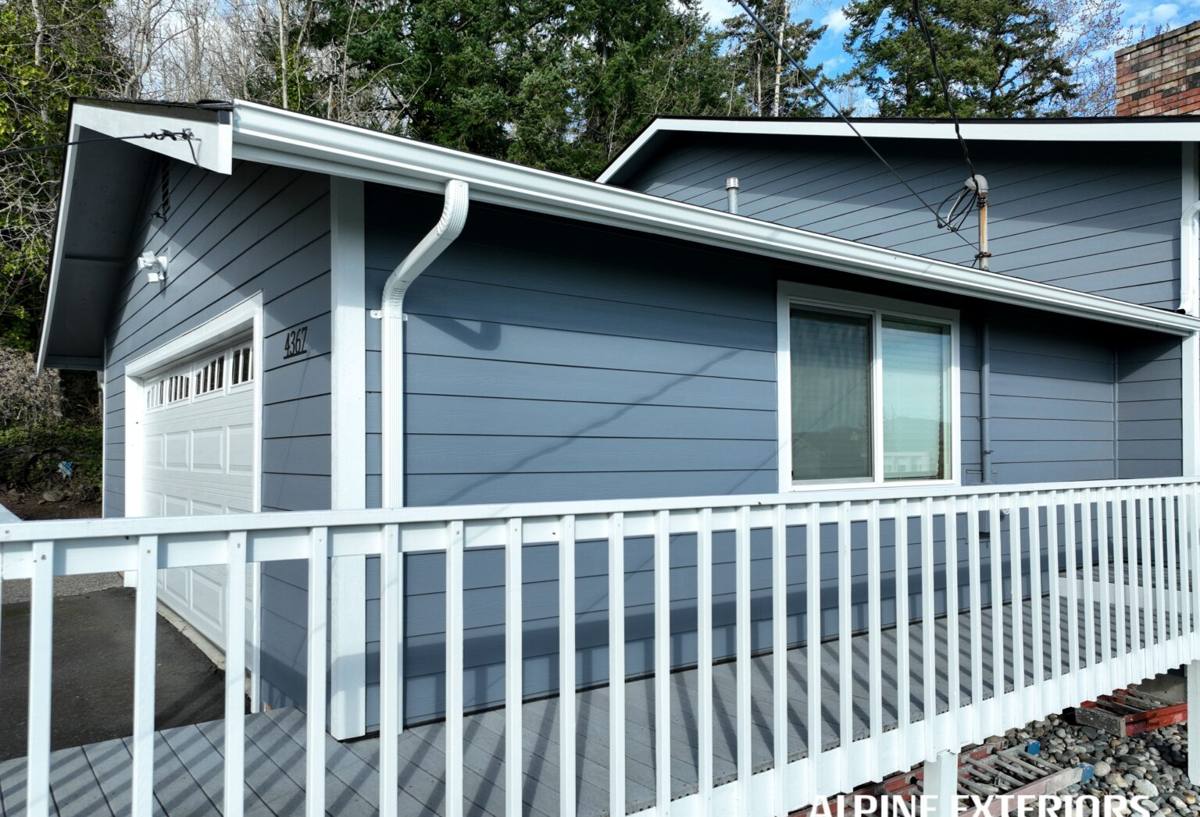
What Storm Damage Actually Looks Like on a Ferndale Roof
Wind Damage
Sustained wind off the water doesn't just rip shingles off outright — more often it works underneath the edges and tabs, breaking the seal without tearing the shingle loose. From the ground it can look fine. Up close, you'll find creased shingles, lifted tabs, and ridge cap pieces that have shifted or cracked. Once the seal is broken, the next rain gets underneath it.
Wind-Driven Rain and Water Intrusion
Because storms here so often come with horizontal rain, water gets pushed into places a roof was never designed to shed water from directly — under ridge caps, around chimney and vent flashing, and along valleys. This is the damage that's easiest to miss, because it shows up as a stain on a ceiling weeks later, not as a visible hole right after the storm.
Tree Limb and Debris Impact
Ferndale has plenty of mature trees close to rooflines, and wind events regularly bring down branches, not always whole trees. A limb strike can crack shingles, dent metal flashing, or puncture underlayment without leaving an obvious visual sign from the yard.
Moss and Algae Exploiting the Damage
This is the local twist that catches a lot of homeowners off guard. A roof surface that's already carrying moss or algae growth — common on north-facing and shaded slopes around here — holds moisture against a storm-damaged spot instead of letting it dry out. A minor lifted shingle that would dry out fine in a drier climate can rot the decking beneath it here if it sits wet under a moss mat for a few weeks.
Why Fast, Correct Repair Matters More Here Than in Drier Climates
With Whatcom County's wet season running long and steady rather than arriving in short bursts, a small opening in the roofing system doesn't get a break to dry out between rain events. Water that gets under a shingle in October can still be finding its way into the decking in January. Delayed repairs are also the single biggest reason a repair that should have cost a few hundred dollars turns into a decking replacement costing several times that.
There's also an insurance timing factor. Most policies require damage to be reported and documented promptly, and adjusters want to see clear evidence tying damage to a specific storm event. Waiting weeks to address it can complicate a claim even when the damage is legitimate.
What a Correct Storm Damage Repair Actually Involves
A proper repair isn't just replacing what's visibly missing. It should include:
- A full inspection of the affected slope, not just the spot that looks damaged — wind and water rarely stay in one place
- Checking the decking underneath for soft spots or discoloration before any new material goes on
- Matching shingle type, color, and exposure to the existing roof as closely as possible
- Reworking flashing at any penetration near the damaged area, not just patching over it
- Confirming ridge and soffit ventilation weren't compromised, since trapped moisture undoes a good repair from the inside
- Clearing moss or debris from the surrounding area so the repair isn't sitting under the same conditions that caused the original failure
Skipping any of these steps is how a roof ends up with the same failure again within a year or two, often in the same spot.
Repair or Replace? What Actually Tips the Decision
Storm damage doesn't automatically mean a full roof replacement, and it doesn't automatically mean a quick patch is enough either. The honest answer depends on a few specific factors:
| Factor | Leans Toward Repair | Leans Toward Replacement |
|---|---|---|
| Age of existing roof | Under roughly 12-15 years | Already near the end of its expected life |
| Extent of damage | Isolated to one slope or section | Scattered across multiple slopes |
| Decking condition | Solid, no soft spots found | Soft, stained, or delaminating decking |
| Shingle availability | Matching material still available | Discontinued or mismatched color/profile |
| Moss/algae history | Minor, surface-level growth | Long-term growth with visible granule loss |
| Insurance scope | Adjuster approves targeted repair | Adjuster's estimate supports full replacement |
We'll walk you through where your roof lands on each of these before recommending anything — a repair is the right call more often than not, but we'll say so plainly if it isn't.
Our Process, Start to Finish
When a Ferndale homeowner calls us after a storm, the process is straightforward:
- Same-window inspection. We look at the whole roof, not just the reported problem area, and photograph everything for your records.
- Temporary protection if needed. If there's active water intrusion, we tarp the exposed area properly the same visit so the damage doesn't spread while repairs are scheduled.
- A written scope and honest estimate. You'll get a clear description of what's damaged, what needs to happen, and a real cost range — no inflated storm-chaser pricing.
- Repair work. Matching materials, correct flashing and fastening technique, and a check of ventilation and surrounding surfaces.
- Final walk-through. We show you the completed work and point out anything worth keeping an eye on going forward.
Working With Your Insurance Company
Most storm damage repairs in this area involve an insurance claim, and the process goes smoother when the documentation is solid from the start. We provide detailed photos, a written damage assessment tied to the storm event, and a scope of work that adjusters can review without back-and-forth delays. We're not a public adjuster and won't claim to be one, but we can meet an adjuster on site and speak to what we found on the roof itself.
Why Hiring a Crew That Already Works Ferndale Matters
After any significant windstorm in Whatcom County, homeowners in Ferndale and nearby parts of Bellingham often see contractors going door to door offering fast repairs. Some are legitimate. Many are not local, won't be around if the repair fails, and have no ongoing relationship with local suppliers who stock the shingle lines and flashing profiles common on homes in this area.
A crew that works Ferndale regularly knows which slopes on local homes tend to take the brunt of southwest storms, which neighborhoods deal with heavier moss pressure from shade and tree cover, and how to source matching materials without a homeowner ending up with a visibly mismatched patch. That familiarity is worth more than a same-day sales pitch.
- Check that the contractor carries current liability insurance and can provide proof without hesitation
- Ask for a local address and references from jobs in Whatcom County, not just a phone number
- Get the scope of work in writing before any contract is signed
- Be cautious of anyone asking for full payment up front, before any work has started
- Confirm they'll still be reachable for a warranty callback months after the repair, not just during storm season
After the Storm: What to Do in the First 48 Hours
- Photograph any visible damage from the ground — don't get on the roof yourself
- Check interior ceilings and attic spaces for new staining or dampness
- Note the date and approximate time of the storm for insurance purposes
- Cover any obvious active leak from the inside with a tarp or bucket to limit interior damage
- Call your insurance company to start the claim process while the event is still recent
- Get a professional inspection before assuming the damage is only cosmetic
If a recent storm has left you wondering whether your roof needs attention, we're happy to take a look and give you a straight answer — no pressure, no obligation. Use the form below to request a free estimate and we'll get back to you promptly.