 Bellingham
 Why Fairhaven Siding Wears Differently Than the Rest of Bellingham
Fairhaven sits close enough to the water that homes there take on a different kind of weather load than siding a few miles inland. The combination of salt-laden air off Bellingham Bay, wind-driven rain that gets pushed sideways into wall assemblies, and a long, damp moss season that can stretch from fall through spring means siding here ages on its own schedule. A repair approach that works fine on a house in a drier, more sheltered part of Whatcom County can fall short on a Fairhaven home facing the water or tucked under heavy tree cover.
That's the reason a generic "patch it and move on" repair job often doesn't hold up in this neighborhood. Salt air accelerates corrosion on fasteners and metal trim. Driving rain finds gaps in flashing and caulk that would stay dry elsewhere. Moss and algae hold moisture against the siding surface for weeks at a time, which matters a lot if the underlying material isn't built to handle sustained damp exposure. Any repair plan for a Fairhaven home needs to account for all three factors, not just fix the visible symptom.
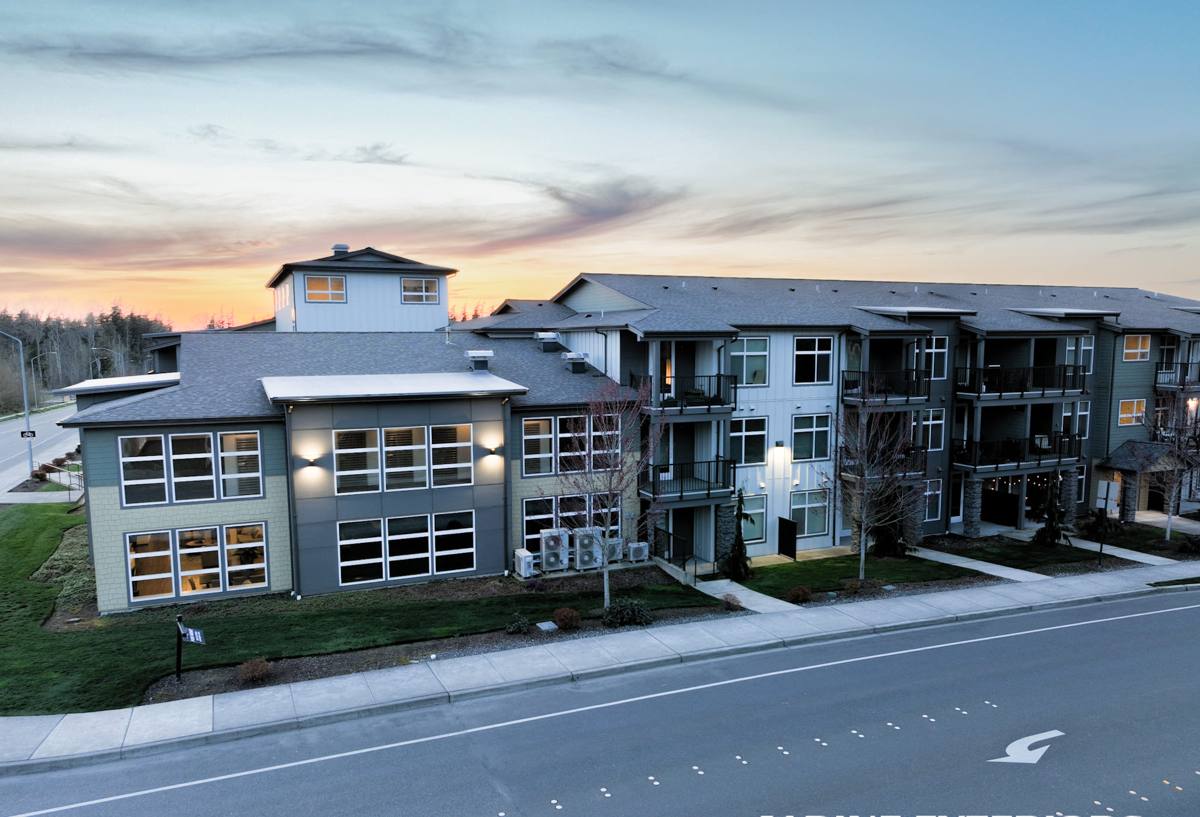
What Salt Air Actually Does to Siding Over Time
Salt air isn't just a coastal nuisance — it's chemically active. Airborne salt is hygroscopic, meaning it pulls moisture out of the air and holds it against whatever surface it lands on. On siding, that translates into a few specific problems:
- Steel fasteners, flashing, and trim hardware corrode faster than they would a few miles from the water, sometimes leaving rust streaks bleeding down the face of the siding.
- Painted or coated surfaces can chalk and fade faster where salt film sits on them repeatedly between rains.
- Any wood-based or wood-adjacent siding product with exposed or poorly sealed edges is more prone to swelling and softening when salt-moist air keeps the material from fully drying out between storms.
None of this means a Fairhaven home is doomed to constant repairs — it means the siding material and the fastener/flashing hardware behind it both need to be chosen and installed with that exposure in mind, not just for the neighborhood's curb appeal.
Driving Rain and Wind-Loaded Walls
Bellingham's storms often come with real wind behind them, and homes with more open exposure toward the water take that wind-driven rain directly on the wall. Rain that's being pushed horizontally behaves differently than rain falling straight down — it gets forced up under laps, into seams, and behind trim in ways gravity-fed water never would. A repair that only addresses a crack or a soft spot on the surface, without checking the flashing and water-resistive barrier behind it, can look fixed for a season and then fail again at the first serious wind event.
Moss Season and Trapped Moisture
Whatcom County's wet season gives moss and algae months of steady moisture and shade to establish themselves, especially on north-facing walls, under eaves, and anywhere tree cover blocks the sun. Moss holds water against the siding surface long after the rain has stopped, which is a slow, constant moisture load rather than an occasional soaking. On materials that aren't dimensionally stable when wet, that sustained dampness is often what turns a cosmetic issue into a structural one over a few seasons.
Signs a Fairhaven Home Needs Siding Repair, Not Just Cleaning
A lot of homeowners assume moss and staining are purely a pressure-washing problem. Sometimes that's true. But some of these signs point to damage that cleaning won't fix:
- Soft or spongy spots when you press on the siding, especially near the bottom courses or under windows
- Visible swelling, delamination, or bubbling of the surface finish
- Persistent dark staining that returns quickly after cleaning, which can indicate moisture is being held from behind rather than sitting on the surface
- Cracked or missing caulk at seams, corners, and trim joints
- Rust streaking from fasteners or metal flashing
- Gaps or separation at butt joints where boards meet
- Paint or factory finish that's peeling rather than just fading
Any one of these is worth a closer look. Several at once, especially on a wall facing the prevailing weather, usually means there's water getting behind the siding rather than just sitting on top of it.
What a Correct Repair Involves
Repairing siding well isn't just about matching the color and swapping a board. It's about understanding why that section failed in the first place and making sure the fix addresses the cause, not just the symptom. A repair on a Fairhaven home should typically include:
- Diagnosis before demolition. Pulling the damaged section to check the sheathing, water-resistive barrier, and flashing underneath — not just replacing what's visible.
- Correcting the water path. If flashing was missing, undersized, or improperly lapped, that gets corrected as part of the repair, not left in place under new siding.
- Matching material and profile. Replacement boards need to match the existing reveal, profile, and finish closely enough that the repair doesn't stand out as a patch.
- Correct fastening for the exposure. In a salt-air environment, fastener choice matters — corrosion-resistant hardware belongs in these repairs, not standard-grade fasteners that will streak and fail early.
- Sealing and caulking to spec. Manufacturer-specified sealants at the right joints, not a bead of caulk over everything as a catch-all.
- Addressing the moss/algae source where possible. That can mean trimming back vegetation, improving airflow, or flagging drainage issues that keep a wall wetter than it should be.
Repair vs. Replacement: How We Make the Call
Not every damaged section needs full replacement, and not every homeowner needs to hear "you need all new siding" when a targeted repair will hold up fine. The honest answer depends on how much of the wall is affected and what's causing it.
| Situation | Usual Recommendation | Why |
|---|---|---|
| Isolated damage, one or two boards, clear single cause (impact, one bad flashing detail) | Targeted repair | The rest of the wall is sound; fixing the cause and the section is enough |
| Recurring moisture damage in the same area after prior repairs | Investigate deeper, likely a larger repair | A repeat failure usually means the underlying water path was never actually fixed |
| Widespread soft spots, delamination, or staining across multiple walls | Full or partial siding replacement | Patchwork repairs on aging material rarely age at the same rate as new sections |
| Original material was a moisture-sensitive product not rated for this exposure | Replacement with a climate-appropriate product | Repeated repairs on an ill-suited material are a maintenance treadmill, not a fix |
Why Material Choice Matters for Repair Longevity
We only install James Hardie fiber cement siding, and that standard applies to repair work too. Fiber cement doesn't absorb and swell the way some wood-based products can, which matters directly in a moss-heavy, salt-air environment where sections of a wall can stay damp for extended stretches. Hardie's ColorPlus factory finish is also engineered to hold up to UV and moisture exposure better than field-applied paint, so a properly matched repair keeps its color and doesn't become the one faded or peeling patch on an otherwise solid wall. For homeowners currently living with a different siding material, a repair is often a good moment to ask whether that product is worth continuing to maintain in this climate, or whether the affected section should transition to something built for it.
Our Repair Process in Fairhaven
- On-site assessment: We look at the damaged area, the wall's exposure to wind and rain, and pull back enough material to see what's actually happening behind the siding.
- Honest scope: We tell you plainly whether this is a contained repair or a sign of a bigger issue, and why.
- Written estimate: Clear scope of work, materials, and cost before anything starts.
- Correct sequencing: Flashing and moisture barrier issues get resolved first, then siding goes back on to spec.
- Finish match: We work to keep the repaired section as close to invisible as the existing siding allows.
- Cleanup and walkthrough: We show you what was done and why, including anything we'd recommend keeping an eye on going forward.
Why Local Experience in Fairhaven Matters
A crew that regularly works in Fairhaven has already seen how the neighborhood's specific exposure plays out on real homes — which walls tend to take the worst of the driving rain, where moss builds up fastest, and which older repair methods haven't held up over time. That's different from general siding knowledge. It means fewer surprises during the assessment and a repair plan that's shaped by what actually works here, not just what works in siding repair in general. It also means we're not guessing at appropriate fastener and flashing choices for a salt-air property — we're applying what we've already confirmed holds up on homes nearby.
What to Ask Before Hiring Anyone for Siding Repair
Whatcom County has no shortage of people willing to caulk a crack and call it fixed. Before hiring, it's worth asking:
- Will you check the flashing and water barrier behind the damaged section, or just replace the visible board?
- What fastener and flashing materials do you use in salt-air-exposed areas?
- Can you match the existing siding's profile and finish, or will the repair be visible?
- Do you offer a written estimate that separates diagnosis from repair scope?
- What's your experience with this specific siding material?
A contractor who can't answer the first two questions clearly is likely to hand you the same problem again in a year or two.
If you're seeing soft spots, staining, or gaps in your siding in Fairhaven, we're happy to take a look and give you a straight answer about what it needs. Reach out for a free, no-pressure estimate using the form below.