 Bellingham
 Deck Replacement in Fairhaven: Built for the Neighborhood You Live In
Fairhaven sits close enough to the water that its homes take a different kind of weather beating than decks a few miles inland in Bellingham. Salt-tinged air off Bellingham Bay, near-constant winter drizzle, and a moss season that can stretch from October into May all work on wood, fasteners, and footings in ways that generic deck advice doesn't address. If you're planning a deck replacement here, the job needs to account for the neighborhood's specific exposure, not just "Pacific Northwest weather" in the abstract.
This page walks through what actually goes wrong with decks in this part of Whatcom County, what a correct replacement involves from the ground up, and how we approach the work as a crew that's done this job repeatedly in Fairhaven and the surrounding Bellingham area.
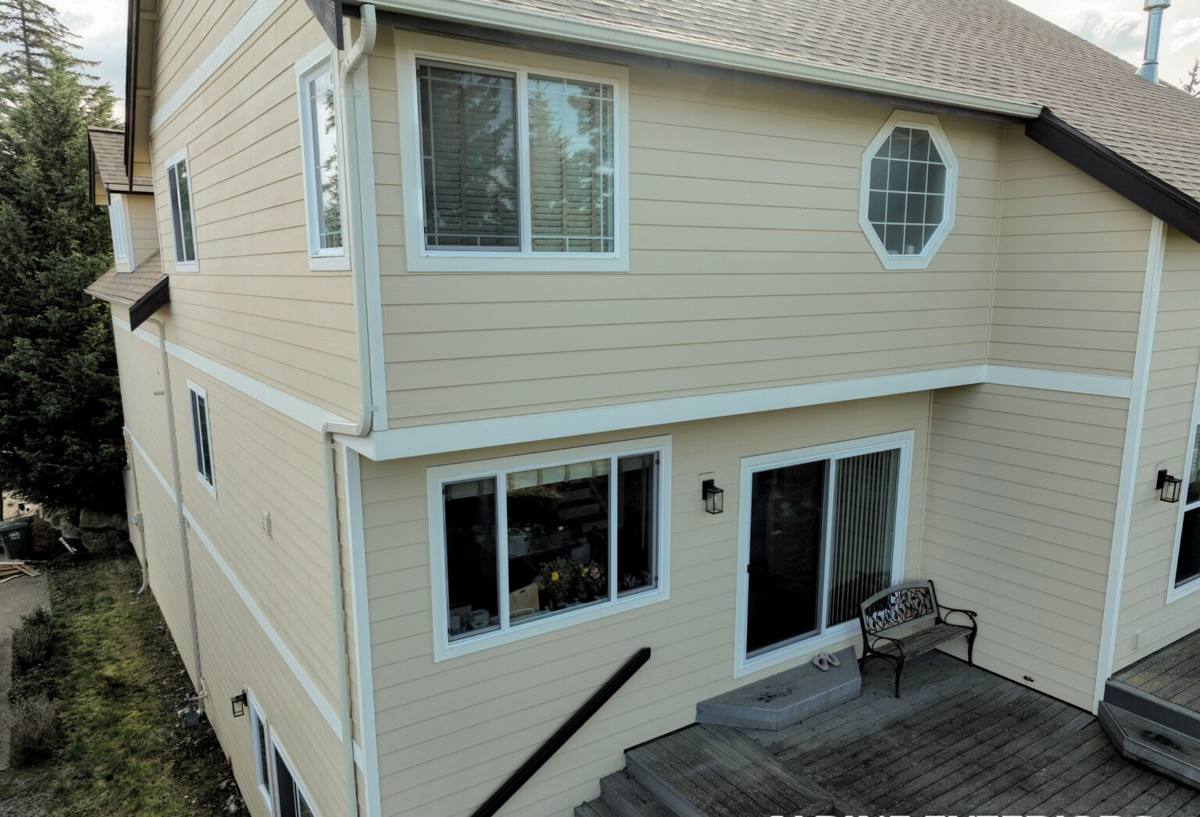
Why Decks Fail Faster Near Fairhaven
Salt Air and Metal Fasteners
Proximity to the bay means airborne salt settles on everything, including the metal that holds a deck together. Standard fasteners, brackets, and structural connectors corrode faster here than they would further inland. Once corrosion starts at a joist hanger or ledger bolt, it's hidden inside the structure — you don't see it until a board feels spongy or a railing wobbles.
Driving Rain and Moisture Trapping
Wind-driven rain off the water doesn't just fall on a deck, it drives sideways into gaps, under ledger boards, and behind rim joists where a normal downpour wouldn't reach. Combined with Bellingham's long wet season, that means moisture gets into places a deck built for a drier climate was never designed to shed.
Moss, Algae, and Surface Breakdown
Shaded yards, tree cover, and months of damp conditions make moss and algae a near-constant presence on horizontal wood surfaces here. Beyond the slip hazard, moss holds moisture against the decking itself, which accelerates rot in untreated or improperly finished wood and breaks down the surface layer of composite boards that aren't rated for heavy biological growth.
Freeze-Thaw Cycling
Bellingham doesn't get brutal winters, but it does get repeated cycles of freezing and thawing through the cooler months. Water that's worked its way into a crack or a fastener hole expands when it freezes, widening the damage a little more each cycle. Over several winters, that's often the real reason a deck that "looked fine" two years ago is suddenly failing structurally.
Signs a Fairhaven Deck Needs Full Replacement, Not Just Repair
- Soft or spongy spots in the decking boards, especially near the house or in shaded corners
- Visible rust staining around fasteners, brackets, or post bases
- Railings or stair stringers that flex or feel loose when weight shifts
- Persistent moss or dark staining that comes back within weeks of cleaning
- Gaps opening up at the ledger board where the deck meets the house
- Posts that show rot or insect damage at or below grade
- A deck more than 20-25 years old built to older code, especially around ledger attachment and guardrail spacing
Any one of these on its own might be repairable. Two or more together, especially involving the ledger board or structural posts, usually means the underlying frame has been compromised long enough that patching won't hold up through another wet season.
What a Correct Deck Replacement Actually Involves
A deck replacement done right in this climate isn't just swapping old boards for new ones. It starts below the surface.
1. Full Structural Assessment
Before any demolition, we check the ledger connection, the condition of posts and footings, and how water has been moving through the existing structure. This tells us whether footings need to be replaced or can be reused, and whether the ledger flashing was ever installed correctly in the first place — a common gap on older decks in wetter neighborhoods.
2. Proper Ledger Flashing
The ledger board, where the deck attaches to the house, is the single most common failure point on decks exposed to driving rain. Correct flashing directs water away from this joint instead of letting it pool against the house siding or sheathing. This step gets rushed on budget rebuilds and it's usually the first place rot returns.
3. Corrosion-Resistant Hardware
Given the salt exposure near Fairhaven, we use fasteners and structural connectors rated for coastal or high-moisture environments rather than standard-grade hardware. It costs more upfront and saves the homeowner from hidden structural corrosion five or ten years down the road.
4. Footing and Post Inspection or Replacement
Footings that have shifted, cracked, or were never poured below the frost line get addressed now, not patched around. Posts showing any rot at the base are replaced, not sistered, since rot at grade level tends to keep spreading underneath a repair.
5. Decking Material Selection
This is where the homeowner's priorities matter most — see the comparison below.
6. Drainage and Grading Check
We look at how water drains away from the posts and footings after the deck is built, not just how it drains off the surface. Standing water at the base of a post undoes a lot of the other work if it's not addressed.
Decking Material Comparison for This Climate
| Material | How It Handles Salt Air & Rain | Moss & Algae Resistance | Maintenance Burden |
|---|---|---|---|
| Pressure-treated wood | Good with proper sealing; needs re-sealing on a regular schedule | Moderate — moss gets a foothold without upkeep | Higher — annual cleaning and periodic re-staining |
| Cedar | Naturally moisture-resistant but still needs finish maintenance near salt air | Moderate to good depending on finish | Moderate to higher |
| Composite decking | Very good — doesn't absorb moisture or corrode | Good on most modern composites, but surface texture affects how easily moss grips | Lower — periodic washing, no staining or sealing |
| PVC decking | Excellent — fully moisture-resistant material | Good, similar upkeep to composite | Lowest of the group |
We don't push one material as universally "best" — it's a genuine trade-off between upfront cost, appearance preference, and how much upkeep you want to take on. What we do insist on, as a professional standard, is matching the fastening and flashing details to whatever material you choose, since a good board with a poorly flashed ledger will still fail early.
How Our Process Works
Step 1: On-Site Walkthrough
We look at the existing deck's structure, the ledger connection, footings, and how the site drains. This is also when we talk through what you actually want from the new deck — size, material, railing style, whether it needs to handle heavy furniture or a hot tub.
Step 2: Written Estimate
You get a clear scope of work and cost breakdown before anything is scheduled, so there are no surprises about what's included.
Step 3: Demolition and Disposal
Old decking, framing, and any compromised footings are removed and hauled off. We check what's underneath as we go, since hidden rot or drainage issues sometimes only become visible once the old boards are off.
Step 4: Structural Rebuild
Framing, ledger flashing, footings, and posts are built or replaced to current code, using hardware rated for this area's moisture and salt exposure.
Step 5: Decking, Railing, and Finish Work
Boards and railings go on per the material's manufacturer specifications, including proper board spacing for drainage and expansion.
Step 6: Final Walkthrough
We walk the finished deck with you, check railing height and stair spacing against code, and go over any maintenance recommendations specific to the material you chose.
Why Hiring a Crew That Already Works in Fairhaven Matters
A crew that regularly works decks in this part of Bellingham has already seen how ledger flashing fails near the water, which hardware holds up against salt air, and how quickly moss returns on a shaded lot versus an open one. That's not something you can fully substitute with a generic checklist — it comes from doing the work here repeatedly and seeing what actually breaks down first. It also means we're realistic with you about timelines, since weather windows for deck construction in Whatcom County's wetter months are narrower than in drier regions, and a crew unfamiliar with that pattern can end up scheduling around it poorly.
Permitting and Code Considerations
Deck replacements involving structural changes, height above a certain threshold, or attachment to the house typically require a permit in Bellingham and unincorporated Whatcom County. Requirements can include guardrail height, baluster spacing, stair rise and run, and ledger attachment method. We handle the permit process as part of the job rather than leaving it to the homeowner to navigate separately, since permit requirements do shift over time and it's easy to miss a detail that causes a failed inspection.
Pre-Project Checklist for Homeowners
- Confirm whether your existing deck has any known history of water intrusion at the house wall
- Decide on a decking material based on how much ongoing maintenance you're willing to do
- Think through how the deck will be used — dining furniture, a grill, a hot tub — since that affects framing requirements
- Ask whether your project will need a permit and factor that timeline into your planning
- Consider drainage around the deck's footings, especially if your yard tends to hold water after heavy rain
- Set a realistic budget range and be upfront about it, so material and design options can be matched to it honestly
What Honest Cost Factors Look Like
Deck replacement costs vary widely based on size, material, height off grade, and how much of the existing substructure can be reused versus needs replacing. Broadly, treated wood decks tend to sit at the lower end of the cost range, cedar in the middle, and composite or PVC decking at the higher end due to material cost — though composite and PVC often even out over time through lower maintenance spending. Footing and post replacement, if the existing ones are compromised, adds to the scope regardless of decking material chosen. We give a specific number only after seeing the site, since guessing at cost without inspecting the structure underneath does homeowners a disservice.
If your Fairhaven deck is showing any of the signs above, or you're just ready to replace an aging deck before it becomes a safety issue, we're happy to come take a look. The estimate is free, there's no pressure to move forward, and you'll get a straight answer about what your deck actually needs — use the form below to get started.