 Bellingham
 Deck Replacement Built for Sudden Valley's Conditions
Sudden Valley sits in a different microclimate than a lot on the flats near downtown Bellingham. Homes here are tucked into forest, many with lake-facing or lake-adjacent exposure to Lake Whatcom, and that combination of heavy tree canopy and lake humidity is hard on outdoor structures. Decks in this community deal with near-constant shade on at least part of their footprint, slow-drying surfaces, and moss and algae growth that can start within a single wet season if a deck isn't built or maintained correctly. Add in Whatcom County's long stretch of driving rain from fall through spring, and it's easy to see why decks that would last two decades in a drier, more open part of the county start showing rot, soft spots, and failing hardware in half that time out here.
We've replaced decks throughout Sudden Valley and the surrounding Lake Whatcom area long enough to know which parts of a deck fail first in this environment, and we build replacements to address those specific weak points rather than just swapping old boards for new ones on the same footprint.
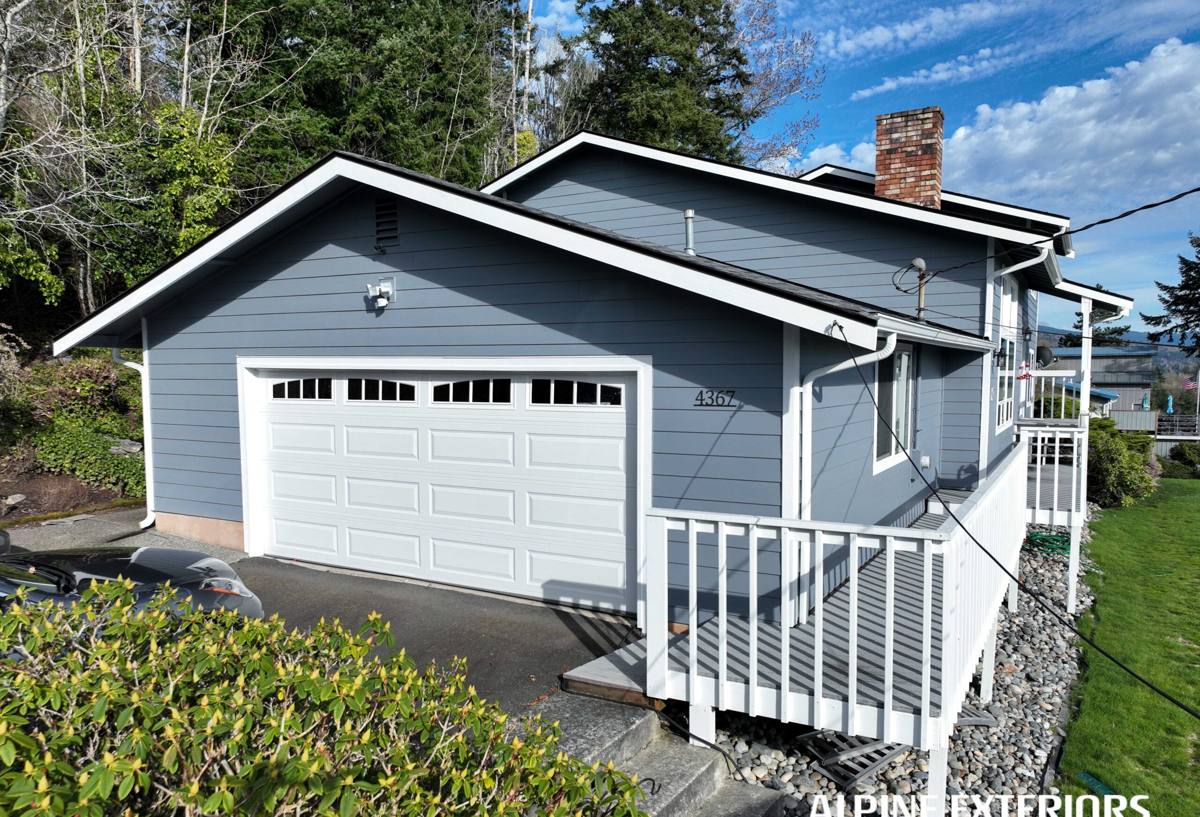
Why So Many Sudden Valley Decks Need Full Replacement, Not Repair
A deck that looks rough on the surface isn't always a lost cause, and a deck that looks fine from a distance isn't always sound. The honest answer depends on what's happening below the decking boards, not just what you can see when you walk out the back door.
Signs You're Likely Looking at a Replacement
- Ledger board pulling away from the house, or soft/spongy wood where the deck meets the siding or rim joist
- Joists or beams that flex noticeably underfoot, especially near the shaded end of the deck
- Post bases sitting in standing water or buried in soil and debris, with visible rot at the base
- Persistent moss or black staining that returns within weeks of cleaning, even after pressure washing
- Railings or stairs that wobble when pushed, which usually points to failed fasteners or rotted framing underneath, not just a loose post
- A deck older than 15-20 years that has never had the substructure inspected
If the framing and ledger connection are still sound and it's just the decking boards that are worn, a resurfacing or board-replacement job can make sense. But once moisture has gotten into the structural members, patching individual boards just delays the real problem, and in a wooded, shaded lot like most of Sudden Valley, that problem tends to move faster than homeowners expect.
What a Correct Deck Replacement Actually Involves
Replacing a deck the right way is a structural project, not a cosmetic one. A deck that looks good but isn't flashed, fastened, and drained correctly will fail again in the same wet conditions that took out the last one.
The Parts That Matter Most in This Climate
In a shaded, high-moisture setting, three details separate a deck that lasts from one that doesn't:
- Ledger flashing: The connection between the deck and the house needs proper flashing that sheds water away from the rim joist, not just caulk or a construction-grade wrap. This is the single most common failure point we find on old decks.
- Footings and post bases: Concrete footings set below frost depth with post bases that hold the wood off the ground and concrete, so posts don't sit in standing water after a heavy rain.
- Air flow and drainage: Framing spaced and oriented so air can move underneath the deck and water doesn't pool against joists. On lots with dense tree cover, this matters more than it does on an open, sun-exposed lot because things simply dry out slower here.
We also pull the necessary permits, size framing to current code for the deck's height and use, and use fasteners and hardware rated for the treated lumber or wood species involved — mismatched metal is a quiet cause of premature hardware corrosion in a damp climate like this one.
Choosing Decking Material for a Shaded, Wet Lot
There's no single "best" decking material — the right choice depends on how much sun the deck gets, how much maintenance the homeowner wants to keep up with, and budget. Here's how the common options stack up specifically for a shaded, tree-covered lot near Lake Whatcom:
| Material | How It Handles Shade & Moisture | Maintenance | Typical Lifespan |
|---|---|---|---|
| Pressure-treated wood | Resists rot well if sealed and maintained; moss and algae still grow on shaded boards | Needs cleaning and re-sealing every 1-2 years in shaded areas | 15-20 years with upkeep |
| Cedar | Naturally rot-resistant, ages gracefully, but softens faster in constant shade without sealing | Regular cleaning and periodic sealing/staining | 15-25 years with upkeep |
| Composite decking | Won't rot, but shaded/damp composite boards can still grow surface algae if never cleaned | Occasional washing; no staining or sealing required | 25-30+ years, manufacturer-dependent |
We don't push one product on every job. On a heavily shaded lot where a homeowner doesn't want to think about re-sealing, composite usually makes the most sense. On a lot that gets a few hours of direct sun and where the owner likes the look and feel of real wood, cedar or treated lumber is a perfectly sound choice as long as it's maintained. We'll tell you honestly which one fits your specific spot on the lot.
Our Deck Replacement Process
1. On-Site Assessment
We walk the existing deck, check the ledger connection, probe the framing and posts for soft spots, and look at how much sun and drainage the specific location gets. This tells us whether repair is realistic or replacement is the honest recommendation.
2. Design and Material Selection
We talk through size, layout, railing style, and material based on your budget and how much maintenance you want going forward, then put it in writing with no vague allowances.
3. Permitting
Most deck replacements in Whatcom County require a permit, especially for elevated decks or any change to footprint or footings. We handle the permit application and inspections so you're not the one tracking down paperwork. Sudden Valley properties may also need to satisfy the community association's architectural review process in addition to county permitting — we account for that timeline when scheduling.
4. Demolition and Structural Work
Old decking, framing, and any rotted structural members come out. We reset or replace footings and posts as needed and correct the ledger flashing before anything new goes on.
5. Build and Finish
Decking, railings, and stairs go in per the design, with fasteners and hardware matched to the material. We finish with a walkthrough so you know what maintenance, if any, the material requires going forward.
6. Cleanup
Old material and debris hauled off-site — you're not left with a pile of rotted lumber to deal with.
Working Around Sudden Valley's Access and Community Requirements
Sudden Valley is a private residential community, and that comes with a few practical realities we plan around rather than treat as surprises mid-project: gated or restricted access for crews and delivery vehicles, private roads that aren't always sized for large trucks, and an architectural or community review process for exterior changes that runs alongside standard county permitting. A crew that hasn't worked in the community before can lose real time figuring out access logistics or discovering the review requirement after materials are already ordered. We build that lead time into the schedule up front so it doesn't turn into a delay once the job is underway.
Maintaining Your New Deck in a Wooded, Lake-Adjacent Setting
Even the right material and a correctly built structure benefit from a little seasonal attention in a climate like this one:
- Sweep leaves and needles off the deck surface regularly, especially in fall — trapped organic debris holds moisture against boards and feeds moss growth
- Clean gutters and downspouts near the deck so runoff isn't draining directly onto or under it
- Rinse shaded areas of the deck periodically to slow algae buildup, even on composite decking
- Re-seal wood decking on the schedule appropriate to the product, more often on shaded boards than sun-exposed ones
- Check the ledger flashing and any visible fasteners once a year for early signs of corrosion or gaps
Why Local Experience in Sudden Valley Matters
A deck built to a generic spec doesn't account for the specific shade pattern, drainage, and access conditions of a Sudden Valley lot. We've replaced decks throughout this community and the broader Lake Whatcom and Bellingham area, so we already know which parts of a build need extra attention here — the ledger flashing, the footing drainage, the material choice for a shaded lot — instead of learning it on your project. That local knowledge is part of what you're paying for when you hire a crew that already works in this specific part of Whatcom County.
If your deck is showing soft spots, persistent moss, or you're just planning ahead before the next wet season, we're happy to take a look and give you a straightforward, no-pressure estimate — fill out the form below and we'll get in touch.