 Bellingham
 Barkley's Climate Is Tougher on Decks Than It Looks
Barkley sits close enough to Bellingham Bay and the Salish Sea that salt-laden air is a constant, low-grade stress on anything outdoors — including your deck. Add in the driving rain that comes through Whatcom County for most of the fall, winter, and spring, plus a long moss season fed by tree cover and shade on north-facing lots, and you have a combination that ages decks faster than homeowners expect. A deck that would hold up for two decades in a drier inland climate can start showing real structural problems in half that time here if it wasn't built or maintained with this specific climate in mind.
The damage rarely shows up all at once. It starts quietly: a soft spot near the ledger board, fasteners weeping rust stains, moss creeping across the boards where the sun never quite reaches. By the time it's obvious — sagging, spongy decking, a railing that wobbles — the deck has usually been failing underneath for a while.
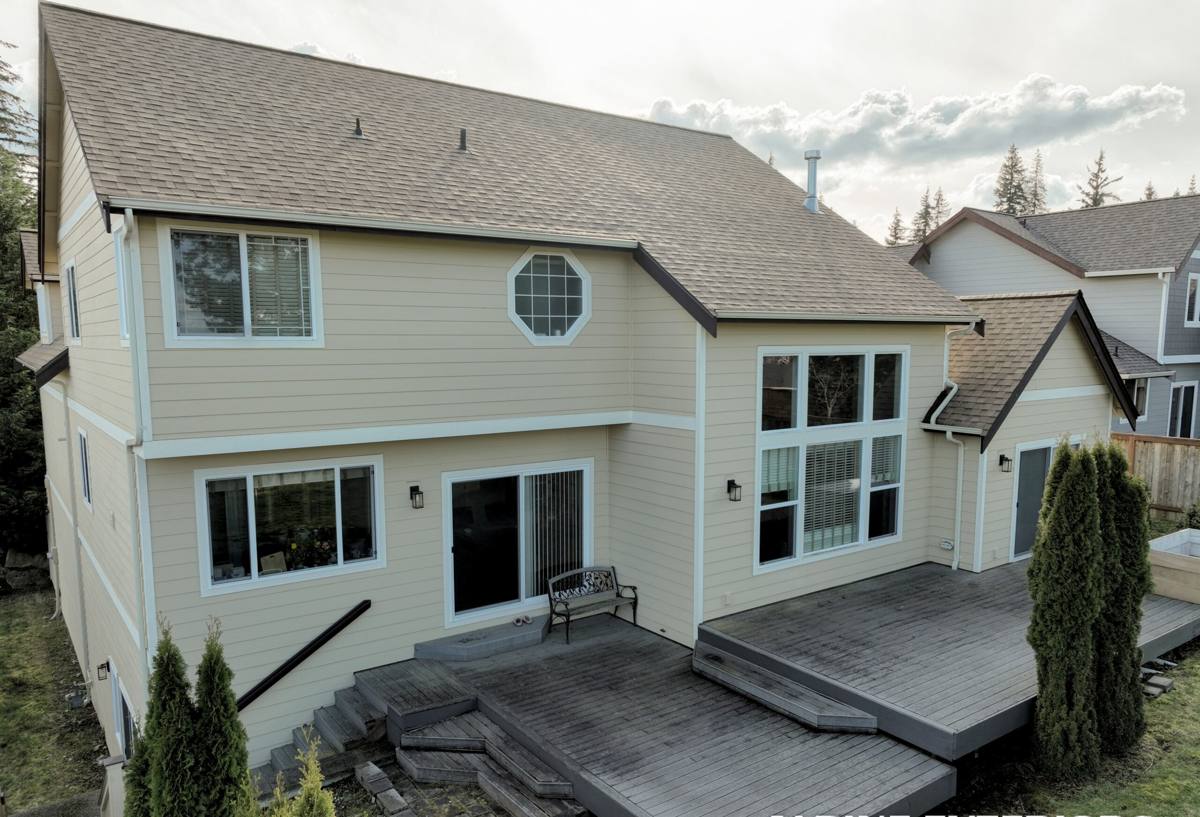
Signs a Deck Needs Replacement, Not Another Repair
Not every tired deck needs to be torn out. But there's a point where patching individual boards is just delaying a bigger job, and spending money on repairs stops making sense. Here's what we look for during an assessment:
- Soft, spongy, or discolored decking near the house, especially where the deck meets the ledger board
- Rust streaking or corrosion around fasteners and joist hangers
- Persistent moss or algae film that returns within weeks of cleaning
- Railings or posts that flex or move when you lean on them
- Visible gaps opening up between the ledger board and the house siding or trim
- Framing lumber that's gone gray, cracked, or crumbly to the touch under the deck boards
- A deck older than 15–20 years that has never had the substructure inspected
If it's just a handful of cupped or split boards on an otherwise sound frame, repair is the honest answer and that's what we'll recommend. If the framing, ledger connection, or footings are compromised, replacement is the only way to fix it properly — patching decking on top of failing framing just hides the problem for another season.
What a Correct Deck Replacement Actually Involves
The Framing and Connection to Your House
Most deck failures we see in this area start at the ledger board — the piece that bolts the deck to the house — because that's where water collects if the flashing isn't right. A correct replacement means proper ledger flashing (not just caulk), lag bolts or through-bolts sized to code, and joist hangers rated for exterior use. Given how much rain this area sees, getting the water to shed away from the house at this one connection point matters more than almost anything else on the job.
Footings and Posts
Footings need to be sized and set to the depth required for our soil and frost conditions, with posts anchored so they can't shift or rot at grade. On older Barkley decks we often find posts set directly in soil or in undersized footings — fine when they were built, not something we'll repeat.
Decking, Railings, and Stairs
Once the frame is sound, decking gets installed with proper spacing for drainage and expansion, railings are set to current height and baluster-spacing requirements, and stair stringers are sized for the actual rise and run of your site — not just copied from the old deck.
Choosing the Right Decking Material for This Climate
There's no single "best" decking material — there's a best fit for your budget, how much upkeep you want to do, and how much sun or shade your deck gets. In a moss-prone, high-rainfall area like Bellingham, moisture behavior and how a material handles shaded, damp spots matter more than they would somewhere drier.
| Material | Moisture & Moss Resistance | Maintenance | Typical Lifespan |
|---|---|---|---|
| Pressure-treated lumber | Resists rot when sealed regularly; moss still grows on shaded, damp boards | Needs cleaning and re-sealing every 1–2 years | 10–15 years with upkeep |
| Cedar | Naturally rot- and insect-resistant; still needs sealing to hold color and shed water | Annual cleaning, periodic staining | 15–20 years with upkeep |
| Composite decking | Doesn't rot; some early-generation composites held moisture and grew mold in shade — modern capped composites shed water and resist staining much better | Occasional washing, no sealing or staining | 25–30 years, manufacturer-warrantied |
| PVC decking | Fully synthetic, doesn't absorb moisture, good in heavy shade | Lowest maintenance of the group | 25+ years, manufacturer-warrantied |
For heavily shaded lots — common on tree-covered Barkley properties — we lean toward capped composite or PVC decking because they don't give moss and algae the porous surface they need to take hold. For sunnier decks, cedar or well-maintained pressure-treated lumber can still be the right call, especially if you want the natural wood look and don't mind the upkeep.
Hardware and Fasteners That Actually Hold Up Near Salt Air
This is where a lot of decks quietly fail years before the decking itself gives out. Standard coated screws and joist hangers can corrode faster in areas that get salt-influenced air off the Sound, especially combined with constant damp conditions. We use stainless steel or heavy hot-dip galvanized fasteners and connectors rated for coastal exterior exposure, and we match hidden fastener systems to the decking manufacturer's specs rather than mixing hardware that wasn't designed to work together. It costs a bit more up front. It's cheap insurance against rust stains and failed connections five years in.
Permits and Code in Bellingham
Most deck replacements — especially anything attached to the house or built more than 30 inches off grade — require a permit through the City of Bellingham or Whatcom County, depending on where the property sits. Permitted work means an inspector checks the footings, framing, and ledger connection before it's covered up, which is exactly the part of the job that's impossible to verify once the decking is down. We handle the permit application and inspection scheduling as part of the job so it's one less thing on your plate, and so there's a record on file if you ever sell the house.
Our Deck Replacement Process
- On-site assessment — we inspect the existing deck, framing, ledger connection, and footings to determine what's salvageable versus what needs to go.
- Honest scope and estimate — you get a clear breakdown of what's being replaced and why, with material options and pricing explained plainly.
- Permit filing — we pull the necessary permit and schedule required inspections.
- Demolition — the old deck comes down, including any compromised framing, posts, or footings.
- Structural rebuild — new or repaired footings, posts, ledger flashing, and joists, built to current code.
- Decking, railing, and stairs — installed with the material you chose, proper spacing, and code-compliant railings.
- Final walkthrough — we go over the finished deck with you, including basic care for whatever material you selected.
Caring for Your New Deck in a Moss-Prone Climate
Whatever material you choose, a few habits go a long way toward keeping a Barkley deck looking and performing well through the wet months:
- Sweep leaves and debris off the deck regularly in fall — trapped organic matter is what feeds moss growth
- Rinse or lightly scrub shaded areas a couple of times a year, even on low-maintenance composite or PVC decking
- Keep gutters and downspouts clear so runoff isn't draining directly onto the deck surface
- Reseal wood decking on the manufacturer's recommended schedule, not just when it looks dry
- Check railings and stair connections once a year for movement or loosening fasteners
Why Hiring a Crew That Already Works Barkley Matters
A deck built to a generic spec sheet and a deck built for how water, shade, and salt air actually behave on a specific lot are two different projects, even if they look the same when they're finished. Working regularly in Barkley and the surrounding Bellingham area means we know which lots hold moisture longer because of tree cover, which connections tend to corrode first in this air, and how to work with the City of Bellingham and Whatcom County permitting process without it becoming a bottleneck on your project. That familiarity shows up in fewer surprises during the build and a deck that's actually built for the conditions it has to survive, not just the conditions on a spec sheet written somewhere else.
If your deck is showing its age, or you're just not sure whether it needs a repair or a full replacement, we're happy to take a look and give you a straight answer. Reach out for a free, no-pressure estimate using the form below.