 Bellingham
 Deck Repair Built for Cordata's Conditions
Cordata sits in north Bellingham, close enough to Bellingham Bay and the Salish Sea that homes here deal with the same marine climate that wears on the rest of Whatcom County: salt-tinged air, long stretches of driving rain, and a moss season that can run from October well into spring. A deck is one of the most exposed structures on a property — it takes weather from above, below, and the ground it stands on — so it tends to show climate damage years before siding or roofing does. If you own a home in Cordata with a deck more than eight or ten years old, there's a good chance it needs more than a fresh coat of stain.
This page covers what deck repair actually involves in this specific climate, how we decide between a repair and a rebuild, and what to expect if you call us out to look at yours.
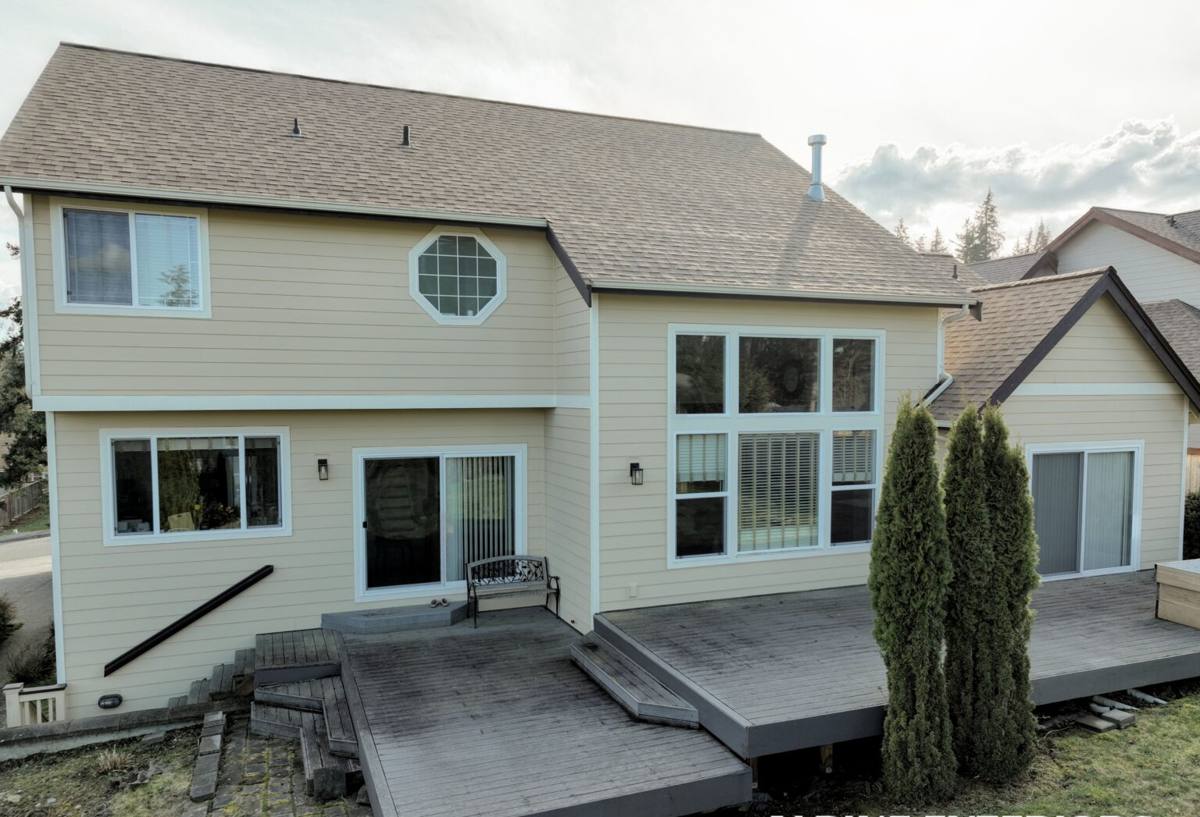
Why Decks Here Age the Way They Do
Salt Air and Metal Fasteners
Homes closer to the water pick up airborne salt that accelerates corrosion on nails, screws, and structural hardware. Once a fastener starts rusting, it loses grip strength long before the wood around it looks bad — which is why a deck can feel "loose" or springy even when the boards themselves seem fine.
Driving Rain and Water Intrusion
Wind-driven rain doesn't just fall on a deck, it gets pushed sideways and underneath it. Water works its way into board gaps, screw holes, and — most importantly — the ledger board connection where the deck attaches to the house. That joint is the single most common place we find hidden rot, because it's rarely visible without pulling boards or checking from underneath.
Moss, Algae, and a Long Wet Season
Whatcom County's moss season is long, and a deck that sits partially shaded — under trees, near a fence line, or on the north side of a house — can stay damp for days after a storm. Moss and algae hold moisture against the wood surface, which softens fibers, makes boards slick and unsafe underfoot, and creates the ideal environment for rot to set in around fasteners and board edges.
Signs Your Deck Needs Repair Now, Not Later
- Boards that feel spongy, springy, or slightly give when you walk across them
- Any board that flexes near where it meets a joist, not just at mid-span
- Dark staining, black streaking, or persistent moss along board edges and fastener heads
- Rust bleeding out from screw or nail heads
- Gaps opening up around the ledger board where the deck meets the house siding
- Railings or posts that wiggle at the base
- Stair stringers that feel uneven, soft, or shift under weight
- A musty smell coming from underneath the deck, especially after rain
Any one of these on its own might just mean routine maintenance. Several together, especially near the ledger board or stairs, usually mean structural repair is overdue.
What a Correct Deck Repair Actually Involves
A lot of deck "repairs" we get called to fix were done as surface patches — a new board dropped in over a rotting joist, or fresh screws driven into wood that's already lost its holding strength. That doesn't hold up through another wet season. A correct repair addresses the structure first and the surface second.
Ledger Board and Flashing
Because this connection carries so much of the deck's load and sees so much water, we check it on every repair call. If flashing is missing, cracked, or was never properly integrated with the house's water-resistive barrier, we correct that as part of the repair — not just patch around it.
Joists and Framing
We probe joists with an awl or screwdriver rather than judging by eye. Wood can look sound on the surface while being soft an inch in. Any joist with active rot gets sistered or replaced — never just covered over.
Fasteners and Hardware
Rusting nails and undersized screws get replaced with corrosion-resistant fasteners and code-rated structural hardware, especially at joist hangers, post bases, and the ledger connection.
Decking, Railings, and Stairs
Once the structure underneath is solid, we replace damaged boards, tighten or rebuild railings to meet proper spacing and height, and address any stair stringers that have softened or shifted.
Repair or Rebuild? How We Make the Call
Not every deck problem calls for a full teardown, and not every deck is worth patching. We look at where the damage is concentrated and how much of the structural system it's touching.
| Factor | Leans Toward Repair | Leans Toward Rebuild |
|---|---|---|
| Ledger board condition | Solid, properly flashed | Rotted or improperly flashed |
| Joist damage | Isolated to one or two joists | Widespread across the frame |
| Age of deck | Under 15 years | Original build is 20+ years old |
| Decking material | Boards sound, surface wear only | Most boards cupping, splitting, or soft |
| Typical cost range | Few hundred to a few thousand dollars | Larger investment, priced by square footage |
These are general guidelines, not guarantees — every deck is different once we're actually under it. We'll walk you through what we find and why we're recommending one path over the other before any work starts.
Materials We Use and Why
Wood Decking
Pressure-treated wood is still a reasonable choice when it's properly maintained — sealed or stained on a regular schedule and kept clear of standing moss. It's more forgiving to repair in sections since you're not trying to match a discontinued composite color or profile.
Composite Decking
Composite holds up well against moss and doesn't need staining, which appeals to a lot of homeowners here who are tired of the maintenance cycle. The trade-off is that composite is less forgiving of poor substructure work — it doesn't flex to warn you the way wood does, so the framing underneath has to be right the first time. We're upfront that composite is a longer-term investment up front in exchange for less upkeep later, not a product that fixes a bad frame.
Fasteners and Hardware
Given the salt air this area sees, we use corrosion-resistant fasteners and structural connectors rated for exterior, coastal-adjacent exposure rather than standard interior-grade hardware. It costs a little more up front and saves you from redoing the same repair in five years.
Our Deck Repair Process
- On-site assessment — we inspect the deck from the top, underneath, and at the ledger connection, probing suspect wood rather than guessing from appearance.
- Honest scope and estimate — you get a clear breakdown of what's structural, what's cosmetic, and what we recommend addressing now versus monitoring.
- Structural correction — rotted framing, failed flashing, and corroded hardware get replaced first, before any surface work.
- Decking, railing, and stair repair — boards, balusters, and stringers are replaced or reinforced to current safety standards.
- Finish and protection — sealing or staining as needed, plus guidance on upkeep specific to your deck's exposure and shade pattern.
Keeping a Repaired Deck Solid Through the Wet Season
A repair is only as good as the maintenance that follows it. This checklist is what we tell Cordata homeowners to stay on top of between our visits:
- Sweep leaves and debris off the deck surface before fall rains set in — trapped debris holds moisture against boards
- Clear moss and algae early with a deck-safe cleaner rather than letting it build up over winter
- Check the gap under the deck for standing water or poor drainage after heavy rain
- Look at fastener heads once a year for early rust staining
- Re-seal or re-stain wood decking on the schedule appropriate for its exposure — shaded, damp areas need it more often
- Press-test boards near the ledger and at stair landings periodically for early softness
Why It Matters That We Already Work in Cordata
Deck problems in this neighborhood follow patterns — which sides of a house catch the worst driving rain, which yards hold shade long enough to grow persistent moss, which older decks were built before current flashing and fastener standards were common practice. A crew that's already worked on homes in this part of Bellingham isn't guessing at those patterns; we've seen how this climate specifically wears on deck structures here, not just in a textbook sense. That shows up in faster, more accurate diagnosis and repairs that are built for the exposure your deck actually gets, not a generic fix.
If your deck has soft spots, rust staining, moss that keeps coming back, or you just haven't had it looked at in a few years, we're happy to come take a look. There's no pressure and no cost to get an honest read on where it stands — just fill out the form below and we'll set up a time to stop by.