 Bellingham
 New-Construction Windows in Cordata: Why the Install Sequence Matters More Than the Window
Cordata sits in north Bellingham, close enough to Bellingham Bay and the Strait of Georgia that homes here deal with salt-laden air, wind-driven rain off the water, and long stretches of damp, low-light winter that keep moss and algae going most of the year. On a new build, the window itself is only part of the job. What actually keeps water out of the wall for the next thirty years is the sequence: how the rough opening is prepped, how the weather-resistive barrier (WRB) laps over the flashing, and how the nailing fin ties into that system before siding ever goes on. Get that sequence wrong and you won't see it for a year or two — until staining shows up on interior drywall near a window corner, usually on the wall that takes the worst of the weather.
We install new-construction windows on builds and additions throughout the Cordata area and work directly with framers and builders during the rough-in phase, not just at trim-out. That timing is the whole point of this page: new-construction installation is a different job than swapping out an old replacement window, and it has to be treated that way from the first opening cut.
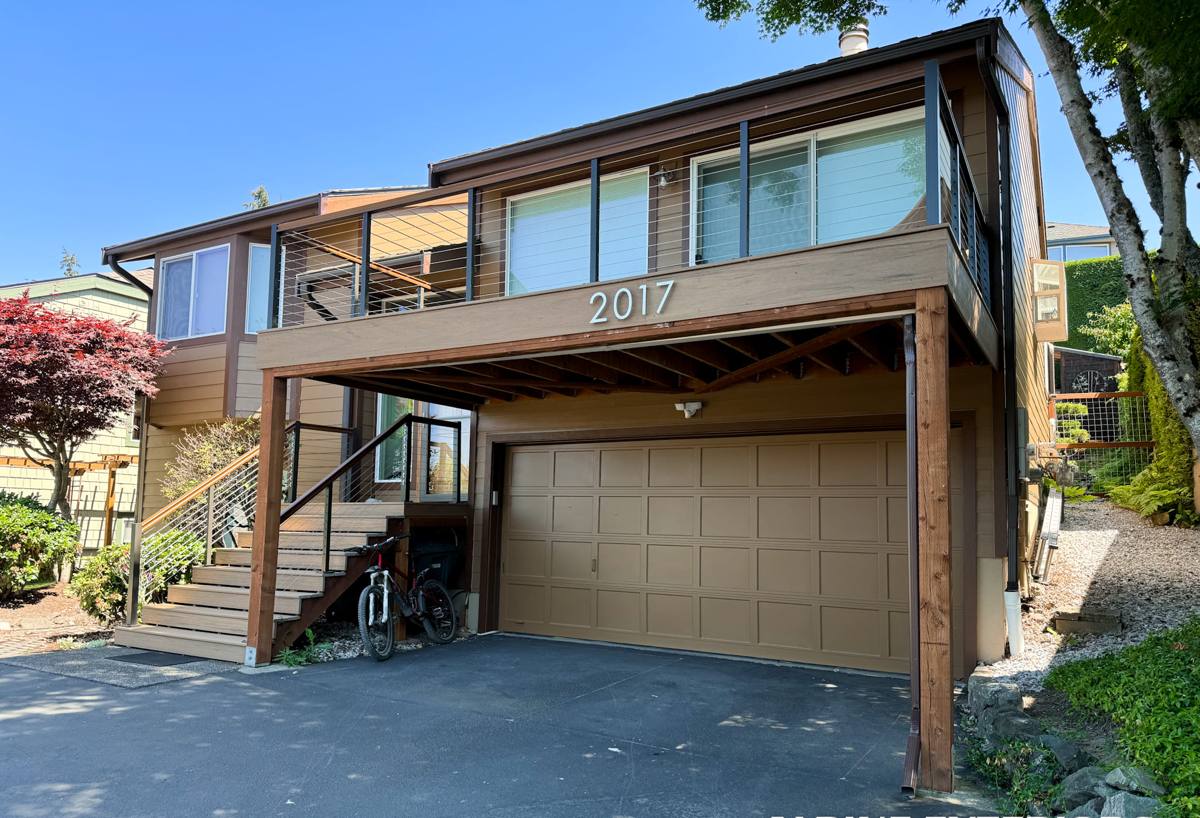
What Whatcom County's Climate Asks of a New Window Install
Three regional factors shape how we detail every opening in Cordata:
- Salt air: Proximity to the bay means airborne salt reaches building materials even a few miles inland. Fasteners, flashing metal, and hardware that aren't rated for it corrode faster than manufacturers' generic warranty language assumes.
- Driving rain: Whatcom County storms frequently come with sustained wind, which pushes rain sideways into wall assemblies rather than letting it run straight down. Flashing details that only manage vertical water flow aren't enough here.
- Moss and algae season: Bellingham's damp, shaded stretches (roughly October through May) keep exterior surfaces wet for days at a time. Sill details and drainage gaps that don't shed water quickly become the spots where organic growth and slow rot start.
None of this means Cordata needs exotic materials. It means ordinary details — laps, gaps, and fastener choice — have to be done correctly and in the right order, every time, because the climate doesn't give sloppy work much room to dry out between rain events.
Salt Air and Fastener Corrosion
Standard electro-galvanized nails and screws can start showing rust streaks on light-colored trim within a few years this close to salt water. We spec corrosion-resistant fasteners (stainless or hot-dip galvanized, matched to the window manufacturer's requirements) for new-construction installs in this area rather than defaulting to whatever ships in a generic fastener box.
Nail-Fin vs. Block-Frame Windows: Picking the Right Type for a Cordata Opening
New-construction windows generally come in two mounting styles. Which one is correct depends on the wall assembly, not personal preference.
| Window Type | How It Mounts | Best Fit | Water-Management Note |
|---|---|---|---|
| Nail-fin (flanged) | Flange fastens to sheathing before siding/WRB laps over it | Standard wood-framed new construction, the most common Cordata build type | Depends entirely on correct WRB and flashing lap sequence — the fin itself doesn't stop water |
| Block-frame | Sets into the rough opening and is face- or jamb-fastened, no nailing fin | Masonry, stucco, or certain retrofit-style new openings | Needs sill pan flashing and careful sealant detailing since there's no flange to lap |
Most Cordata new builds are standard wood-frame construction, so nail-fin windows are the norm. The performance difference between a well-installed nail-fin window and a poorly installed one is much bigger than the difference between window brands — which is why we spend more time talking about installation sequence than about product lines.
The Flashing and Water-Management Sequence We Follow
This is the part of a new-construction window install that determines whether the opening stays dry through Bellingham winters. In order:
- Inspect the rough opening for square, level, and correct dimensions before the window ever shows up on site.
- Install a sloped sill pan flashing so any water that gets past the window has a path back outside instead of sitting on the sill.
- Set the window plumb, level, and square, shimmed correctly so the frame isn't under stress that can bind hardware or crack sealant over time.
- Fasten the nailing fin per the manufacturer's schedule — fastener spacing isn't cosmetic, it's part of the structural and warranty spec.
- Flash the head, jambs, and sill in the correct shingle-lap order (sides first, then head, always lapping over the layer below) so water sheds outward at every course.
- Integrate the flashing with the WRB so the whole wall drains as one system, not window flashing taped over a housewrap that was already installed wrong.
- Seal and backer-rod the interior per code and manufacturer instructions, leaving the exterior weep path clear rather than fully caulking it shut.
Skipping or reordering any of these steps is the single biggest cause of window leaks in new construction — far more common than a defective window unit.
Working With Builders and Framers on Cordata Projects
New-construction window work only goes smoothly when the installer is coordinated with the framing and siding schedule, not squeezed in wherever there's a gap. On Cordata jobs we typically:
- Confirm rough opening sizes against window shop drawings before framing is closed up, so mistakes get caught while they're cheap to fix.
- Time our install between WRB application and siding start, so flashing laps land in the correct order instead of being retrofitted.
- Communicate directly with the general contractor or builder about weather windows — driving rain mid-install is a real scheduling factor here, not a minor inconvenience.
- Walk the openings with the builder before siding closes them up, since that's the last easy chance to correct anything.
Frame Material and Glass: What Actually Matters for This Climate
Homeowners often ask which frame material or glass package is "best." For Cordata's climate, the honest answer is that several materials perform well if installed correctly — the differences show up more in maintenance and longevity than in day-one weather resistance.
| Factor | Vinyl | Fiberglass | Wood-Clad |
|---|---|---|---|
| Moisture tolerance | Good, won't rot | Very good, dimensionally stable | Depends on cladding quality; interior wood needs protection from condensation |
| Maintenance in damp/moss-prone conditions | Low | Low | Moderate — cladding and sill details need periodic checks |
| Upfront cost | Lower | Mid to higher | Higher |
| Typical use | Standard new-construction builds | Larger openings or higher-performance specs | Where a wood interior look is wanted with an exterior-protected frame |
Glass packages matter too — a double-pane, low-E unit with appropriate gas fill handles Whatcom County's temperature swings and helps with condensation control on cold, wet mornings, which is a common complaint in under-specified new builds. We'll walk through glass options relative to the home's orientation and budget rather than pushing a single package.
Our Process, Rough Opening to Final Trim
For a typical Cordata new-construction job:
- Plan review: we check window schedules and rough opening sizes against the actual framing.
- Pre-install walk: confirm openings are square, sheathed, and ready before windows arrive.
- Flashing and set: sill pan, window set, fin fastening, and shingle-lap flashing as outlined above.
- WRB tie-in: integrate flashing with the housewrap so the drainage plane is continuous.
- Quality check: operate every unit, confirm level and square, verify fastener schedule was followed.
- Handoff: document the install for the builder and homeowner, including any manufacturer warranty registration steps.
A Homeowner's Checklist for New-Construction Window Installation
If you're building in Cordata and want to sanity-check your installer's work (yours or ours), these are reasonable things to ask about or look for:
- Is there a sloped sill pan flashing under every window, not just sealant on the rough sill?
- Does the flashing lap in shingle order — sides, then head, each layer over the one below?
- Are fasteners corrosion-resistant, appropriate for a coastal-influenced climate?
- Is the WRB integrated with the window flashing, or just taped over the top afterward?
- Is the interior sealed while the exterior still has a clear weep path for drainage?
- Were rough openings checked for square and size before the windows were ordered or set?
- Can the installer explain their flashing sequence without hesitation? If they can't describe it, they may not be following one consistently.
Why Hire a Crew That Already Works Cordata
New-construction window installation isn't complicated in theory, but it's easy to get subtly wrong in ways that don't show up until a wet winter tests every lap and seal. A crew that regularly works Cordata and the surrounding Bellingham area has already seen how local wind direction, rain intensity, and moss buildup interact with different wall assemblies — and adjusts flashing and fastener choices accordingly instead of applying a generic install method regardless of region. That local repetition is what turns a correct-on-paper install into one that actually holds up through Whatcom County winters.
If you're building or framing a home in Cordata and want your window openings done right the first time, we're glad to walk your plans or your framed openings and give you a straight, no-pressure estimate — just fill out the form below.