 Bellingham
 Fiber Cement Siding Built for Cordata's Weather
Cordata sits on the north side of Bellingham, close enough to the water and the low, wet terrain around Whatcom Creek and the interurban corridor that it gets the full package of Pacific Northwest siding stress: salt-tinged air moving in off Bellingham Bay, driving rain that comes in sideways during fall and winter storms, and a moss season that can run eight months out of the year on shaded north- and west-facing walls. None of that is unusual for Whatcom County. What it means for a house is that whatever material is on the exterior needs to shed water fast, resist organic growth, and hold up to repeated wet-dry cycling without swelling, cracking, or feeding mold behind the cladding.
We install James Hardie fiber cement siding on Cordata homes because it's engineered for exactly this kind of climate. It's not a general-purpose product we're stretching to fit the area — Hardie makes a specific HZ10 formulation for the Pacific Northwest, and we spec it on every Cordata job by default.
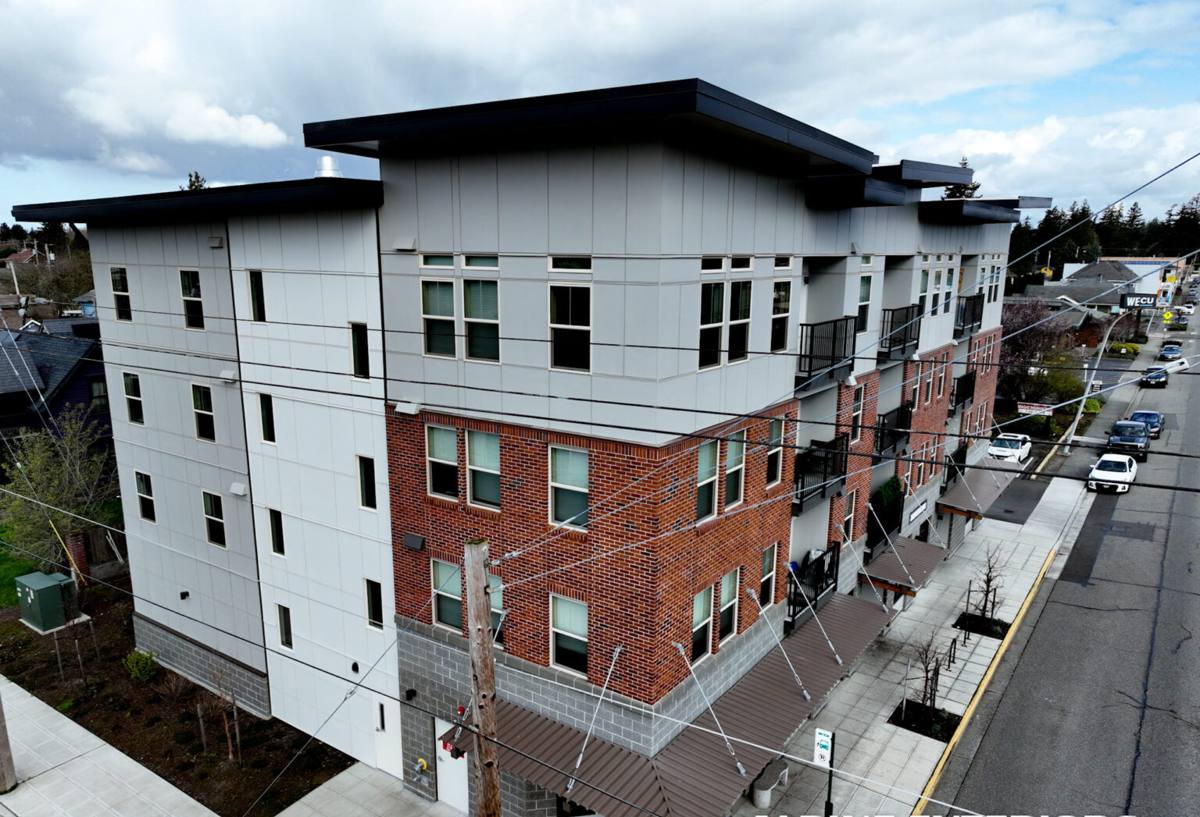
What Cordata Homes Actually Need From Their Siding
Moisture Management First
Most siding failures we see in this neighborhood aren't about the visible face of the siding — they're about what's happening behind it. Wood-based products (cedar, primed spruce, and engineered wood like LP SmartSide) absorb moisture at cut edges, fastener penetrations, and seams. In a climate where a wall can stay damp for days between rain events, that absorbed moisture doesn't fully dry before the next storm arrives. Over years, that cycle is what causes swelling, paint failure, and eventually rot. Fiber cement is cement, sand, and cellulose fiber — it doesn't absorb water the same way, and it doesn't rot.
Moss and Algae Resistance
Cordata has plenty of mature tree cover and shaded exposures, which means moss and algae growth on north and west walls is a fact of life, not a maintenance failure on the homeowner's part. Porous or textured surfaces give moss more to grab onto. Hardie's ColorPlus factory finish is baked on and smoother than field-applied paint, which gives organic growth less to hold onto and makes the periodic wash-down homeowners already do here more effective.
Wind-Driven Rain at Seams and Penetrations
Storms off the Strait of Georgia and the Sound don't just drop rain — they push it horizontally into wall penetrations, corner boards, and window trim. This is where installation quality matters as much as the product itself. Correct flashing details and proper caulking at penetrations matter more here than in a drier climate, because a small gap that would be a minor issue in Eastern Washington becomes a chronic leak point in Bellingham.
What a Correct Fiber Cement Install Involves
Fiber cement is unforgiving of shortcuts. It's a rigid material — it doesn't flex to hide bad substrate prep the way vinyl can, and if it's installed wrong, the failures show up as cracking, nail popping, or water intrusion at the exact points where corners are cut. A correct install includes:
- Removal of existing siding down to the sheathing so the wall assembly can actually be inspected, not covered over
- Repair of any rot, soft sheathing, or water damage found underneath before new material goes up
- A weather-resistive barrier installed and lapped correctly, shingle-style, so water sheds outward at every seam
- Rainscreen or proper furring where the wall assembly calls for it, to let moisture that does get behind the siding actually dry out
- Correct flashing at every window, door, and roofline penetration — this is the single most common place we find problems on older Cordata homes
- Fastening per Hardie's published pattern and blind-nailing where the reveal allows it, so fastener heads aren't a long-term maintenance point
- Factory-primed or ColorPlus-finished cut edges sealed so the raw edge of the board is never left exposed to weather
Every one of those steps takes time. It's also exactly where corners get cut on rushed jobs — skipping the tear-off, reusing old flashing, or nailing through the reveal instead of the correct zone. Those shortcuts don't show up as a problem on install day. They show up two or three winters later, after this area's rain has had a few full seasons to find the gap.
Why We Only Install James Hardie
We get asked fairly often why we don't offer vinyl, LP SmartSide, or lower-cost fiber cement alternatives like Cemplank or Allura. It's a fair question, and the honest answer is a standards decision, not a knock on every other product on the market.
Vinyl is inexpensive and low-maintenance in dry climates, but it expands and contracts more than fiber cement, and in wind-driven rain it relies almost entirely on a water-resistive barrier behind it doing all the work — the panels themselves aren't a real water barrier. LP SmartSide and other engineered wood products perform well when kept dry and maintained, but they're wood-based, and wood-based products are the category most sensitive to the wet-dry cycling this climate produces. Primed spruce and cedar are honest, attractive materials, but they require ongoing refinishing and are the most maintenance-intensive option in a climate that gives a house very little time to dry out between storms.
Other fiber cement brands exist and some are reasonable products. We standardized on Hardie specifically because of the HZ10 zone engineering for this climate, the factory-applied ColorPlus finish (which holds color and resists fading and chipping better than field-painted siding), and a warranty structure that's transferable to a future owner — which matters in a neighborhood like Cordata where homes do change hands. We'd rather install one product correctly and stand behind it than offer five options and manage five different sets of trade-offs.
Product Comparison for This Climate
| Material | Moisture Behavior in Wet-Dry Cycling | Moss/Algae Resistance | Maintenance |
|---|---|---|---|
| James Hardie Fiber Cement (HZ10) | Does not absorb and swell; dimensionally stable | Factory finish resists organic buildup | Periodic wash; no repainting for the life of the finish |
| Vinyl | Panels stable but joints/laps are the weak point in driving rain | Moderate; textured panels can hold moss | Low, but cracks and fades over time in UV |
| LP SmartSide / Engineered Wood | Wood-based; sensitive to prolonged damp exposure | Moderate; needs sealed edges maintained | Periodic caulk/paint touch-up required |
| Cedar / Primed Spruce | Absorbs and releases moisture readily; needs to breathe and dry | Low without regular treatment | Highest; refinishing on a recurring cycle |
Our Process on a Cordata Job
1. Walkthrough and Assessment
We look at the whole wall assembly, not just the visible siding — trim, flashing, window details, and any signs of past moisture problems, which are common on older homes in this part of Bellingham.
2. Tear-Off and Substrate Check
Old siding comes off, and we inspect sheathing before anything new goes up. This is the point where hidden rot or past leak damage gets found and fixed, not covered.
3. Weather Barrier and Flashing
Correct house wrap and flashing details go in first, because the siding itself is only one layer of a multi-layer water management system.
4. Hardie Install to Spec
Boards, panels, or trim go up per manufacturer fastening and clearance requirements, with attention to reveal consistency and clean sealed cuts.
5. Final Walkthrough
We check the finished exterior against the original scope and confirm trim, caulking, and transitions are clean before calling the job done.
Why a Local Crew That Knows Cordata Matters
Whatcom County's building conditions aren't uniform — a home a few blocks from the water sees different exposure than one further inland, and older homes in established Bellingham neighborhoods often have layers of past repairs and additions that a crew unfamiliar with the area can misread. A crew that regularly works Cordata and the surrounding Bellingham neighborhoods already knows which wall orientations tend to hold moss, where flashing tends to have been done wrong on homes of a certain age, and how the county's inspection expectations run. That local pattern recognition is part of what keeps a job from turning into a callback.
A Few Questions Worth Asking Before You Hire Anyone
- Will the crew tear off old siding and inspect sheathing, or install over what's already there?
- Who is doing the flashing detail work — the siding crew, or a separate sub who may not coordinate with them?
- Is the fiber cement being fastened per the manufacturer's published pattern, not just "however it goes up fastest"?
- Does the warranty transfer to a future homeowner if the house sells?
- Can they explain, specifically, why they recommend the product they're recommending for your home's exposure?
If you're weighing a siding replacement in Cordata, we're happy to take a look at the house, walk the exterior with you, and give you a straight assessment of what it needs — no pressure, no obligation. Reach out for a free estimate using the form below.