 Bellingham
 Composite Decking Built for Cordata's Climate
Cordata sits in north Bellingham, and like the rest of Whatcom County it deals with a long wet season, moss that colonizes anything that stays damp for more than a few days, and the kind of driving rain that finds its way into every gap a deck wasn't built to handle. Add the salt-laden air that rolls in off Bellingham Bay and the Salish Sea, and you've got a climate that is genuinely hard on outdoor wood structures. A deck here doesn't fail because the homeowner did anything wrong — it fails because it wasn't built, or maintained, with this specific climate in mind.
Composite decking has become the default choice for a lot of Cordata homeowners for exactly this reason. Done right, it sidesteps the two biggest wood-decking headaches in this region: rot from sustained moisture exposure, and the endless cycle of pressure-washing and re-staining just to keep moss and mildew from taking over. Done wrong — or installed by a crew that treats it like a generic build-anywhere product — it can still trap moisture, warp, or fade unevenly. The material matters, but the installation matters just as much.
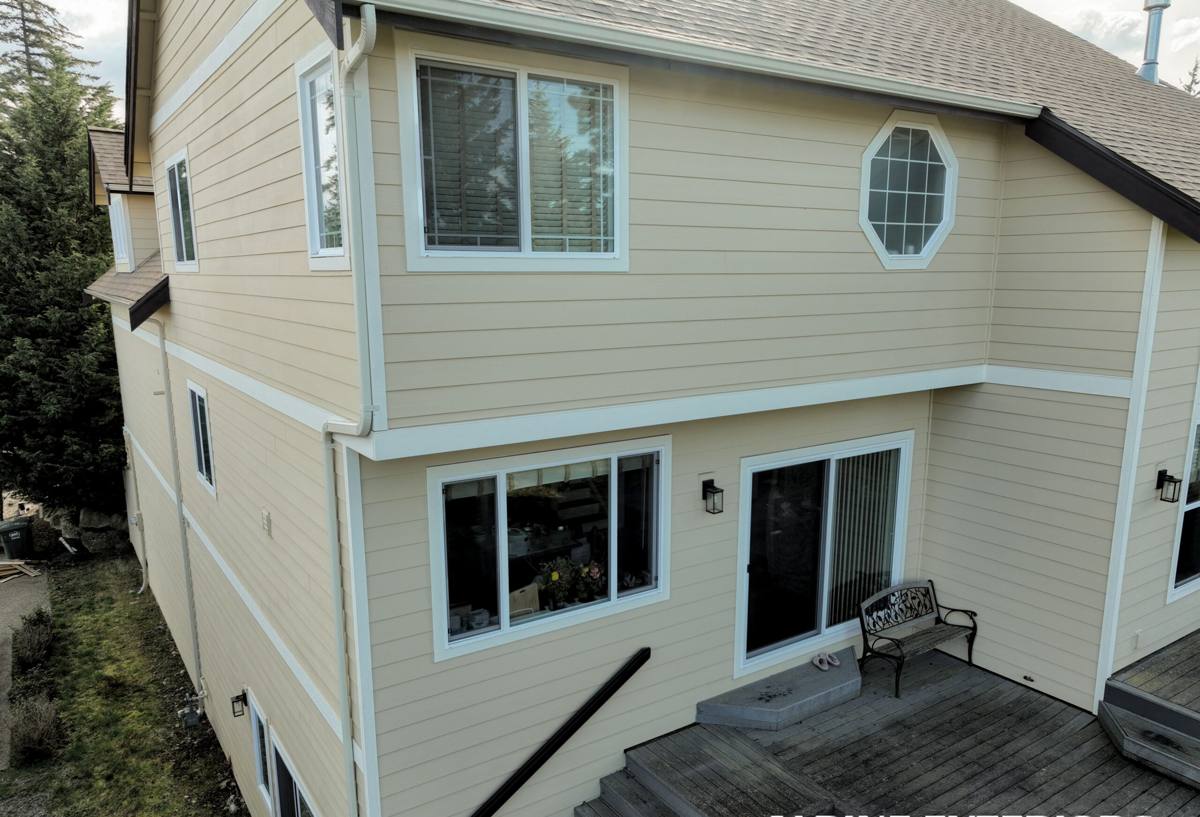
What Local Homes Actually Need From a Deck
Most of the deck problems we see in this area trace back to a handful of climate-driven issues, not manufacturing defects:
- Moss and algae growth on any surface that doesn't drain and dry quickly, especially shaded sides of the house or spots under tree cover.
- Moisture trapped between boards and joists when there's no airflow underneath, which speeds up rot in the substructure even if the decking itself is composite.
- Fastener corrosion from the combination of persistent dampness and salt-tinged coastal air, which is worse on cheap or mismatched hardware.
- Ledger board and flashing failures where the deck meets the house — this is where most water intrusion into the home actually starts.
- UV and moisture cycling on lower-grade composite boards that weren't rated for a marine-influenced climate, leading to fading or surface degradation faster than expected.
A composite deck built for Cordata needs to solve all five of these, not just swap wood boards for composite ones and call it done.
Why Composite Makes Sense Here
Composite decking — whether wood-plastic composite or fully capped PVC — doesn't absorb water the way solid wood does, so it isn't feeding rot the same way. It also doesn't need annual staining or sealing to stay protected, which matters a lot when the "dry window" for that kind of maintenance in Whatcom County can be pretty narrow between spring rains and fall moss season. That said, composite isn't maintenance-free. Moss and mold don't care what the surface is made of — they'll grow on composite decking just as readily as on wood if the board stays damp and shaded long enough. The difference is that composite won't rot or splinter from it, and cleaning it is usually a straightforward wash rather than a full refinishing job.
We also pay attention to which composite products actually hold up in this kind of damp, low-sun climate versus which ones are better suited to drier regions. Some lower-cost boards use uncapped composite that can absorb a small amount of moisture at the surface over time, which shows up as mold staining faster than a fully capped board would. That's a product trade-off worth understanding before you buy, not a defect — it's just not the right fit for a shaded, damp Cordata backyard.
Composite Board Types: What's the Real Difference
| Type | How It Handles Moisture | Maintenance | Best Fit For |
|---|---|---|---|
| Uncapped wood-plastic composite | Some surface moisture absorption over time | Occasional cleaning; more prone to mold in shaded, damp spots | Sunnier, well-ventilated deck areas |
| Capped composite (cap on face only) | Better moisture resistance on the walking surface | Periodic washing; edges/ends still need attention | Most Cordata backyards with mixed sun/shade |
| Fully capped composite (all sides) | Best resistance to moisture, staining, and mold | Lowest maintenance; rinse as needed | Shaded yards, north-facing decks, areas under trees |
We'll talk through which category makes sense for your specific yard — sun exposure, tree cover, and how sheltered or exposed the deck is all change the calculation. A deck tucked under a stand of trees on a north-facing lot in Cordata has very different moss exposure than one that gets full afternoon sun.
What a Correct Installation Actually Involves
Substructure First
The decking boards get the attention, but the framing underneath is what determines whether the deck lasts. We check joist spacing against the specific board's span rating (composite often needs tighter joist spacing than wood, and this gets skipped more often than it should), confirm the substructure is either naturally resistant or properly treated lumber, and make sure there's real airflow underneath — not a deck sitting low and tight to damp ground.
Flashing and Ledger Attachment
Where the deck attaches to the house is the single most common point of water intrusion we find on older decks in this region. Correct flashing — installed so water sheds away from the house rather than behind the siding — isn't optional, and it's not something that shows up in a quick visual inspection after the fact. This is one of the areas where we won't cut corners regardless of what's quoted elsewhere.
Fasteners and Hidden Hardware
We use fastener systems rated for exterior, coastal-climate exposure — corrosion resistance matters more here than in drier inland climates. Hidden fastener clip systems also give a cleaner look and eliminate the exposed screw heads that become moss and grime collection points over time.
Drainage and Grading
Composite doesn't rot, but standing water underneath a deck still causes problems for the framing, the ground beneath, and anything stored under there. We grade and plan drainage so water moves away from the structure instead of pooling.
Our Process for a Cordata Composite Deck Project
- On-site assessment. We look at sun/shade exposure, existing structure (if replacing an old deck), drainage, and how the space will actually be used.
- Board and layout recommendation. Based on that assessment, we recommend a composite tier and layout suited to your yard's specific moisture and shade conditions — not a one-size-fits-all pitch.
- Permitting. Deck projects in Bellingham and Whatcom County typically require permits depending on size and height; we handle that process rather than leaving it to you.
- Demo and structural prep (if replacing an existing deck), including an honest look at whether the ledger, posts, and footings are sound enough to build on.
- Framing and flashing to current code and to the moisture-management standard this climate actually requires.
- Composite installation with hidden fasteners, proper board spacing for expansion, and clean edge and stair detailing.
- Final walkthrough covering care and cleaning expectations specific to your deck's sun exposure and layout.
Maintaining a Composite Deck in a Damp, Mossy Climate
Composite cuts out sanding, staining, and sealing, but it isn't a "never touch it" surface here. A basic seasonal routine keeps it looking right and prevents the kind of buildup that eventually stains even capped boards:
- Sweep off leaves, needles, and debris regularly, especially in shaded corners where they trap moisture longest.
- Rinse the deck a few times a year with plain water and a soft-bristle brush to knock back early moss and algae before it sets in.
- Use a composite-safe cleaner for stubborn mildew spots — avoid pressure washing at close range or high PSI, which can damage the board surface.
- Keep planters, mats, and furniture feet from sitting in one spot too long, since trapped moisture underneath is what starts most localized moss growth.
- Check and clear gaps between boards each fall before the heavy rains set in, so water keeps draining the way it's supposed to.
What Drives Cost
| Factor | Why It Matters |
|---|---|
| Board tier (uncapped vs. capped vs. fully capped) | Higher-cap boards cost more upfront but resist moisture and staining better in shaded, damp yards |
| Deck size and shape | More cuts, angles, and stairs mean more labor and material waste |
| Substructure condition | Reusing sound existing framing costs less than a full rebuild |
| Height and railing requirements | Elevated decks need code-compliant railings and stairs, which adds material and labor |
| Site access | Tight lots or backyards with limited equipment access can add labor time |
We give straightforward, itemized estimates rather than a single vague number, so you can see what's driving the price and where there's room to adjust the scope if needed.
What to Check Before You Hire Anyone
- Are they licensed and insured to work in Washington State, and will they show you proof without you having to ask twice?
- Do they talk about joist spacing and span ratings specific to the board you're buying, or just say "composite works with any deck"?
- Will they explain how they're handling ledger flashing, in plain language, before work starts?
- Do they have real, verifiable experience with decks in this specific climate — damp, shaded, moss-prone yards — not just decks in general?
- Is the estimate itemized, or is it one lump number with no breakdown?
Why a Crew That Already Works in Cordata Matters
A lot of deck problems in this region aren't visible until a wet season or two has passed — moss creeping in at the shaded end, a soft spot near the ledger, boards that started fading unevenly because the wrong tier of composite went in a heavily shaded yard. A crew that works Cordata and the surrounding Bellingham neighborhoods regularly has already seen how these specific lots, tree cover patterns, and drainage conditions play out over time. That's not something you get from a national installer who treats every job site as generic. We build for what actually happens to a deck here through a full Whatcom County winter, not just what looks good on install day.
Get an Honest Look at Your Project
If you're planning a new composite deck or replacing an aging wood deck in Cordata, we're happy to come take a look, talk through what your specific yard needs, and give you a straightforward, no-pressure estimate. There's no obligation — just a clear picture of what a correctly built deck for this climate actually involves and what it would cost. Use the form below to get started.