 Bellingham
 Why Composite Decking in Puget Has to Be Built Differently
Puget sits close enough to the water that salt air is a real factor in how a deck ages, not just a talking point. Add Bellingham's long, wet stretch of fall-through-spring rain and the moss that comes with it, and a deck built to a generic spec sheet will show its age fast — cupped boards, green film underfoot, corroded screws bleeding rust streaks into the surface. None of that is inevitable. It's a product-and-installation problem, and it's solvable if the deck is built for this climate instead of a catalog photo.
Composite decking is a good fit for Whatcom County homes precisely because it doesn't absorb water the way wood does and won't rot, splinter, or need annual staining. But "composite" isn't one product — the boards, the fasteners, the hidden structure underneath, and how it's all put together determine whether it holds up here for twenty-plus years or starts looking tired in five.
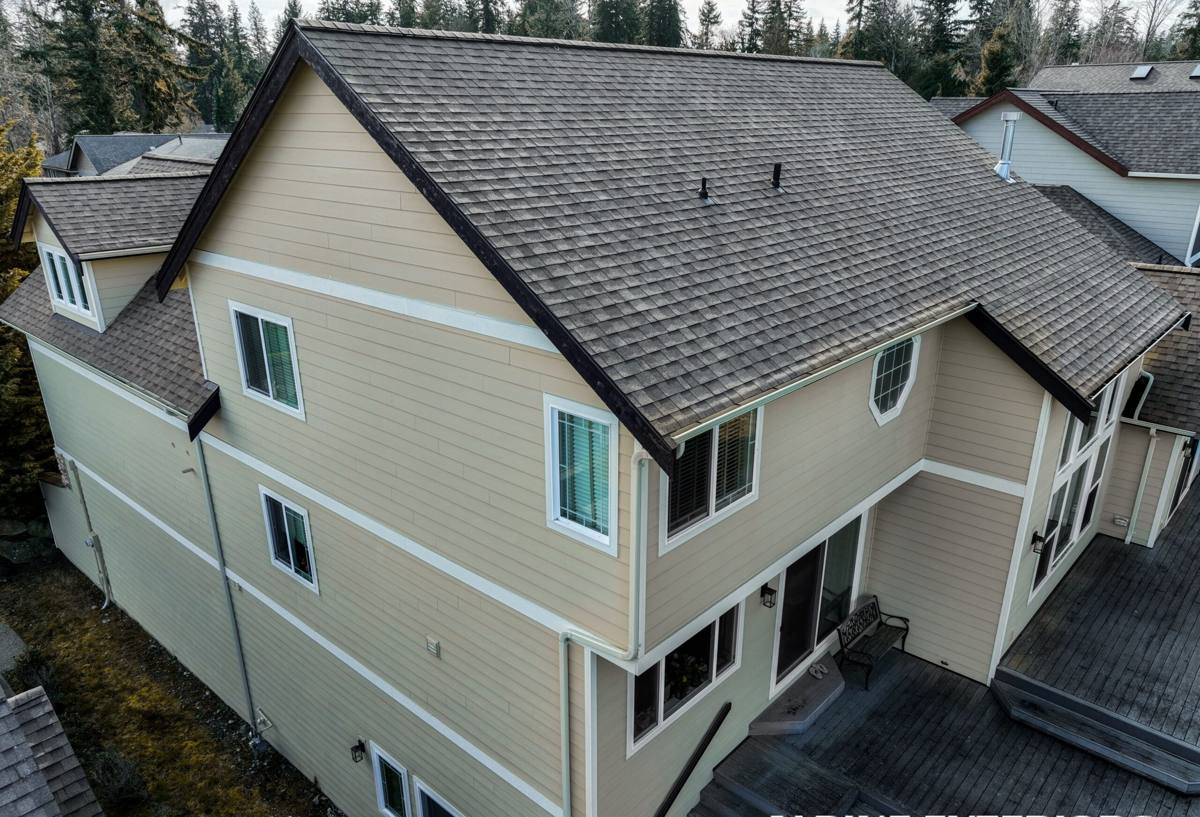
What Bellingham's Climate Actually Does to a Deck
Driving rain and trapped moisture
Rain here doesn't just fall straight down — wind off the Sound pushes it sideways under railings, into board gaps, and against the house where the deck ledger attaches. If that water has nowhere to go, it sits against the substructure long after the surface looks dry. Composite boards themselves shrug this off, but the joists, ledger board, and fasteners underneath are usually still wood and metal, and they're the parts that actually fail first.
The moss season
Whatcom County's moss season runs long — anywhere shaded, north-facing, or under tree cover stays damp enough for algae and moss to take hold on almost any exterior surface, composite decking included. Composite doesn't rot from moss the way wood does, but a heavily textured board in a shaded corner of a Puget yard will still green up faster than an open, sun-exposed deck, and it needs periodic cleaning to stay safe underfoot.
Salt air and hardware
Being close to Puget Sound means airborne salt reaches further inland than most homeowners expect, especially on exposed or elevated decks. Standard zinc-coated screws and generic joist hangers corrode noticeably faster out here than the same hardware would fifty miles inland. The decking boards don't care, but every metal fastener and connector holding the structure together does.
Composite vs. the Alternatives, for This Climate
| Material | Moisture behavior here | Moss/algae resistance | Salt air impact | Upkeep |
|---|---|---|---|---|
| Pressure-treated wood | Absorbs water, swells and checks over wet winters | Grows moss readily, especially in shade | Fasteners corrode; wood itself unaffected | Annual cleaning, periodic sealing or staining |
| Cedar | Better than PT wood but still absorbs moisture | Resists moss slightly better when sealed | Fasteners are the weak point | Regular sealing to keep rot resistance |
| Capped composite | Core doesn't absorb water; cap sheds it | Textured/dark boards in shade need periodic washing | Boards unaffected; hardware still needs to be corrosion-rated | Occasional wash, no staining or sealing |
| PVC/cellular decking | Fully moisture-proof core | Similar to composite; smoother boards shed algae faster | Boards unaffected; hardware still the concern | Occasional wash |
Capped composite is where most Puget-area homeowners land: it costs less upfront than full PVC, handles this climate's moisture load without the maintenance burden of wood, and the better product lines now come with caps and color-through cores designed specifically to resist the graying and staining that damp, low-light Pacific Northwest yards cause faster than they would in a drier climate.
What a Correctly Built Composite Deck Includes Here
The board itself is maybe a third of what makes a composite deck last in this climate. The rest is substructure work that never gets seen once the decking goes down — which is exactly why it's the part most likely to get shortcut by a crew that isn't used to building in wet coastal conditions.
- Joist tape over every joist top, so trapped rainwater can't wick into the wood substructure through screw penetrations
- Stainless steel or coated, corrosion-rated fasteners and hidden fastener clips — not standard exterior-grade screws
- Proper ledger flashing where the deck meets the house, so wind-driven rain can't track behind the siding or into the rim joist
- A slight slope and consistent board gapping so water sheds instead of pooling, especially under railing posts and near the house
- Ventilated space beneath the deck, not decking laid tight to grade, so the substructure can actually dry out between storms
- Hardware and post bases rated for ground or near-water exposure if the deck is low to grade or close to drainage
Skip any one of these and the composite boards can look fine while the frame underneath is quietly failing — which is the opposite of what composite decking is supposed to buy you.
Our Process for a Puget Composite Deck
We start with a site walk, not a sales pitch. That means looking at sun exposure and tree cover (which drives how much moss and algae pressure the deck will see), checking how close the build is to grade and drainage paths, and inspecting the existing structure if this is a replacement rather than new construction. A lot of composite deck problems we get called out to fix started as a wood deck that was resurfaced with composite boards over a frame that was never inspected.
- Site and structural assessment — sun exposure, drainage, existing framing condition
- Design and material selection matched to the site's shade and moisture exposure
- Permitting through the appropriate city or county building department
- Substructure build or repair — framing, flashing, joist tape, corrosion-rated hardware
- Composite board installation with hidden fastener systems
- Railing, stair, and lighting install if part of the scope
- Final walkthrough and inspection sign-off
Both Bellingham and unincorporated Whatcom County require permits for most attached or elevated decks, and skipping that step can turn into a real problem at resale. We handle the permitting as part of the job rather than leaving it for the homeowner to sort out.
Picking the Right Board for a Shaded, Damp Lot
Not every composite board performs the same way in a shaded Puget yard. Heavily embossed, wood-grain textures hold moisture in their grooves longer, which gives moss and algae more time to take hold — fine on a sun-exposed deck, less ideal tucked under mature trees. Smoother, more tightly capped boards shed water faster and are easier to keep clean with a simple wash. Color matters too: very dark boards run hotter in the rare sunny stretch but also show pollen, moss residue, and mineral streaking from rain less than very light colors do. We walk through these tradeoffs against the actual site conditions rather than just handing over a sample box.
Keeping a Composite Deck Ahead of the Moss
Composite decking's low-maintenance reputation is earned, but "low" isn't "none" in this climate. A yearly wash — a stiff broom, mild cleaner, and a garden hose or gentle pressure washer setting — keeps moss and algae from getting a foothold before it needs a heavier treatment. A few habits make a real difference over the life of the deck:
- Sweep leaves and needles off the deck regularly in fall rather than letting them sit and stay wet against the boards
- Keep gutters and downspouts near the deck clear so runoff isn't dumping directly onto or under it
- Rinse off pollen and organic debris in spring before it has a chance to stain or feed algae growth
- Check exposed fastener heads and railing hardware yearly for early rust staining, especially the closer you are to the water
- Avoid leaving rugs or planters in one spot for months at a time — they trap moisture against the board underneath
Why It Matters That We Already Work in Puget
A crew that mostly builds decks in drier inland climates will still build a technically sound deck — but they're less likely to default to joist tape, corrosion-rated hardware, and ventilated substructures unless a homeowner specifically asks. Out here, those aren't upgrades, they're the baseline for a deck that's supposed to last. Working regularly in Bellingham and around Puget means we're not guessing at how much moss pressure a shaded lot will see or how far salt air reaches inland from the Sound — we've built decks that answer both of those questions already.
If you're weighing a new composite deck or replacing an aging wood one, we're happy to walk the site, look at what you're working with, and put together a straightforward estimate — no pressure, no upsell. Use the form below to get started.