 Bellingham
 Roof Replacement for Puget: A Bellingham Neighborhood That Takes Weather From Every Direction
Puget sits close enough to the water that homes here deal with a specific combination of stresses most inland Whatcom County properties don't see in the same intensity: salt-tinged marine air moving in off the bay, rain that arrives sideways as much as it falls straight down, and a moss season that can run most of the year on shaded slopes. A roof in this part of Bellingham isn't just shedding water, it's fending off wind uplift, standing up to fastener corrosion from salt exposure, and resisting a growth layer that never fully goes dormant. When a roof in Puget starts failing, it's usually because one of those three factors quietly won out over a few years, not because of one dramatic storm.
We replace roofs across this part of Bellingham regularly, and the patterns repeat: shaded north- and east-facing slopes hold moss and moisture longest, older roofs installed before local wind-driven-rain detailing became standard practice tend to fail first at valleys and penetrations, and homes closer to the water show fastener and flashing corrosion earlier than the same age roof further inland. None of that is unique to any one house. It's the climate doing what it does, and a correct roof replacement plans for it up front instead of reacting to it later.
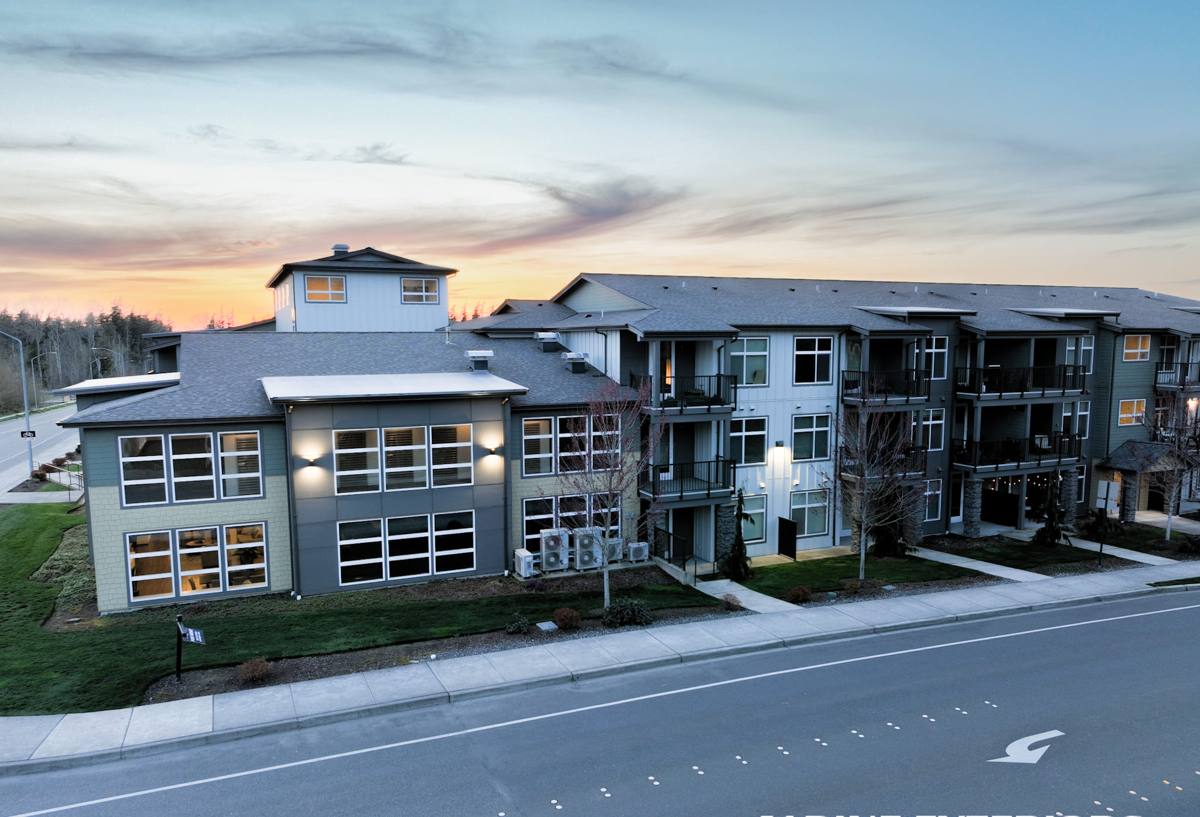
What Puget's Climate Actually Does to a Roof
Salt Air and Corrosion
Proximity to the bay means a steady presence of salt-laden moisture in the air, not just on stormy days. Over years, that accelerates corrosion on exposed metal fasteners, flashing, and lower-grade hardware faster than an inland roof would experience. It's a slow process that's easy to miss until a fastener backs out or a flashing seam starts leaking from the inside.
Wind-Driven Rain
Rain in this part of Bellingham doesn't just fall, it gets pushed sideways and upward under eaves, into valleys, and behind poorly lapped shingle courses. A roofing system that would perform fine in a calmer climate can still leak here because the underlayment, flashing, and shingle overlap weren't detailed for rain moving at an angle instead of straight down.
A Long Moss Season
Mild temperatures, tree cover, and near-constant dampness add up to moss and algae growth that can persist across most of the calendar year on shaded slopes. Moss doesn't just look bad. It holds moisture directly against the roofing material, works its way under shingle tabs as it grows, and can lift edges enough to let wind-driven rain in underneath.
Wind Exposure
Puget's position relative to the water means some properties see stronger, more sustained wind than sheltered inland lots. Roofs here need fastening patterns and edge details rated for that exposure, not the minimum spec that would pass on a calmer site.
Signs Your Puget Home's Roof Needs Replacement, Not Another Repair
- Granule loss heavy enough that you're finding grit in gutters and downspouts regularly
- Moss that returns within a season or two of cleaning, especially on shaded slopes
- Curling, cupping, or cracked shingles across large sections rather than a few isolated spots
- Soft spots in the roof deck you can feel when walking it, a sign moisture has reached the sheathing
- Daylight visible through the attic at roof boards, or staining on attic framing
- Repeated leaks in different spots after storms, rather than one consistent trouble area
- A roof approaching or past the manufacturer's expected service life for this climate
A single repair can often handle isolated damage. But when several of these show up together, or the roof is old enough that the underlayment and decking are likely compromised in places you can't see yet, patching tends to just delay a bigger job while moisture keeps working on the structure underneath.
What a Correct Roof Replacement Involves Here
Tearing off old roofing and nailing down new shingles isn't the whole job, and in a climate this wet, skipping steps is exactly how a roof ends up leaking again within a few years. A replacement done right in Puget includes:
Full Tear-Off and Deck Inspection
We remove the existing roofing down to the deck rather than layering over it, because that's the only way to actually see what's underneath. Years of trapped moisture behind failing shingles can rot sheathing in ways that aren't visible from above, and any soft or damaged decking gets replaced before new material goes down.
Ice-and-Water Shield at Vulnerable Areas
Valleys, eaves, and areas around penetrations get a self-adhering waterproof membrane underneath the underlayment. These are the spots wind-driven rain finds first, and they're the spots that matter most in a climate like Bellingham's.
Synthetic Underlayment Across the Full Deck
A full synthetic underlayment layer gives the roof a second line of defense if wind ever drives water past the shingle surface, which happens more often here than in drier inland climates.
Correct Fastening for Wind Exposure
Fastener count and placement matter more on wind-exposed lots than the manufacturer's bare minimum spec accounts for. We fasten to hold up against sustained coastal wind, not just to pass inspection.
Flashing Done as a System
Step flashing at walls, counterflashing at chimneys, and valley metal all have to work together with the underlayment and shingles as one continuous water path. A flashing detail that's correct in isolation but doesn't tie into the rest of the system is one of the most common sources of a callback leak.
Ventilation That Matches the Climate
Proper intake and exhaust ventilation keeps moist attic air from condensing against the underside of the deck, which matters in a marine climate where humidity is a year-round factor, not a seasonal one. Poor ventilation can shorten the life of an otherwise well-installed roof from the inside out.
Roofing Material Options for Puget Homes
Most homes in this part of Bellingham are well served by architectural asphalt shingles rated for high wind and algae resistance, but the right material depends on the roof's slope, exposure, and the look you're going for.
| Material | Where It Fits Best in Puget | Trade-Offs |
|---|---|---|
| Architectural asphalt shingles | Most homes; good balance of cost, wind rating, and algae resistance | Still needs correct underlayment and flashing detail to perform in this climate; lower-tier shingles wear faster under salt exposure |
| Standing seam metal | Wind-exposed lots, steeper roofs, homes wanting a longer service interval | Higher upfront cost; requires installers experienced with metal-specific flashing and expansion detailing |
| Synthetic/composite shingles | Homes wanting a wood-shake or slate look without the maintenance | Product quality varies significantly by manufacturer; we're selective about which lines we install |
| Basic three-tab asphalt | Rarely recommended here | Lower wind rating and shorter service life make it a poor fit for this exposure, even though it's the cheapest upfront option |
We'll walk you through what actually fits your roof's pitch, exposure, and how long you plan to be in the home, rather than steering everyone toward the same product.
How We Approach a Puget Roof Replacement
- On-site inspection. We walk the roof and attic in person, checking deck condition, ventilation, flashing points, and moss or moisture patterns specific to your lot's sun and wind exposure.
- Honest scope and material recommendation. You get a clear explanation of what your roof actually needs, what it doesn't, and which materials fit your home, your budget, and this climate.
- Written estimate before any work starts. No verbal ballpark that turns into a different number on invoice day.
- Full tear-off and deck repair as needed. Any compromised sheathing is replaced, not covered over.
- Underlayment, flashing, and shingle installation as one connected system. Every layer is detailed to work with the ones around it.
- Final walkthrough. We go over the finished roof with you before we consider the job done.
Roof Replacement Cost Factors in Puget
| Factor | What It Affects | Why It Matters Here |
|---|---|---|
| Roof size and slope complexity | Total material and labor | Homes with more valleys, dormers, and roof intersections have more spots where wind-driven rain can work its way in |
| Deck condition found at tear-off | Sheathing repair costs | Years of trapped moisture behind old shingles is common on shaded or older roofs in this climate |
| Material selection | Upfront cost and expected service life | Higher wind and algae-resistance ratings matter more here than in drier, calmer climates |
| Ventilation upgrades | Long-term roof and attic performance | Marine humidity is a year-round load on attic moisture, not just a summer concern |
| Site access and roof pitch | Labor time and equipment needs | Steeper roofs and tree-shaded lots common around Puget can add staging and safety setup time |
We don't quote off square footage alone. Real numbers come after we've actually seen the roof, because two homes of the same size can need very different scopes of work depending on what tear-off reveals.
Roofing and Siding Work Together
Roof leaks in Puget rarely stay contained to the roof. Water that gets past a failing valley or worn flashing often tracks down into fascia, soffits, and the siding below before it ever shows up as a stain inside the house. Because we also handle siding and exterior repair, we can look at a Puget roof replacement as part of the whole exterior envelope rather than an isolated project, and catch related damage before it turns into a second job a year later.
Why a Crew That Already Works Puget Matters
A roofing crew that regularly works this stretch of Bellingham has actually seen how salt air, wind-driven rain, and moss behave on real roofs across a full year, not just how a shingle spec sheet reads. That translates into practical decisions on install day: which slopes need extra ice-and-water coverage, where flashing deserves extra attention because of how wind hits that particular lot, and which corners genuinely can't be cut in this climate without shortening the roof's real-world life. Puget's mix of water exposure, tree cover, and varied roof pitches isn't identical to more sheltered Bellingham neighborhoods, and experience with this specific stretch of Whatcom County shows up in the details that keep a roof watertight for its full expected lifespan instead of just its first few winters.
If your Puget home's roof is showing wear, past its expected service life, or you'd just like an honest opinion on how much time it has left, we're glad to take a look. Reach out using the form below to schedule a free, no-pressure estimate.