 Bellingham
 Why Siding Wears Out Faster in Columbia
Columbia sits close enough to Bellingham Bay that homes here deal with a slightly different set of conditions than siding a few miles inland has to survive. Salt-laden air off the water accelerates corrosion on fasteners, trim, and any siding material that isn't formulated to resist it. Add Whatcom County's long wet season — months of driving rain pushed sideways by wind off the bay — and siding gets tested on two fronts at once: constant moisture exposure and constant pressure at every seam, lap, and penetration.
Then there's moss. Bellingham's moss season isn't a two-week nuisance; it's a stretch of the year long enough that anything organic or moisture-retentive on a wall — wood trim, poorly primed panels, siding that never fully dries between rain events — becomes a growth surface. Moss and algae don't just look bad. They hold moisture against the wall assembly, and sustained moisture against siding is how rot, delamination, and paint failure start.
None of this means Columbia homes need exotic materials. It means the material and the installation both have to be chosen for a marine, high-moisture climate rather than a generic one. That's the whole difference between siding that looks good for five years and siding that looks good for twenty-five.
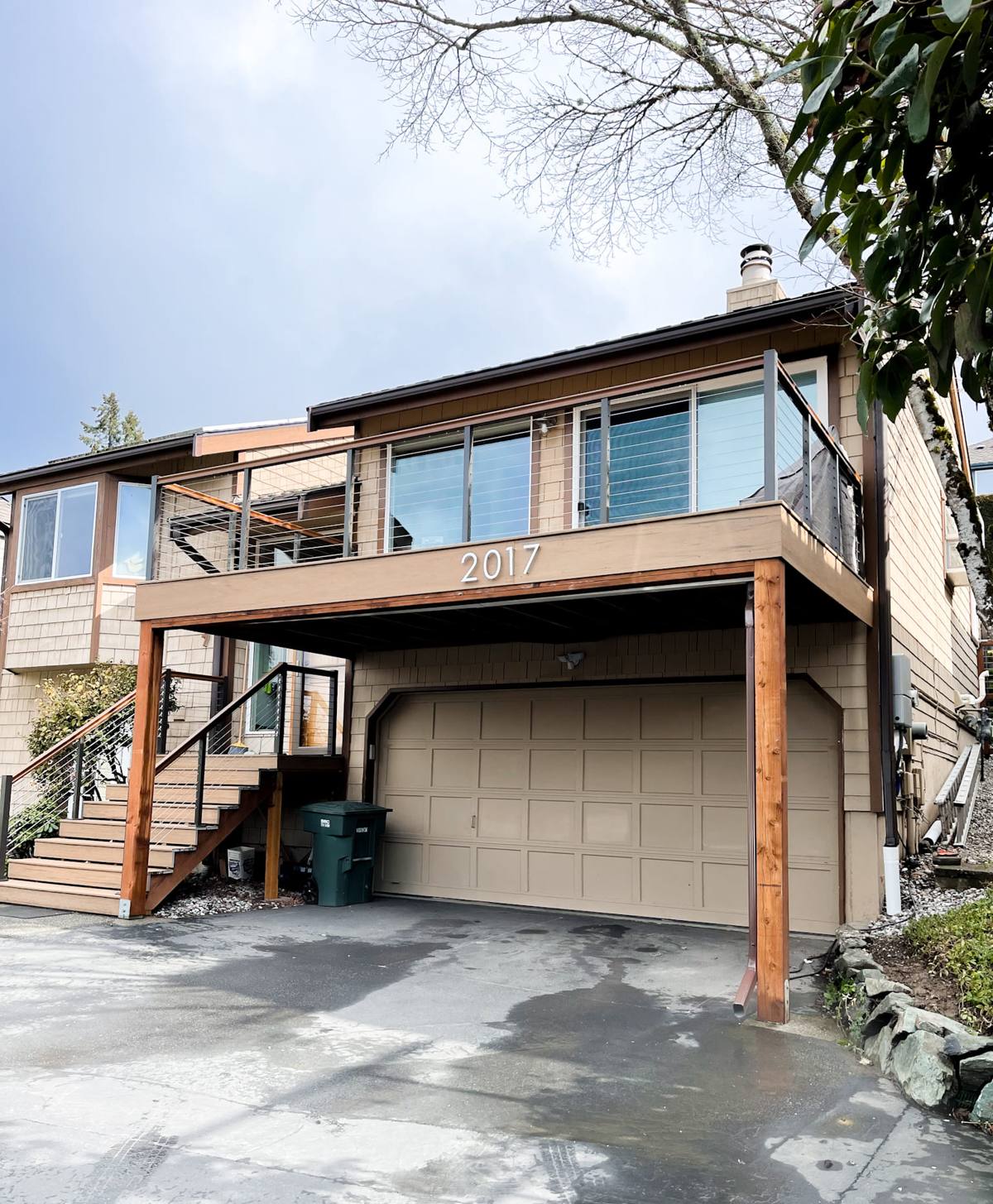
Signs a Columbia Home Needs Siding Replacement, Not Just Repair
Not every siding problem calls for a full replacement. But in a climate like ours, certain signs mean the damage has moved past the surface and into the wall assembly, where patching won't hold.
- Soft or spongy spots when you press on the siding, especially near the bottom courses or under windows
- Paint that's bubbling, peeling, or won't hold a new coat no matter how it's prepped
- Visible cracking, warping, or delamination (layers separating) on wood-based or composite siding
- Persistent moss, algae, or black staining that comes back within a season of cleaning
- Gaps opening up at seams, corners, or trim where caulking has failed repeatedly
- Rising utility bills or noticeably drafty rooms that point to a failing weather barrier behind the siding
- Visible rot at bottom edges, penetrations (hose bibs, vents, light fixtures), or wherever siding meets a horizontal surface
If you're seeing two or more of these at once, it's usually a sign the underlying water-resistive barrier — not just the visible siding — has been compromised, and that's a replacement conversation, not a caulk-and-paint conversation.
What a Correct Siding Replacement Involves
A siding replacement is only as good as what's underneath it. In Columbia's climate, cutting corners on the parts you can't see is exactly how a ten-year-old siding job ends up failing early.
Tear-off and inspection
Old siding comes off entirely so the sheathing underneath can actually be inspected — not guessed at. Any soft or rotted sheathing gets identified and addressed before anything new goes up. This is the step that gets skipped by crews trying to move fast, and it's the step that determines whether the new siding has a sound base.
Water-resistive barrier and flashing
A properly lapped weather-resistive barrier, correctly integrated flashing at windows, doors, and any wall penetration, and attention to how water is meant to shed at every horizontal transition — this is the layer doing the real work of keeping driving rain out of the wall. Siding sheds most of the water; the barrier behind it handles what gets past.
Fastening and gapping to spec
Fiber cement siding has manufacturer-specified fastener patterns, gap requirements at butt joints, and clearance requirements above grade, decks, and roof lines. These specs exist for a reason in a wet climate — they let the material expand, contract, and shed water the way it's engineered to. Skipping them is one of the most common ways a correct product still ends up with a premature failure.
Finish and sealant details
Factory-finished panels reduce how much depends on field painting and caulking, but the cut edges, corners, and trim joints still need to be sealed and finished correctly. This is where a lot of the long-term moss and staining resistance actually comes from.
Why We Install Only James Hardie Fiber Cement
We don't install vinyl, LP SmartSide, Cemplank, Allura, primed spruce, or cedar. That's a deliberate standard, not a lack of options, and it's worth explaining honestly rather than just asserting.
Vinyl is inexpensive and low-maintenance in the sense that it doesn't need painting, but it's a petroleum-based product that can warp under heat and become brittle with age, and its seams and profile don't hold up as cleanly against sustained wind-driven rain as a fiber cement lap system. LP SmartSide is an engineered wood product — it performs reasonably when installed and maintained exactly to spec, but it's still wood-based, meaning it's more sensitive to sustained moisture exposure and edge sealing failures than fiber cement, which matters a lot in a climate with a moss season as long as ours. Cedar and primed spruce are attractive but demand ongoing maintenance — refinishing, sealing, moss treatment — that most homeowners underestimate until the upkeep bill shows up, and untreated cut edges are a common failure point in wet climates.
James Hardie fiber cement is cement, sand, and cellulose fiber — it doesn't rot, it isn't a food source for moss and algae the way wood is, and it's non-combustible. James Hardie also engineers its formulations by climate zone rather than selling one product everywhere: the HZ5 line is built for regions like ours that see year-round moisture and freeze-thaw cycling, as opposed to the HZ10 formulation built for hot, humid, termite-prone climates. That climate-specific engineering, plus the ColorPlus factory finish (a baked-on finish that holds color and resists fading and chipping far better than field-applied paint) and a strong transferable warranty, is why we standardized on it instead of stocking multiple product lines.
How the materials actually compare in this climate
| Material | Moisture/rot resistance | Moss & algae resistance | Salt air durability | Ongoing maintenance |
|---|---|---|---|---|
| James Hardie fiber cement | Excellent — cement-based, doesn't rot | High — not an organic food source | Strong with correct fasteners/flashing | Low — factory finish, occasional wash |
| Vinyl | Good, but seams can trap moisture | Moderate — surface growth still occurs | Can degrade/discolor over time | Low, but not repaintable if faded |
| LP SmartSide | Moderate — wood-based, edge-sensitive | Moderate — needs sealed edges/finish | Moderate, spec-dependent | Moderate — finish upkeep matters |
| Cedar / primed spruce | Lower — organic, absorbs moisture | Low — prone to moss/algae growth | Lower without regular treatment | High — refinishing, sealing, cleaning |
Our Process for a Columbia Siding Replacement
- On-site assessment — we look at existing siding condition, sheathing exposure risk, drainage around the foundation, and sun/rain exposure specific to your lot
- Scope and product selection — HardiePlank lap, HardiePanel, or HardieShingle depending on your home's style, plus ColorPlus color selection
- Written estimate — tear-off, sheathing repair allowance, barrier and flashing detail, labor, and material broken out so you know what you're paying for
- Tear-off and sheathing inspection — any rot or damage found gets documented and addressed before new material goes up
- Weather barrier and flashing installation — done to manufacturer and code spec, not shortcut
- Siding installation — fastener pattern, gapping, and clearances installed to James Hardie's published specifications
- Trim, caulking, and final finish — the details that determine how the job ages, not just how it looks on day one
- Walkthrough — we go over the finished work with you before calling the job done
What Siding Replacement Costs Depend On
We won't quote a number without seeing the home, but these are the factors that actually move the price on a Columbia siding job:
| Factor | Why it matters |
|---|---|
| Total square footage / linear footage of siding | Sets the baseline material and labor volume |
| Condition of existing sheathing | Rot repair discovered during tear-off adds scope |
| Home height and access | Multi-story homes and tight lots require more staging and time |
| Number of windows, corners, and penetrations | Each one needs individual flashing and trim work |
| Siding profile and color | Lap width, shingle-style siding, and custom ColorPlus colors vary in cost |
| Trim and accessory scope | Fascia, soffit, and trim replacement alongside siding adds material and labor |
Why a Crew That Already Works in Columbia and Bellingham Matters
A contractor who works this specific area regularly already knows how homes here tend to be built, what kind of moisture and wind exposure a given lot gets off the bay, and where moss and algae problems typically start on a wall. That's not a marketing point — it changes real decisions on site, like where extra flashing attention is worth it or which sides of a home need closer inspection during tear-off. It also means a crew that understands Whatcom County permitting and inspection expectations, so the job doesn't stall on paperwork a contractor unfamiliar with the area might miss.
Local also means accountability. If a question comes up two years after installation, you're calling a company that's still working in your neighborhood, not chasing down a crew that came through once and moved on.
Maintenance After Installation
Correctly installed James Hardie siding is low-maintenance, not no-maintenance. In a climate like Columbia's, a periodic soft wash to keep moss and algae from establishing, an annual look at caulking around windows and trim, and prompt attention to anything that looks like standing water or staining will keep the siding performing for its full service life. None of this is heavy upkeep — it's closer to gutter cleaning than a real chore — but skipping it in a moss-prone climate is how avoidable problems start.
If your Columbia home's siding is showing its age, or you just want an honest read on whether you're looking at repair or replacement, we're happy to take a look and give you a straight answer. Request a free, no-pressure estimate using the form below.