 Bellingham
 Why Siding in Columbia Takes a Different Kind of Beating
Homes in Bellingham's Columbia neighborhood sit close enough to Bellingham Bay and the Salish Sea that salt-laden air is a constant, low-grade stress on exterior materials. Add Whatcom County's long wet season — driving rain that comes in sideways off the water, months of overcast humidity, and a moss season that can stretch from fall through spring — and you have a climate that is genuinely harder on siding than most of the country deals with. It's not one dramatic event that damages siding here; it's the accumulation of hundreds of small ones.
Salt air accelerates corrosion on fasteners, flashing, and any exposed metal trim. Driving rain finds every gap in caulking, every hairline crack, and every spot where a previous repair was done with the wrong material or the wrong technique, and pushes water behind the cladding instead of off of it. And moss — which thrives in the shade and moisture common on north-facing walls and under eaves in this neighborhood — holds water against the siding surface far longer than open air would, softening whatever it's growing on and giving rot a head start. A repair that doesn't account for all three of these factors tends to fail again within a season or two.
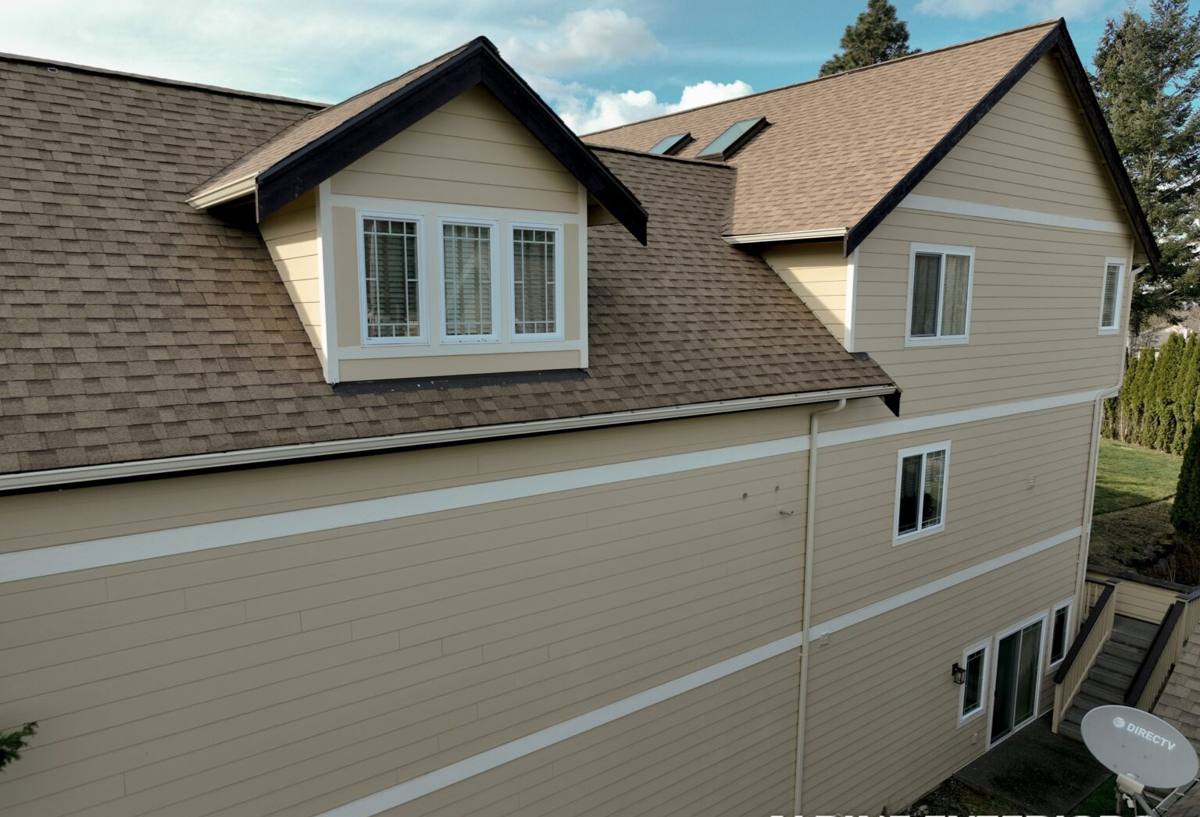
Signs a Columbia Home Needs Siding Repair, Not Just Paint
Homeowners often call about paint peeling or a faded look, but by the time siding shows visible surface problems, there's usually something happening underneath that paint alone won't fix. Here's what we look for on a repair inspection:
- Soft or spongy spots when you press on the siding, especially near the bottom courses or around window and door trim
- Visible gaps, cracks, or separation at seams and butt joints
- Persistent moss or dark staining that keeps returning within weeks of cleaning
- Bubbling, peeling, or chalking paint that recurs in the same spots year after year
- Rust streaks running down from nail heads or metal flashing
- Warping, buckling, or boards that no longer sit flat against the wall
- Interior clues — a musty smell, a damp patch on drywall, or a slightly discolored ceiling near an exterior wall
Any one of these can be isolated and minor. Several of them together, especially on the weather-facing sides of the house, usually mean water has been getting behind the siding for a while and the repair needs to address the water path, not just the cosmetic symptom.
What a Correct Repair Actually Involves
It starts with finding the source, not the symptom
A rotten board or a moss-stained panel is the visible result of a problem, not the problem itself. Before we replace anything, we trace the water path: is it a failed caulk joint, a flashing detail that was never installed correctly, a gutter overflow point, or just age and UV breakdown of the original material? Replacing a damaged panel without correcting what let water in means the same spot fails again, often faster the second time.
Matching materials and technique, not just color
Repairs on this kind of siding aren't a universal patch job. The replacement piece needs to be the right product, cut and fastened correctly, flashed at the top the same way the original installation should have been flashed, and finished so the seam is weathertight rather than just cosmetically acceptable. A repair that looks fine from the street but was caulked instead of properly flashed is a repair that buys you a year or two, not a decade.
Fastening for the local wind and rain load
Columbia's exposure to weather coming off the bay means fastener spacing and type matter more here than in a sheltered inland lot. We fasten to the manufacturer's specification for the wind and moisture exposure of the site, not a generic minimum, and we replace any corroded fasteners we find rather than leaving them in place under the new piece.
Our Repair Process
- On-site inspection. We walk the exterior, probe suspect areas, and check trim, flashing, and caulk lines in addition to the siding field itself.
- Diagnosis and scope. We tell you plainly whether this is a contained repair, a repair plus some preventive flashing or caulk work nearby, or a case where repair would be patchwork on siding that's failing broadly and replacement is the more honest recommendation.
- Written estimate. You get a clear scope and price before any work starts — no surprise add-ons discovered mid-job without a conversation first.
- Removal and inspection of the substrate. Once damaged siding is off, we check the sheathing and house wrap underneath. Hidden rot at this stage gets flagged and priced separately before we cover it back up.
- Correct flashing and weather barrier detailing. Any flashing or water-resistive barrier disturbed by the repair is restored properly, not just tucked back into place.
- Installation of the repair material, fastened and sealed to specification, with attention to how the new piece transitions into the existing siding.
- Finish work and cleanup. Caulking, touch-up finish where needed, and a final walk-through so you can see exactly what was done and why.
Repair or Replace? How We Help You Decide
Not every damaged section needs a full re-side, and we're not going to tell you it does. But there's a point where repeated repairs cost more over time than replacing a full wall or elevation once, correctly. Here's the general framework we walk homeowners through:
| Factor | Leans toward repair | Leans toward replacement |
|---|---|---|
| Extent of damage | Isolated to one or two areas | Recurring in multiple spots across the house |
| Age of existing siding | Under 10–15 years, otherwise sound | Original material near or past its expected service life |
| Underlying cause | One-time or localized (a bad joint, one flashing failure) | Systemic — original install issues, chronic moisture exposure |
| Material match | Discontinued product still reasonably matchable | Product no longer available or matches poorly |
| Moss and moisture history | Limited to a shaded corner or two | Widespread moss staining, especially on multiple elevations |
We'll always give you the repair option when it's the honest one. We'd rather do a smaller, correct job now than sell a full replacement a homeowner doesn't need yet.
Why We Only Repair and Replace With James Hardie Fiber Cement
We don't install vinyl, LP SmartSide, Cemplank, Allura, or primed wood siding — on repairs or full installs. That's a deliberate standard, not a sales preference. In a climate like Columbia's, where siding is dealing with salt air, sustained moisture, and moss almost year-round, the material matters as much as the workmanship. Fiber cement doesn't feed mold or moss the way wood-based products can, it doesn't expand and contract with temperature swings the way vinyl does, and it holds paint and factory finish far longer under UV and salt exposure than primed wood substrates.
When we do repair work on a home already sided in Hardie product, matching is straightforward — we can source the same profile and, in most cases, a very close ColorPlus factory finish match, so the repaired section blends in rather than standing out as an obvious patch. That consistency is part of why we standardized on one manufacturer rather than carrying multiple product lines: it means our trucks, our crews' expertise, and our fastening and flashing details are all built around doing one system correctly, rather than doing five systems adequately.
Why Hiring a Crew That Already Works Columbia Matters
Siding repair is very site-specific work. A crew that has spent time on homes in this part of Bellingham already understands which elevations tend to take the worst of the driving rain, where moss tends to establish first, and how salt exposure shows up differently than it would on an inland property. That's not a substitute for a proper inspection of your specific house, but it does mean fewer surprises and a diagnosis that starts from an informed baseline rather than a generic checklist.
It also means accountability. A local crew that plans to keep working in this neighborhood has every incentive to do the repair right the first time, because a callback isn't an abstract risk — it's a conversation with a neighbor down the street. We stand behind our repair work and will tell you plainly if something we didn't do is likely to cause the new repair to fail again.
Maintaining Siding After a Repair
A correct repair should hold up, but a little seasonal attention extends its life significantly in this climate:
- Rinse siding gently once or twice a year, focusing on shaded and north-facing walls where moss and algae establish first
- Keep gutters clear so overflow doesn't run down the siding face repeatedly during heavy rain
- Trim back vegetation and tree cover that keeps a wall shaded and damp longer than the rest of the house
- Have caulk lines and trim joints checked every couple of years — caught early, a failed joint is a five-minute fix, not a repair call
- Watch for the early signs listed above and address them while they're still isolated, rather than waiting until they spread
If you're noticing recurring moss, soft spots, or paint failure on your Columbia-area home, we're happy to take a look and give you a straight answer — repair, targeted replacement, or just maintenance — with no pressure either way. Request a free estimate and we'll walk the exterior with you in person.