 Bellingham
 Deck Replacement Built for Columbia's Waterfront Climate
Columbia sits close enough to Bellingham Bay that salt-laden air is part of daily life, and that changes what a deck has to survive. Add Whatcom County's long, wet fall-through-spring stretch and the moss season that comes with it, and you've got a recipe that wears out decks faster here than it does in drier parts of the state. Fasteners corrode sooner. Wood surfaces stay damp longer between dry spells. Moss and algae take hold on north-facing and shaded sections and hold moisture against the boards. A deck that might last 20-plus years somewhere inland can start showing real problems in 12 to 15 years in this neighborhood if it wasn't built or maintained with that reality in mind.
We work on decks throughout Columbia and the surrounding Bellingham area regularly, so we're not guessing at how local conditions treat different materials and construction details — we see the results every time we tear an old deck apart.
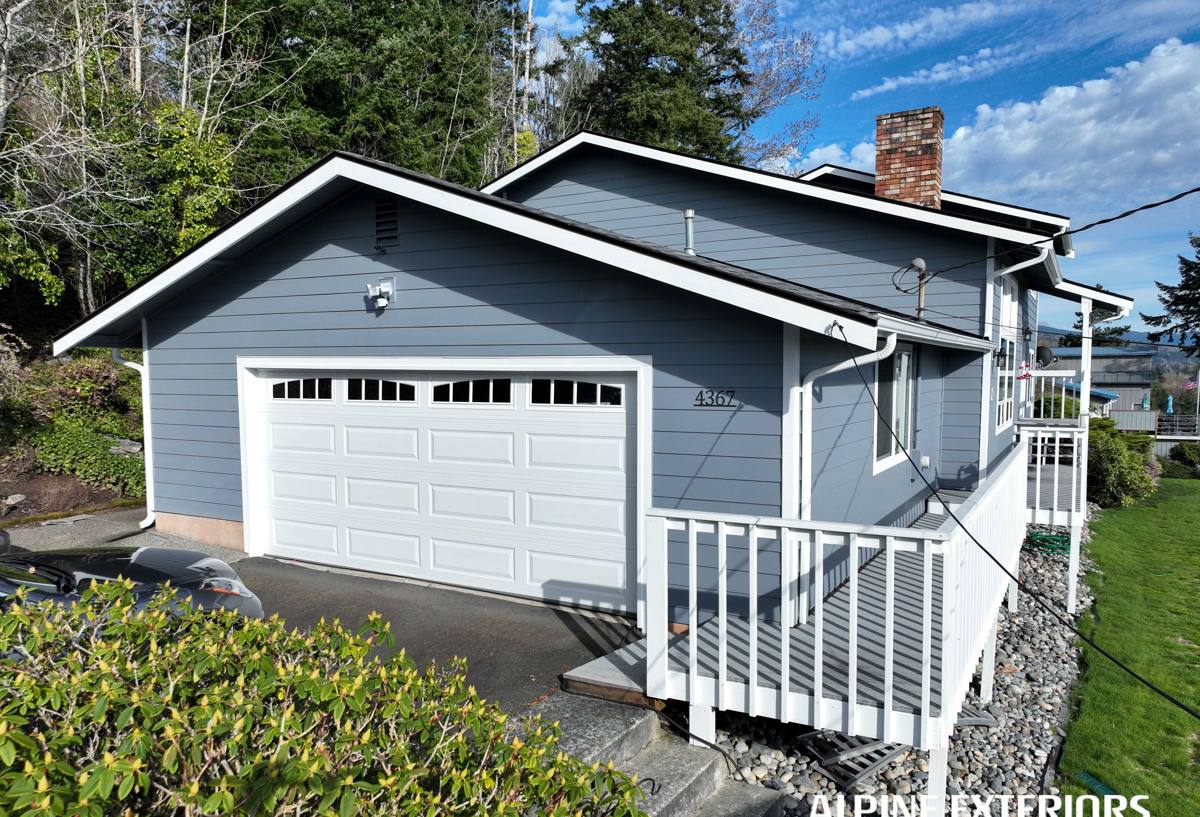
Signs a Deck Needs Replacing, Not Just Repairing
Not every tired-looking deck needs a full rebuild. But there are signs that point past patching and toward replacement:
- Soft, spongy, or spring-loaded decking boards, especially near the house or in shaded corners
- Rust streaks running down from fasteners or metal hardware
- A ledger board (where the deck attaches to the house) that's dark, swollen, or separating from the siding
- Posts or footings that have shifted, causing the deck to feel uneven or rock slightly
- Persistent moss or black-green staining that returns within weeks of cleaning
- Guardrails or stair stringers that flex under normal weight
- A deck more than 15-20 years old that was built before current fastener and flashing standards
A screwdriver test tells you a lot: press it into the wood at ledger connections, post bases, and stair stringers. If it sinks in easily, that's decay, not just weathering, and no amount of surface repair fixes rot underneath.
What a Correct Deck Replacement Actually Involves
A deck is only as good as what's underneath the decking boards. Replacing the visible surface while leaving a compromised structure underneath just resets the clock on the same failure.
Framing and Ledger Attachment
The ledger board — the piece bolted to your house that carries a large share of the deck's load — is the single most common failure point we find on older decks in this climate. It needs proper flashing that sheds water away from the house, not just caulk, and it needs to be through-bolted or lag-screwed per code, not just nailed. We check and correct this on every replacement; it's not optional.
Joists and Beams
Joist spacing and beam sizing have to match the actual span and load, not just match what was there before. Older decks are sometimes under-built by today's standards. We use joist tape or a comparable moisture barrier on top of framing members so standing water doesn't sit against bare wood for days at a time — a detail that matters a lot more here than in a dry climate.
Fasteners and Hardware
Salt air corrodes standard fasteners faster than most homeowners expect. We use stainless steel or heavy hot-dip galvanized structural hardware and coated deck screws rated for ground contact and coastal exposure. This is a small cost difference upfront and a major difference in how long connections hold up.
Decking Surface
Board spacing, orientation, and ventilation underneath the deck all affect how fast the surface dries out after rain — which directly affects how much moss and mildew you'll deal with.
Guardrails and Stairs
These get replaced to current code, with proper baluster spacing and secure post attachment, even when only the decking itself looked like the problem.
Choosing a Decking Material for Bellingham's Climate
There's no single "best" decking material — there's a best fit for your budget, how much upkeep you want to do, and how exposed your deck is to salt air and shade. Here's how the common options actually perform in conditions like Columbia's:
| Material | Moss/Mildew Resistance | Maintenance | Typical Lifespan Here |
|---|---|---|---|
| Pressure-treated wood | Fair — needs regular cleaning and sealing | Annual cleaning, re-sealing every 2-3 years | 12-18 years |
| Cedar | Good — natural oils resist decay | Cleaning plus periodic oil/sealant | 15-20 years |
| Composite decking | Very good — non-porous surface | Occasional washing, no sealing | 25-30 years |
| PVC/vinyl decking | Excellent — fully non-porous | Minimal — soap and water | 25-30+ years |
In a climate with this much sustained damp weather, composite and PVC products generally make the most sense for surfaces that stay shaded or get limited direct sun, since they don't hold moisture the way wood fibers do. Wood still has a place — it's less expensive upfront and some homeowners prefer the look and feel — but it needs a real maintenance commitment to hold up here. We'll walk through the honest trade-offs for your specific deck's sun and shade exposure rather than push one product across the board.
Our Deck Replacement Process
- On-site assessment. We check the ledger, framing, footings, and posts, not just the decking surface, and identify moisture or decay issues you may not be able to see from the top.
- Material and layout discussion. We go over decking options, railing style, and any layout changes, with a clear, written estimate.
- Permit handling. For most full deck replacements in Bellingham, a permit is required — we handle that paperwork rather than leaving it to you.
- Demolition. Full removal of the old decking, and framing where needed, with attention to protecting landscaping and the house exterior.
- Structural rebuild. Ledger flashing, framing, footings, and posts brought up to current code and sized correctly for the deck's actual use.
- Decking, railing, and stairs installed with corrosion-resistant fasteners throughout.
- Final walkthrough and inspection so you know exactly what was done and what to expect going forward.
Permits, Code, and Columbia-Area Considerations
Full deck replacements in the City of Bellingham typically require a building permit, and inspections check things like ledger attachment, footing depth, and guardrail height. Skipping this step is a real risk — beyond the legal exposure, it can cause problems when you go to sell the house, since unpermitted structural work often surfaces in a home inspection. We pull permits and schedule inspections as part of the job so you don't have to manage that process yourself.
Because Columbia is close to the water, some lots also have grading or drainage considerations that affect footing placement. We evaluate that on-site rather than assuming a standard layout will work.
What Deck Replacement Typically Costs
Every deck is different, but these are the main factors that move the price up or down:
| Factor | Effect on Cost |
|---|---|
| Deck size and footprint | Larger square footage increases material and labor directly |
| Decking material chosen | PVC and high-end composite cost more upfront than wood; lower long-term maintenance |
| Height and structural complexity | Multi-level decks or decks requiring engineered support cost more |
| Framing condition | Rot found in ledger, beams, or posts during demo adds rebuild cost |
| Railing style | Cable, glass, or custom railing costs more than standard baluster railing |
| Stairs and landings | Additional stairs or landings add both material and labor |
We give a firm written estimate after seeing the deck in person — online calculators can't account for what condition the framing is actually in underneath.
Keeping a New Deck in Good Shape
A properly built deck still needs some seasonal attention, especially in a moss-prone, salt-air climate. A short routine keeps most problems from starting in the first place:
- Sweep debris off the deck regularly, especially fallen leaves and needles that trap moisture
- Rinse off salt residue and grime a few times a year, particularly after storms with wind off the bay
- Treat moss and algae early with a deck-safe cleaner rather than waiting for heavy buildup
- Check and re-seal wood decking every 2-3 years; composite and PVC just need washing
- Keep gutters and downspouts clear so runoff isn't dumping onto or near the deck
- Inspect railings and stair connections once a year for looseness
Why Hire a Crew That Already Works in Columbia
Deck framing and fastener choices that hold up fine in a dry inland climate don't always hold up here. A crew that regularly works Columbia and the rest of Bellingham knows which details actually matter for salt exposure, moss buildup, and Whatcom County's rain totals — because we've replaced decks that failed early from the same shortcuts we now build to avoid. That local track record is worth more than a lower bid from a crew unfamiliar with how fast conditions here can wear down the wrong materials or missed flashing detail.
If your deck is showing its age, or you're just not sure whether it needs repair or full replacement, we're happy to take a look and give you a straight answer. Reach out for a free, no-pressure estimate using the form below.