 Bellingham
 When a Blaine Home Needs Full Siding Replacement, Not a Patch
Blaine sits at the northern edge of Whatcom County, close enough to Semiahmoo Bay and Drayton Harbor that salt air and wind-driven rain off the water are part of daily conditions for most homes in town, not just the ones facing the water directly. That exposure, combined with a mild, wet climate that keeps shaded and north-facing walls damp for long stretches of the year, shortens the useful life of a lot of siding systems in ways homeowners further inland don't deal with as often. We work across Whatcom County on siding, roofing, windows, and decks, and Blaine is regular territory for our crew — enough that we've got a clear sense of which homes are candidates for a patch repair and which ones genuinely need to come off the wall entirely.
This page is specifically about full siding replacement for existing Blaine homes — tearing off failing siding and installing new James Hardie fiber cement in its place. It's a different project than new-construction installation and a bigger step than spot repair, and the decision to take it on deserves a straight explanation of why, not just a sales pitch for the biggest job available.
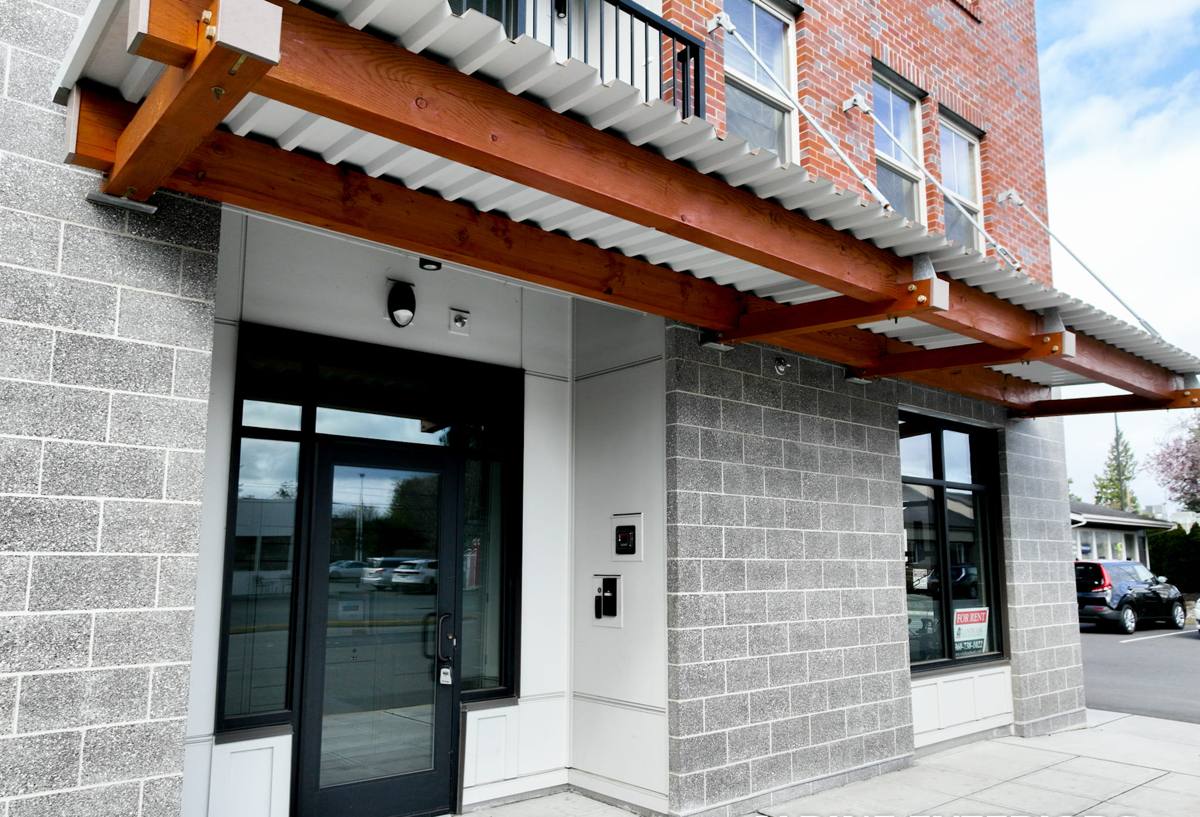
Signs a Blaine Home Has Outgrown Repair
Repair makes sense when damage is isolated and the rest of the siding system is sound. Replacement becomes the more honest recommendation once the problems are spread across the wall, or once what's failing on the surface points to something wrong underneath. A few patterns we see repeatedly on Blaine homes:
- Moss or dark staining that returns within a season or two of being cleaned, on more than one wall
- Soft, spongy, or crumbling siding low on the wall or around window and door trim
- Paint that won't hold anymore — peeling, bubbling, or chalking within a couple years of a repaint
- Visible warping, cupping, or delamination on more than an isolated board or panel
- Rust streaking from corroded fasteners or trim, especially on walls that face the water directly
- A musty smell or soft drywall on an interior wall that backs up to exterior siding
- Siding that's original to a home built more than 20-25 years ago and was never a fiber cement product
Any one of these on its own might be a repair. Several of them together, or any sign that moisture has been getting behind the siding for a while, usually means the whole wall assembly needs a fresh look rather than another round of caulk and touch-up paint.
What Repair Actually Fixes — and What It Doesn't
Repair is the right call when the problem is truly local: a cracked panel from an impact, a section of trim that rotted because a gutter overflowed onto it for a season, a few boards near grade that took splash-back damage. Swapping out the affected pieces and correcting whatever caused the localized damage solves the problem without disturbing the rest of a sound wall.
Where repair falls short is when the siding itself has reached the end of its service life, or when the damage found in one spot is a symptom of a wider issue — a water-resistive barrier that was never properly lapped, insufficient clearance at grade across the whole house, or a siding material that simply wasn't built to handle sustained salt air and moisture. Patching those homes buys a little time but doesn't change the underlying trajectory. In our experience working Blaine's coastal exposure, that's a common enough pattern that it's worth being upfront about rather than selling a homeowner a repair that's likely to need another repair in a couple of years.
What Tear-Off Reveals
Full replacement starts with removing the existing siding, and that step tells us more about a house than any exterior inspection can. Sheathing that's been protected by a sound water-resistive barrier usually looks fine. Sheathing behind siding that's been letting moisture in for years often doesn't — soft spots, staining, or in some cases rot that needs to be cut out and replaced before anything new goes up.
We inspect the sheathing on every wall as it's exposed, not just the ones that looked suspect from outside. It's common for the water-facing side of a Blaine home to show more wear than the sheltered side, simply because that's the wall taking the brunt of wind-driven rain off the water. Finding a problem at this stage means it gets fixed before new siding seals it back up, rather than being buried for another decade.
Why This Step Can't Be Skipped or Estimated Sight-Unseen
We're cautious about giving a hard, fixed price for a full replacement before any siding has come off, because sheathing condition is genuinely unknown until it's exposed. We give a realistic estimate based on the home's age, exposure, and visible condition, but we flag upfront that hidden sheathing repair is the one factor that can change scope once the crew is actually into the wall.
Why We Replace With James Hardie Fiber Cement Only
We install one siding system on replacement projects: James Hardie fiber cement. We don't offer LP SmartSide, vinyl, Cemplank, Allura, primed spruce, or cedar as replacement options, and that's a professional standard we've held to after watching how different materials perform — or fail to — on tear-offs and service calls in coastal, high-moisture towns like Blaine.
| What Matters on a Replacement | Why It's the Deciding Factor |
|---|---|
| Non-combustible fiber cement core | Doesn't feed a fire the way wood-based or wood-fiber siding products can |
| Factory-applied ColorPlus finish | Baked on under controlled conditions, holds color and resists chalking longer than field-applied paint against salt air and constant humidity |
| HZ5 climate-engineered formulation | Built for sustained moisture exposure and freeze-thaw cycling, which describes coastal Whatcom County's marine climate |
| Dimensional stability | Doesn't swell, cup, or warp the way engineered wood products can after repeated wet-weather exposure |
| Strong transferable warranty | Backed by the manufacturer when installation follows their published spec — meaningful on a replacement meant to be the last one for a long time |
Every product on the list we don't install has a place in the market, and homeowners who chose them aren't wrong to have done so. But on a replacement project — where the whole point is fixing a problem for good, not deferring it — we'd rather stand behind one system we trust in this climate than offer a cheaper alternative that shifts risk back onto the homeowner a few years down the road.
How a Replacement Project Runs
Assessment and Estimate
We walk the exterior, look at exposure by wall, and check for the signs listed above before putting together a scope and estimate. Homes closer to the water or with heavier shade typically warrant a closer look than sheltered, sun-exposed lots.
Tear-Off
Existing siding comes off wall by wall, and sheathing is inspected as it's exposed rather than all at once at the end. Anything soft, stained, or damaged gets flagged before we move forward.
Sheathing and Structural Repair
Any damaged sheathing or framing found during tear-off gets repaired before new material goes up. This is the step that gets skipped on a cut-rate replacement job, and it's the one that determines whether the new siding actually solves the problem or just covers it back up.
Water-Resistive Barrier and Flashing
A new, properly lapped barrier goes on with correctly integrated flashing at every window, door, and penetration — the layer that does most of the work keeping wind-driven rain out of the wall once the siding is back on.
New Siding Installation
James Hardie panels go up following the manufacturer's fastening, spacing, and clearance spec, with field-cut edges sealed as they're made.
Final Walkthrough
We go over the finished job together, confirm it matches what was scoped, and cover basic maintenance for a home in this climate.
Repair vs. Full Replacement: A Practical Comparison
| Factor | Repair | Full Replacement |
|---|---|---|
| Best for | Isolated, recent damage on an otherwise sound wall | Widespread wear, aging original siding, or signs of moisture behind the wall |
| What gets inspected | The damaged section only | Sheathing and barrier condition on every wall |
| Cost, upfront | Lower | Higher |
| Cost, over time | Can recur if the underlying cause isn't addressed | Resets the wall assembly, reducing near-term repeat costs |
| Warranty impact | Limited to the repaired section | Full manufacturer warranty on the new system |
Cost Factors for a Blaine Replacement
Every estimate is specific to the house, but a few things consistently move the number on a Blaine replacement project:
| Factor | Why It Matters Here |
|---|---|
| Home size and story count | More wall area and height mean more tear-off, disposal, and staging |
| Sheathing condition found at tear-off | Rot or water damage adds repair scope that can't be fully known until siding is off |
| Trim and window complexity | More openings and roofline transitions mean more flashing and cutting work |
| Exposure to wind and open water | Water-facing walls often warrant closer attention to drainage and flashing detail |
| Product line and finish selection | James Hardie offers multiple panel styles, textures, and ColorPlus finishes at different price points |
These are general drivers, not a quote — we walk every property before putting a real number on the work, because two homes on the same street can need very different scopes once tear-off actually starts.
Timing a Replacement Around Blaine's Weather
Whatcom County's wettest, windiest stretch runs from late fall through winter, and Blaine's coastal exposure makes that stretch harder on both the exposed wall assembly and the crew than it is further inland. Spring and summer offer the driest, most stable conditions for tear-off and installation, since exposed sheathing and new fiber cement both perform better going in dry rather than between storm systems. A home actively taking on water is still worth addressing on its own timeline rather than waiting out the season, since ongoing moisture intrusion tends to get worse, not better, the longer it sits.
Why a Crew That Already Works Blaine Matters for a Replacement
A replacement project lives or dies on judgment calls made once the old siding is off and the wall is exposed — how much sheathing repair is actually necessary, where extra flashing attention is worth the time, which walls need the most drainage consideration. A crew that regularly tears off and replaces siding on homes exposed to this much salt air and driving rain has already seen those calls play out on other Blaine houses, and builds accordingly instead of applying a generic approach borrowed from drier, more sheltered towns. That local pattern recognition is most valuable exactly at the point where a homeowner can't see what's happening — once the old siding is off the truck and the crew is looking at bare sheathing.
If your Blaine home is showing signs it's outgrown repair, we're glad to take a look and give you a straightforward, honest read on whether replacement makes sense. Reach out using the form below to schedule a free, no-pressure estimate.