 Bellingham
 Why Blaine Siding Takes More Punishment Than Most
Blaine sits right where Whatcom County meets the water, and that location comes with a climate that's noticeably harder on exterior siding than a few miles inland. Salt-laden air off the bay works its way into seams, fastener heads, and any spot where paint or caulk has started to fail. Add in driving rain that comes sideways during winter storms, plus a long, shaded moss season that can run from fall through spring, and you've got three separate stressors hitting the same wall assembly year after year. Most siding repair calls we get in Blaine trace back to one of these three causes, often working together rather than alone.
None of this means siding is a losing battle in a coastal town — it means the repair has to account for the actual conditions instead of treating every job like a generic patch. A repair that would hold up fine in a dry inland neighborhood can fail again within a year or two out here if the underlying moisture path isn't addressed.
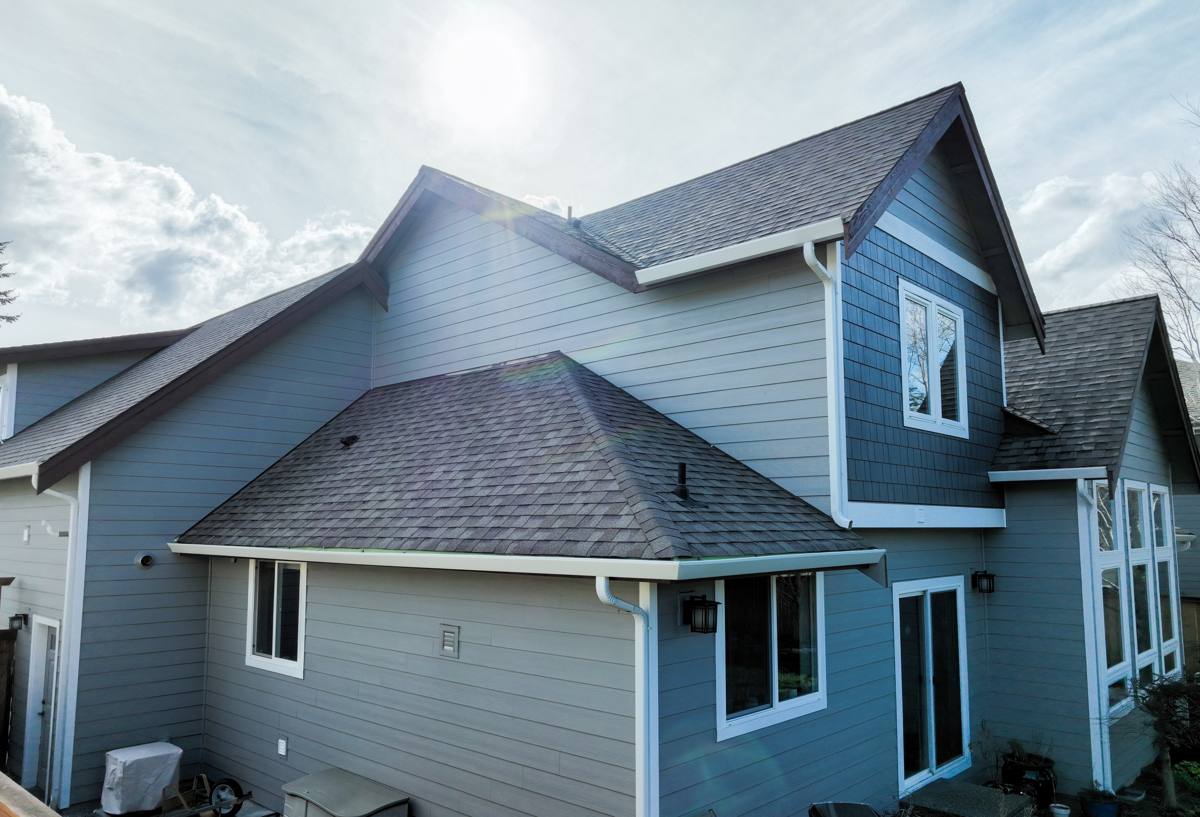
The Damage Patterns We See Most Often in Blaine
Salt Air and Metal Fasteners
Salt air accelerates corrosion on exposed nail heads, trim fasteners, and any galvanized or untreated metal flashing. Once a fastener starts rusting, it weakens, the siding around it loosens, and water gets a new entry point. This is a slow process, which is why it often shows up first as a small stain or a slightly proud nail head rather than an obvious failure.
Driving Rain and Wind-Driven Moisture
Wind off the water doesn't just drop rain straight down — it drives it sideways into siding, especially on the windward walls of a home. Over time this pushes water past seams, under poorly lapped boards, and into any gap where caulk has shrunk or cracked. The result is trapped moisture behind the siding rather than visible damage on the surface, which is why some of the worst repair jobs look fine from the driveway.
Moss, Algae, and Prolonged Dampness
Shaded north- and west-facing walls in this part of Whatcom County can stay damp for extended stretches during the wetter months. Moss and algae take hold on rough or damaged surfaces, and their root structures hold moisture directly against the siding. Left alone, this constant dampness breaks down paint film and, on the wrong substrate, the substrate itself.
Signs It's Time for a Repair Call
- Soft or spongy spots when you press on the siding, especially near the bottom courses or around window and door trim
- Visible staining, streaking, or dark patches that don't wash off
- Boards that have pulled away from the wall or show gaps at the seams
- Paint that's bubbling, peeling, or alligatoring in patches rather than evenly across the wall
- Moss or algae growth that keeps returning to the same spots after cleaning
- Nail heads that are rusted, popped, or visibly corroded
- A musty smell or interior moisture signs on an exterior wall
Any one of these on its own might just need a spot repair. Several of them together, or damage that keeps recurring in the same area, usually means there's a moisture problem behind the siding that a surface patch won't fix.
What an Honest Siding Repair Actually Involves
A repair that's going to hold up in Blaine's climate has to do more than replace the visible damaged piece. The steps that actually matter:
- Find the real cause. Before anything gets replaced, we trace the damage back to its source — a failed seal, a flashing gap, a fastener issue, or ongoing moss coverage that's been holding moisture against the wall.
- Check what's behind the siding. Damaged siding is sometimes a symptom of a compromised weather-resistive barrier or sheathing underneath. Repairing the surface without checking this just delays the next failure.
- Match the material correctly. Mismatched siding profiles, thicknesses, or finishes stand out and can create new water paths at the seams. On Hardie installations, this means using the correct HZ5 product and matching factory finish, not a close-enough substitute.
- Re-flash and re-seal properly. Any repair touching a window, door, or penetration needs correct flashing and sealant detailing — not just caulk smeared over the old gap.
- Fasten correctly for the coastal environment. Corrosion-resistant fasteners, set to the manufacturer's spec, matter more here than in a drier inland setting.
Repair vs. Replacement: How to Think About the Decision
Not every damaged section needs a full re-side, and not every "repair" is actually worth doing instead of replacing a larger section. Here's how we walk homeowners through that decision:
| Factor | Leans Toward Repair | Leans Toward Replacement |
|---|---|---|
| Extent of damage | Isolated to one or two wall sections | Recurring across multiple elevations |
| Cause | Single fixable issue (flashing, fastener, isolated seal failure) | Widespread moisture intrusion or substrate breakdown |
| Age of existing siding | Newer installation with an otherwise sound system | Siding is near or past its expected service life |
| Material match | Matching product/finish is available | Discontinued profile or color, poor match likely |
| Underlying sheathing | Sound, no rot found on inspection | Soft sheathing or framing found during tear-out |
When damage is contained and the cause is clear, a targeted repair is the honest recommendation — there's no reason to sell a homeowner a full re-side they don't need. When we find rot, widespread moss-driven moisture damage, or a siding system that's simply reached the end of its life, we say so plainly and explain why.
Why Fiber Cement Holds Up Better to This Kind of Repair
We install James Hardie fiber cement exclusively, and coastal repair work is part of why. Fiber cement doesn't rot, and it isn't a food source for the moss and algae that thrive in Blaine's damp, shaded conditions the way untreated wood products can be. Hardie's ColorPlus factory finish also means a repaired section can be matched more reliably than field-painted alternatives, since the finish is baked on at the factory rather than mixed on site. The HZ5 product line is engineered specifically for cold, wet, coastal climates like this one — it's built to handle moisture cycling without the swelling and warping that some other siding materials show over time in this kind of environment.
This doesn't mean fiber cement is maintenance-free or immune to problems. Fastener corrosion, failed caulk joints, and moss buildup can still affect a Hardie installation if it wasn't installed to spec or hasn't been kept up. But when damage does show up, the repair work is more predictable and the material itself isn't the weak link.
Our Process for a Blaine Repair Call
We keep repair visits straightforward:
- Inspection first. We look at the damaged area and the surrounding wall, not just the spot you called about — coastal damage often extends further than what's visible from the ground.
- Straight answer on cause and scope. You'll hear whether this is a contained repair or something bigger, and why, before any work is scheduled.
- Written estimate. No surprise scope creep once we've opened up a wall section.
- Correct materials and technique. Matched product, proper flashing and fastening, and attention to the moisture path — not just a cosmetic patch.
- Cleanup and a final walk-through. You see the finished work before we consider the job done.
Why Local Experience in Blaine Actually Matters
A crew that regularly works this part of Whatcom County already knows which walls in a given home are most exposed to driving rain, where moss tends to build up fastest, and how salt air affects fastener choice over time. That's not something you can fully substitute with a generic checklist — it comes from having repaired enough siding in this specific coastal environment to recognize the patterns quickly. It also means shorter lead times, since we're not routing a crew and materials in from far outside the area for a single repair visit.
Keeping Repaired Siding From Failing Again
After a repair, a little upkeep goes a long way toward making sure it's the last one you need in that spot:
- Rinse siding periodically to keep salt residue and grime from building up, especially on walls facing the water
- Keep gutters and downspouts clear so water isn't dumping directly onto or behind siding
- Trim back vegetation that's shading a wall and keeping it damp longer than necessary
- Address moss growth early rather than letting it establish and hold moisture against the surface
- Walk the exterior once or twice a year and check caulk joints, trim, and fastener heads for early wear
- Repaint or touch up any field-finished trim before bare wood or substrate is exposed
If you're dealing with damaged, stained, or failing siding anywhere in Blaine, we're happy to take a look and give you a straight assessment — repair or replacement, whichever the wall actually needs. Reach out for a free, no-pressure estimate using the form below.