 Bellingham
 Siding Installation in Blaine: What This Corner of Whatcom County Demands
Blaine sits about as close to the water and the wind as a Whatcom County community gets. Homes here take a steady diet of marine weather: salt-laden air off the Strait of Georgia and Semiahmoo Bay, driving rain that comes in sideways during winter storms, and a moss season that can stretch from October well into spring. Siding that works fine forty minutes inland in a drier microclimate can fail early here. If you're planning a siding installation project in Blaine, the material and the installation details matter more than they would almost anywhere else in the county.
Bellingham Siding installs James Hardie fiber cement siding exclusively — not vinyl, not LP SmartSide, not primed wood or cedar. That's not a marketing line; it's a standard we hold because of what we've seen these coastal conditions do to lesser assemblies. Below is what a correct siding installation actually involves for a Blaine home, and why the details are worth getting right the first time.
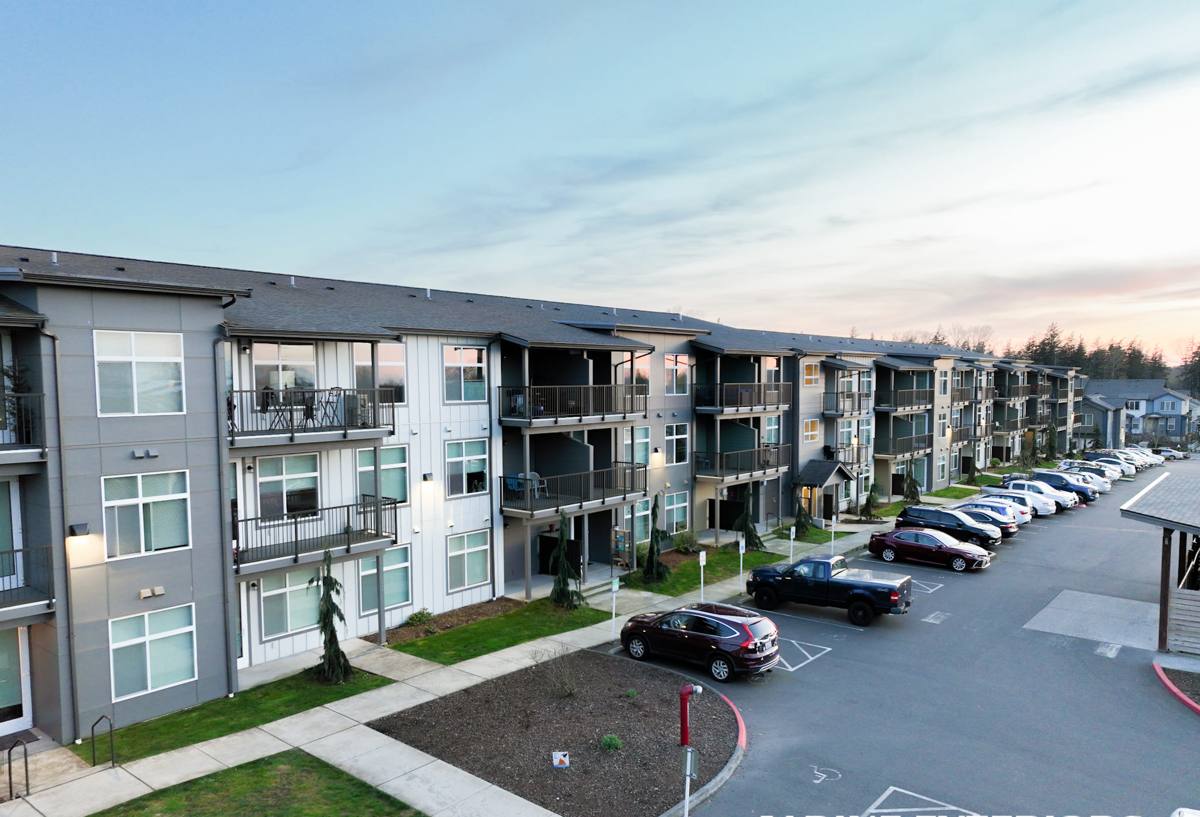
Why Blaine's Climate Is Harder on Siding Than It Looks
Salt Air and Corrosion
Proximity to salt water changes what "durable siding" means. Salt carried on the wind settles on exterior surfaces and accelerates corrosion of fasteners, trim, and any metal flashing components. It also degrades some paint and coating systems faster than manufacturers' inland test data would suggest. Siding materials and the hardware behind them need to be chosen with this in mind — not as an afterthought, but from the first planning conversation.
Driving Rain and Wind-Driven Moisture
Blaine's exposure to open water means wind-driven rain isn't a rare event — it's a normal winter pattern. Rain that's pushed horizontally by wind finds every gap, seam, and undersized lap in a siding system. This is a wall-assembly problem as much as a siding problem: the water-resistive barrier, flashing details, and siding overlaps all have to work together, because siding alone was never meant to be the sole barrier against bulk water.
The Long Moss Season
Shade, moisture, and mild temperatures are exactly what moss and algae need to establish themselves, and Whatcom County's marine climate provides all three for much of the year. On north-facing walls and anywhere tree cover blocks direct sun, organic growth can take hold on siding surfaces that don't shed moisture well or that hold onto surface moisture between rain events. Over time, that growth traps moisture against the substrate — which is a much bigger problem for wood-based products than for fiber cement.
What a Correct Siding Installation Involves
A siding job is really three layers working together, and shortcuts on any one of them show up as problems within a few years — sooner in an exposed location like Blaine.
1. The Water-Resistive Barrier
Before a single piece of siding goes up, the wall needs a continuous, properly lapped weather-resistive barrier. Seams, penetrations, and transitions around windows and doors get sealed and flashed so that any water that gets past the siding has a clear path down and out, not into the wall cavity.
2. Flashing and Trim Details
Window heads, deck ledgers, roof-to-wall intersections, and outside corners are where most siding failures start — not in the field of the wall. Correct flashing at these transitions is what actually keeps wind-driven rain out, regardless of which siding product sits on top.
3. The Siding Itself
This is the visible layer, but it's the last line of defense, not the first. Panel or lap siding needs correct fastening patterns, proper clearance at the ground and roofline, and factory-finished edges wherever possible to minimize field-cut exposure. Manufacturer installation instructions exist for a reason — following them is what keeps a warranty valid and keeps the assembly performing as designed.
Why We Install Only James Hardie Fiber Cement
We get asked regularly why we don't offer vinyl or LP SmartSide as a lower-cost option. The honest answer is that in a coastal Whatcom County environment, we've made a professional judgment that the trade-offs aren't worth it on the homes we put our name behind.
Non-Combustible, Dimensionally Stable
James Hardie siding is fiber cement — it doesn't expand and contract with moisture the way wood-based products do, and it's non-combustible. In a marine climate with sustained damp periods, dimensional stability matters: siding that swells and shrinks repeatedly opens up joints and paint lines over time, which is exactly where moss and moisture intrusion get their foothold.
ColorPlus Factory Finish
Hardie's ColorPlus finish is baked on at the factory under controlled conditions, which gives it better adhesion and UV resistance than field-applied paint typically achieves — and it comes with its own finish warranty. In a location where siding gets rinsed by salt spray and rain for most of the year, a factory finish that's engineered to hold up outperforms a site-painted surface.
HZ5 Product Engineering
Hardie engineers its HZ product lines for specific climate zones, accounting for moisture exposure. That's a meaningful distinction from a one-size-fits-all product — it means the material was designed with places like Blaine's exposure profile in mind, not just for a national average climate.
Warranty Structure
James Hardie backs its siding with a strong, transferable limited warranty when installed to spec. That transferability matters to homeowners who may sell in the years ahead — it's a tangible piece of value that follows the house, not just the original owner.
Comparing Siding Options for a Blaine Home
| Factor | James Hardie Fiber Cement | Vinyl | Untreated Wood / Cedar |
|---|---|---|---|
| Salt air / corrosion exposure | Engineered for coastal exposure (HZ lines) | Can become brittle and fade faster in UV and salt exposure | No inherent resistance; relies entirely on maintenance |
| Moisture / moss resistance | Dimensionally stable, doesn't swell with moisture | Resists rot but can trap moisture behind panels if installed poorly | Absorbs moisture, prone to rot and moss colonization |
| Finish durability | Factory ColorPlus finish, warrantied | Color molded in, but can fade and chalk over time | Requires repeated staining or painting |
| Fire resistance | Non-combustible | Combustible (petroleum-based) | Combustible |
| Long-term maintenance | Low — occasional wash, no refinishing cycle | Low, but repairs can be visually mismatched | High — recurring stain/paint and rot inspection |
Our Installation Process for Blaine Projects
- On-site assessment. We walk the exterior, check the current siding and sheathing condition, and note exposure factors specific to the lot — tree cover, wind exposure, proximity to water, and existing moisture damage.
- Wall preparation. Old siding removal (when applicable), sheathing repair as needed, and installation of a continuous water-resistive barrier with properly lapped seams.
- Flashing installation. Window, door, and roof-to-wall flashing detailed before any siding goes up — this is the step that gets skipped on rushed jobs and is the one that matters most in driving rain.
- Hardie siding installation. Panels or lap siding installed per manufacturer specification, with correct fastening, clearances, and joint treatment.
- Trim and detail work. Corners, fascia, and transitions finished to shed water and match the home's design.
- Final walkthrough. We review the completed work with the homeowner and go over basic care so the siding performs the way it's designed to for decades.
What to Ask Before Hiring a Siding Contractor in Blaine
Not every contractor who installs siding does it to a standard that holds up in this specific climate. Before hiring, it's worth asking pointed questions.
- Do you have direct experience installing on homes in Blaine or similarly exposed coastal areas of Whatcom County?
- What water-resistive barrier and flashing details do you use at windows, doors, and roof transitions?
- Are you a certified installer for the siding product you're proposing, and can you speak to the manufacturer's installation requirements in detail?
- What does the warranty actually cover — material only, or labor and material both?
- How do you handle existing moisture damage or rot discovered once old siding comes off?
- Can you walk me through why you recommend this specific product for my home's exposure?
Signs Your Current Siding May Already Be Failing
Homeowners often call us after noticing something that's been quietly getting worse for a season or two. In Blaine's climate, watch for:
- Persistent moss or algae growth that returns quickly after cleaning, especially on shaded or north-facing walls
- Soft spots, bubbling, or visible warping in wood-based siding
- Paint that's peeling or chalking faster than expected, particularly on walls facing prevailing wind and rain
- Staining or discoloration below window sills and along the foundation line — often a sign of water tracking down from a failed flashing detail
- Gaps opening up at seams, corners, or trim joints
Any of these can indicate that moisture is getting past the surface layer, which is worth addressing before it reaches the sheathing or framing.
Cost Factors for a Blaine Siding Installation
Every project is different, but the same variables tend to drive cost on siding installations in this area:
| Factor | Why It Matters Here |
|---|---|
| Existing wall condition | Sheathing or framing damage from prior moisture intrusion adds repair work before new siding can go on |
| Home size and complexity | More corners, windows, and roof transitions mean more flashing detail work |
| Siding profile and accessories | Lap vs. panel siding, trim choices, and factory-finished color selections affect material cost |
| Access and site conditions | Waterfront lots, steep grades, or limited access can affect labor time |
| Removal and disposal | Removing and disposing of old siding, especially if it's wood or has moisture damage, adds scope |
Why Local Experience in Blaine Matters
A crew that already works this part of Whatcom County knows what a Blaine exposure actually does to a wall assembly — where wind-driven rain tends to concentrate, which orientations hold onto moss longest, and how salt exposure changes fastener and flashing choices. That's the kind of judgment that doesn't come from a spec sheet; it comes from having done the work in this specific environment repeatedly. It's also why we don't try to be all things to all homeowners with every siding product on the market. We install one system, we install it correctly, and we stand behind it.
If you're considering a siding installation project for your Blaine home, we're happy to walk the property with you, talk through what your specific exposure calls for, and put together a straightforward estimate — no pressure, no hard sell. Reach out using the form below to get started.