 Bellingham
 Why Blaine Roofs Wear Out Faster Than the Brochure Says
Blaine sits right on the water at the top of Whatcom County, which means every roof here is doing three jobs at once: shedding a lot of rain, standing up to salt-laden air blowing in off the Strait, and staying clean enough that moss doesn't get a foothold. Any one of those is manageable. All three, year after year, is what actually ages a roof.
Salt air is the one homeowners underestimate most. It doesn't just affect boats and railings — it accelerates corrosion on exposed roofing fasteners, flashing, and metal valleys, especially on homes with a clear line to the water or prevailing wind off the coast. A roofing system that would hold up fine 20 miles inland can show fastener bleed-through or flashing corrosion years earlier in Blaine.
Then there's the rain itself — not just the volume, but how often it comes in sideways with wind. Driving rain finds every weak lap, every under-driven nail, every spot where flashing was cut short. And because temperatures stay mild and damp for long stretches, moss and moisture-loving growth get months of ideal conditions instead of a hard freeze to knock them back.
None of this means a roof in Blaine is doomed — it means the materials, fasteners, and detailing have to be chosen for this specific combination, not for a generic Pacific Northwest spec sheet.
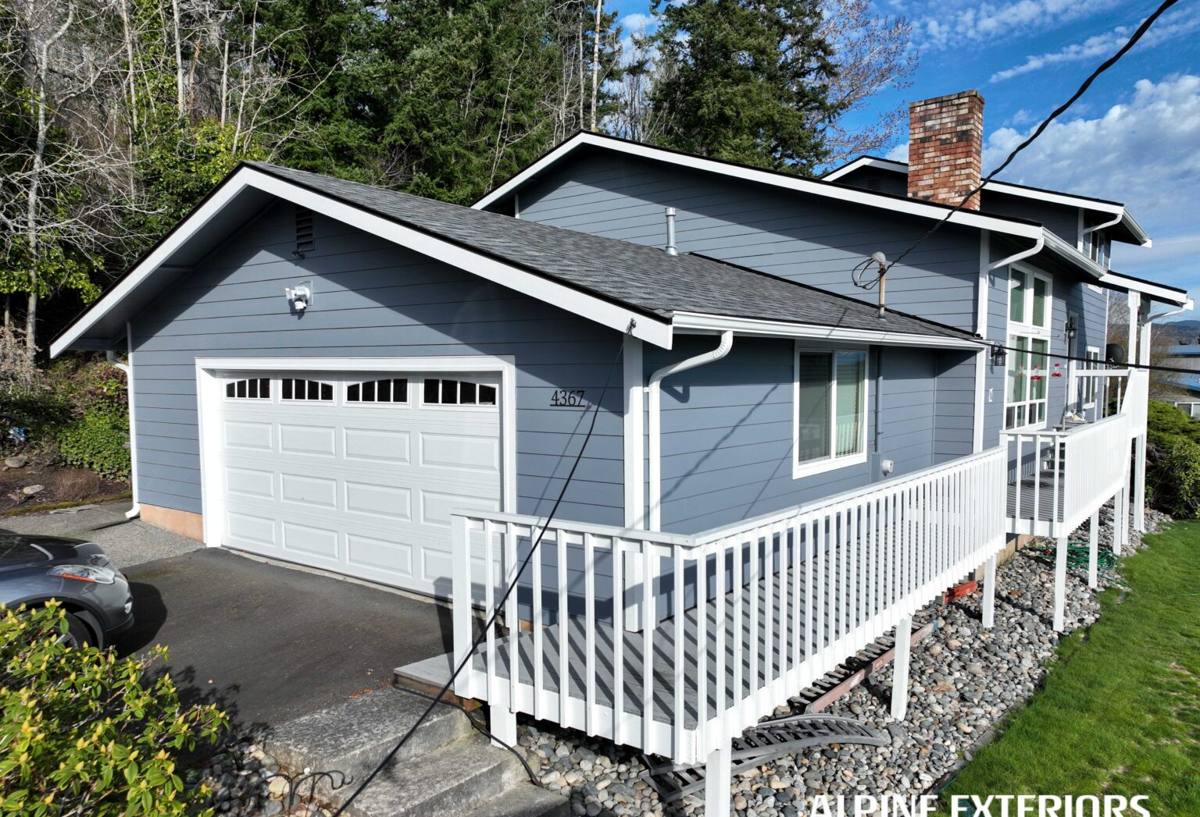
Signs a Blaine Home Needs Replacement, Not Another Repair
Not every roof problem needs a full replacement. But there's a point where patching becomes a waste of money, especially on a roof that's already dealing with coastal exposure. Watch for:
- Granule loss showing up in gutters or at downspout outlets, especially after wind-driven rain
- Moss established in mats rather than a light green film — mats hold moisture against the roofing material year-round
- Rust staining or streaking near valleys, flashing, or fastener heads
- Soft spots or sagging when walked, which usually means deck damage underneath
- Daylight visible through the attic or consistent damp spots on interior ceilings after storms
- A roof past 20-25 years old (asphalt) that's had more than one repair in the last few years
- Curling, cracked, or missing shingles concentrated on the side of the roof facing prevailing wind and salt spray
If you're seeing two or more of these together, it's worth getting an honest look before another wet winter, rather than chasing leaks one at a time.
What a Correct Roof Replacement Actually Involves
Tear-Off and Deck Inspection
We don't roof over existing layers. A full tear-off is the only way to actually see the deck — and in a climate like Blaine's, deck damage from long-term moisture intrusion is common enough that skipping this step means guessing at what's underneath the new roof. Soft or delaminated sheathing gets replaced before anything else goes down.
Underlayment and Water Protection
Given how much wind-driven rain this area gets, underlayment choice matters more here than in drier climates. Self-adhered ice-and-water membrane at eaves, valleys, and any roof penetration gives a second line of defense when wind pushes rain up and under the primary roofing material — which happens regularly on exposed Blaine roofs.
Ventilation
Balanced intake and exhaust ventilation keeps the underside of the roof deck dry and reduces the moisture load that feeds moss and mildew from underneath. It also protects the new material's warranty — most manufacturers require proper ventilation to honor coverage, and it's one of the most commonly skipped details on lower-quality replacements.
Flashing and Fasteners
This is where salt air does the most damage over time. We use corrosion-resistant flashing and fastener specs suited to coastal exposure rather than the minimum a manufacturer allows, particularly around chimneys, skylights, and valleys where standing water and salt spray both concentrate.
Choosing Materials for Blaine's Coastal Climate
There's no single "best" roofing material — there's the right trade-off for your home's exposure, budget, and how long you plan to own it. Here's how the common options actually perform under Blaine's specific mix of salt air, rain, and moss pressure:
| Material | Moss & Moisture Resistance | Salt Air Durability | Maintenance | Typical Lifespan |
|---|---|---|---|---|
| Architectural asphalt shingle | Good with algae-resistant granules; still needs periodic cleaning | Good; use corrosion-resistant fasteners and flashing | Low to moderate | 20-30 years |
| Standing seam metal | Excellent — sheds moss and moisture well, few laps to trap debris | Very good with coastal-rated coatings and fasteners | Low | 40-50+ years |
| Cedar shake | Poor without diligent upkeep — retains moisture, feeds moss | Moderate; hardware needs to be corrosion-resistant | High | 20-30 years with upkeep |
| Synthetic composite | Good; resists moisture absorption better than wood | Good | Low to moderate | 30-50 years |
For most Blaine homes we lean toward algae-resistant architectural asphalt or standing seam metal, because both handle the moss-and-moisture combination without demanding constant maintenance. Cedar can still be the right call for the look a homeowner wants, but we're upfront that it asks for more from the owner over time — that's a maintenance conversation, not a knock on the material itself.
Our Process for a Blaine Roof Replacement
- On-site inspection — we walk the roof and attic, checking deck condition, ventilation, flashing, and how much salt/moisture exposure your specific site and orientation get.
- Written scope and estimate — materials, fastener spec, underlayment plan, and timeline, spelled out before any work starts.
- Permitting — Blaine roof replacements typically require a building permit; we handle that paperwork as part of the job.
- Tear-off and deck repair — full removal of old roofing, deck inspected and repaired as needed.
- Install — underlayment, flashing, and roofing material installed to manufacturer spec plus our coastal-exposure details.
- Final walkthrough — we go over the finished roof, gutters, and any warranty paperwork with you before calling it done.
What Actually Drives Cost
Roof replacement pricing varies a lot by home, and anyone who quotes a number sight unseen is guessing. The factors that move the price most are:
| Factor | Why It Matters |
|---|---|
| Roof size and pitch | Steeper roofs take longer and need more safety setup |
| Number of existing layers | Extra tear-off labor and disposal cost |
| Material choice | Metal and synthetic composites cost more upfront than asphalt but last longer |
| Deck condition | Rot or soft sheathing found during tear-off adds repair cost |
| Roof complexity | Valleys, dormers, chimneys, and skylights all add flashing labor |
| Access and site conditions | Tight lots, tall trees, or difficult staging add time |
As a very rough range, straightforward asphalt shingle replacements on typical Blaine homes often land somewhere in the mid-teens to mid-twenty-thousands, with metal roofing running higher. The only way to get a real number is a site visit — too many variables to price it any other way.
Why Hire a Crew That Already Works Blaine
A roofer who mostly works inland jobs will still install a roof correctly by the book — but "by the book" isn't always tuned for a site three blocks from saltwater. A crew that regularly works Blaine and the surrounding Whatcom County coastline already knows to spec corrosion-resistant fasteners as standard rather than an upsell, to pay extra attention to flashing on wind-exposed elevations, and to expect moss pressure that inland roofs don't see. That familiarity shows up less in the sales pitch and more in the small install details that determine whether a roof is still tight in year 15.
Local crews are also easier to get back out for a warranty check or a quick look after a bad storm, which matters more here given how often winter weather rolls through off the water.
Keeping a New Roof Ahead of Moss and Salt
A correctly installed roof still benefits from basic upkeep in this climate:
- Keep gutters and downspouts clear so water doesn't back up under shingle edges
- Trim back overhanging branches that shade the roof and keep it damp longer
- Have moss growth treated before it forms mats, not after
- Do a visual check after major windstorms for lifted shingles or displaced flashing
- Schedule a professional look every few years, even with no visible problems
None of this is heavy maintenance — it's the difference between a roof that reaches its full expected lifespan and one that starts needing repairs a decade early because moss or trapped moisture got a head start.
If your roof is showing its age or you just want an honest read on where it stands, we're glad to come take a look. The estimate is free, there's no pressure attached, and you'll get a straight answer about whether it's time to replace or whether a repair still makes sense — just fill out the form below.