 Bellingham
 Asphalt Shingle Roofing Built for Blaine's Coastal Conditions
Blaine sits about as close to the water and the border as a Whatcom County home can get, and that location shapes what a roof has to survive. Salt-laden air off the Strait of Georgia, wind-driven rain that comes in sideways during fall and winter storms, and a moss season that can run eight or nine months out of the year all put a different kind of stress on asphalt shingles than you'd see in a drier inland climate. A roof that's correctly installed for these conditions holds up for its full service life. One that isn't starts showing granule loss, moss colonies, and leaks years before it should.
We work Blaine regularly as part of our Bellingham-area service territory, so we're not learning this microclimate on your dime. We know which roof orientations take the worst of the weather off the water, where moss tends to establish first, and how flashing details need to be handled differently here than in a typical suburban subdivision fifty miles inland.
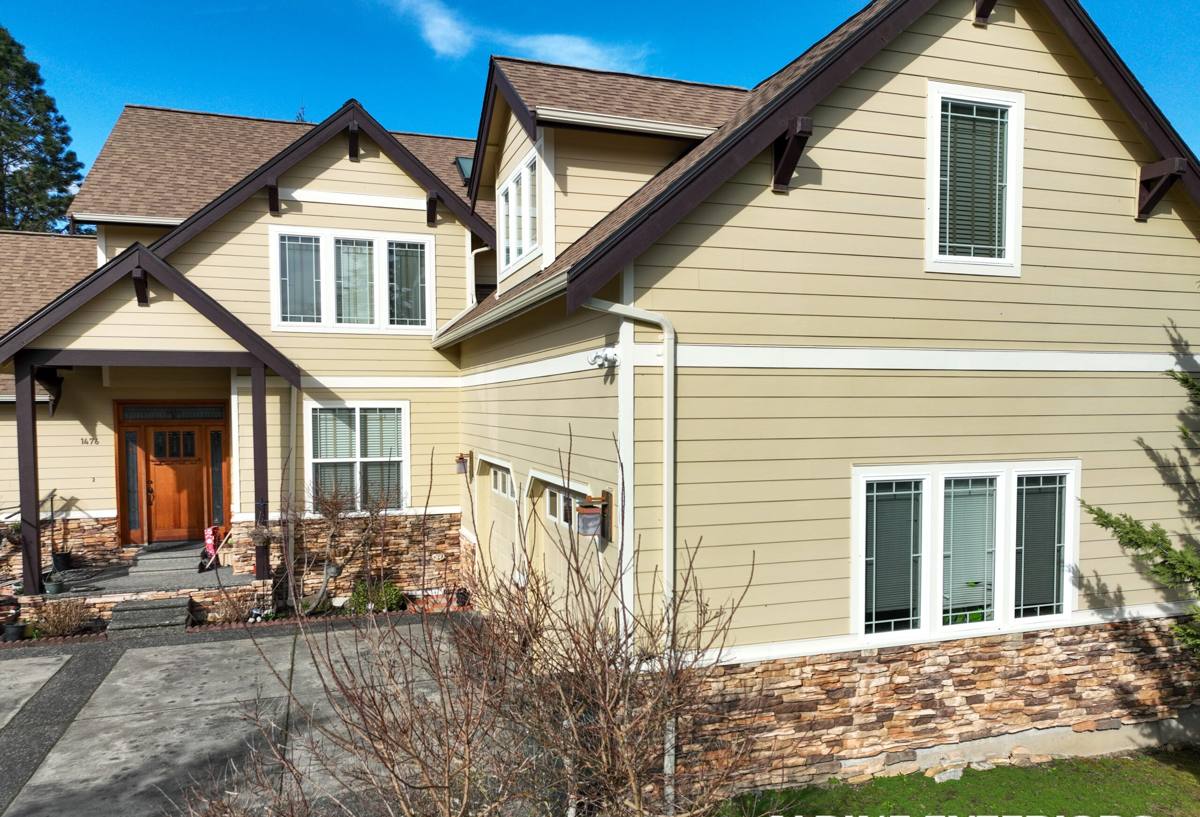
What Blaine's Climate Actually Does to a Shingle Roof
Salt Air and Metal Components
Asphalt shingles themselves aren't directly damaged by salt air, but the metal components tied into the roof system are. Flashing, drip edge, roofing nails, and vent stacks all corrode faster in a marine environment than they would inland. Cheaper galvanized fasteners and thin flashing stock show rust streaks and pinholing well before the shingles themselves are due for replacement. The fix isn't complicated — it's using corrosion-resistant materials from the start — but it does mean a Blaine roof shouldn't be specified the same way you'd spec one in, say, Lynden or Sumas.
Driving Rain and Wind Uplift
Storms moving through this part of Whatcom County often bring rain at an angle, not straight down. That matters because it tests every lap, seal, and fastening point on the roof rather than just the field of the shingle. Underlayment quality, proper shingle overlap, and nailing pattern all become more important here than they would in a calmer climate. Wind uplift is a related concern — gusts off open water can get underneath poorly sealed shingle tabs and start a lifting problem that snowballs over a few seasons.
Moss and Moisture Retention
Blaine's tree cover, humidity, and long damp stretches from fall through spring create ideal conditions for moss and algae growth. Moss isn't just cosmetic — it holds moisture against the shingle surface, works its way under tabs as it grows, and can lift shingles enough to let water in during the next hard rain. North-facing slopes and roof sections shaded by trees are the first places it shows up, and once established, it spreads.
What a Correct Installation Involves Here
A shingle roof that's going to hold up in this environment needs attention to a handful of details that matter more here than elsewhere:
- Ice-and-water shield at eaves and valleys — even though hard freezes are rare, the same membrane protects against wind-driven rain backup at low-slope transitions.
- Corrosion-resistant flashing and fasteners — stainless or heavier-gauge coated materials at chimneys, sidewalls, and vent penetrations instead of standard galvanized where budget allows.
- Proper starter strip and nailing pattern — this is what actually resists wind uplift, more than the shingle brand itself.
- Zinc or copper strips near the ridge on moss-prone roofs — a low-cost addition that slows regrowth between cleanings.
- Ventilation that matches the attic — balanced intake and exhaust venting keeps moisture from condensing on the underside of the deck, which is a separate problem from surface moss but just as damaging over time.
Our Process for a Blaine Roofing Job
1. On-Site Inspection and Honest Assessment
We start by getting on the roof, not just looking at it from the driveway. We check deck condition, existing ventilation, flashing condition around chimneys and walls, and how much moss or granule loss is present. We'll tell you plainly if you're looking at a full replacement, a targeted repair, or a few more years of life with some maintenance.
2. Straightforward Written Estimate
You get a written scope covering materials, tear-off (if applicable), flashing work, ventilation changes, and cleanup — no vague line items. If there are decisions to make (shingle line, ventilation upgrade, moss-prevention strips), we walk through the trade-offs in plain terms.
3. Tear-Off and Deck Check
For full replacements, we remove existing roofing down to the deck and inspect for soft spots or water damage that wouldn't be visible otherwise. This is often where hidden problems from years of moss and moisture surface — better to catch it now than have it fail under a new roof.
4. Underlayment, Flashing, and Shingle Installation
We install underlayment and flashing to the standard described above, then the shingle field with correct nailing and overlap for wind resistance. Ridge and hip work gets finished last, along with any moss-prevention strips if you've chosen that option.
5. Final Walkthrough
We walk the job with you, cover care and maintenance, and make sure you know what a normal wear pattern looks like versus something that needs a call back.
Shingle Options and What They Mean for a Blaine Roof
| Shingle Type | Typical Lifespan Here | Wind Rating Fit | Moss Resistance |
|---|---|---|---|
| Standard 3-tab | 15–20 years | Adequate for sheltered lots only | Lower unless treated |
| Architectural (laminate) | 25–30 years | Good, better mat weight and adhesive coverage | Moderate; better with zinc strips |
| Algae-resistant (copper-granule) architectural | 25–30 years | Good | Best available in asphalt category |
For most Blaine homes exposed to open water views or heavy tree shade, we lean toward architectural shingles with algae-resistant granules — the added upfront cost is modest compared to the maintenance it saves over the roof's life. Standard 3-tab still has its place on sheltered, budget-driven projects, but we'll say so plainly if we think it's the wrong fit for your specific lot.
Maintenance That Actually Extends Roof Life Here
A roof warranty assumes reasonable upkeep, and in this climate that means more than an occasional glance from the ground. A few habits make a real difference:
- Clear gutters and downspouts each fall before the heavy rain sets in — clogged gutters back water up under the shingle edge.
- Have moss physically removed (not just chemically treated) every year or two on shaded, north-facing slopes.
- Keep overhanging branches trimmed back to reduce shade, debris buildup, and physical abrasion on the shingle surface.
- Check attic ventilation isn't blocked by insulation, especially after any attic work.
- Have flashing points inspected every few years, since that's where leaks actually start far more often than in the open shingle field.
Why Local Roofing Experience Matters in Blaine Specifically
Blaine isn't just "Bellingham weather with a few more degrees of latitude." Its position right on the water and near the border means specific microclimate effects — more direct exposure to marine wind and salt spray than roofs even a few miles inland, and drainage patterns shaped by the lots common in the area. A crew that treats every Whatcom County roof identically will spec the same materials and details everywhere, and that's how you end up with premature flashing corrosion or moss problems that could have been designed around from day one.
We service Blaine as a regular part of our coverage area out of Bellingham, which means we're already familiar with the permitting expectations, typical roof pitches and styles in the area, and the specific trouble spots — valleys, north slopes, chimney flashing — that tend to need extra attention on homes here.
Repair, Partial Replacement, or Full Tear-Off?
Not every roofing problem in Blaine calls for full replacement. We assess based on:
- Age relative to material — a 12-year-old architectural roof with isolated flashing failure is usually a repair; a 22-year-old roof with widespread granule loss usually isn't.
- Extent of moss and moisture damage — localized moss on one slope can often be cleaned and treated; moss that's lifted shingles across multiple sections points to replacement.
- Deck condition — soft or delaminating decking found during a repair often means the scope needs to expand, and we'll tell you before proceeding, not after.
- Insurance considerations — storm damage from wind events is sometimes a covered repair; we'll document conditions honestly either way.
What Affects the Cost of a Blaine Roofing Project
| Factor | Why It Matters Here |
|---|---|
| Roof size and pitch | Steeper roofs common near the water take longer to work safely and use more material per square. |
| Tear-off layers | Removing existing roofing (sometimes multiple layers) adds labor and disposal cost. |
| Deck repair needs | Moisture-damaged decking found underneath adds material and labor not visible in the initial estimate. |
| Shingle grade chosen | Algae-resistant architectural shingles cost more upfront but reduce moss-related maintenance and repair calls. |
| Flashing and ventilation upgrades | Corrosion-resistant materials and improved venting add modest cost but matter more in a marine climate. |
We give real numbers in the written estimate rather than a rough range over the phone — every roof and every lot here is different enough that a phone quote isn't honest.
Ready for a Straight Answer on Your Blaine Roof?
Whether you're dealing with visible moss, a few leaks after last winter's storms, or you're just trying to plan ahead before a real problem starts, we're happy to take a look. Fill out the form below for a free, no-pressure estimate — we'll give you a straight assessment of what your roof actually needs, not an upsell.