 Bellingham
 Roof Repair Built for Birchwood's Weather, Not a Textbook
Birchwood sits close enough to the water and the lowland weather patterns that move through Whatcom County to take a particular kind of beating on a roof. It's not one dramatic storm that does the damage here — it's the accumulation. Salt-laden air off the bay corrodes exposed metal fasteners and flashing edges faster than inland homes ever see. Driving rain, pushed sideways by wind off the Strait, finds its way under shingles and around penetrations that would stay dry in a calmer climate. And then there's moss season, which in this part of Western Washington isn't really a season at all — it's most of the year. Put those three things together and you get roofs that look fine from the driveway but are quietly failing underneath.
A roof repair done right in Birchwood accounts for all three. That means matching materials and fastener types to a marine environment, sealing and flashing details with driving rain in mind, and treating moss as an ongoing maintenance issue rather than a one-time cleanup. We've been doing repair work on homes throughout Bellingham and Whatcom County long enough to know which failure patterns show up here again and again — and this page walks through what that actually looks like.
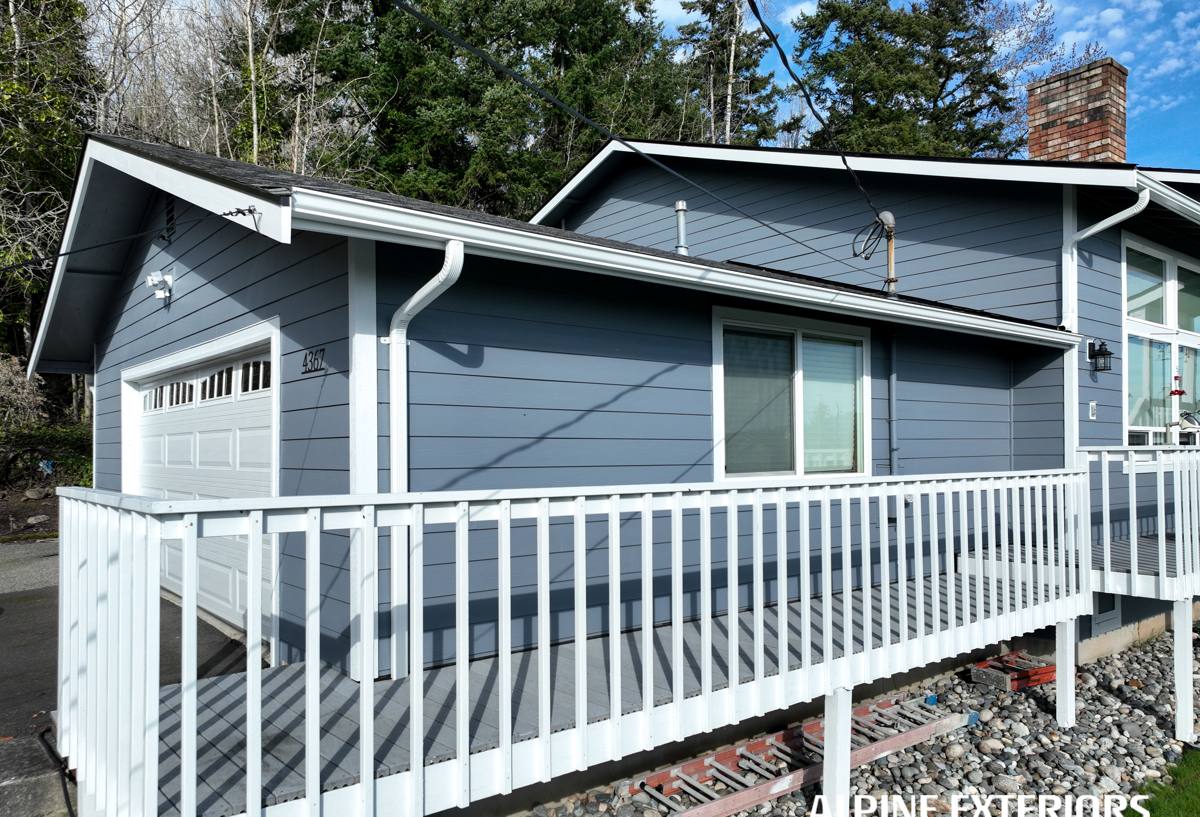
Why Birchwood Roofs Fail the Way They Do
Salt Air and Metal Fatigue
Homes closer to the water deal with a slow, steady corrosion process on anything metal — nails, screws, flashing, drip edge, and vent caps. Once a fastener starts to rust, it loses its grip on the roofing material around it, and that's often where a leak actually starts. It's rarely the shingle itself that fails first; it's the metal holding everything together.
Driving Rain and Wind-Driven Moisture
Rain that falls straight down is fairly easy for any roof to shed. Rain that comes in sideways, pushed by wind gusts off the water, behaves differently. It gets pushed up under shingle tabs, into open laps at ridge caps, and around chimneys, skylights, and vent boots that were sealed for calmer conditions. Over time, this is what turns a small original installation gap into an active leak.
Moss and Organic Growth
Bellingham's damp, shaded conditions are close to ideal for moss growth, and Birchwood's tree cover doesn't help. Moss holds moisture directly against the roofing surface for days at a time, which accelerates granule loss on shingles, promotes rot on wood shakes, and can lift shingle edges as it grows underneath them. Left unaddressed, a moss mat is basically a sponge sitting on your roof.
What a Proper Repair Actually Involves
A roof repair isn't just patching the spot where water is showing up inside the house. Interior stains often show up several feet from the actual point of entry, because water travels along the underlayment or framing before it drips through. A correct repair starts with tracing the leak to its real source, not just its visible symptom.
- Inspecting the full roof plane above and around the affected area, not just the ceiling stain location
- Checking flashing at every penetration — chimneys, vents, skylights, and wall-to-roof transitions
- Assessing fastener condition, especially on homes over 10-15 years old in salt-exposed locations
- Removing moss and organic debris before making any repair, so the fix isn't sealed under a growth mat
- Confirming attic ventilation and insulation aren't contributing to condensation that mimics a roof leak
- Matching replacement materials to the existing roof as closely as possible for both appearance and performance
Skipping any of these steps tends to produce a repair that looks fine for a season and then fails again in the next round of fall storms.
Common Repair Scenarios We See Around Birchwood
Flashing Failures
Flashing around chimneys, skylights, and dormers is one of the most common failure points on any roof, and it's especially common here because wind-driven rain tests these seals harder than a straight-down rain ever would. Corroded or improperly lapped flashing is a frequent culprit behind leaks that seem to appear "out of nowhere."
Shingle Damage from Wind and Debris
Lifted, cracked, or missing shingles expose the underlayment beneath, and once that layer is compromised, it's only a matter of time before water gets through. Wind gusts common to the area can lift shingle edges that have already been weakened by age or granule loss.
Moss-Related Deterioration
On shake and shingle roofs especially, moss can work its way under the butt edges of individual pieces, holding moisture against the wood or asphalt and accelerating rot or granule loss. Repair in these cases usually means moss removal, treatment, and replacement of the affected pieces — not just a surface cleaning.
Valley and Gutter-Adjacent Leaks
Roof valleys concentrate a huge volume of water during Whatcom County's wetter months. Any breakdown in the valley flashing or an undersized valley for the amount of water it handles will show up as a leak faster than almost anywhere else on the roof.
Repair or Replace? A Cost-Factor Comparison
Not every roof issue calls for a full replacement, but a repair only makes sense when the rest of the roof still has useful life left in it. Here's how we help homeowners think through that decision:
| Factor | Favors Repair | Favors Replacement |
|---|---|---|
| Roof age | Under 15 years, or well-maintained | Near or past expected service life |
| Extent of damage | Isolated to one area (flashing, one section) | Multiple areas failing independently |
| Moss/organic history | Recently treated, minimal buildup | Chronic moss with visible granule loss roof-wide |
| Decking condition | Sound, dry, no soft spots | Soft, delaminated, or water-stained decking |
| Fastener/metal condition | Localized corrosion | Widespread rust on nails, flashing, and vents |
We'll always tell you honestly which side of that table your roof falls on. A repair that's likely to fail again within a year or two isn't a good use of your money, and we'd rather say so upfront than sell a patch job that doesn't hold.
Our Process for a Birchwood Repair
- Inspection and diagnosis — We get on the roof (weather permitting) and trace the actual source of the problem, including checking areas that aren't obviously related to where the leak shows up inside.
- Clear, written scope — You get a plain-English explanation of what's actually wrong, what needs to happen to fix it, and what it will cost — no vague line items.
- Moss and debris removal — Any repair area gets cleared of organic growth first, so the fix isn't compromised from day one.
- Repair execution — Flashing, shingles, underlayment, or decking are replaced as needed, using materials matched to your existing roof and appropriate for a marine climate.
- Final check — We confirm the repair holds under the specific stress points that caused the original failure — flashing laps, fastener seating, and drainage paths.
Why Local Experience Matters More Than It Sounds
Roofing crews that don't regularly work in this part of Whatcom County sometimes miss the details that matter here. A repair method that's perfectly adequate in a drier inland climate can underperform against Bellingham's combination of salt air, wind-driven rain, and near-constant moss pressure. A crew that already works Birchwood roofs regularly knows which flashing details tend to fail first, which fastener types hold up over time in this environment, and which moss-prevention steps actually reduce callbacks instead of just looking good on a quote.
That familiarity also means faster, more accurate diagnosis. We're not guessing at what a coastal Bellingham roof is dealing with — we've seen the same failure patterns on homes throughout the neighborhood and the surrounding area, and that experience shortens the distance between "there's a leak" and "here's exactly what's causing it."
Simple Maintenance That Extends Your Repair
Once a repair is done, a few basic habits go a long way toward keeping it from recurring:
- Have moss treated or removed at least once a year, ideally before the wettest months set in
- Keep gutters and valleys clear of debris so water has a clean path off the roof
- Trim back overhanging branches that keep sections of the roof shaded and damp
- Schedule a visual inspection after any major windstorm
- Address small issues — a lifted shingle, a small stain — before they become bigger repairs
None of this requires special equipment or expertise on your part. It's mostly about not letting small, normal wear sit unaddressed through another wet season.
Get an Honest Look at Your Roof
If you're dealing with a leak, a stain on the ceiling, or just want a second opinion on a roof that's been through a few too many Bellingham winters, we're happy to take a look. The estimate is free, there's no pressure, and if a simple repair is genuinely the right call, that's what we'll recommend. Use the form below to get started.