 Bellingham
 Birchwood Roofs Work Harder Than Most People Realize
Birchwood sits close enough to the water and the hills around Bellingham that its roofs absorb a specific combination of punishment: salt-laden air off Bellingham Bay, long stretches of driving rain in the fall and winter, and a moss season that can run eight months or more thanks to the shade and moisture Whatcom County holds onto. None of that is unusual for this part of Washington, but it does mean a roof built to a generic spec — rather than one built for this climate — tends to fail early in ways homeowners don't expect: soft decking under otherwise fine-looking shingles, moss lifting shingle edges, and slow leaks at valleys and flashing points that only show up after years of quiet damage.
A correctly installed new roof accounts for all of that from the start. This page covers what that actually looks like for a Birchwood home, not a generic roofing checklist.
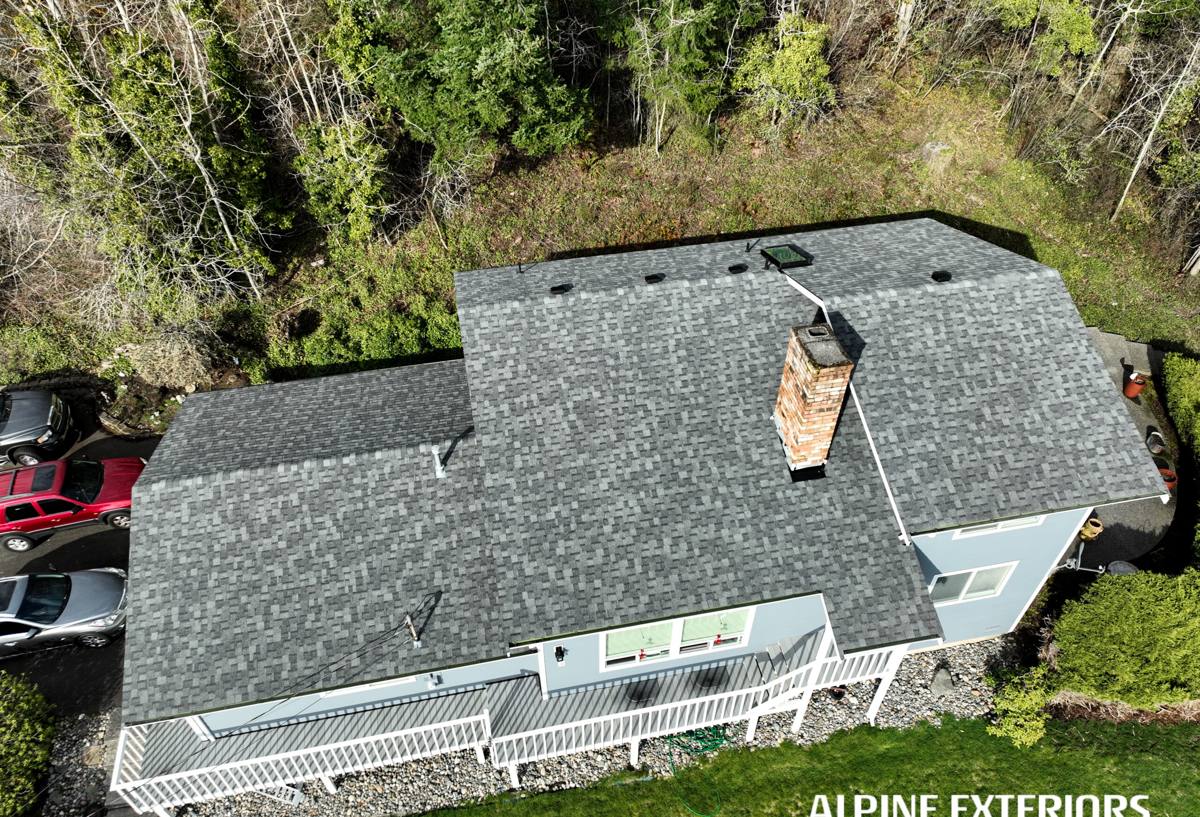
What the Local Climate Demands From a New Roof
Three conditions drive almost every roofing decision we make in this neighborhood:
- Salt air: Metal fasteners, flashing, and vents corrode faster near the bay than they would inland. Material and fastener grade matter more here than in a landlocked town.
- Driving rain: Wind-driven rain finds its way under standard laps and around poorly sealed penetrations. Valleys, chimneys, skylights, and roof-to-wall transitions need extra attention, not just standard flashing.
- Moss: Shade from mature trees plus near-constant moisture means moss growth is a matter of when, not if, on north-facing slopes and shaded valleys. Moss holds water against the roof surface and works its way under shingle tabs over time.
None of these are exotic problems. They're just the normal cost of living in a marine climate on the western side of Whatcom County, and a roof installed without them in mind will show its age faster than it should.
Choosing the Right Roofing Material for Birchwood
There's no single "best" roofing material — the right choice depends on your home's roof pitch, tree cover, budget, and how long you plan to stay in the house. Here's an honest comparison of the options we install most often in this area:
| Material | Moss/Algae Resistance | Rain & Wind Performance | Maintenance | Typical Lifespan |
|---|---|---|---|---|
| Architectural asphalt shingle | Good with algae-resistant granules; still needs periodic moss removal in shaded areas | Strong when properly nailed and sealed | Low — occasional cleaning | 25–35 years |
| Standing seam metal | Excellent — moss struggles to grip a smooth metal surface | Excellent; sheds water fast, handles wind well | Very low | 40–60 years |
| Cedar shake | Poor without regular treatment — retains moisture and feeds moss/rot | Good if installed correctly, but seams need care in driving rain | High — regular treatment required | 20–30 years with upkeep |
| Synthetic composite shingle | Good — many products include algae-resistant additives | Strong; consistent performance in wet climates | Low | 30–50 years |
We're upfront that we steer most Birchwood customers away from untreated cedar shake unless they're committed to a real maintenance schedule. It's not that cedar is a bad product — it's that its moisture behavior in a shaded, rain-heavy lot works against it, and the upkeep burden is higher than most homeowners want to sign up for. Asphalt and metal both give you a better maintenance-to-lifespan tradeoff in this specific climate.
What a Correct Roof Installation Actually Involves
A roof is only as good as what's underneath the shingles. In a climate like ours, the components most homeowners never see are the ones that decide whether the roof lasts 15 years or 35:
Underlayment
We use synthetic underlayment across the field for its water resistance and tear strength, with self-adhering ice-and-water shield in valleys, around penetrations, and along eaves — the spots where wind-driven rain is most likely to work its way backward under the shingle laps.
Flashing
Chimneys, skylights, sidewalls, and any roof-to-wall transition get new flashing, not reused flashing. Corrosion-resistant materials matter here given the salt content in the air — this is one place where cutting cost shows up as a leak within a few years, not decades.
Ventilation
Proper intake and exhaust ventilation keeps the attic space close to outdoor temperature, which reduces condensation buildup on the underside of the roof deck — a real issue in a humid marine climate where trapped moisture can rot decking from the inside without any visible roof leak.
Deck condition
We don't install a new roof over compromised decking. Soft spots get cut out and replaced before anything goes down — skipping this step is one of the most common corners cut in the industry, and it guarantees problems later.
Our New Roof Installation Process
1. Inspection and estimate
We start with a full roof and attic inspection — pitch, current material condition, decking, ventilation, and any moss or moisture damage already present. You get a written estimate that spells out material options and what we found, not just a number.
2. Tear-off and deck assessment
Old roofing comes off down to the deck so we can actually see what we're working with. Any rotted or soft sheathing gets flagged and replaced — this is priced as part of the estimate range, not sprung on you afterward, unless something unexpected turns up once the old roof is off.
3. Underlayment, flashing, and ventilation
Ice-and-water shield goes into valleys and vulnerable areas first, then synthetic underlayment across the field, then new flashing at every penetration and transition, then intake/exhaust ventilation components as needed for the home.
4. Roofing material installation
Shingles, metal panels, or composite material go down to manufacturer spec — correct nailing pattern, correct exposure, correct fastener count. This is where installation quality separates a roof that performs for its full rated lifespan from one that underperforms it.
5. Cleanup and final walkthrough
Full site cleanup including magnetic sweep for stray fasteners, then a walkthrough so you can see the finished work and ask questions before we consider the job done.
Moss Prevention Isn't an Afterthought Here
Given how long moss season runs in Whatcom County, we build moss resistance into the installation itself rather than treating it as a separate maintenance task. That can mean zinc or copper strips near the ridge, which release trace metals that discourage moss growth as rain washes over them, along with material choices that don't hold moisture against the roof surface. None of this eliminates the need for occasional roof cleaning on heavily shaded homes, but it meaningfully slows how fast moss becomes a problem.
What Affects the Cost of a New Roof
Every roof is different, but the same handful of factors drive most of the cost variation we see on Birchwood homes:
| Factor | Why It Matters |
|---|---|
| Roof pitch and complexity | Steep or multi-plane roofs take longer and require more safety setup than a simple gable |
| Number of layers to remove | Tear-off of multiple existing layers adds labor and disposal cost |
| Decking condition | Rot or soft spots discovered at tear-off require sheathing replacement |
| Material choice | Asphalt, metal, and composite carry different material and labor costs |
| Ventilation and flashing upgrades | Bringing an older roof's ventilation up to current standards adds scope but improves longevity |
| Access and site conditions | Tree cover, steep lots, or tight access can affect setup time and equipment needs |
We give you a real range up front based on what we can see, and we flag anything that might change once tear-off reveals the deck condition — no surprise change orders for things we could have anticipated.
Signs Your Birchwood Home May Need a New Roof
- Shingles that are cupping, curling, or missing granules in patches
- Moss or dark streaking concentrated on north-facing or shaded slopes
- Soft or spongy spots when walking the roof, or sagging visible from the ground
- Daylight visible through the attic roof deck, or damp insulation after rain
- A roof approaching or past 20–25 years old, especially with no recent flashing updates
- Recurring leaks around chimneys, skylights, or valleys despite past patch repairs
Why It Matters to Hire a Crew That Already Works This Area
A roofing crew that regularly works Birchwood and the wider Bellingham area already knows which slopes tend to hold moss, how wind-driven rain typically finds its way into older flashing details in this neighborhood's housing stock, and what Whatcom County's permitting and inspection process actually requires — so there's no learning curve at your expense. That familiarity shows up in fewer surprises during tear-off, fewer callbacks, and a roof detailed for the conditions it will actually face rather than a one-size-fits-all install.
If you're weighing a new roof for your Birchwood home, we're glad to come take a look and give you a straight, no-pressure estimate — what we see, what it would take to do right, and a real cost range. Use the form below to get started.